
Blog
Zinc Air Battery vs Lithium Ion Battery: Differences, Advantages & Applications
2026-08-04 | Calvin
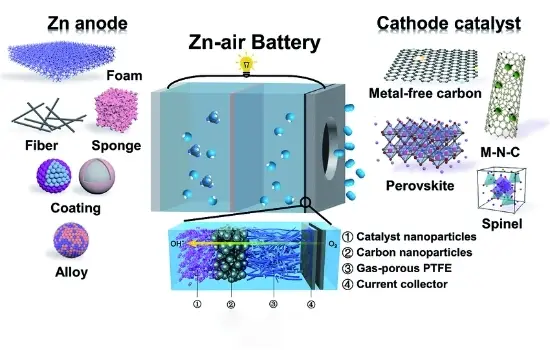
Zinc-air batteries and lithium-ion batteries are two different battery technologies designed for different energy storage needs. Zinc-air batteries are known for their lightweight design and high energy density, while lithium-ion batteries are widely used because of their rechargeability, high power output, and long cycle life.
Choosing between a zinc-air battery and a lithium-ion battery depends on the application. Zinc-air technology is commonly used in low-power devices such as hearing aids and medical sensors, while lithium-ion batteries power high-demand applications including electric vehicles, smartphones, laptops, and renewable energy storage systems.
This guide explains the differences between zinc-air and lithium-ion batteries, including how they work, their advantages and disadvantages, energy density, lifespan, safety, applications, and which battery technology is better for specific situations.
Quick Answer: Zinc-Air vs Lithium-Ion Battery
| Feature | Zinc-Air Battery | Lithium-Ion Battery |
|---|---|---|
| Rechargeability | Usually non-rechargeable | Rechargeable |
| Energy Density | High potential energy density | High practical energy density |
| Power Output | Low to moderate | High |
| Weight | Very lightweight | Heavier due to internal components |
| Cycle Life | Usually single-use | Hundreds to thousands of cycles |
| Best Applications | Low-power devices | High-power rechargeable systems |
In simple terms, zinc-air batteries are better when lightweight and long-lasting single-use power is required. Lithium-ion batteries are better when rechargeable energy storage and high power delivery are needed.
What Is a Zinc-Air Battery?
A zinc-air battery is an electrochemical battery that uses zinc as the anode and oxygen from the surrounding air as the cathode reactant.
Unlike traditional batteries that store all active materials inside the cell, zinc-air batteries use oxygen from outside the battery. This reduces internal material requirements and allows the battery to achieve a lightweight structure.
Because oxygen is supplied from the environment, zinc-air batteries can achieve high energy density compared with many traditional battery technologies.
How Zinc-Air Batteries Work
A zinc-air battery produces electricity through a chemical reaction between zinc and oxygen.
1. Zinc Oxidation
During discharge, zinc releases electrons through an oxidation reaction. These electrons travel through the external circuit and provide electrical power to the connected device.
2. Oxygen Reduction
Oxygen enters the battery through the air cathode and participates in the chemical reaction that completes the electrical process.
3. Ion Transfer
The electrolyte allows ions to move inside the battery, maintaining the chemical balance required for continuous operation.
Advantages of Zinc-Air Batteries
High Energy Density
One major advantage of zinc-air batteries is their high energy density potential. Since oxygen comes from outside the battery, less internal material is required compared with many conventional battery designs.
Lightweight Design
Zinc-air batteries are extremely lightweight because part of their active material comes from air rather than being stored inside the battery.
This makes them suitable for:
- Hearing aids
- Wearable medical devices
- Small sensors
- Portable electronics
Lower Material Cost Potential
Zinc is an abundant material that is widely available. This makes zinc-air batteries attractive for applications where cost and resource availability are important considerations.
Good Safety Characteristics
Zinc-air batteries generally have lower fire risk compared with many lithium-ion battery designs because they do not rely on the same energy storage chemistry used in high-power lithium systems.
Limitations of Zinc-Air Batteries
Limited Rechargeability
Most commercially available zinc-air batteries are primary batteries, meaning they are designed for single use.
Rechargeable zinc-air batteries are being researched, but challenges remain, including electrode degradation, efficiency loss, and long-term cycling performance.
Lower Power Output
Although zinc-air batteries can store large amounts of energy relative to their weight, they are generally not designed for applications requiring high current output.
They are not ideal for:
- Electric vehicles
- Power tools
- High-performance electronics
- Large energy storage systems
Environmental Sensitivity
Because zinc-air batteries depend on oxygen from the surrounding environment, factors such as humidity, temperature, and air exposure can affect performance.
What Is a Lithium-Ion Battery?
A lithium-ion battery is a rechargeable battery technology that stores energy through the movement of lithium ions between the anode and cathode during charging and discharging.
Lithium-ion batteries have become the dominant rechargeable battery technology because they offer a strong combination of energy density, power output, efficiency, and cycle life.
They are commonly used in:
- Smartphones
- Laptops
- Electric vehicles
- Power tools
- Solar energy storage systems
How Lithium-Ion Batteries Work
During discharge, lithium ions move from the negative electrode (anode) to the positive electrode (cathode). Electrons travel through the external circuit, creating electrical power.
During charging, the process reverses. The charger pushes lithium ions back to the anode so the battery can store energy again.
Advantages of Lithium-Ion Batteries
Rechargeable Performance
One of the biggest advantages of lithium-ion batteries is their ability to complete hundreds or thousands of charge cycles.
This makes them suitable for devices that require daily charging and long-term operation.
High Power Output
Lithium-ion batteries can deliver high current output, making them suitable for demanding applications such as electric vehicles and power tools.
High Efficiency
Lithium-ion batteries provide efficient energy conversion with low self-discharge compared with many older battery technologies.
Wide Range of Applications
Because of their balanced performance characteristics, lithium-ion batteries are used across consumer electronics, transportation, and energy storage industries.
Limitations of Lithium-Ion Batteries
Higher Manufacturing Cost
Lithium-ion batteries generally have a higher initial cost compared with traditional battery technologies because of their materials, manufacturing processes, and battery management requirements.
Temperature Sensitivity
Extreme temperatures can affect lithium-ion battery performance and lifespan. High temperatures may accelerate battery degradation, while very cold conditions can temporarily reduce available capacity.
Safety Requirements
Lithium-ion batteries require proper protection systems because damage, overheating, or incorrect charging can create safety risks.
Modern lithium-ion battery packs use battery management systems (BMS) to monitor:
- Temperature
- Voltage
- Current
- Cell balance
Zinc-Air Battery vs Lithium-Ion Battery: Detailed Comparison
| Feature | Zinc-Air Battery | Lithium-Ion Battery |
|---|---|---|
| Battery Type | Primary battery in most applications | Rechargeable battery |
| Main Materials | Zinc and oxygen from air | Lithium compounds, graphite, electrolyte |
| Rechargeability | Usually not rechargeable | Rechargeable |
| Energy Density | High potential energy density | High practical energy density |
| Power Delivery | Lower power output | High power output |
| Cycle Life | Limited in commercial cells | Hundreds to thousands of cycles |
| Weight | Very lightweight | Higher weight depending on design |
| Charging | Usually replaced after use | Can be repeatedly charged |
| Best Use | Small low-power devices | High-power rechargeable applications |
Zinc-Air vs Lithium-Ion: Energy Density Comparison
Energy density measures how much energy a battery can store relative to its weight or size.
Zinc-air batteries have a unique advantage because oxygen is supplied from outside the battery. This reduces the amount of internal material required and allows a lightweight design.
However, high energy density does not always mean better overall performance. A battery must also provide sufficient power output, rechargeability, and durability for the intended application.
When Zinc-Air Has an Advantage
- Small size requirements
- Lightweight devices
- Low continuous power consumption
- Long shelf life applications
When Lithium-Ion Has an Advantage
- Electric vehicles
- Portable electronics
- Power tools
- Energy storage systems
Zinc-Air vs Lithium-Ion: Rechargeability and Cycle Life
Rechargeability is one of the biggest differences between zinc-air and lithium-ion batteries.
Zinc-Air Battery Lifespan
Most commercial zinc-air batteries are designed as single-use batteries. After the zinc material is consumed, the battery must typically be replaced.
Rechargeable zinc-air technology is still developing, with challenges involving:
- Electrode stability
- Reaction efficiency
- Long-term cycling performance
Lithium-Ion Battery Lifespan
Lithium-ion batteries are designed for repeated charging and discharging. Depending on battery chemistry, operating conditions, and usage patterns, they can provide hundreds or thousands of cycles.
This makes lithium-ion better suited for applications where batteries are used every day.
Zinc-Air vs Lithium-Ion: Power Output Comparison
Energy storage and power delivery are two different battery characteristics.
A battery may store a large amount of energy but still be unable to deliver that energy quickly.
| Application | Better Technology | Reason |
|---|---|---|
| Hearing Aid | Zinc-Air | Small size and low power requirements |
| Electric Vehicle | Lithium-Ion | Requires high current output |
| Smartphone | Lithium-Ion | Rechargeable and compact |
| Medical Sensor | Zinc-Air | Long-lasting low-power operation |
| Solar Storage | Lithium-Ion | Requires repeated charging cycles |
Zinc-Air vs Lithium-Ion: Safety Comparison
Battery safety depends on chemistry, design, manufacturing quality, and battery management systems.
Zinc-Air Safety Advantages
- Lower fire risk in many applications
- Uses abundant zinc materials
- Suitable for small medical devices
Lithium-Ion Safety Considerations
- Requires protection circuits
- Needs proper charging control
- Can experience thermal issues if damaged or misused
Modern lithium-ion batteries include advanced safety features such as battery management systems, protective circuits, and thermal monitoring to improve reliability.
Applications: Zinc-Air vs Lithium-Ion Battery
Zinc-Air Battery Applications
- Hearing aids
- Medical monitoring devices
- Small sensors
- Military low-power equipment
- Specialized portable devices
Lithium-Ion Battery Applications
- Smartphones
- Laptops
- Electric vehicles
- Electric bicycles
- Power tools
- Solar energy storage
- Backup power systems
Which Battery Technology Is Better?
There is no single battery technology that is best for every application. The right choice depends on the power requirements, operating conditions, and expected usage pattern.
Choose Zinc-Air Batteries If:
- You need an extremely lightweight battery.
- The device requires low power.
- Rechargeability is not necessary.
- Small size is a priority.
Examples:
- Hearing aids
- Medical sensors
- Small electronic devices
Choose Lithium-Ion Batteries If:
- You need rechargeable energy storage.
- The application requires high power output.
- The battery will be used frequently.
- Long cycle life is important.
Examples:
- Electric vehicles
- Mobile devices
- Energy storage systems
- Power equipment
Future of Zinc-Air and Lithium-Ion Batteries
Lithium-ion batteries currently dominate rechargeable energy storage because of their mature manufacturing, strong performance, and wide adoption.
Zinc-air batteries continue to attract interest because of their lightweight design, resource availability, and energy density advantages.
Future improvements in rechargeable zinc-air technology could expand its applications, but lithium-ion remains the leading choice for most high-power rechargeable systems today.
Frequently Asked Questions About Zinc-Air vs Lithium-Ion Batteries
Are zinc-air batteries better than lithium-ion batteries?
Zinc-air batteries are not universally better than lithium-ion batteries. Each technology is designed for different purposes.
Zinc-air batteries are better for lightweight, low-power applications such as hearing aids and small medical devices. Lithium-ion batteries are better for applications requiring rechargeability, high power output, and long cycle life, such as electric vehicles and energy storage systems.
Can zinc-air batteries be recharged?
Most commercially available zinc-air batteries are not rechargeable. They are typically designed as primary batteries and are replaced after the zinc material is consumed.
Rechargeable zinc-air batteries are being developed, but challenges remain in improving electrode durability, efficiency, and long-term cycling performance.
Why do zinc-air batteries have high energy density?
Zinc-air batteries achieve high energy density because they use oxygen from the surrounding air as part of the chemical reaction instead of storing all active materials inside the battery.
This reduces battery weight and allows more energy storage relative to the battery size.
Why are lithium-ion batteries more popular?
Lithium-ion batteries are widely used because they offer a combination of:
- Rechargeability
- High power output
- Good energy density
- Long cycle life
- Fast charging capability
These advantages make lithium-ion technology suitable for everyday electronics, transportation, and renewable energy storage.
Which battery is safer: zinc-air or lithium-ion?
Zinc-air batteries generally have lower fire risk because of their chemistry and common low-power applications.
However, modern lithium-ion batteries include advanced safety systems such as battery management systems, protective circuits, and temperature monitoring to improve reliability.
Are zinc-air batteries environmentally friendly?
Zinc-air batteries have some environmental advantages because zinc is abundant and widely available.
However, environmental impact depends on manufacturing processes, recycling systems, and battery disposal methods.
Can zinc-air batteries replace lithium-ion batteries?
Currently, zinc-air batteries cannot replace lithium-ion batteries in most high-power applications.
Lithium-ion remains the preferred technology for:
- Electric vehicles
- Portable electronics
- Power tools
- Large energy storage systems
Zinc-air batteries are more suitable for specialized low-power applications.
Which battery lasts longer: zinc-air or lithium-ion?
The answer depends on how lifespan is measured.
- Zinc-air batteries can provide long shelf life and reliable operation in low-drain devices.
- Lithium-ion batteries provide much longer usable life when measured by repeated charge and discharge cycles.
Are lithium-ion batteries more powerful than zinc-air batteries?
Yes. Lithium-ion batteries generally provide much higher power output and can deliver the current required for demanding applications such as electric motors and electronic devices.
Final Thoughts: Zinc-Air Battery vs Lithium-Ion Battery
Zinc-air and lithium-ion batteries represent two different approaches to energy storage. Zinc-air batteries focus on lightweight design and high energy density, while lithium-ion batteries focus on rechargeability, power delivery, and long-term cycling performance.
For small, low-power devices where size and weight are critical, zinc-air batteries can be an excellent solution. Their ability to use oxygen from the air allows them to achieve impressive energy density in compact designs.
For applications requiring frequent charging, high power output, and reliable long-term operation, lithium-ion batteries remain the dominant choice. Their widespread use in electric vehicles, consumer electronics, and energy storage systems demonstrates their versatility and performance advantages.
When choosing between zinc-air and lithium-ion batteries, the best option depends on your specific requirements:
- Choose zinc-air for lightweight, low-power, single-use applications.
- Choose lithium-ion for rechargeable systems requiring high performance and long service life.
Understanding the differences between these battery technologies helps engineers, businesses, and consumers select the right energy solution for their application.
- Next:48V 100Ah LiFePO4 Server Rack Battery Lifespan: Complete Guide
- Previous:Battery Acid Leakage: How to Clean, Handle, and Stay Safe
Contact Details
Lithium LiFePO4 Batteries and Lithium LiFePO4 Cells Supplier - LiFePO4 Battery Shop
Contact Person: Miss. Elena Wang
WhatsApp : +8615263269227
Skype : +8615263269227
WeChat :15263269227
Email : info@lifepo4batteryshop.com
All Products
- TC Elcon Charger (3)
- Headway Lithium Battery (6)
- Blade Battery (10)
- Semi Solid State Battery (6)
- A123 Battery (6)
- Sinopoly Battery (7)
- GBS Battery (16)
- CALB Battery (26)
- Cylindrical Cell (14)
- Energy Storage System (0)
- Battery Management System (15)
- Sodium ion Battery Cell (4)
- Lithium Titanate Battery (23)
- Ternary Lithium Battery Cell (12)
- REPT Battery (10)
- BYD Battery (5)
- CATL Battery (15)
- Thunder Sky Winston Battery (26)
- EVE Battery (37)
- LiFePO4 Battery Cell (37)
Certification
Customer Reviews
- I have fond memories of our meeting in Shanghai with LiFePO4 Battery Shop Elena. Your company left a strong impression on me with its impressive growth and professionalism. We both value straightforwardness and honesty, which I believe are the most important qualities in any partnership. I am confident that we can build a successful collaboration based on these shared values. —— Robert from USA
- I've been working with LiFePO4 Battery Shop for years, and their reliability is unmatched. While other suppliers frequently change sales teams, LiFePO4 Battery Shop has consistently provided exceptional service with a stable team. Their commitment to quality and customer support truly sets them apart. —— Henry from Australia