
Blog
Why do lithium batteries need a battery management system (BMS)?
2025-11-21 | Calvin
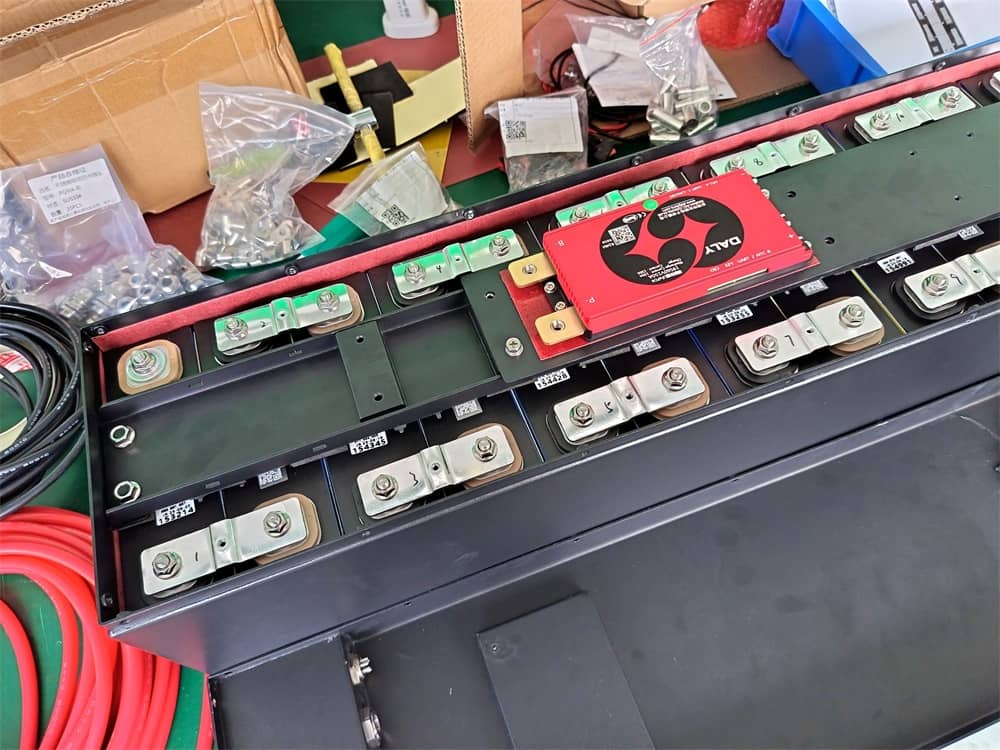
Modern lithium batteries—whether used in forklifts, solar systems, RVs, e-bikes, or high-performance vehicles—deliver impressive power in a compact package. But behind that convenience lies a critical piece of technology: the Battery Management System (BMS).
A BMS isn’t just an accessory. It's the core safety and performance component that protects your lithium cells, ensures a long service life, and keeps your equipment running reliably. With lithium batteries now replacing traditional lead-acid systems across industries, understanding why a BMS is essential helps buyers make smarter and safer purchasing decisions.
Table of Contents
- What Is a Battery Management System (BMS)?
- Key Functions of a Battery Management System
- Conclusion
- FAQ
What Is a Battery Management System (BMS)?
A Battery Management System is an electronic control unit that connects to every cell inside a lithium battery pack. Its job is simple but vital:
monitor, protect, balance, and optimize the battery.
Since a single LiFePO4 cell provides about 3.2V, multiple cells must be combined to create 12V, 24V, or 48V battery systems. Without a BMS, these cells would drift out of balance, become overcharged or over-discharged, and fail prematurely—or even dangerously.
Key Functions of a Battery Management System
1. Safe and Accurate Charging Protection
Lithium batteries are highly sensitive to charging voltage. Overcharging—even slightly—can permanently damage the cells and shorten their lifespan.
Recommended Charge Limits
- LiFePO4 (Lithium Iron Phosphate)
- Nominal voltage: 3.2V
- Maximum charge voltage: 3.65V per cell - LiNCM / LiMn2O4 (Lithium Polymer)
- Nominal voltage: 3.7V
- Maximum charge voltage: 4.2V per cell
A high-quality BMS automatically disconnects charging when the maximum voltage is reached. This prevents thermal damage, capacity loss, and safety hazards—especially in larger battery banks.
2. Preventing Over-Discharge During Use
Just as overcharging harms lithium batteries, deep discharging is equally dangerous.
Safe Discharge Limits
- LiFePO4: never below 2.4V per cell
- Li-Polymer: never below 2.8V per cell
If a battery drops below these values, the internal chemistry degrades, leading to:
- Permanent capacity loss
- Poor cycle life
- Premature failure
A BMS monitors every cell and shuts the discharge down if any cell approaches the minimum voltage. Without this protection, one weak cell can compromise the entire pack—an expensive mistake for industrial users.
3. Cell Balancing: Maximizing Capacity and Lifespan
Not all battery cells age equally. Some charge faster, some hold more energy, and some naturally weaken over time.
A helpful analogy is a wooden barrel made of staves. If some staves are shorter, the barrel can never fill to its maximum capacity. In the same way, one weak cell limits the whole battery.
Balancing Methods
- Passive Balancing:
Uses resistors to burn excess energy from stronger cells while weaker ones catch up. - Active Balancing (found in higher-end BMS units):
Redistributes energy between cells for maximum usable capacity.
Low-cost BMS solutions often stop charging as soon as the first cell reaches 3.65V. That wastes up to 20% of the usable capacity—a huge loss for EVs, solar storage, or heavy-duty equipment where range and runtime matter.
4. Protecting Against Uneven Discharge
During discharge, unbalanced cells pose serious risks. A weak cell will hit the cutoff voltage long before the others do.
A well-engineered BMS:
- Keeps all cells balanced throughout the discharge cycle
- Ensures the weakest cell never falls below its minimum safe voltage
- Protects the entire pack from instability
For LiFePO4 batteries, this means maintaining every cell above 2.4V; for lithium polymer batteries, above 2.8V.
Balanced discharge equals:
- Longer lifespan
- Better performance
- Fewer service interruptions
5. Temperature Monitoring and Thermal Protection
Temperature is one of the biggest factors affecting lithium battery safety.
Some lithium chemistries—especially lithium cobalt—can enter thermal runaway if charged improperly. LiFePO4 is significantly safer and naturally more stable, but extreme heat still causes degradation.
A robust BMS continuously monitors temperature inside the pack and will:
- Limit charging current
- Reduce discharge current
- Disconnect the pack entirely if overheating occurs
This protects your investment and prevents potentially dangerous situations, especially in high-power applications like EVs, forklifts, or power tools.
Conclusion
A Battery Management System is not optional—it’s essential for safe, efficient, and long-lasting lithium battery operation. From charging and discharging protection to cell balancing and temperature control, the BMS ensures that your battery pack performs reliably and safely over its entire lifespan.
FAQ
1. Can a lithium battery run without a BMS?
Technically, yes—but it’s risky. Without a BMS, the cells can become overcharged, over-discharged, or unbalanced, which leads to rapid degradation or even dangerous failures. A battery without a BMS may work for a short time, but it won't last long or operate safely.
2. Does every lithium battery need the same type of BMS?
No. Different lithium chemistries have different voltage limits and safety needs. For example, LiFePO4 requires lower charge and discharge cutoff points compared to Li-ion polymer. That’s why choosing a BMS designed for your specific battery type is important.
3. What happens if the BMS shuts off my battery?
It usually means the system detected an unsafe condition—low voltage, high voltage, high temperature, or overcurrent. After the issue is resolved (charging, cooling, or reducing load), the battery typically resets and becomes usable again.
4. How long does a BMS last?
A good-quality BMS can last as long as the battery itself—often 8 to 15 years for LiFePO4 systems. Lifespan depends on build quality, operating temperature, and overall usage conditions.
5. Is an external BMS better than a built-in BMS?
Both have their place. Built-in BMS units are convenient and ideal for plug-and-play batteries. External BMS solutions offer more advanced controls, higher current handling, and custom programming, making them popular for large battery banks, solar systems, and EV conversions.
- Next:Why Battery Backup Power Is More Important Than Ever: A Complete Guide for Modern Households & Businesses
- Previous:Tesla Battery Types: A Simple Guide for Model S, 3, X, and Y
Contact Details
Lithium LiFePO4 Batteries and Lithium LiFePO4 Cells Supplier - LiFePO4 Battery Shop
Contact Person: Miss. Elena Wang
WhatsApp : +8615263269227
Skype : +8615263269227
WeChat :15263269227
Email : info@lifepo4batteryshop.com
All Products
- A123 Battery (5)
- Sinopoly Battery (7)
- GBS Battery (16)
- CALB Battery (22)
- Cylindrical Cell (3)
- Energy Storage System (0)
- Battery Management System (2)
- Sodium ion Battery Cell (3)
- Lithium Titanate Battery (16)
- Ternary Lithium Battery Cell (11)
- REPT Battery (8)
- BYD Battery (2)
- CATL Battery (14)
- Thunder Sky Winston Battery (21)
- EVE Battery (29)
- LiFePO4 Battery Cell (4)
Certification
Customer Reviews
- I have fond memories of our meeting in Shanghai with LiFePO4 Battery Shop Elena. Your company left a strong impression on me with its impressive growth and professionalism. We both value straightforwardness and honesty, which I believe are the most important qualities in any partnership. I am confident that we can build a successful collaboration based on these shared values. —— Robert from USA
- I've been working with LiFePO4 Battery Shop for years, and their reliability is unmatched. While other suppliers frequently change sales teams, LiFePO4 Battery Shop has consistently provided exceptional service with a stable team. Their commitment to quality and customer support truly sets them apart. —— Henry from Australia