
Blog
Market Share Plunges to 18.7%! Why Have Ternary Lithium Batteries Been Defeated by LFP?
2026-02-11 | Calvin
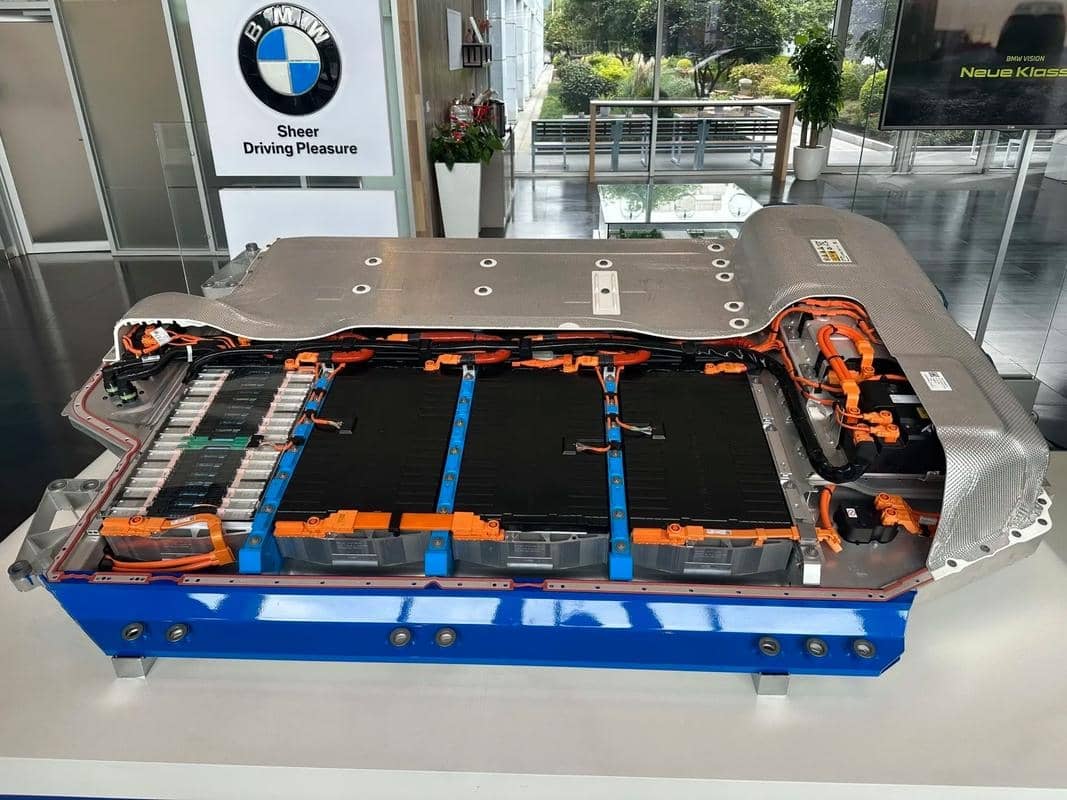
The market share of ternary lithium batteries has collapsed from 48% to less than 20%. Why has what was once considered a “standard feature” of high-end electric vehicles fallen from grace? Is this the twilight of a technology—or the result of a strategic shift?
The “Survival Crisis” of Ternary Lithium Batteries
Anyone paying attention to the new energy vehicle market may notice a striking phenomenon: ternary lithium batteries, once synonymous with “premium” and “long range,” are appearing less and less frequently.
The data is brutally cold. In 2021, ternary lithium and lithium iron phosphate (LFP) batteries were roughly neck and neck. By 2025, however, LFP batteries have surged to a market share of 81.2%, while ternary lithium has shrunk dramatically to just 18.7%.
This trend is not limited to China—it is global. Data shows that in the first half of 2025, total global installed capacity of power batteries for new energy vehicles reached approximately 465.9 GWh. Of this, LFP batteries accounted for 256.6 GWh, representing a year-on-year increase of 64% and a market share of 55.1%.
The “Comeback” of LFP Batteries: The Gap Has Been Closed
The core reason ternary lithium batteries once dominated was simple: higher energy density. In plain terms, with the same volume and weight, they can store more electricity and deliver longer driving range.
Professor Ai Xinping of Wuhan University once pointed out that mass-produced ternary lithium batteries can achieve volumetric energy densities exceeding 600 Wh/L, while LFP batteries were still below 400 Wh/L. In terms of gravimetric energy density, ternary lithium batteries were 40%–90% higher than LFP.
However, in recent years, technological breakthroughs in LFP batteries have rapidly narrowed this gap—and in some aspects, even surpassed ternary lithium.
- BYD’s Blade Battery: By eliminating traditional modules and turning battery cells into structural components, volumetric utilization has increased by over 50%, enabling LFP batteries to deliver long driving range.
- CATL’s Shenxing Superfast Charging: Who says LFP batteries charge slowly? The breakthrough of “10 minutes of charging for 400 km of range” has effectively erased ternary lithium’s fast-charging advantage.
- Gotion High-Tech’s JTM and SVOLT’s Short-Blade Batteries: Various integration technologies have made battery packs as efficient and flexible as building with LEGO.
As Zeng Yuqun (Robin Zeng) has stated, mass-produced fifth-generation LFP batteries have already achieved new breakthroughs in both energy density and lifespan.
Cost and Safety: The Rational Choice for Automakers
As subsidies fade and automakers engage in fierce price wars, cost has become a matter of survival.
Clear cost advantages: Ternary lithium cathode materials rely on expensive elements such as cobalt and nickel, while LFP batteries contain none of these “precious metals.” As a result, the cost difference between the two can exceed 100 yuan per kWh. In today’s environment of shrinking subsidies and intense competition, this directly impacts vehicle pricing and profit margins.
Superior safety characteristics: Thanks to its olivine crystal structure, LFP batteries offer higher thermal stability and significantly higher thermal decomposition temperatures than other chemistries. In simple terms, they are more “durable” and far less prone to thermal runaway under extreme conditions. Batteries such as Geely’s Shield Battery, which can pass a series of tests so harsh they are often described as “hell-level,” naturally provide consumers with greater peace of mind.
Will Ternary Lithium Batteries Disappear Entirely?
Will ternary lithium batteries fade away completely? The answer is no. Instead, they are undergoing a profound strategic transformation—shifting from “full-scale deployment” to “elite breakthroughs.”
Pushing toward higher energy density: In premium models that pursue extreme driving range, ternary lithium remains irreplaceable. For example, NIO’s 150 kWh semi-solid-state battery pack uses high-nickel ternary cathodes to achieve a range exceeding 1,000 km. Future all-solid-state batteries are also widely regarded as the ultimate stage for ternary materials to unleash their maximum performance.
Opening up new growth frontiers: In emerging fields that are extremely sensitive to weight and energy density, ternary lithium batteries are becoming the preferred choice.
- Flying cars (eVTOL): Weight reduction is non-negotiable. Ternary lithium batteries can reduce vehicle weight by 20%–30%, directly translating into longer range and higher payload capacity.
- Embodied intelligent robots: Providing longer-lasting power within limited space plays perfectly to ternary lithium’s high energy density strengths. This is predicted to become a massive incremental market with future demand exceeding 100 GWh.
Defending high-end overseas markets: In markets such as Europe, consumer preferences and brand positioning mean that many luxury electric vehicles still predominantly use high-nickel ternary batteries to maintain a high-performance brand image.
Conclusion
LFP batteries are winning in the present because they address the mass market’s core needs: affordability and reliability. Ternary lithium batteries, meanwhile, are holding the “high-end line of defense” for the future, building momentum in all-solid-state batteries, aviation, and AI-related applications.
This battery battle has no real losers—only a more refined and rational division of the market.
- Next:Lithium-Ion Batteries vs. Lithium-Polymer Batteries: Which One is the Best Choice?
- Previous:Energy Storage Knowledge You Should Know
Contact Details
Lithium LiFePO4 Batteries and Lithium LiFePO4 Cells Supplier - LiFePO4 Battery Shop
Contact Person: Miss. Elena Wang
WhatsApp : +8615263269227
Skype : +8615263269227
WeChat :15263269227
Email : info@lifepo4batteryshop.com
All Products
- TC Elcon Charger (0)
- Headway Lithium Battery (6)
- Blade Battery (10)
- Semi Solid State Battery (6)
- A123 Battery (5)
- Sinopoly Battery (7)
- GBS Battery (16)
- CALB Battery (23)
- Cylindrical Cell (8)
- Energy Storage System (0)
- Battery Management System (5)
- Sodium ion Battery Cell (4)
- Lithium Titanate Battery (20)
- Ternary Lithium Battery Cell (12)
- REPT Battery (10)
- BYD Battery (2)
- CATL Battery (15)
- Thunder Sky Winston Battery (22)
- EVE Battery (30)
- LiFePO4 Battery Cell (13)
Certification
Customer Reviews
- I have fond memories of our meeting in Shanghai with LiFePO4 Battery Shop Elena. Your company left a strong impression on me with its impressive growth and professionalism. We both value straightforwardness and honesty, which I believe are the most important qualities in any partnership. I am confident that we can build a successful collaboration based on these shared values. —— Robert from USA
- I've been working with LiFePO4 Battery Shop for years, and their reliability is unmatched. While other suppliers frequently change sales teams, LiFePO4 Battery Shop has consistently provided exceptional service with a stable team. Their commitment to quality and customer support truly sets them apart. —— Henry from Australia