
Blog
Energy Storage Knowledge You Should Know
2026-02-14 | Calvin
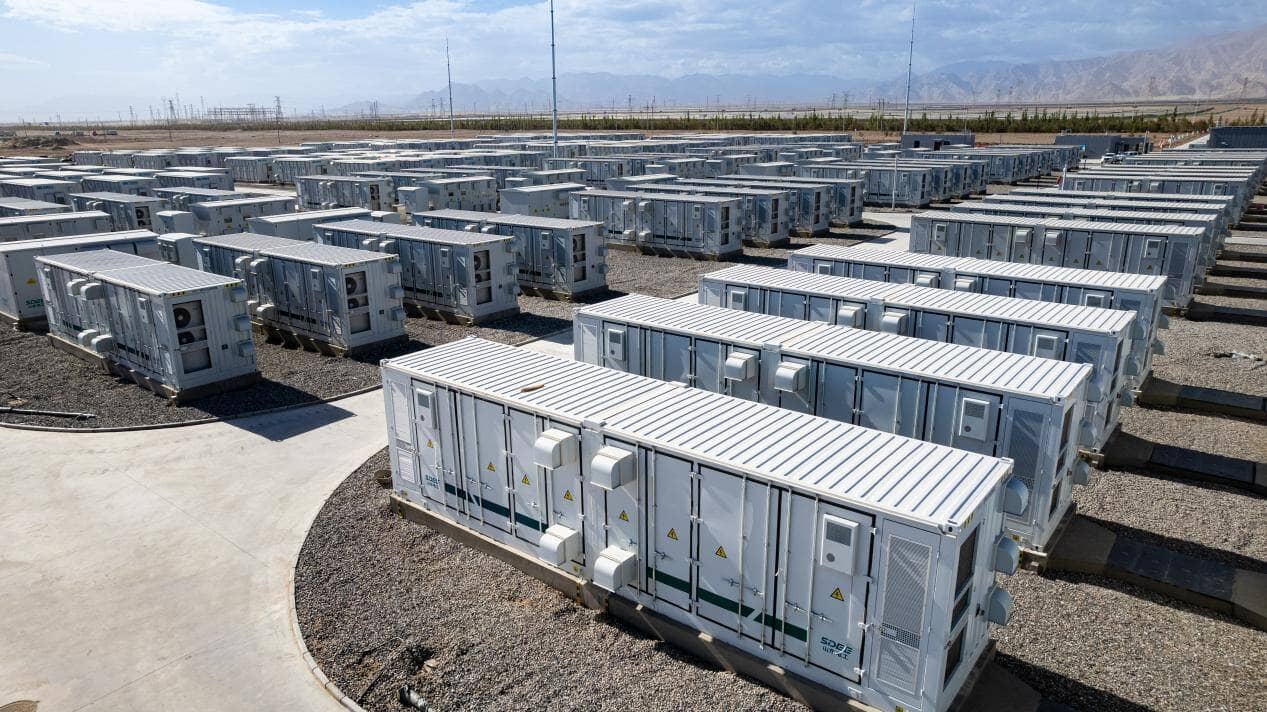
Energy storage, as the "power bank" of the energy system, is one of the core technologies that support the large-scale application of renewable energy, enhance grid flexibility, and ensure energy security. The following is an overview of the essential knowledge in the energy storage field, covering six main dimensions: basic concepts, mainstream technologies, key metrics, application scenarios, policies & market, and challenges & trends.
1. Basic Concepts: The Essence and Core Value of Energy Storage
Energy storage (Energy Storage) is the process of storing energy in a specific form using devices or media and releasing it when needed. Its core value lies in solving the problem of "time mismatch in energy supply and demand":
- Time Mismatch: For instance, solar power generation is abundant during the day but less at night, and wind power fluctuates based on wind speed.
- Spatial Mismatch: Wind and solar resources are abundant in the western regions, but the electricity demand is low, while demand is high in the eastern regions, but resources are scarce.
- System Stability: By rapidly charging and discharging, energy storage helps smooth out grid fluctuations (such as frequency regulation and voltage control), improving the reliability of power supply.
2. Mainstream Energy Storage Technologies: Classification, Principles, and Characteristics
Energy storage technologies can be classified into four major types based on energy conversion methods, each with applicable scenarios:
1. Physical Energy Storage (Mechanical Energy/Gravitational Potential Energy/Thermal Energy)
- Pumped Storage Hydropower (PSH): The most mature large-scale energy storage technology (accounting for over 80% of global installed capacity). Water is pumped to a high-level reservoir during low electricity demand and released to generate electricity during peak demand.
- Compressed Air Energy Storage (CAES): Uses a compressor to store air in underground caverns or storage tanks, which is then expanded by heating to drive turbines for power generation.
- Flywheel Energy Storage: Stores kinetic energy in a high-speed rotating flywheel, with energy conversion through a motor-generator.
2. Electrochemical Energy Storage (Electrochemical Reactions)
- Lithium-Ion Batteries (LIB): The most common electrochemical storage technology (accounting for over 90% of global new storage). Lithium ions migrate between positive and negative electrodes during charge and discharge.
- Lead-Acid Batteries: A mature technology with low cost but lower energy density, used in low-speed vehicles and backup power systems.
- Flow Batteries (VRB): Liquid electrolyte stored in external tanks circulates to the cell stack for reaction.
3. Electromagnetic Energy Storage (Electric Field/Magnetic Field)
- Supercapacitors (SC): Store charge through double electric layers or Faradaic pseudocapacitance, with high power density but low energy density, used for short-term high-power applications.
- Superconducting Magnetic Energy Storage (SMES): Uses superconducting coils to store energy in a strong magnetic field, efficient but requiring low-temperature environments and high costs.
4. Thermal Energy Storage
- Sensible Heat Storage: Stores heat through temperature changes in materials (e.g., water, molten salts), such as in solar thermal power stations.
- Latent Heat Storage: Uses phase-change materials (e.g., ice, paraffin) to absorb or release heat during phase transitions, with higher efficiency than sensible heat storage.
- Chemical Heat Storage: Stores heat through reversible chemical reactions (e.g., metal hydride decomposition/synthesis), with the highest theoretical efficiency but still under development.
3. Key Metrics: Core Parameters for Evaluating Energy Storage Systems
- Energy Density (Wh/kg or Wh/L): Energy stored per unit mass/volume, determining the system's size and weight (e.g., Li-ion > Flow Batteries > Lead-acid).
- Power Density (W/kg): Output power per unit mass/volume, determining the charging and discharging speed (e.g., Flywheel > Supercapacitors > Li-ion).
- Efficiency (%): The ratio of energy input to energy output (e.g., Li-ion > 90%, Flow > 75%, PSH > 70%).
- Cycling Life (Cycles): The number of full charge-discharge cycles before the capacity drops to 80% (e.g., Flow > 10,000 cycles, Li-ion 2000~6000 cycles, Lead-acid < 2000 cycles).
- Self-Discharge Rate (%/month): The rate at which energy is naturally lost during storage (e.g., Lead-acid > 5%, Li-ion < 2%, Flow < 1%).
- Cost (CNY/Wh): Initial investment (equipment + installation) or levelized cost of storage (LCOS), accounting for lifetime and efficiency.
4. Application Scenarios: Where Energy Storage Plays a Role
The value of energy storage depends on specific scenarios, with core applications including:
- Power Generation Side (Supporting Power Generation): Storage for smoothing fluctuations in solar and wind power, improving the integration of renewable energy.
- Grid Side (Supporting Power Systems): Peak shaving, frequency regulation, black start, and grid stability applications.
- User Side (Optimizing End-Use): Peak shaving for industrial/commercial applications and residential energy storage.
5. Policies and Market: Key Factors Driving Energy Storage Development
Energy storage policies and market dynamics are key drivers for its development:
- China: The 2021 "Guiding Opinions on Accelerating the Development of New Energy Storage" sets a target of 30GW installed capacity by 2025.
- USA: Federal ITC tax credit and state-level mandates, such as California's 11GW target for energy storage by 2030.
- Europe: REPowerEU plans and national policies accelerating storage deployment, with Germany simplifying grid connection processes.
6. Challenges and Trends: Future Key Breakthrough Directions
Energy storage faces challenges such as safety concerns, cost pressures, and technical bottlenecks. However, the future holds opportunities for breakthroughs in:
- Diversified Technological Routes: The rise of sodium-ion and solid-state batteries, with lithium-ion dominating short-term storage.
- Intelligent Management: AI algorithms for optimized charge/discharge strategies, and digital twin technologies for monitoring battery health.
- Large-Scale and Standardized Deployment: Large-scale storage stations and improving industry standards.
Conclusion
Energy storage is a "must-have" for the energy revolution. Its technological selection must be based on time and power demands, and system requirements (short-term/long-term, high/low power). In the future, with advances in technology and policy improvements, energy storage will shift from "optional" to "essential," deeply integrated into the new power system.
- Next:Market Share Plunges to 18.7%! Why Have Ternary Lithium Batteries Been Defeated by LFP?
- Previous:What Is an Energy Storage EMS?
Contact Details
Lithium LiFePO4 Batteries and Lithium LiFePO4 Cells Supplier - LiFePO4 Battery Shop
Contact Person: Miss. Elena Wang
WhatsApp : +8615263269227
Skype : +8615263269227
WeChat :15263269227
Email : info@lifepo4batteryshop.com
All Products
- TC Elcon Charger (0)
- Headway Lithium Battery (6)
- Blade Battery (10)
- Semi Solid State Battery (6)
- A123 Battery (5)
- Sinopoly Battery (7)
- GBS Battery (16)
- CALB Battery (23)
- Cylindrical Cell (8)
- Energy Storage System (0)
- Battery Management System (5)
- Sodium ion Battery Cell (4)
- Lithium Titanate Battery (20)
- Ternary Lithium Battery Cell (12)
- REPT Battery (10)
- BYD Battery (2)
- CATL Battery (15)
- Thunder Sky Winston Battery (22)
- EVE Battery (30)
- LiFePO4 Battery Cell (13)
Certification
Customer Reviews
- I have fond memories of our meeting in Shanghai with LiFePO4 Battery Shop Elena. Your company left a strong impression on me with its impressive growth and professionalism. We both value straightforwardness and honesty, which I believe are the most important qualities in any partnership. I am confident that we can build a successful collaboration based on these shared values. —— Robert from USA
- I've been working with LiFePO4 Battery Shop for years, and their reliability is unmatched. While other suppliers frequently change sales teams, LiFePO4 Battery Shop has consistently provided exceptional service with a stable team. Their commitment to quality and customer support truly sets them apart. —— Henry from Australia