
Blog
What Is the Best Voltage for a Chainsaw Battery? 20V to 80V Compared — Power, Runtime & Sizing
2026-06-28 | Calvin
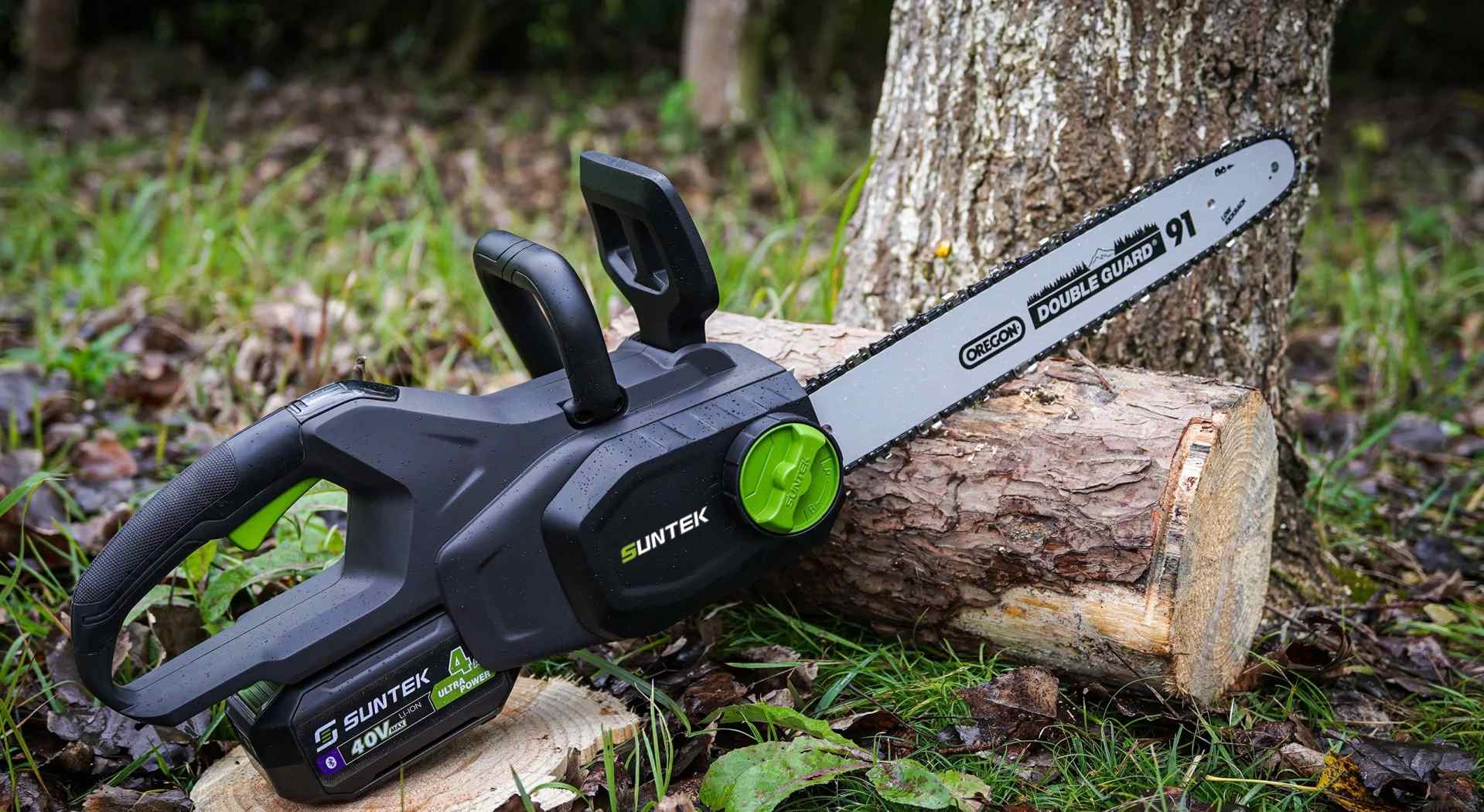
Battery voltage is the first specification every chainsaw buyer sees — and the most misleading one to choose by alone. A 56V chainsaw with a 5.0Ah battery and an 18-inch bar will outcut an 80V model with a 2.0Ah battery and a 12-inch bar in every scenario that matters. Voltage determines the potential power the motor can draw; bar length determines cutting capacity; and watt-hours determine how long it all runs.
After reading this article, you'll be able to understand a chainsaw's specifications at a glance and quickly determine what it can and can't do, as well as whether it's the right fit for your specific needs.
Part 1: How Voltage Actually Affects Chainsaw Performance
Voltage determines the electrical power available to the motor. Higher voltage means the motor can draw more watts, which translates to greater torque and faster chain speed — the two factors that determine how quickly and cleanly a chainsaw moves through wood.
The real-world performance mapping in 2025, based on manufacturer data and independent testing, looks like this:
| Voltage Class | Gas Equivalent | Typical Chain Speed | Bar Length Range | Cuts Wood Up To |
|---|---|---|---|---|
| 18V–20V | ~25cc (mini/pruning) | ~10–12 m/s | 8–12 in | ~10 in diameter |
| 36V–40V | ~35–40cc | ~15–18 m/s | 12–16 in | ~14 in diameter |
| 56V–60V | ~40–50cc | ~18–22 m/s | 14–18 in | ~16 in diameter |
| 80V+ | ~50cc+ | ~20–25 m/s | 18–24 in | ~20+ in diameter |
The "gas equivalent" column is the number that matters most for anyone transitioning from gas: a 56V brushless chainsaw with a quality 5.0Ah+ battery now delivers cutting speed comparable to a 40–50cc gas saw in independent 2025-2026 testing. That covers the vast majority of homeowner and light professional cutting.
The critical caveat: voltage sets the ceiling, but motor design and battery capacity determine whether the saw reaches it. A brushless motor is roughly 85–90% efficient versus 65–70% for brushed — meaning a brushless 40V saw can match or outperform a brushed 60V model. Always check actual chain speed (m/s or ft/s) and bar length alongside voltage.
Part 2: Bar Length — The Spec That Actually Sets Cutting Capacity
A chainsaw can cut wood with a diameter up to approximately twice its bar length by cutting from both sides. A 16-inch bar handles logs up to roughly 30 inches in diameter; a 12-inch bar maxes out around 22 inches. In practice, most cuts are made in a single pass from one side, meaning the bar length itself is the effective single-pass cutting diameter.
Bar length by voltage class:
| Bar Length | Single-Pass Cut | Two-Pass Max | Best For |
|---|---|---|---|
| 8–10 in | Up to 8 in | ~16 in | Pruning, limbs, light cleanup |
| 12–14 in | Up to 12 in | ~24 in | Storm cleanup, small trees, moderate firewood |
| 16–18 in | Up to 16 in | ~32 in | Firewood, medium trees, serious yard work |
| 20–24 in | Up to 20 in | ~40 in | Tree felling, large firewood, professional work |
The sizing rule: choose the bar length based on the largest wood you regularly cut, not the largest you might ever encounter. A 16-inch bar handles 90% of homeowner cutting; stepping up to 18 inches adds capability for firewood and storm cleanup.
Part 3: Watt-Hours — The True Runtime Predictor
Runtime depends on the total energy in the battery, not voltage alone. As with leaf blowers, watt-hours (Wh) = voltage × amp-hours (Ah) is the formula that lets you compare runtime across different platforms.
Consider two real-world examples:
- 80V × 2.0Ah = 160 Wh — an 80V saw with this pack might deliver only 5–10 minutes of continuous heavy cutting before shutdown.
- 56V × 5.0Ah = 280 Wh — a 56V saw with this pack delivers 20–30 minutes of hard cutting, or 60+ minutes of intermittent use.
The 56V setup runs nearly twice as long despite lower voltage, because it carries 75% more energy. Voltage without adequate amp-hours is all horsepower and no fuel tank.
Practical runtime expectations (intermittent cutting, real-world conditions):
| Battery Configuration | Watt-Hours | Light Cutting | Heavy Cutting |
|---|---|---|---|
| 20V × 4.0Ah | ~80 Wh | 20–30 min | 10–15 min |
| 40V × 4.0Ah | ~160 Wh | 40–60 min | 20–30 min |
| 56V × 5.0Ah | ~280 Wh | 60–90 min | 25–35 min |
| 60V × 6.0Ah | ~360 Wh | 60–90 min | 30–45 min |
| 80V × 5.0Ah | ~400 Wh | 90–120 min | 40–60 min |
Key insight: heavy cutting (continuous full-throttle through hardwood) draws dramatically more energy than intermittent pruning. The "90-minute runtime" you see on 60V–80V models is measured at low speed. At full throttle in hardwood, expect roughly a third of that. Plan accordingly — for long cutting sessions, a second charged battery is more practical than buying the largest single pack available.
Part 4: Match the Voltage to the Job
Occasional pruning, limbing, light garden work:
A 20V chainsaw with a 10–12-inch bar is light, affordable, and more than adequate for branches under 8 inches. Anything heavier is overkill and adds unnecessary weight.
General homeowner use — storm cleanup, hedge trimming, small trees:
A 40V chainsaw with a 14–16-inch bar and a 4.0Ah battery is the sweet spot for most homeowners. It handles wood up to 12–14 inches in a single pass, weighs 9–12 pounds with battery, and runs 40–60 minutes on intermittent cuts.
Regular firewood processing, medium tree felling, large-property maintenance:
Step up to 56V–60V with a 16–18-inch bar and 5.0Ah+ battery. This is where battery chainsaws genuinely rival 40–50cc gas saws in cutting speed, and the 280–360 Wh energy capacity covers a meaningful firewood session. The EGO 56V 18-inch CS1810, for example, tests at 50cc gas-equivalent power with a 20 m/s chain speed.
Professional arborism, tree felling, commercial landscaping:
80V+ with an 18–24-inch bar and high-capacity battery packs. The Greenworks Commercial 82V offers 20-inch, 24-inch, and 28-inch bar options — the first battery chainsaws to genuinely compete with professional gas saws. Expect to rotate batteries on long jobs; a single pack lasts 40–60 minutes at heavy load.
Where gas still wins: all-day continuous cutting in remote locations without electricity for recharging, very large timber (24-inch+ diameter hardwood requiring sustained full-throttle power), and extreme cold where battery performance degrades significantly.
Part 5: Five Things to Check Before Buying
1. Match bar length to your typical cutting diameter. A 16-inch bar covers most homeowner needs; 18 inches adds firewood and storm cleanup capability. Don't overbuy — longer bars add weight and drain batteries faster.
2. Compare watt-hours, not just voltage. A 56V × 5.0Ah battery (280 Wh) outlasts an 80V × 2.0Ah (160 Wh). Check total energy, not voltage alone.
3. Insist on brushless. Brushless motors run 85–90% efficient versus 65–70% for brushed — extracting more cuts per charge from every watt-hour, with less heat and longer motor life.
4. Check battery platform compatibility. If you already own cordless tools, staying within the same voltage platform (DeWalt 60V, EGO 56V, Milwaukee M18, Greenworks 80V) lets you share batteries across chainsaw, blower, trimmer, and mower — significant cost savings.
5. Verify the chain brake type. Look for both a mechanical chain brake (hand-activated lever) and an electronic chain brake (instant motor stop on trigger release). Both are standard on quality models in 2025 and are essential safety features on any chainsaw.
Frequently Asked Questions
What is the best voltage for a chainsaw battery?
For most homeowners, 40V with a 14–16-inch bar is the best balance of power, runtime, weight, and cost. For regular firewood cutting, 56V–60V with an 18-inch bar delivers gas-equivalent cutting power comparable to a 40–50cc gas saw. For professional use, 80V+ with 18–24-inch bars handles the most demanding work. The "best" voltage depends entirely on the wood you cut most often and how long you need the saw to run.
Can a battery chainsaw replace a gas chainsaw?
For most homeowner and light professional use, yes. Modern 56V–60V brushless chainsaws match 40–50cc gas saws in cutting speed and can handle wood up to 16–18 inches in a single pass. Where gas still wins: all-day continuous cutting without recharging, extreme cold, and very large timber above 24 inches where sustained high power is needed.
How long does a battery chainsaw run on one charge?
It depends on watt-hours and cutting intensity. A 56V × 5.0Ah battery (280 Wh) typically provides 60–90 minutes of intermittent cutting or 25–35 minutes of continuous full-throttle hardwood cutting. A 40V × 4.0Ah battery (160 Wh) gives roughly 40–60 minutes intermittent or 20–30 minutes heavy. Always check watt-hours (voltage × Ah), not voltage alone, for runtime comparison.
Does higher voltage mean more power in a chainsaw?
Higher voltage allows the motor to draw more watts, generally producing faster chain speed and greater torque. But motor efficiency and battery capacity matter just as much. A well-engineered brushless 56V saw with a 5.0Ah battery (280 Wh) often outperforms a poorly designed 80V model with a 2.0Ah battery (160 Wh) in both power delivery and runtime. Voltage sets the ceiling; watt-hours determine whether the saw reaches it.
What bar length do I need?
Match bar length to the wood you regularly cut: 10–12 inches for pruning and limbs, 14–16 inches for general homeowner use and storm cleanup, 16–18 inches for firewood, and 20+ inches for professional tree work. A chainsaw can cut wood up to approximately twice its bar length by cutting from both sides, but single-pass diameter equals the bar length itself.
Conclusion
The best chainsaw battery voltage is not the highest one — it's the one correctly sized for the wood you actually cut, with enough watt-hours to finish the job, and a bar length that matches your typical cutting diameter. For most homeowners, that answer is 40V with a 14–16-inch bar. For firewood and serious property maintenance, 56V–60V with an 18-inch bar now genuinely rivals a 40–50cc gas saw. For professional work, 80V+ with high-capacity packs and 20-inch+ bars handles the heaviest cordless cutting available.
Read voltage as potential power, bar length as cutting capacity, and watt-hours as runtime — and you'll never overbuy or underpower again.
- Next:How to Choose the Right Leaf Blower Battery: Voltage, Ah, Runtime & CFM Explained
- Previous:Should You Charge a LiFePO4 Battery to 100% or 80%?
Contact Details
Lithium LiFePO4 Batteries and Lithium LiFePO4 Cells Supplier - LiFePO4 Battery Shop
Contact Person: Miss. Elena Wang
WhatsApp : +8615263269227
Skype : +8615263269227
WeChat :15263269227
Email : info@lifepo4batteryshop.com
All Products
- TC Elcon Charger (0)
- Headway Lithium Battery (6)
- Blade Battery (10)
- Semi Solid State Battery (6)
- A123 Battery (6)
- Sinopoly Battery (7)
- GBS Battery (16)
- CALB Battery (26)
- Cylindrical Cell (14)
- Energy Storage System (0)
- Battery Management System (15)
- Sodium ion Battery Cell (4)
- Lithium Titanate Battery (23)
- Ternary Lithium Battery Cell (12)
- REPT Battery (10)
- BYD Battery (5)
- CATL Battery (15)
- Thunder Sky Winston Battery (26)
- EVE Battery (37)
- LiFePO4 Battery Cell (35)
Certification
Customer Reviews
- I have fond memories of our meeting in Shanghai with LiFePO4 Battery Shop Elena. Your company left a strong impression on me with its impressive growth and professionalism. We both value straightforwardness and honesty, which I believe are the most important qualities in any partnership. I am confident that we can build a successful collaboration based on these shared values. —— Robert from USA
- I've been working with LiFePO4 Battery Shop for years, and their reliability is unmatched. While other suppliers frequently change sales teams, LiFePO4 Battery Shop has consistently provided exceptional service with a stable team. Their commitment to quality and customer support truly sets them apart. —— Henry from Australia