
Blog
Should You Charge a LiFePO4 Battery to 100% or 80%?
2026-07-01 | Calvin
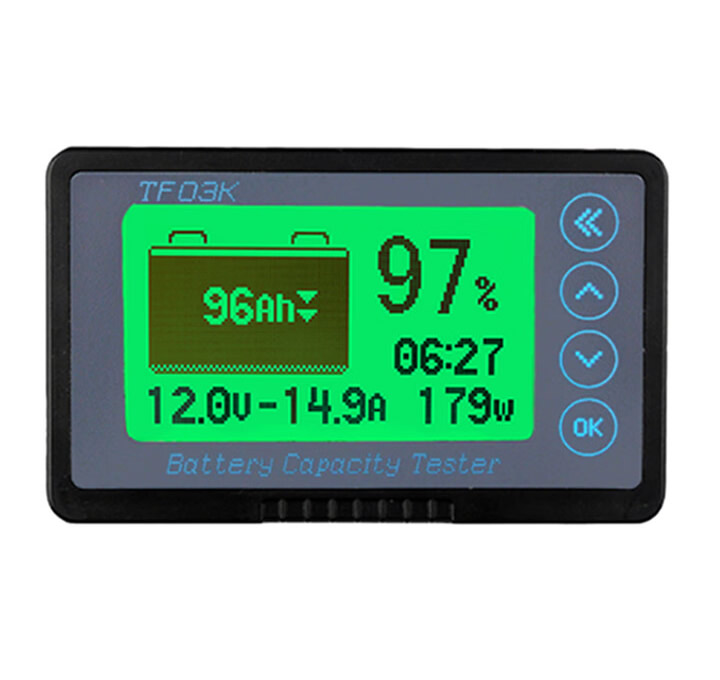
Ask whether you should charge a LiFePO4 battery to 100% and you'll find confident answers in both directions — some sources insist on full charges, others recommend stopping at 80%. Both are partly right, which is exactly why the question confuses so many people.
The honest answer is that two real forces pull in opposite directions. Cell balancing needs the battery to reach 100% periodically. Calendar aging is minimized by keeping the battery below 100% most of the time. The correct charging strategy isn't picking one side — it's resolving the tension between them based on how you actually use the battery. This guide explains the science behind both forces, debunks the common myths, and gives you a clear, application-specific answer.
Part 1: Why LiFePO4 Is Different From NMC
Before resolving the 100% question, it's essential to understand why LiFePO4 charging advice differs from the "never charge to 100%" rule you may have heard for phones and electric cars.
Most consumer electronics and many EVs use NMC or NCA (nickel-rich) chemistries. For these, manufacturers often recommend a daily charge ceiling of around 80–90%, because nickel-rich cathodes suffer meaningful oxidative stress at high state of charge, and limiting the top charge slows that degradation.
LiFePO4 (lithium iron phosphate) uses a fundamentally more stable olivine cathode. It tolerates high state of charge far better than NMC, with much less voltage-driven cathode stress. This is why blanket advice copied from phone or EV guidance — "never charge past 80%" — doesn't directly apply to LiFePO4. The chemistry is more forgiving at the top of the charge.
But "more forgiving" is not "immune." LiFePO4 still experiences some calendar aging at 100%, which is what creates the genuine trade-off this guide addresses.
Part 2: The Case for Charging to 100% — Cell Balancing
The strongest argument for periodic full charges is cell balancing, and it's a real one.
A LiFePO4 battery pack is made of multiple cells in series (4 cells for 12V, 16 for 48V). Over time and through normal cycling, individual cells drift apart in state of charge — small manufacturing differences and slightly uneven aging mean some cells fill before others. Left uncorrected, this imbalance compounds: the weakest cell hits its limits first in every cycle, shrinking the usable capacity of the entire pack and accelerating wear on that cell.
The Battery Management System (BMS) corrects this through cell balancing — but most passive BMS units can only balance near the top of charge, where cell voltage differences become measurable. LiFePO4's famously flat voltage curve means that across most of the SOC range, all cells read nearly identical voltages, giving the BMS no signal to balance against. Only in the final few percent before 100%, where the voltage curve finally rises steeply, can the BMS reliably identify and correct imbalance.
This is the core truth in the "charge to 100%" advice: if you never reach full charge, the BMS rarely gets the chance to balance the pack. Over months, that can produce cell drift that costs you more capacity than calendar aging ever would.
Part 3: The Case Against Sitting at 100% — Calendar Aging
The counterargument is equally real. Holding any lithium battery at 100% state of charge for extended periods accelerates calendar aging — the capacity loss that happens over time regardless of cycling.
Research consistently shows the effect. Storing a LiFePO4 battery at 100% SOC induces meaningfully faster monthly capacity fade compared to storing at 50%, due to persistent strain on the cathode lattice at high voltage. The effect intensifies with temperature: a battery held at 100% in a hot environment ages substantially faster than one held at a moderate SOC in a cool one.
Crucially, the damage comes from dwelling at 100%, not from reaching it. A battery that touches 100%, balances, and is then discharged experiences little harm. A battery that sits at 100% for days or weeks — a backup system left permanently topped up, a solar battery that fills by mid-morning and holds full all afternoon — accumulates calendar aging the whole time.
This is the legitimate basis for the "stop at 80–90%" advice: it minimizes the time the battery spends at the high-voltage, high-stress top of its range.
Part 4: Resolving the Tension — The Right Strategy
The two forces don't actually contradict each other once you separate reaching 100% from dwelling at 100%. The optimal strategy combines both insights:
For daily cycling: charge to 80–90%, not 100%.
For everyday use, setting your charge ceiling to 80–90% minimizes calendar aging while still delivering nearly full usable capacity. This is the "sweet spot" widely recommended for LiFePO4 home and solar storage: a daily operating window of roughly 20% to 80–90% SOC.
For balancing: charge fully to 100% periodically.
To give the BMS its chance to balance the cells, perform a full 100% charge every one to three months (more often for heavily cycled packs). Let the battery reach full, hold briefly so the BMS can complete balancing, then return to normal use. This periodic full charge also recalibrates the BMS's SOC estimate, keeping your battery percentage readout accurate.
For storage: keep at 40–60%.
If the battery will sit unused for weeks or months, store it at 40–60% SOC — the lowest-stress state for long-term calendar life. Never store at 100% (maximum calendar aging) or near empty (risk of over-discharge from self-discharge).
This three-part approach captures the balancing benefit of full charges while avoiding the calendar-aging cost of dwelling at 100%.
Part 5: Application-Specific Guidance
The ideal setting shifts with how you use the battery:
Daily-cycled solar / home storage:
Set the inverter or charge controller to an 85–90% daily charge ceiling, with a 20% floor. Schedule a full 100% balancing charge monthly. This maximizes service years while keeping the BMS balanced. If your battery bank is sized so you genuinely need full capacity daily, charging to 100% is acceptable — but a slightly oversized bank operated to 90% will outlast it.
Backup / standby power (rarely cycled):
Here calendar aging dominates because the battery sits idle most of the time. Avoid leaving it permanently at 100%. A standby SOC of 80–90% provides ample reserve while reducing calendar stress, with a periodic full charge for balancing.
RV / marine (seasonal use):
Charge to 100% before trips when you need full range, operate normally during the season, and store at 40–60% during the off-season. Run a full balancing charge at the start of each season.
EV (LiFePO4-equipped):
Follow the manufacturer's guidance, which for LiFePO4 EVs often does recommend regular 100% charges specifically because of the balancing benefit and the chemistry's tolerance — but avoid leaving the vehicle parked at 100% for long periods in hot conditions.
Part 6: Common Myths Cleared Up
Myth: "Full charge and deep discharge will damage my LiFePO4 like overcharging."
False. Charging to 100% and discharging until the BMS signals low is normal operation within the safe range. Overcharging (forcing voltage above the cell maximum) and over-discharging (draining past the BMS cutoff) are different, genuinely damaging events — and a quality BMS prevents both.
Myth: "I should treat my LiFePO4 exactly like my phone — never above 80%."
Misleading. That rule is for nickel-rich chemistries. LiFePO4 tolerates high SOC far better and actually needs periodic full charges for balancing — something phone advice never mentions.
Myth: "Charging to 100% every day is fine because LiFePO4 is robust."
Partly true but not optimal. LiFePO4 will tolerate daily 100% charges far better than NMC, but daily full charges still accelerate calendar aging compared to an 80–90% ceiling. For maximum lifespan, reserve 100% for periodic balancing.
Frequently Asked Questions
Should I charge my LiFePO4 battery to 100% or 80%?
For daily use, charge to 80–90% to minimize calendar aging while retaining nearly full usable capacity. However, perform a full 100% charge every one to three months so the Battery Management System can balance the cells — LiFePO4's flat voltage curve means the BMS can only balance effectively near the top of charge. The best practice combines a daily 80–90% ceiling with periodic full balancing charges.
Does charging LiFePO4 to 100% damage it?
Reaching 100% does not damage a LiFePO4 battery — it's normal, safe operation. What accelerates aging is dwelling at 100% for extended periods, which increases calendar aging through sustained cathode lattice strain, especially at high temperatures. A battery that reaches 100%, balances, and is then used experiences minimal harm. A battery left sitting at full charge for days or weeks ages faster.
How often should I fully charge my LiFePO4 battery?
For most LiFePO4 systems, a full 100% charge every one to three months is sufficient for cell balancing and SOC recalibration. Heavily cycled packs may benefit from monthly full charges; lightly used systems can go longer. The full charge gives the BMS the opportunity to balance cells, which LiFePO4's flat voltage curve otherwise prevents during partial charging.
Why does LiFePO4 advice differ from phone and EV battery advice?
Most phones and many EVs use nickel-rich NMC or NCA chemistry, which suffers significant cathode stress at high SOC — hence the "stay below 80%" advice. LiFePO4 uses a more stable olivine cathode that tolerates high SOC far better, and it actually requires periodic full charges for cell balancing. Copying phone or NMC-EV charging rules directly to LiFePO4 leads to under-balanced packs.
What SOC should I store my LiFePO4 battery at?
For long-term storage (weeks to months), keep LiFePO4 at 40–60% SOC. This minimizes calendar aging. Avoid storing at 100% (maximum high-voltage stress) or near empty (risk of over-discharge from self-discharge over time). Store in a cool, dry location, and check the charge every few months, topping up to 50% if it has dropped significantly.
Conclusion
The "100% or not" debate has a clear resolution once you separate the two forces at play. Cell balancing genuinely requires periodic full charges, because LiFePO4's flat voltage curve only lets the BMS balance near the top. Calendar aging genuinely penalizes dwelling at 100%, because sustained high voltage strains the cathode. The optimal strategy honors both: charge to 80–90% for daily use, perform a full 100% balancing charge every one to three months, and store at 40–60%.
Do that, and you sidestep the false choice entirely — your pack stays balanced, ages slowly, and delivers its full rated service life. The goal isn't to fear 100% or to chase it daily; it's to reach it deliberately, on a schedule, and let the chemistry do the rest.
- Next:What Is the Best Voltage for a Chainsaw Battery? 20V to 80V Compared — Power, Runtime & Sizing
- Previous:8D Deep Cycle Battery Guide: AGM vs Lithium — The Honest Comparison
Contact Details
Lithium LiFePO4 Batteries and Lithium LiFePO4 Cells Supplier - LiFePO4 Battery Shop
Contact Person: Miss. Elena Wang
WhatsApp : +8615263269227
Skype : +8615263269227
WeChat :15263269227
Email : info@lifepo4batteryshop.com
All Products
- TC Elcon Charger (0)
- Headway Lithium Battery (6)
- Blade Battery (10)
- Semi Solid State Battery (6)
- A123 Battery (6)
- Sinopoly Battery (7)
- GBS Battery (16)
- CALB Battery (26)
- Cylindrical Cell (14)
- Energy Storage System (0)
- Battery Management System (15)
- Sodium ion Battery Cell (4)
- Lithium Titanate Battery (23)
- Ternary Lithium Battery Cell (12)
- REPT Battery (10)
- BYD Battery (5)
- CATL Battery (15)
- Thunder Sky Winston Battery (26)
- EVE Battery (37)
- LiFePO4 Battery Cell (36)
Certification

Customer Reviews
- I have fond memories of our meeting in Shanghai with LiFePO4 Battery Shop Elena. Your company left a strong impression on me with its impressive growth and professionalism. We both value straightforwardness and honesty, which I believe are the most important qualities in any partnership. I am confident that we can build a successful collaboration based on these shared values. —— Robert from USA
- I've been working with LiFePO4 Battery Shop for years, and their reliability is unmatched. While other suppliers frequently change sales teams, LiFePO4 Battery Shop has consistently provided exceptional service with a stable team. Their commitment to quality and customer support truly sets them apart. —— Henry from Australia