
Blog
How to Choose the Right Leaf Blower Battery: Voltage, Ah, Runtime & CFM Explained
2026-06-26 | Calvin
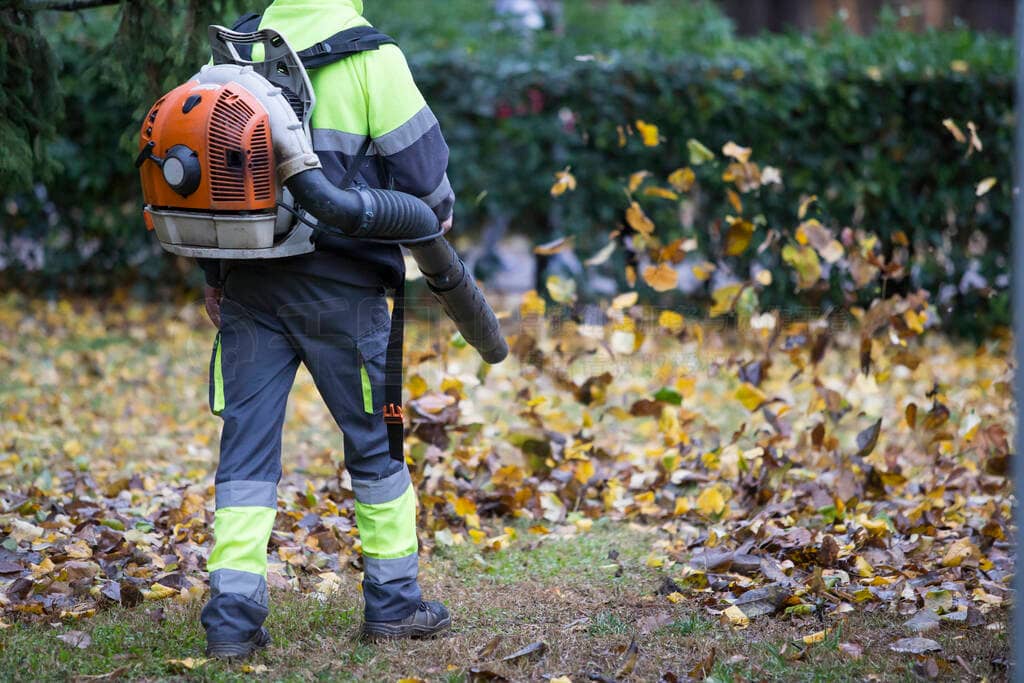
Choosing the right leaf blower battery is the difference between clearing your whole yard on one charge and standing around waiting for a recharge halfway through. But most buying guides stop at "match the voltage and pick a higher Ah" — which misses the two things that actually determine whether a battery suits your job: how much air the blower moves (CFM), and how long the battery sustains it.
This guide connects the dots the spec sheet leaves out. You'll learn how voltage maps to blowing power, the simple watt-hour formula that predicts real runtime, how to match a battery to your specific yard and debris type, and what to check before buying. By the end, you'll be able to look at any battery's numbers and know exactly what it will do for you.
Part 1: Voltage — What It Actually Controls
Voltage is the most misunderstood spec on a leaf blower. It does not directly mean "more power" in a simple way — it indicates how many cells are stacked in the pack and, in practice, how much electrical power the motor can draw. Higher voltage platforms can deliver more watts to the motor, which generally translates to higher potential air volume (CFM) and air speed (MPH).
As a practical rule of thumb for cordless systems, CFM tends to scale with voltage:
| Voltage Class | Typical CFM | Best Suited For |
|---|---|---|
| 18V–20V | ~200–300 CFM | Patios, decks, small hard surfaces, dust |
| 36V–40V | ~350–450 CFM | Mid-sized yards, moderate dry leaf piles |
| 56V–60V | ~500–650 CFM | Large yards, wet leaves, light snow |
| 80V+ | ~700–800+ CFM | Heavy residential, commercial, backpack use |
The critical caveat: voltage alone doesn't define performance. A well-engineered 56V brushless blower can outperform a poorly designed 80V unit. Motor efficiency, impeller geometry, and air-intake design matter as much as the number on the battery. Treat voltage as a starting filter, not a final verdict — and always check the actual CFM and MPH ratings.
You must match your blower's required voltage exactly. Battery platforms are voltage-specific; you cannot put a 40V pack on a 20V tool. The voltage decision is really a decision about which platform to buy into.
Part 2: Amp-Hours and Watt-Hours — The Real Runtime Predictor
Amp-hours (Ah) measure how much charge a battery stores — like the size of a fuel tank. A 4.0Ah battery holds twice the charge of a 2.0Ah battery at the same voltage. But Ah alone is misleading across voltages, because a 2.0Ah pack at 40V holds far more energy than a 2.0Ah pack at 20V.
The metric that actually lets you compare batteries and predict runtime is watt-hours (Wh):
Watt-hours (Wh) = Voltage (V) × Capacity (Ah)
Examples:
- 20V × 5.0Ah = 100 Wh
- 40V × 4.0Ah = 160 Wh
- 56V × 5.0Ah = 280 Wh
Watt-hours are the true "size of the tank." A 40V 4.0Ah battery (160 Wh) will run a blower roughly twice as long as a 40V 2.0Ah pack (72 Wh) under identical conditions — which is exactly why manufacturers advertise "3× the runtime" when comparing a 6.0Ah pack to a 2.0Ah one.
When comparing two batteries for runtime, compare their watt-hours — not their amp-hours. This single shift in how you read the spec sheet is the most useful takeaway in this guide.
Part 3: Real-World Runtime — What to Actually Expect
Runtime depends on watt-hours, the power setting you use, and the efficiency of the motor. Manufacturer "up to" figures are almost always measured on the lowest setting. Here's what 2025-2026 testing across major brands actually shows:
| Battery | Watt-hours | High-Speed Runtime | Turbo Runtime |
|---|---|---|---|
| 20V 5.0Ah | ~100 Wh | 12–18 min | 8–12 min |
| 40V 4.0Ah | ~144 Wh | 30–38 min | 15–20 min |
| 56V 5.0Ah | ~280 Wh | 35–45 min | ~15 min |
| 56V 8.0Ah (×3, backpack) | ~1,300 Wh | 60+ min | ~40 min |
The pattern is clear: turbo mode roughly halves runtime. A 56V 5.0Ah pack might give 45 minutes of steady high-speed clearing but only 15 minutes if you hold turbo continuously. For most users, running at a moderate setting and reserving turbo for stubborn wet patches is the way to make a charge last.
For longer jobs, the practical move is to keep a second charged battery on hand rather than buying one enormous pack — two 4.0Ah batteries are lighter to handle one at a time than a single 8.0Ah pack, and you can recharge one while using the other.
Part 4: Match the Battery to Your Job
This is where the specs become a decision. Pick your scenario:
Small yard, hard surfaces, dry debris (patio, deck, driveway):
An 18V–20V blower (~200–300 CFM) with a 4.0Ah battery (~80 Wh) is sufficient and keeps the tool light. Runtime of 15–25 minutes covers typical quick cleanups.
Mid-sized yard, moderate dry leaf piles:
A 40V blower (~400 CFM) with a 4.0Ah battery (~144 Wh) is the sweet spot for most homeowners — 30–38 minutes of high-speed runtime, manageable weight, and enough power for normal autumn leaf clearing.
Large yard, wet leaves, or light snow:
Step up to 56V–60V (~500–650 CFM) with a 5.0Ah+ battery. The higher CFM lifts matted wet leaves that a 40V unit pushes around ineffectively, and the larger watt-hour capacity covers the bigger area.
Commercial / daily professional use:
80V or backpack systems (700+ CFM) with multiple high-capacity packs. Plan for battery swaps — even large packs deliver only 15–40 minutes at the high power these jobs demand.
The debris rule: dry leaves on hard surfaces need volume (CFM); wet, matted, or stuck debris needs speed and force (MPH and a strong turbo mode). If you regularly deal with wet leaves or pine needles, prioritize a higher-voltage platform with a robust turbo function over a lightweight low-voltage unit.
Part 5: Don't Overlook the Motor — Brushless Efficiency
The battery doesn't work alone. The motor type dramatically affects how far your watt-hours stretch. Brushless motors convert roughly 85–90% of stored energy into airflow, versus 65–70% for older brushed motors — a difference that can extend runtime by up to 50% at the same airspeed.
In practical terms, a brushless 40V blower with a 4.0Ah battery can outlast a brushed unit with the same battery by 12–15% or more, while also running cooler and quieter. When choosing a blower, a brushless motor is worth prioritizing — it makes every watt-hour of battery do more work. Nearly all quality 2025-2026 cordless blowers use brushless motors; if you encounter a brushed model, factor its lower efficiency into your runtime expectations.
Part 6: Brand Compatibility and Battery Quality
Platforms are proprietary. A DeWalt 20V pack won't fit a Makita blower; a Ryobi 40V won't power a Greenworks. When you buy a blower, you're buying into a battery ecosystem. If you already own cordless tools, staying within the same voltage platform lets you share batteries across your blower, trimmer, and chainsaw — a real cost saving and convenience.
On third-party and replacement batteries: aftermarket packs can be cheaper and come in various capacities, but quality varies widely. Poorly made packs risk poor fit, reduced cycle life, and safety issues like overheating or swelling, and may void your tool warranty. If you go aftermarket or need a custom replacement, choose a reputable manufacturer that meets OEM specifications, provides a warranty of at least 12 months, and uses quality lithium-ion cells with proper BMS protection.
Part 7: Battery Care — Make It Last 3–5 Years
A quality lithium-ion leaf blower battery should last 500–800 charge cycles, or roughly 3–5 years, with proper care:
- Recharge before fully draining — deep discharges stress lithium cells.
- Store in a cool, dry place; avoid leaving the battery in a hot shed or freezing garage.
- Use only the charger designed for your battery.
- If storing for the season, charge to roughly 50% and top up every few months.
- Keep terminals clean and dry.
Avoid the most damaging habit: leaving a battery fully discharged for long periods, which can drive cells into deep discharge and permanent capacity loss.
Frequently Asked Questions
What size battery do I need for a leaf blower?
Match the battery to your yard and debris. For small hard surfaces and dry leaves, an 18V–20V blower with a 4.0Ah battery is enough. For a typical mid-sized yard, a 40V blower with a 4.0Ah pack (~144 Wh) gives 30–38 minutes of high-speed runtime — the sweet spot for most homeowners. For large yards, wet leaves, or light snow, step up to 56V–60V with a 5.0Ah+ battery. Always match the voltage to your specific blower's platform.
Does higher voltage mean more power?
Generally yes, but not always. Higher voltage lets the motor draw more watts, which usually means higher CFM and MPH — as a rule of thumb, 18V ≈ 300 CFM, 40V ≈ 400 CFM, 60V ≈ 600 CFM, 80V ≈ 750 CFM. But motor efficiency, impeller design, and air intake matter just as much. A well-designed brushless 56V blower can outperform a poorly designed 80V one. Use voltage as a starting filter, then compare the actual CFM and MPH ratings.
How do I compare runtime between batteries?
Compare watt-hours, not amp-hours. Watt-hours = voltage × amp-hours, and they represent the true energy stored. A 40V 4.0Ah pack (160 Wh) runs roughly twice as long as a 40V 2.0Ah pack (72 Wh). Amp-hours alone are misleading across different voltages, because a 2.0Ah pack at 40V holds far more energy than a 2.0Ah pack at 20V. Expect turbo mode to roughly halve whatever runtime you'd get at high speed.
Can I use a higher Ah battery in my blower?
Yes, as long as the voltage matches your blower's platform. A higher Ah battery stores more energy and runs longer; the main tradeoff is added weight. Note that some blowers require a minimum Ah rating to access their highest power modes — for example, certain high-CFM models need a 4.0Ah or larger pack to run above 50% power, so check your tool's requirements.
How long do leaf blower batteries last?
A quality lithium-ion pack lasts 500–800 charge cycles, roughly 3–5 years with proper care. Recharge before fully draining, store in a cool dry place, use the correct charger, and keep the battery at around 50% charge during long off-season storage. Poor charging habits and storage at full discharge are the main causes of premature capacity loss.
Conclusion
Choosing the right leaf blower battery comes down to three connected questions: how much air does my job need (voltage and CFM), how long must it run (watt-hours), and how efficiently does the tool use that energy (brushless motor). Get those three right and the rest — brand compatibility, care, and replacement choices — falls into place.
For most homeowners, a 40V brushless blower with a 4.0Ah battery hits the ideal balance of power, runtime, and weight. Scale up to 56V+ for large or wet jobs, stay within one battery platform to share packs across your tools, and read watt-hours rather than amp-hours when comparing runtime. Do that, and you'll buy once, clear your whole yard on a charge, and get 3–5 years of reliable service.
- Next:NMC vs NCA Battery Cell: What’s the difference?
- Previous:What Is the Best Voltage for a Chainsaw Battery? 20V to 80V Compared — Power, Runtime & Sizing
Contact Details
Lithium LiFePO4 Batteries and Lithium LiFePO4 Cells Supplier - LiFePO4 Battery Shop
Contact Person: Miss. Elena Wang
WhatsApp : +8615263269227
Skype : +8615263269227
WeChat :15263269227
Email : info@lifepo4batteryshop.com
All Products
- TC Elcon Charger (0)
- Headway Lithium Battery (6)
- Blade Battery (10)
- Semi Solid State Battery (6)
- A123 Battery (6)
- Sinopoly Battery (7)
- GBS Battery (16)
- CALB Battery (26)
- Cylindrical Cell (14)
- Energy Storage System (0)
- Battery Management System (15)
- Sodium ion Battery Cell (4)
- Lithium Titanate Battery (23)
- Ternary Lithium Battery Cell (12)
- REPT Battery (10)
- BYD Battery (5)
- CATL Battery (15)
- Thunder Sky Winston Battery (26)
- EVE Battery (37)
- LiFePO4 Battery Cell (33)
Certification
Customer Reviews
- I have fond memories of our meeting in Shanghai with LiFePO4 Battery Shop Elena. Your company left a strong impression on me with its impressive growth and professionalism. We both value straightforwardness and honesty, which I believe are the most important qualities in any partnership. I am confident that we can build a successful collaboration based on these shared values. —— Robert from USA
- I've been working with LiFePO4 Battery Shop for years, and their reliability is unmatched. While other suppliers frequently change sales teams, LiFePO4 Battery Shop has consistently provided exceptional service with a stable team. Their commitment to quality and customer support truly sets them apart. —— Henry from Australia