
Blog
What Is a LiFePO4 Battery? Complete Guide (2026) — Chemistry, Pros, Cons & Uses
2026-05-20 | Calvin
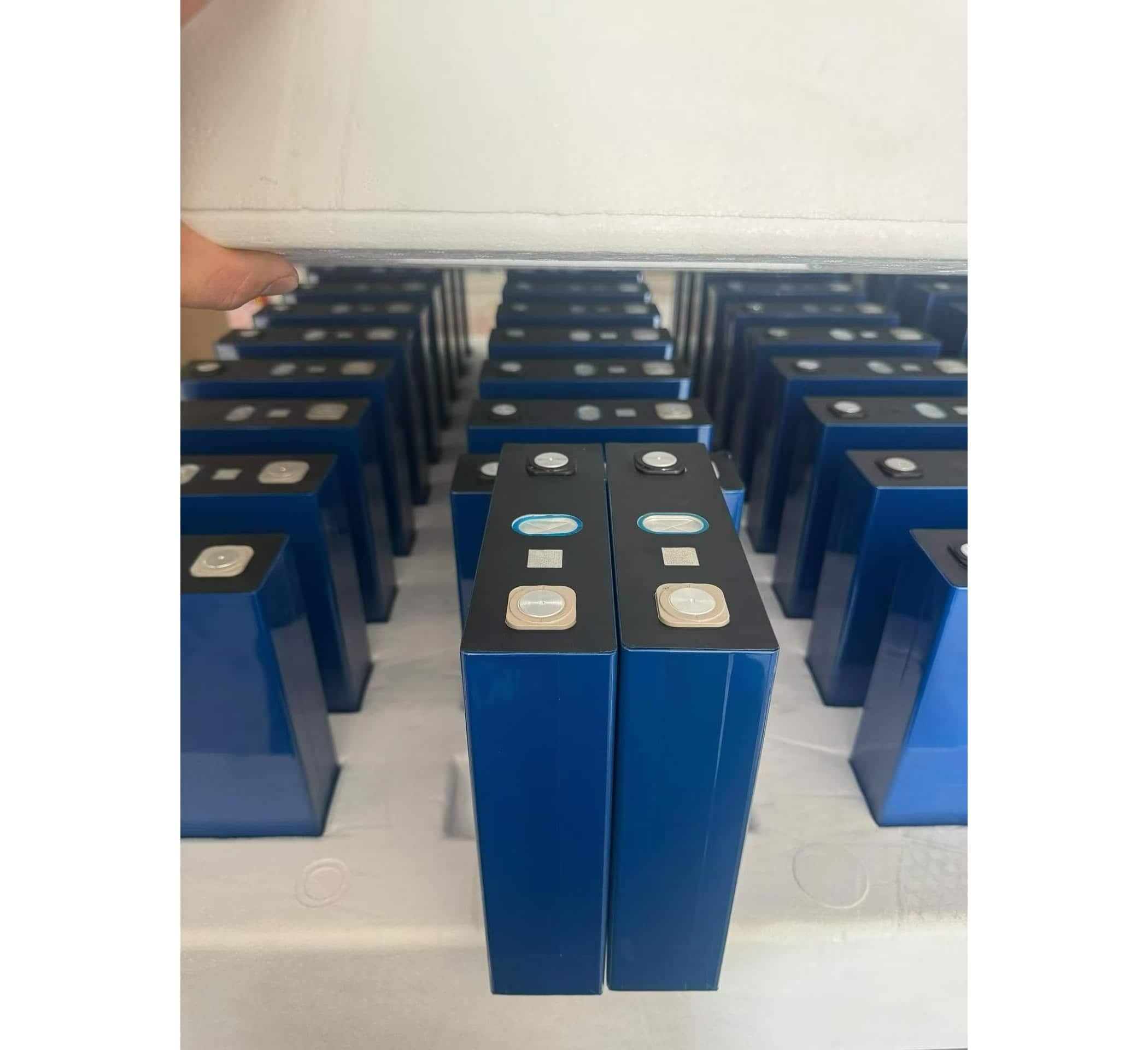
If you've spent any time researching batteries for solar storage, an RV, a boat, or an electric vehicle, you've run into the acronym LiFePO4 — and probably wondered what makes it different from every other lithium battery on the market.
The short answer: a lot.
Lithium iron phosphate (LiFePO4) batteries aren't just another lithium chemistry. They represent a fundamental trade-off — deliberately sacrificing some energy density in exchange for vastly superior safety, longevity, and thermal stability. That trade-off turns out to be the right one for the vast majority of real-world energy storage applications.
This guide covers everything: the underlying chemistry, precise performance data, honest drawbacks, a head-to-head against NMC and lead-acid, and a clear breakdown of where LiFePO4 wins — and where it doesn't.
Part 1: What Is a LiFePO4 Battery?
A LiFePO4 battery (pronounced "LFP" or "lithium iron phosphate battery") is a rechargeable lithium-ion battery that uses lithium iron phosphate (LiFePO4) as its cathode material, with a graphite carbon electrode as the anode.
This chemistry was first proposed by John Goodenough's research group at the University of Texas in 1997. Since then, it has matured into one of the dominant technologies for stationary energy storage and medium-duty electric vehicles.
How it works at the cell level
During charging, lithium ions move from the cathode (LiFePO4) through the electrolyte and intercalate into the graphite anode. During discharge, this process reverses — lithium ions return to the cathode, generating an electrical current in the external circuit.
What makes LiFePO4 structurally unique is its olivine crystal structure. The phosphorus and oxygen atoms are bonded together by extremely strong covalent bonds, creating a rigid three-dimensional framework that is highly resistant to thermal or mechanical stress. This is the root cause of its exceptional safety profile — it simply doesn't break down the way other lithium chemistries do under abuse conditions.
Key baseline specifications
| Parameter | LiFePO4 Value |
|---|---|
| Nominal cell voltage | 3.2 V |
| Fully charged voltage | 3.65 V |
| Fully discharged voltage | 2.5 V |
| Typical energy density | 100–180 Wh/kg |
| Round-trip efficiency | 92–98% |
| Self-discharge rate | ~2–3% per month |
| Thermal runaway threshold | ~270°C (518°F) |
| Typical cycle life | 3,000–6,000+ cycles |
Part 2: The Real Advantages of LiFePO4 Batteries
1. Exceptional safety — the chemistry doesn't lie
The single biggest differentiator between LiFePO4 and other lithium chemistries is thermal stability. The olivine crystal structure means that even at elevated temperatures, the cathode doesn't release oxygen — and without oxygen, there's no fuel for combustion.
LiFePO4's thermal runaway threshold sits at approximately 270°C (518°F). For comparison, NMC batteries reach thermal runaway at around 210°C (410°F), and the breakdown is far more energetic, releasing oxygen that can ignite the electrolyte. LiFePO4 won't catch fire even if punctured, crushed, or significantly overcharged — at worst, it produces some smoke.
This is why LiFePO4 is the chemistry of choice for enclosed spaces: RVs, boats, homes, and medical environments where a thermal event is simply not acceptable.
2. Industry-leading cycle life
Cycle life is where LiFePO4 truly separates itself economically. Under standard testing conditions (25°C, 80% depth of discharge, end of life at 80% state of health), LiFePO4 cells typically deliver 3,000 to 6,000 full charge-discharge cycles. Some industrial-grade cells and optimized systems exceed 10,000 cycles under controlled conditions.
To put that in real terms: a battery cycled once per day reaches 3,000 cycles in just over 8 years. At 6,000 cycles, that's 16+ years of daily use.
By contrast, NMC typically delivers 1,000–3,000 cycles, and lead-acid struggles to reach 300–500 deep cycles. On a per-cycle cost basis, LiFePO4 consistently wins — even when its upfront price is higher.
3. Flat discharge curve = stable, usable power
LiFePO4 maintains a remarkably flat voltage curve throughout most of its discharge range. This means the voltage stays close to 3.2V per cell from roughly 90% capacity all the way down to 20%, then drops off. In practice, your devices see stable, consistent power throughout the entire discharge cycle — not the declining voltage you'd experience with lead-acid.
This is especially valuable in solar applications and off-grid systems, where consistent power delivery matters more than peak capacity.
4. High round-trip efficiency
LiFePO4 batteries typically achieve 92–98% round-trip efficiency — meaning 92–98 cents of every dollar of electricity you put in comes back out as usable power. Lead-acid batteries, by comparison, return only 75–85%. For a solar system cycling 10 kWh per day, that efficiency gap saves hundreds of dollars annually.
5. Deep discharge tolerance
LiFePO4 can safely discharge to 95–100% depth of discharge (DoD) without meaningful damage to the cells. Lead-acid batteries should not regularly be discharged below 50% DoD without significant lifespan penalties. NMC systems are often software-limited to 80–90% DoD to protect the cells.
In a 100Ah LiFePO4 battery, you can actually access close to 100Ah. In a 100Ah lead-acid battery, you should only plan on using 50Ah.
6. Low self-discharge
When stored, LiFePO4 loses charge very slowly — approximately 2–3% per month, compared to 5–10% for NMC and 15–20% for lead-acid. This makes it an excellent choice for seasonal applications (boats stored over winter, backup power systems that sit idle for months) and emergency power reserves.
7. No memory effect
Unlike older nickel-based chemistries, LiFePO4 has no memory effect. You can charge it from any state of charge without degrading the battery, and partial charges are completely fine — ideal for solar systems where charging is inherently partial and irregular.
8. Environmentally responsible materials
LiFePO4 contains no cobalt, no nickel, and no manganese — three materials associated with significant supply chain, environmental, and ethical concerns. Iron and phosphate are abundant, inexpensive, and relatively low-impact materials. LiFePO4 batteries are also fully recyclable.
Part 3: Honest Drawbacks of LiFePO4 Batteries
1. Lower energy density than NMC
LiFePO4 typically achieves 100–180 Wh/kg. NMC batteries range from 160–270 Wh/kg. For the same energy storage capacity, an LiFePO4 battery will be roughly 20–40% larger and heavier than an NMC equivalent.
For most stationary applications — home solar storage, RV house batteries — this is a non-issue. For applications where weight and volume are constrained (long-range electric passenger cars, aerospace, portable electronics), NMC's density advantage becomes meaningful.
2. Lower nominal voltage per cell
At 3.2V per cell, LiFePO4 is lower than NMC (3.7V) or lithium cobalt oxide (3.6V). Building a 48V battery bank requires 15 LiFePO4 cells in series, versus 13 NMC cells. This adds complexity and marginal cost to the cell arrangement, though modern battery management systems handle this seamlessly.
3. Cold temperature performance limitations
LiFePO4's performance drops noticeably in cold conditions. Below 0°C, charging should be restricted or halted entirely to prevent lithium plating on the anode, which permanently degrades the battery. At -20°C, usable capacity can fall to around 60% of rated capacity.
Many quality LiFePO4 batteries now include built-in self-heating (controlled by the BMS) that activates below freezing to warm the cells before allowing charge current. If you're in a cold climate, verify your battery has this feature before purchasing.
4. Higher upfront cost than lead-acid
LiFePO4 batteries cost more per kilowatt-hour upfront than lead-acid. However, when you account for usable capacity (DoD), cycle life, and efficiency, the levelized cost of storage (LCOS) over the battery's lifetime is typically lower. The math consistently favors LiFePO4 for anyone planning to use the battery for more than 2–3 years.
Prices have fallen significantly — from roughly $400/kWh in 2020 to around $240/kWh in 2025 — and continue to decline as manufacturing scales.
5. Requires a compatible charger and BMS
LiFePO4 has a specific charge profile (CC/CV to 3.65V per cell) that differs from lead-acid and NMC. Charging with a mismatched charger risks undercharging, overcharging, or accelerated degradation. Always use a charger explicitly rated for LiFePO4 chemistry.
Part 4: LiFePO4 vs. NMC vs. Lead-Acid — Full Comparison
| Parameter | LiFePO4 (LFP) | NMC Lithium-Ion | Lead-Acid (AGM) |
|---|---|---|---|
| Energy density | 100–180 Wh/kg | 160–270 Wh/kg | 30–50 Wh/kg |
| Nominal cell voltage | 3.2 V | 3.7 V | 2.0 V |
| Cycle life | 3,000–6,000+ | 1,000–3,000 | 300–500 |
| Usable DoD | 95–100% | 80–90% | 50% |
| Round-trip efficiency | 92–98% | 90–95% | 75–85% |
| Thermal runaway threshold | ~270°C | ~210°C | N/A (different risk) |
| Cold performance | Drops below 0°C | Moderate cold tolerance | Poor below -15°C |
| Self-discharge/month | 2–3% | 3–5% | 15–20% |
| Cobalt/nickel content | None | Yes (significant) | No |
| Upfront cost | Medium-high | Medium-high | Low |
| 10-year total cost | Low | Medium | High |
| Best for | Solar, RV, marine, stationary | Long-range EVs, portable electronics | Low-use backup, budget |
The bottom line: For most energy storage applications — solar backup, RV, marine, off-grid — LiFePO4 is the correct answer. NMC wins where weight and volume are truly constrained (performance EVs, laptop computers). Lead-acid remains relevant only where upfront cost is the dominant constraint and cycle life expectations are low.
Part 5: LiFePO4 Applications — Where This Chemistry Dominates
Solar energy storage (residential and commercial)
LiFePO4 has become the de-facto standard for home solar battery systems. Its flat discharge curve pairs well with solar's variable generation, its 92–98% efficiency minimizes losses, and its 6,000+ cycle life means a battery cycled daily will last 15–20 years — longer than most solar installations.
Electric vehicles — buses, trucks, and commercial fleets
While NMC dominates premium passenger EVs (where range per kilogram is critical), LiFePO4 has taken over the commercial EV space. Electric buses, delivery vehicles, forklifts, and light-commercial trucks overwhelmingly use LFP chemistry because the safety and cycle life advantages outweigh the weight penalty at scale.
Marine and RV house batteries
LiFePO4 is the ideal chemistry for house batteries in boats and RVs. It handles daily deep cycles gracefully, tolerates vibration and temperature variation, produces no off-gas (unlike flooded lead-acid), is safe in enclosed spaces, and at roughly half the weight of equivalent lead-acid, it meaningfully reduces vessel or vehicle weight.
Off-grid and backup power systems
For telecom tower backup, remote cabins, emergency power systems, and any application requiring reliable standby power, LiFePO4's low self-discharge and long shelf life make it the obvious choice. A well-maintained LiFePO4 battery stored at 50% state of charge can sit for 6–12 months and return to full service.
Medical equipment
Hospitals and medical device manufacturers use LiFePO4 in life-critical equipment specifically because it doesn't pose fire or explosion risk. In environments where a battery failure could be catastrophic, the olivine chemistry's inherent stability is a non-negotiable advantage.
Trolling motors and marine propulsion
LiFePO4 has largely replaced lead-acid in tournament fishing and recreational boating for trolling motors. The weight savings (a 100Ah LiFePO4 weighs roughly 13 kg vs. 28 kg for AGM), combined with full usable capacity and consistent power delivery through the entire discharge curve, make it a clear performance upgrade.
Frequently Asked Questions
- What is the main disadvantage of LiFePO4?
- The primary disadvantage is lower energy density compared to NMC lithium batteries — roughly 100–180 Wh/kg versus 160–270 Wh/kg for NMC. This means a LiFePO4 battery will be larger and heavier than an NMC battery of the same capacity. Cold temperature performance is a secondary limitation; charging below 0°C requires a battery with self-heating capability.
- How long do LiFePO4 batteries last?
- Under standard conditions, LiFePO4 batteries typically deliver 3,000–6,000 full charge-discharge cycles before capacity falls to 80% of original. Cycled daily, this equals 8–16 years of service life. With partial cycles and optimized charge management, service life can extend considerably beyond that.
- Can I use a regular lithium charger on a LiFePO4 battery?
- No. LiFePO4 requires a charger specifically programmed for its charge profile — a constant current phase to 3.65V per cell, followed by constant voltage at that level. Generic lithium-ion chargers (designed for NMC at 4.2V per cell) will overcharge LiFePO4 cells and cause damage. Always use a charger explicitly rated for LiFePO4.
- Is LiFePO4 better than AGM?
- For most deep-cycle applications, yes — significantly. LiFePO4 offers roughly 10× the cycle life, double the usable capacity (95% DoD vs. 50%), higher efficiency, lower weight, and no maintenance requirements. The upfront cost is higher, but the lifetime cost of ownership typically favors LiFePO4 for anyone planning more than 2–3 years of regular use.
- Is LiFePO4 the same as lithium-ion?
- LiFePO4 is a type of lithium-ion battery — the term "lithium-ion" describes a broad family of chemistries, not a single technology. LiFePO4 (lithium iron phosphate) uses a different cathode material than common lithium-ion batteries like NMC (nickel manganese cobalt) or NCA (nickel cobalt aluminum), resulting in different performance, safety, and longevity characteristics.
Conclusion
LiFePO4 batteries aren't the right choice for every application — nothing is. If you're building a high-performance electric sports car and every kilogram matters, NMC's energy density advantage is real and relevant. If you need a cheap battery to start an engine a few times a week, lead-acid still does that cheaply.
But for the vast majority of energy storage use cases — solar backup, off-grid living, RV and marine house power, commercial vehicle electrification, and critical backup power — LiFePO4 is the clear engineering choice. The combination of inherent safety (no thermal runaway risk), genuine decade-plus service life, high efficiency, and deep discharge capability creates a value proposition that competing chemistries can't match on a total cost basis.
The price trend is firmly downward, the technology is mature, and the manufacturing ecosystem is robust. If you've been waiting for LiFePO4 to become the obvious choice, that moment is now.
- Next:AGM Battery Pros and Cons: A Complete Guide for 2026
- Previous:How Long Does a 3.7V Lithium-Ion Battery Last? Lifespan, Cycles & Proven Maintenance Tips
Contact Details
Lithium LiFePO4 Batteries and Lithium LiFePO4 Cells Supplier - LiFePO4 Battery Shop
Contact Person: Miss. Elena Wang
WhatsApp : +8615263269227
Skype : +8615263269227
WeChat :15263269227
Email : info@lifepo4batteryshop.com
All Products
- TC Elcon Charger (0)
- Headway Lithium Battery (6)
- Blade Battery (10)
- Semi Solid State Battery (6)
- A123 Battery (6)
- Sinopoly Battery (7)
- GBS Battery (16)
- CALB Battery (25)
- Cylindrical Cell (9)
- Energy Storage System (0)
- Battery Management System (15)
- Sodium ion Battery Cell (4)
- Lithium Titanate Battery (22)
- Ternary Lithium Battery Cell (12)
- REPT Battery (10)
- BYD Battery (5)
- CATL Battery (15)
- Thunder Sky Winston Battery (26)
- EVE Battery (35)
- LiFePO4 Battery Cell (20)
Certification
Customer Reviews
- I have fond memories of our meeting in Shanghai with LiFePO4 Battery Shop Elena. Your company left a strong impression on me with its impressive growth and professionalism. We both value straightforwardness and honesty, which I believe are the most important qualities in any partnership. I am confident that we can build a successful collaboration based on these shared values. —— Robert from USA
- I've been working with LiFePO4 Battery Shop for years, and their reliability is unmatched. While other suppliers frequently change sales teams, LiFePO4 Battery Shop has consistently provided exceptional service with a stable team. Their commitment to quality and customer support truly sets them apart. —— Henry from Australia