
Blog
What Is a Battery Charge? Complete Guide to Battery Charging Process
2026-08-23 | Calvin
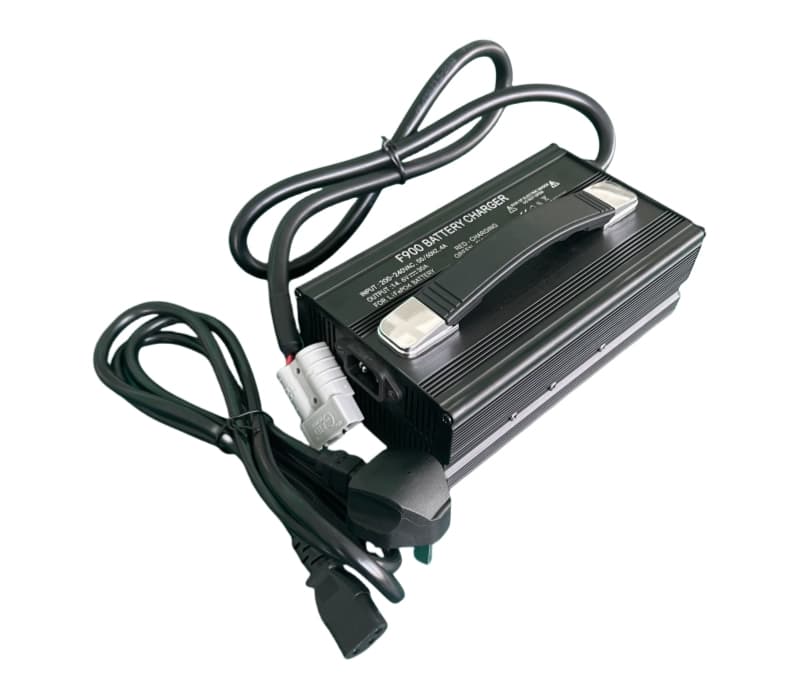
A battery charge refers to the amount of electrical energy stored inside a battery and available to power an electrical device. Battery charging is the process of restoring that stored energy after the battery has been discharged.
Although charging a battery appears simple from the outside, the process involves carefully controlled electrical and chemical reactions inside the battery. A charger must provide the correct voltage and current while managing heat, charging speed, and battery protection.
Understanding what a battery charge means, how battery charging works, and how different battery types require different charging methods can help you improve battery performance, increase lifespan, and avoid common charging mistakes.
Quick Answer: What Is a Battery Charge?
A battery charge is the amount of electrical energy currently stored inside a rechargeable battery. It determines how long a battery can continue powering a device before it needs to be charged again.
Battery charging is the process of adding electrical energy back into a rechargeable battery using an external power source such as a wall charger, solar charger, charging station, or battery charger.
| Term | Meaning |
|---|---|
| Battery Charge | The electrical energy stored inside a battery. |
| Battery Charging | The process of restoring energy into a rechargeable battery. |
| Battery Charger | A device that supplies controlled electrical energy to charge a battery. |
In simple terms:
- Discharging: Chemical energy inside the battery is converted into electrical energy.
- Charging: Electrical energy from the charger is converted back into stored chemical energy.
Battery Charge vs Battery Charging: What Is the Difference?
Many people use the words "battery charge" and "battery charging" interchangeably, but they describe different concepts.
What Does Battery Charge Mean?
Battery charge describes the amount of energy available inside the battery at a specific moment.
For example:
- A smartphone showing 100% means it has a full battery charge.
- A laptop showing 20% means only a small portion of usable energy remains.
- An electric vehicle showing 80% has 80% of its available battery energy remaining.
What Does Battery Charging Mean?
Battery charging describes the process of transferring electrical energy from an external power source into the battery.
During charging, the battery stores this energy through reversible chemical reactions. Rechargeable batteries are designed so these reactions can happen repeatedly.
Why Proper Battery Charging Matters
Proper battery charging is important because charging directly affects battery lifespan, safety, and performance.
Using the correct charging method helps:
- Maintain battery capacity
- Reduce unnecessary heat generation
- Prevent overcharging damage
- Improve charging efficiency
- Extend overall battery life
Different battery chemistries require different charging methods. A lithium-ion battery, for example, cannot always be charged using the same method as a lead-acid battery because their internal chemical processes are different.
How Is Battery Charge Measured?
Battery charge can be measured using several different units depending on the battery size and application.
State of Charge (SOC)
State of Charge (SOC) represents the remaining battery capacity as a percentage.
| SOC Level | Meaning |
|---|---|
| 100% | Battery is fully charged. |
| 50% | Approximately half of usable energy remains. |
| 10% | Battery is close to empty. |
Amp-Hours (Ah)
Amp-hours measure the amount of electrical charge a battery can deliver over time.
For example, a 100Ah battery can theoretically provide:
- 100 amps for 1 hour
- 20 amps for 5 hours
- 10 amps for 10 hours
Milliamp-Hours (mAh)
Milliamp-hours are commonly used for smaller batteries found in portable electronics.
Common examples include:
- Smartphones
- Wireless earbuds
- Small rechargeable devices
Watt-Hours (Wh)
Watt-hours measure total stored energy by combining battery voltage and capacity.
The formula is:
Watt-hours (Wh) = Voltage (V) × Amp-hours (Ah)
Example:
A 12V 100Ah battery contains:
12V × 100Ah = 1,200Wh
Kilowatt-Hours (kWh)
Kilowatt-hours are used for larger battery systems such as electric vehicles and energy storage systems.
| Application | Common Measurement |
|---|---|
| Smartphones | mAh |
| Laptops | Wh |
| Electric Vehicles | kWh |
| Home Energy Storage | kWh |
What Is Battery Charging?
Battery charging is the process of supplying electrical energy to a rechargeable battery so it can store energy again.
When a battery powers a device, stored chemical energy is converted into electrical energy. Charging reverses this process by using electricity to rebuild the battery's chemical energy.
This reversible process allows rechargeable batteries to be used through many charge and discharge cycles.
How Does Battery Charging Work?
Battery charging works through electrochemical reactions inside the battery. A charger pushes electrical energy into the battery, causing ions to move back to their stored positions inside the battery materials.
A rechargeable battery contains several important components:
- Anode
- Cathode
- Electrolyte
- Separator
- Battery Management System (BMS) in many modern battery packs
Anode
The anode is the electrode where energy is stored during charging. In lithium-ion batteries, lithium ions move back toward the anode during the charging process.
Cathode
The cathode is the electrode involved in accepting and releasing ions during charging and discharging.
Electrolyte
The electrolyte allows ions to move between the anode and cathode while preventing direct electron movement inside the battery.
Battery Charger
A battery charger controls the charging process by supplying the correct voltage and current required by the battery.
What Happens Inside a Battery During Charging?
During charging, electrical energy from the charger is converted into stored chemical energy inside the battery. The charging process reverses the chemical reactions that occur when the battery provides power to a device.
Inside a rechargeable battery, charging involves the movement of electrons through the external circuit and the movement of ions through the electrolyte between the electrodes.
- Electrical energy enters the battery from the charger.
- Electrons move through the external circuit.
- Ions move through the electrolyte.
- Chemical energy is restored inside the battery materials.
- The battery's State of Charge (SOC) increases.
The Battery Charging Process Explained
Modern batteries use controlled charging processes to safely restore energy. The charger continuously adjusts voltage and current based on the battery condition.
Step 1: Electrical Energy Enters the Battery
When a charger is connected, it supplies electrical energy to the battery terminals. The charger must provide a voltage higher than the battery's current voltage to push energy back into the cells.
Step 2: Ions Return to Their Stored Position
During charging, ions move back toward their original electrodes. This restores the chemical balance that allows the battery to release energy again during discharge.
Step 3: Battery Capacity Increases
As charging continues, more energy is stored inside the battery. The battery management system or charger monitors voltage, current, and temperature to maintain safe operation.
Step 4: Charging Slows Near Full Capacity
As the battery approaches full charge, it becomes harder to store additional energy. The charger reduces current to protect the battery and complete the charging process safely.
Battery Charging Stages
Different battery chemistries use different charging methods. Lithium-ion batteries typically use CC/CV charging, while lead-acid batteries commonly use multi-stage charging.
Lithium-Ion Battery Charging Process (CC/CV)
Most lithium-ion batteries use a charging method called Constant Current / Constant Voltage (CC/CV).
Stage 1: Constant Current (CC)
During the constant current stage, the charger provides a steady charging current while the battery voltage gradually increases.
This stage is responsible for restoring most of the battery capacity quickly.
Stage 2: Constant Voltage (CV)
When the battery reaches its maximum charging voltage, the charger maintains a fixed voltage while gradually reducing charging current.
This final stage allows the battery to reach full charge while preventing excessive voltage stress.
Why Lithium Batteries Need Controlled Charging
Lithium batteries require precise charging control because incorrect voltage or current can damage cells.
A proper lithium battery charging system helps prevent:
- Overcharging
- Excessive heat generation
- Cell imbalance
- Reduced battery lifespan
Lead-Acid Battery Charging Process
Lead-acid batteries use a different charging method compared with lithium batteries. They typically follow a three-stage charging process.
Stage 1: Bulk Charging
During bulk charging, the charger provides a higher current to restore most of the battery capacity quickly.
Stage 2: Absorption Charging
During absorption charging, the charger maintains voltage while reducing current. This allows the remaining battery capacity to be restored safely.
Stage 3: Float Charging
Float charging maintains the battery at a full charge level using a lower voltage. This is commonly used for backup batteries that remain connected for long periods.
NiMH Battery Charging Process
Nickel-metal hydride (NiMH) batteries are commonly used in rechargeable AA and AAA batteries, cameras, and household electronics.
Common NiMH charging methods include:
- Slow charging
- Trickle charging
- Controlled fast charging
Because NiMH batteries generate heat during charging, temperature monitoring is important for safe operation.
Types of Battery Chargers
Battery chargers are designed for different applications and battery chemistries. Choosing the correct charger improves charging efficiency and battery lifespan.
Standard Battery Chargers
Standard chargers provide a fixed charging output and are usually designed for simple charging applications.
Advantages:
- Low cost
- Simple operation
- Suitable for basic applications
Limitations:
- Less charging control
- May not optimize battery health
- Not suitable for every battery chemistry
Smart Battery Chargers
Smart chargers automatically adjust charging voltage and current based on battery condition.
Benefits include:
- Better battery protection
- Improved charging efficiency
- Reduced risk of overcharging
- Longer battery service life
Fast Battery Chargers
Fast chargers reduce charging time by delivering higher charging current.
They are commonly used for:
- Electric vehicles
- Smartphones
- Power tools
- High-capacity lithium batteries
However, fast charging creates more heat, and frequent high-current charging may increase battery stress if the battery system is not designed for it.
Solar Battery Chargers
Solar chargers convert sunlight into electrical energy and are widely used in off-grid applications.
Common applications include:
- RV systems
- Marine batteries
- Camping equipment
- Remote monitoring systems
- Solar energy storage
How Long Does It Take to Charge a Battery?
Battery charging time depends on several factors, including battery capacity, charger output, battery chemistry, temperature, and the battery's current state of charge.
A larger battery requires more energy and usually takes longer to charge. A higher-output charger can reduce charging time, but the charger must always match the battery's maximum charging capability.
Battery Charging Time Formula
A simple way to estimate charging time is:
Charging Time (Hours) = Battery Capacity (Ah) ÷ Charger Current (A)
Example: Charging a 100Ah Battery
| Charger Output | Estimated Charging Time |
|---|---|
| 10A Charger | About 10 hours |
| 20A Charger | About 5 hours |
| 50A Charger | About 2 hours |
This calculation provides an estimate. Real charging time is usually slightly longer because charging efficiency is not 100% and the charging current decreases near full capacity.
Example: Charging a 100Ah LiFePO4 Battery
A 12V 100Ah LiFePO4 battery stores approximately:
12V × 100Ah = 1,200Wh
Using different chargers:
| Charger | Approximate Charging Time |
|---|---|
| 10A LiFePO4 Charger | 10–12 hours |
| 20A LiFePO4 Charger | 5–6 hours |
| 50A LiFePO4 Charger | 2–3 hours |
Factors That Affect Battery Charging Speed
Charging speed is influenced by more than just charger power. Several factors determine how quickly a battery can safely accept energy.
1. Battery Capacity
Battery capacity is one of the biggest factors affecting charging time.
A small battery with a low capacity charges faster than a large battery with the same charger.
Example:
- A 20Ah battery charges faster than a 100Ah battery using the same charger.
- A 200Ah battery requires significantly more charging time than a 100Ah battery.
2. Charger Output Current
The charger's current rating directly affects charging speed.
A higher amp charger can charge faster, but the battery must be designed to safely accept that current.
Using a charger with excessive current can cause:
- Excess heat
- Battery stress
- Reduced lifespan
- Safety risks
3. Battery Chemistry
Different battery chemistries accept energy at different rates.
| Battery Type | Charging Characteristics |
|---|---|
| LiFePO4 | Fast charging, high efficiency, stable performance |
| Lithium-Ion | Fast charging with controlled CC/CV method |
| Lead-Acid | Slower charging with multiple charging stages |
| NiMH | Requires temperature-controlled charging |
4. Battery State of Charge
A battery usually charges faster when it is deeply discharged and slower when it approaches full capacity.
This happens because chargers reduce current during the final charging stage to protect the battery.
5. Temperature
Temperature has a major impact on charging performance and safety.
- Very cold temperatures can slow charging or prevent charging.
- High temperatures can increase battery stress and reduce lifespan.
- Moderate temperatures usually provide the best charging performance.
What Is Charging Current?
Charging current is the amount of electrical current flowing from the charger into the battery during charging. It is measured in amps (A).
The charging current determines how quickly energy enters the battery.
Example:
| Battery | Charger | Charging Current |
|---|---|---|
| 100Ah Battery | 10A Charger | Slow charging |
| 100Ah Battery | 50A Charger | Fast charging |
What Is Battery Charging C-Rate?
C-rate describes how quickly a battery is charged or discharged compared with its total capacity.
The formula is:
C-rate = Charging Current ÷ Battery Capacity
Examples
For a 100Ah battery:
- 10A charging current = 0.1C
- 50A charging current = 0.5C
- 100A charging current = 1C
A higher C-rate means faster charging, but not every battery is designed to handle extremely high charging speeds.
What Is a Battery Charge Cycle?
A battery charge cycle refers to the process of using and restoring the equivalent of 100% of a battery's capacity.
A cycle does not always mean charging from 0% to 100% in one session.
For example:
- Using 50% of a battery today and charging it back
- Using another 50% tomorrow and charging again
Together, these two partial uses equal approximately one complete charge cycle.
How Charging Affects Battery Lifespan
Proper charging habits can significantly improve battery lifespan.
Good charging practices include:
- Using a charger designed for the correct battery chemistry
- Avoiding excessive heat during charging
- Preventing overcharging
- Avoiding unnecessary deep discharge
- Following manufacturer charging limits
Battery Charging Safety Tips
Safe charging practices help prevent battery damage and improve reliability.
- Always use the correct charger voltage.
- Do not charge damaged, swollen, or leaking batteries.
- Avoid charging batteries in extreme temperatures.
- Do not exceed recommended charging current.
- Monitor unusual heat, smell, or battery behavior.
- Use batteries with proper protection systems such as BMS when required.
Practical Battery Charging Examples
Understanding charging becomes easier when looking at real-world applications.
Example 1: Smartphone Battery Charging
A smartphone battery is usually measured in milliamp-hours (mAh).
For example:
- A 5,000mAh smartphone battery stores more energy than a 3,000mAh battery.
- A fast charger can reduce charging time by increasing charging current.
- The charging system reduces power near full capacity to protect battery health.
Example 2: 12V 100Ah LiFePO4 Battery Charging
A 12V 100Ah LiFePO4 battery contains approximately:
12V × 100Ah = 1,200Wh
Using a 20A charger:
100Ah ÷ 20A = approximately 5 hours
In real conditions, charging may take slightly longer because the charger reduces current during the final charging stage.
Example 3: Electric Vehicle Battery Charging
Electric vehicle batteries are measured in kilowatt-hours (kWh).
For example:
- A larger EV battery stores more energy and provides longer driving range.
- Home chargers usually provide slower charging over several hours.
- DC fast chargers provide higher charging power and reduce charging time.
Example 4: Solar Energy Storage Battery Charging
Solar batteries store energy collected from solar panels during the day and release it when needed.
Charging speed depends on:
- Solar panel output
- Weather conditions
- Battery capacity
- Charge controller performance
Common Battery Charging Mistakes to Avoid
Many battery problems are caused by incorrect charging practices rather than battery defects.
Using the Wrong Charger
Every battery chemistry has specific charging requirements. A charger designed for one battery type may damage another type.
Examples:
- Lithium batteries require lithium-compatible chargers.
- Lead-acid batteries require appropriate charging stages.
- NiMH batteries require controlled charging methods.
Charging in Extreme Temperatures
Temperature strongly affects battery charging performance.
- Very cold temperatures can slow charging or prevent charging.
- High temperatures increase battery stress and aging.
Using Excessive Charging Current
A higher amp charger does not always mean better charging. The battery must be designed to accept that charging rate.
Ignoring Battery Management Systems
Many lithium battery packs include a Battery Management System (BMS) that monitors:
- Cell voltage
- Charging current
- Discharging current
- Temperature
- State of Charge
A properly configured BMS helps protect lithium batteries from unsafe charging conditions.
How to Extend Battery Life Through Better Charging
Following good charging practices can significantly improve battery performance and reduce replacement costs.
- Use the correct charger for your battery chemistry.
- Avoid exposing batteries to extreme temperatures.
- Prevent repeated deep discharge.
- Use smart charging systems whenever possible.
- Store batteries according to manufacturer recommendations.
- Monitor battery condition regularly.
Frequently Asked Questions About Battery Charging
What happens if I use the wrong charger?
Using the wrong charger can provide incorrect voltage or current, which may reduce battery performance, damage internal components, or create safety risks.
Can a battery charge while the device is being used?
Yes, many modern devices support charging while operating. However, using a device during charging may increase heat and slow the charging process.
Why does battery charging slow down near 100%?
Battery charging slows near full capacity because the charger reduces current to safely complete charging and prevent overvoltage.
What is the best charging method for lithium batteries?
Most lithium-ion batteries use Constant Current / Constant Voltage (CC/CV) charging because it provides efficient charging while protecting battery cells.
How can I calculate battery charging time?
A simple estimate is:
Charging Time = Battery Capacity (Ah) ÷ Charger Current (A)
For example, a 100Ah battery with a 20A charger takes approximately 5 hours under ideal conditions.
Does fast charging damage batteries?
Fast charging does not automatically damage batteries if the battery and charger are designed for it. However, frequent high-speed charging can create additional heat and may increase battery stress.
Final Thoughts: Understanding Battery Charge and Charging
A battery charge represents the electrical energy stored inside a battery, while battery charging is the process used to restore that energy after discharge.
Although charging may appear simple, it is a carefully controlled process involving voltage regulation, current management, and chemical reactions inside the battery.
Choosing the correct charger, understanding your battery chemistry, and following proper charging practices can significantly improve battery performance, safety, and lifespan.
Whether you are charging a smartphone, electric vehicle, solar storage system, RV battery, or industrial energy storage solution, understanding how battery charging works helps you get the best performance from your battery investment.
- Next:Kayak Trolling Motor Speed Guide: How Fast Can a Motorized Kayak Go?
- Previous:Nominal Capacity vs Rated Capacity of Lithium Batteries: What Is the Difference?
Contact Details
Lithium LiFePO4 Batteries and Lithium LiFePO4 Cells Supplier - LiFePO4 Battery Shop
Contact Person: Miss. Elena Wang
WhatsApp : +8615263269227
Skype : +8615263269227
WeChat :15263269227
Email : info@lifepo4batteryshop.com
All Products
- Forklift Battery Charger (0)
- TC Elcon Charger (5)
- Headway Lithium Battery (6)
- Blade Battery (10)
- Semi Solid State Battery (6)
- A123 Battery (6)
- Sinopoly Battery (7)
- GBS Battery (18)
- CALB Battery (26)
- Cylindrical Cell (14)
- Energy Storage System (0)
- Battery Management System (15)
- Sodium ion Battery Cell (4)
- Lithium Titanate Battery (23)
- Ternary Lithium Battery Cell (12)
- REPT Battery (10)
- BYD Battery (5)
- CATL Battery (15)
- Thunder Sky Winston Battery (26)
- EVE Battery (37)
- LiFePO4 Battery Cell (39)
Certification

Customer Reviews
- I have fond memories of our meeting in Shanghai with LiFePO4 Battery Shop Elena. Your company left a strong impression on me with its impressive growth and professionalism. We both value straightforwardness and honesty, which I believe are the most important qualities in any partnership. I am confident that we can build a successful collaboration based on these shared values. —— Robert from USA
- I've been working with LiFePO4 Battery Shop for years, and their reliability is unmatched. While other suppliers frequently change sales teams, LiFePO4 Battery Shop has consistently provided exceptional service with a stable team. Their commitment to quality and customer support truly sets them apart. —— Henry from Australia