
Blog
UPS with Lithium Ion Battery: Benefits, Sizing, Safety, and Buying Guide
2026-10-18 | Calvin
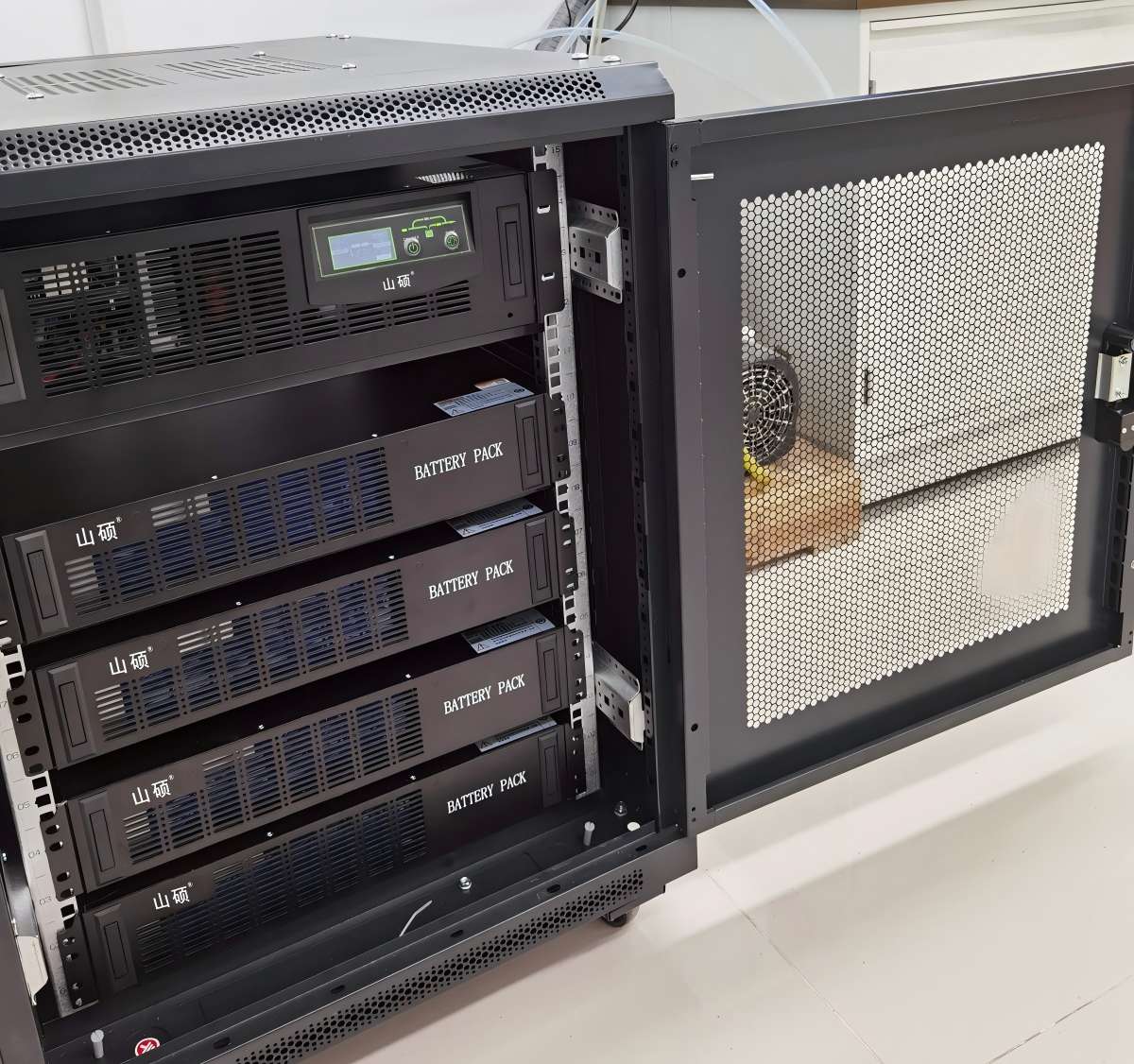
A UPS with lithium ion battery is no longer a niche upgrade for data centers. It is now a practical option for server rooms, edge sites, industrial controls, retail networks, security systems, telecom cabinets, and high-value home offices where downtime costs more than the battery price difference.
The main reason is simple: lithium-ion UPS batteries usually last longer, recharge faster, take less space, weigh less, and provide better monitoring than traditional valve-regulated lead-acid (VRLA) batteries. The best choice still depends on your load, runtime target, fire safety requirements, budget, and whether you are buying a new UPS or trying to retrofit an existing one.
Contents
- Quick Answer
- What Is a Lithium-Ion UPS?
- Main Benefits
- Lithium-Ion UPS vs Lead-Acid UPS
- Which Lithium Chemistry Is Best?
- How to Size Runtime
- Safety and Certification Checklist
- Can You Replace Lead-Acid with Lithium?
- Best Applications
- Common Mistakes
- FAQ
Quick Answer: Is a UPS with Lithium Ion Battery Worth It?
Yes, a lithium-ion UPS is usually worth it when the system will be kept for five years or longer, when maintenance visits are expensive, when rack space or floor loading is limited, or when the UPS protects equipment that cannot tolerate a failed battery string.
If the UPS only protects a low-value desktop for occasional short outages, a lower-cost lead-acid unit may still be enough. But for critical infrastructure, the total-cost argument often shifts toward lithium. Schneider Electric notes that VRLA UPS batteries commonly have a service life of about 3 to 6 years, while lithium-ion batteries used in UPS systems can have a service life above 10 years under suitable conditions . Vertiv also states that lithium-ion UPS batteries can last 2 to 3 times longer than lead-acid, with smaller size and lower weight .
Best fit
- Data centers, server rooms, and network closets that need predictable backup power.
- Edge computing sites where maintenance access is limited.
- Industrial control panels and automation systems in warmer environments.
- Retail POS, security, telecom, and medical support systems where replacement downtime is disruptive.
- Rack installations where battery weight and footprint matter.
Not always the best fit
- Very short-term installations where the UPS will be retired before the lead-acid battery ages out.
- Sites where procurement is based only on upfront price.
- Old UPS frames that are not certified or firmware-approved for lithium-ion battery modules.
- Facilities that cannot meet required fire, ventilation, monitoring, or authority having jurisdiction requirements.
What Is a Lithium-Ion UPS?
A UPS, or uninterruptible power supply, provides short-term backup power when utility power fails, sags, surges, or becomes unstable. The U.S. Department of Energy describes UPSs as systems that combine converters, switches, and energy storage devices to maintain continuity of load power during an input power failure .
A lithium-ion UPS performs the same job as a conventional UPS, but its battery system uses lithium-ion cells instead of lead-acid batteries. The UPS still converts and conditions power, monitors incoming voltage, and transfers the protected load to battery power during an outage. The difference is in the energy storage pack and its control system.
Most lithium-ion UPS battery systems include a battery management system, often called a BMS. The BMS monitors cell voltage, pack voltage, current, temperature, state of charge, and state of health. In larger UPS systems, the BMS also communicates with the UPS, monitoring platform, or building management system so operators can see battery alarms before they become downtime events.
How the system behaves during an outage
- The UPS detects that the incoming AC power is outside acceptable limits.
- The inverter supplies power from the battery to the connected load.
- The BMS protects the battery from overcurrent, overheating, overdischarge, and cell imbalance.
- When utility power or generator power returns, the UPS recharges the lithium-ion battery using the approved charge profile.
In real deployments, the battery is only one part of reliability. The UPS topology, bypass design, monitoring, generator coordination, breaker sizing, cooling, and maintenance process all matter. This is why a good lithium-ion UPS purchase starts with load and runtime requirements, not just battery chemistry.
Main Benefits of a UPS with Lithium Ion Battery
1. Longer service life
Longer battery life is the strongest business case. A VRLA battery may need one or two replacements during the life of a UPS. A lithium-ion battery can often match the useful life of the UPS itself when it is correctly specified and operated. Schneider Electric lists VRLA service life in the 3 to 6 year range and lithium-ion service life above 10 years in UPS applications .
For a single office UPS, this may simply mean fewer interruptions. For a distributed network with dozens of small UPS units in stores, telecom rooms, or edge cabinets, it can remove a major maintenance burden. The practical savings are not just battery cost. They include technician time, travel, scheduling, risk during swap-out, disposal handling, and the chance that one weak battery is missed until the next outage.
2. Smaller footprint and lower weight
Lithium-ion batteries store more energy in less space than lead-acid batteries. Vertiv states that lithium-ion UPS batteries are commonly 40% to 60% lighter and have about a 40% smaller footprint than comparable VRLA batteries .
This matters in three common situations. First, rack space is expensive, especially in colocation and network rooms. Second, floor loading can limit the amount of battery backup that can be installed in upper-floor rooms. Third, small edge sites often have no dedicated power room, so the UPS must fit in a wall cabinet, short-depth rack, retail back office, or industrial enclosure.
3. Faster recharge after an outage
Fast recharge reduces exposure after the first outage. Lead-acid batteries can take many hours to recover after a deep discharge. Lithium-ion UPS batteries often recharge much faster. Vertiv notes that some lithium-ion UPS batteries can recharge in less than 4 hours , and another Vertiv guide describes lithium-ion recharge from 0% to 90% runtime capacity in about 2 to 4 hours compared with more than 12 hours for VRLA in that example .
This is especially useful in areas with repeated outages, unstable grids, generator tests, or storm seasons. A battery that is still partly depleted when the second outage occurs provides less protection than the runtime shown on the sales sheet.
4. Better performance in warmer environments
Heat shortens battery life, but lithium-ion UPS batteries are generally less sensitive to elevated operating temperatures than VRLA batteries. Schneider Electric notes that many lithium-ion batteries used in UPSs are designed for higher average temperatures, such as 40 degrees C or 104 degrees F, while still reaching the specified service life .
This does not mean heat can be ignored. Battery University cautions that elevated temperature accelerates capacity loss in lithium-ion batteries, especially when batteries remain at high state of charge for long periods . The practical point is more nuanced: lithium-ion can tolerate many UPS environments better than VRLA, but it still needs a temperature range that matches the manufacturer's specifications.
5. More useful monitoring through the BMS
A lead-acid UPS battery can look normal until a runtime test or real outage exposes weak cells. Lithium-ion UPS systems usually provide richer battery data through the BMS, including temperature, state of charge, remaining runtime, fault codes, and state of health. Vertiv notes that lithium-ion UPS batteries use integrated BMS monitoring as part of safe operation .
For remote sites, this can be the difference between proactive maintenance and an emergency visit. If the UPS supports network management, connect it to alerts. Battery data is only valuable if someone sees it before the outage.
6. Lower total cost of ownership in long deployments
A lithium-ion UPS usually costs more upfront. The payback comes from fewer battery replacements, less maintenance labor, lower transport and disposal burden, smaller footprint, and less risk during replacement windows. Vertiv states that lithium-ion batteries can provide up to 50% total cost of ownership savings over their life expectancy in UPS applications .
The savings are most obvious when batteries are difficult to access. A battery swap in a headquarters server room is one thing. A battery swap across 80 retail branches, roadside cabinets, telecom rooms, or industrial sites is a different cost profile.
Lithium-Ion UPS vs Lead-Acid UPS
The right comparison is not "new technology versus old technology." It is "which battery best matches the job?" Lead-acid remains common because it is familiar, widely available, relatively inexpensive, and well understood. Lithium-ion is better when lifecycle reliability, space, weight, recharge time, and monitoring justify the higher initial price.
| Factor | Lithium-Ion UPS | VRLA Lead-Acid UPS | What It Means |
|---|---|---|---|
| Typical service life | Often 8 to 10+ years, depending on design and environment | Often 3 to 6 years in real UPS service | Lithium can reduce mid-life battery replacements. |
| Weight | Commonly 40% to 60% lighter | Heavier for the same backup target | Lithium helps with rack handling and floor loading. |
| Footprint | Often about 40% smaller | Larger battery cabinets or packs | Lithium can add runtime without taking as much space. |
| Recharge time | Usually faster | Usually slower after deeper discharge | Faster recovery matters in repeated outage areas. |
| Monitoring | BMS provides detailed battery health data | Basic monitoring unless external battery monitoring is added | Lithium is easier to manage remotely. |
| Upfront cost | Higher | Lower | Lead-acid may win for short-lived or low-value loads. |
| End-of-life handling | Requires approved recycling and transport practices | Mature recycling chain | Ask the supplier about takeback and disposal before buying. |
| Retrofit simplicity | Only if approved by the UPS manufacturer | Usually simple replacement with matching VRLA pack | Do not swap chemistry without compatibility approval. |
Which Lithium Chemistry Is Best for a UPS?
"Lithium-ion" is a family of chemistries, not a single battery. For UPS systems, the most common choices are lithium iron phosphate (LiFePO4 or LFP), lithium nickel manganese cobalt oxide (NMC), and in some specialized cases lithium titanate (LTO).
LiFePO4 (LFP)
LFP is often favored where safety margin, long cycle life, and thermal stability matter more than maximum energy density. Battery University describes LiFePO4 battery as offering high current rating, long cycle life, good thermal stability, enhanced safety, and tolerance if abused, with cycle life commonly 2,000 cycles or higher depending on use conditions .
For UPS buyers, LFP is often the most comfortable chemistry for server rooms, industrial controls, telecom backup, and stationary applications where the battery is expected to sit at high readiness for years.
NMC
NMC offers higher specific energy than LFP, which can help when the design goal is maximum energy in a compact space. Battery University notes that NMC has good overall performance and can be tailored for either energy or power applications .
NMC can be a good fit for compact rackmount UPS designs and situations where space is a priority. It places more importance on good pack design, BMS quality, thermal controls, and certified system integration.
LTO
LTO is less common because it is more expensive and has lower specific energy, but it can be valuable where fast charge, high cycle life, safety, and low-temperature performance are critical. Battery University notes that lithium titanate can be fast charged, can deliver high discharge current, and has excellent low-temperature discharge characteristics .
Practical selection rule
For most stationary UPS projects, start by asking for LFP or an industrial-grade NMC system with strong certification and a mature BMS. Do not choose based on cell chemistry alone. A well-engineered lithium-ion UPS includes the battery cells, BMS, enclosure, thermal protection, firmware, charger profile, communications, and certifications as one tested system.
How to Size a UPS with Lithium Ion Battery
Runtime sizing is where many UPS purchases go wrong. Buyers often select a UPS based on VA rating alone, then discover that battery runtime is shorter than expected. VA tells you apparent power capacity. Runtime depends on watts, battery energy, inverter efficiency, load profile, battery condition, and the discharge curve.
Step 1: List the real load in watts
Add up the actual wattage of the equipment that must stay online. Use measured consumption if possible. Nameplate ratings are often conservative and may overstate normal load, but they are still useful for checking maximum draw.
Example protected load:
- Network switch: 120 W
- Firewall: 45 W
- Two servers: 700 W total
- Storage appliance: 220 W
- KVM and monitoring gear: 35 W
Total running load: 1,120 W.
Step 2: Add headroom
Do not size the UPS at 100% of its output rating. A practical target is often 60% to 80% load, depending on the UPS model, future growth, and efficiency curve. For the 1,120 W example, a UPS with at least 1,500 W output capacity would provide cleaner headroom than a unit rated exactly at the load.
Step 3: Define the runtime job
A UPS is usually not meant to run a site all day. It normally provides enough time to ride through short interruptions, bridge to generator, shut down cleanly, or keep network equipment running until power returns.
Common runtime targets:
- 5 to 10 minutes: safe shutdown or generator bridge.
- 15 to 30 minutes: small server room, network closet, or edge cabinet.
- 30 to 60 minutes: telecom, security, retail, or critical controls where generator support is not immediate.
- More than 60 minutes: usually needs external battery modules, a DC plant, or a broader backup power design.
Step 4: Estimate energy, then confirm with runtime charts
A simple starting estimate is:
Required battery energy in Wh = load watts x runtime hours / inverter efficiency
If a 1,120 W load needs 20 minutes of runtime and inverter efficiency is estimated at 90%, the basic energy need is:
1,120 W x 0.33 hours / 0.90 = about 411 Wh before reserve and manufacturer limits.
This estimate is useful for thinking, but it is not enough for procurement. Always check the UPS manufacturer's runtime chart at your expected load. Battery packs are not discharged to 100% in normal UPS operation, and runtime curves vary by model, temperature, age, and load level.
Step 5: Check recharge requirement
If outages are rare, recharge time may be less important. If outages repeat during storm season or generator transitions, it becomes critical. Ask how long the battery takes to recover to 80% or 90% usable runtime after a full or partial discharge, not just how fast it reaches a voltage threshold.
Step 6: Verify electrical and physical fit
Before ordering, confirm plug type, outlet type, input voltage, output voltage, rack depth, rack rails, airflow direction, battery module weight, bypass requirement, network card support, and service access. Lithium-ion reduces weight, but larger UPS systems can still require careful rack and floor planning.
Safety and Certification Checklist
Lithium-ion UPS systems are safe when they are properly engineered, certified, installed, monitored, and recycled. Safety problems usually come from poor-quality cells, mismatched chargers, damaged packs, blocked ventilation, ignored alarms, or unapproved retrofits.
Check the right standards
Ask the supplier which standards apply to the full UPS system and to the battery pack. Depending on the product and region, relevant standards and tests may include:
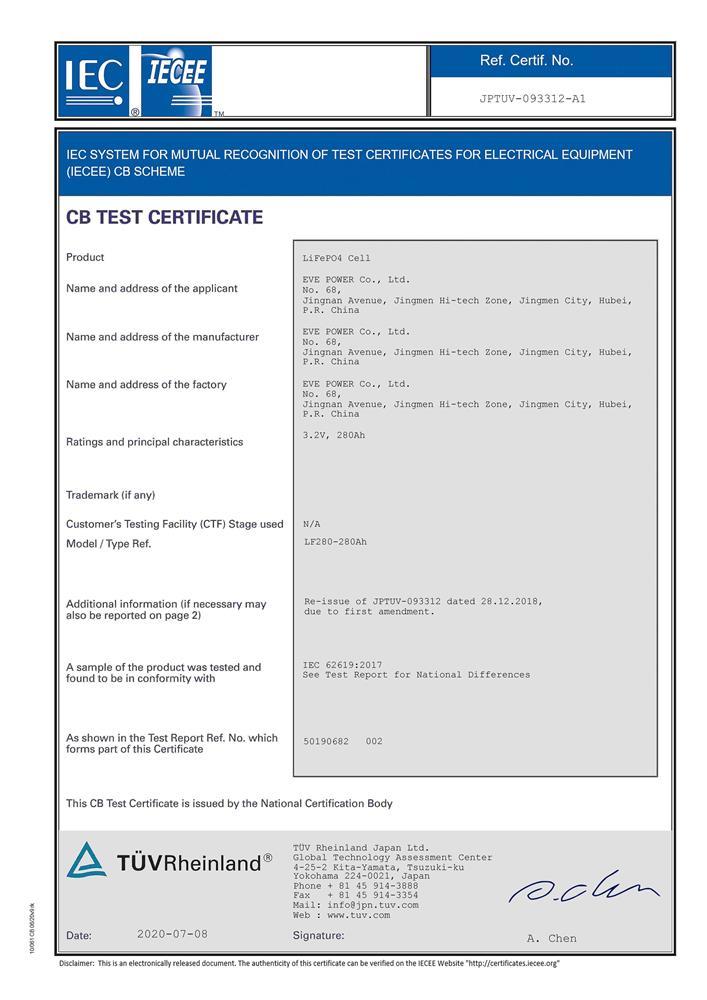
- UL 1778: safety standard for uninterruptible power systems. UL 1973 is referenced in UL's listing information for uninterruptible power systems .
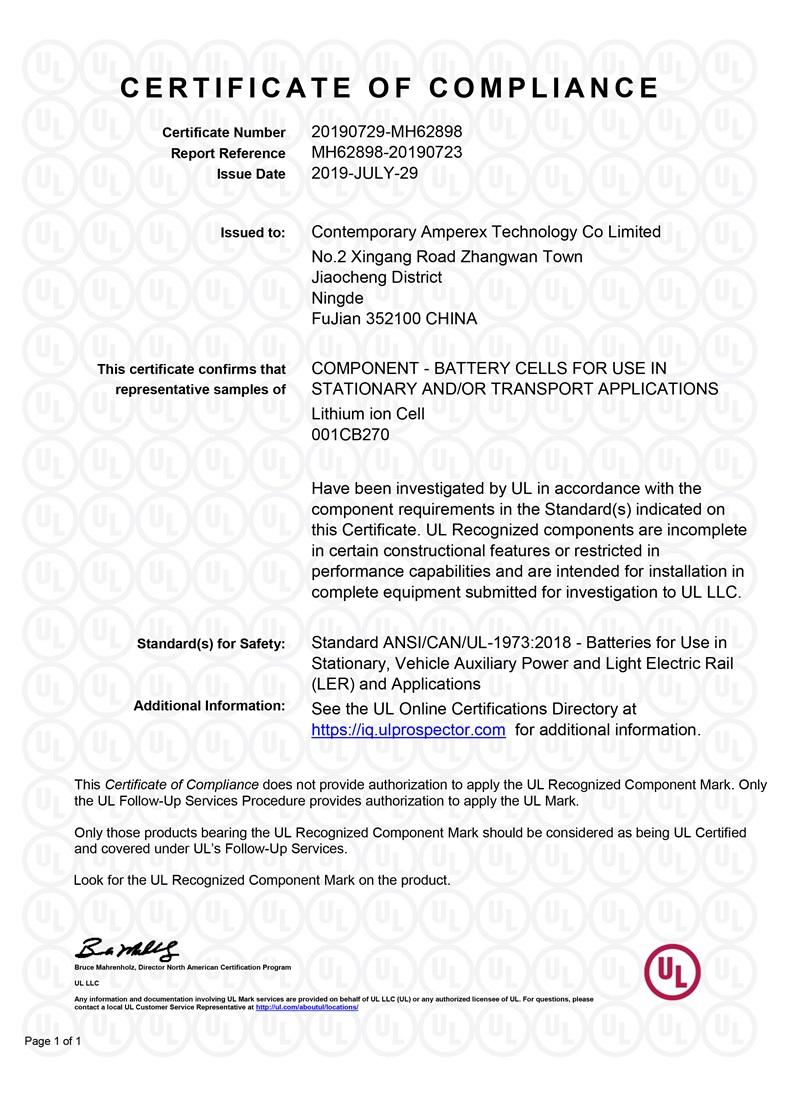
- UL 1973: batteries for stationary and motive auxiliary power applications. UL Solutions lists UL 1973 as the standard for batteries used in stationary and motive auxiliary power applications .
- UL 9540A: thermal runaway fire propagation test method for battery energy storage systems. This may be relevant for larger systems, depending on jurisdiction and installation type.
- IEC 62040: international UPS standards covering safety, electromagnetic compatibility, performance, and environmental aspects. Confirm the exact part and edition required for your market.
- UN 38.3: transport testing for lithium batteries and packs.
- NFPA 855: installation requirements for stationary energy storage systems. NFPA describes NFPA 855 as the standard that provides minimum requirements for mitigating hazards associated with energy storage systems .
Do not treat certification as a checkbox. Ask whether the listing covers the exact battery module, cabinet, UPS model, firmware version, and configuration you plan to install.
Ask fire safety questions before purchase
- What chemistry is used: LFP, NMC, LTO, or another lithium-ion type?
- What happens if one cell or module overheats?
- How does the BMS disconnect a faulted pack?
- What alarms are available locally and remotely?
- What is the required clearance around the UPS or battery cabinet?
- What fire detection or suppression changes are required by the local authority having jurisdiction?
- Does the vendor provide a safety data sheet, emergency response guide, and end-of-life instructions?
For larger installations, involve the facility engineer, electrical contractor, insurer, fire protection consultant, and authority having jurisdiction early. A system that looks simple on a product page can trigger site-specific code and permitting requirements.
Plan recycling and disposal
Lithium-ion batteries should not be placed in household trash or ordinary recycling bins. The EPA says lithium-ion batteries should be taken to separate recycling or household hazardous waste collection points, and terminals should be taped or batteries placed in separate bags to help prevent fires . For commercial UPS packs, ask the supplier for a takeback program, recycler documentation, and transport instructions.
Can You Replace a Lead-Acid UPS Battery with Lithium Ion?
Sometimes, but only when the UPS manufacturer or a qualified power systems provider explicitly approves the lithium-ion battery module for that UPS model. You should not put a generic lithium battery into a lead-acid UPS just because the voltage looks similar.
The risk is not only voltage. Lithium-ion batteries need the correct charging profile, BMS communication, overcurrent protection, thermal protection, firmware support, enclosure design, and fault response. An unapproved retrofit can void the UPS listing, void the warranty, create safety problems, and produce unreliable runtime readings.
Retrofit checklist
- Is the exact UPS model listed as compatible with the lithium-ion module?
- Does the UPS firmware support lithium-ion charging and runtime calculation?
- Does the battery BMS communicate with the UPS?
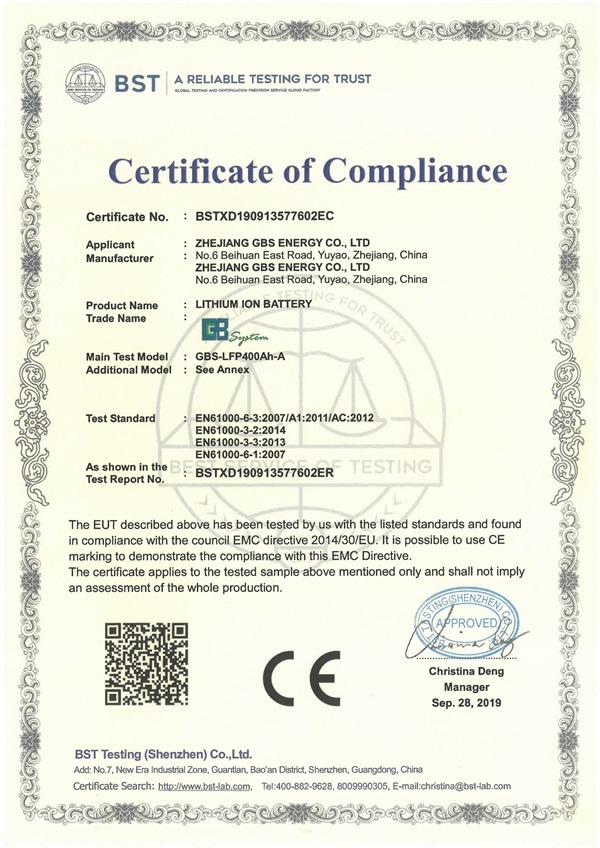
- Does the installation preserve UL, IEC, CE, or other required certifications?
- Are connectors, fuses, breakers, and enclosure clearances approved for the battery?
- Will monitoring software show accurate state of charge, state of health, and alarms?
- Will insurance, fire code, and facility policy allow the retrofit?
If any answer is unclear, buy a UPS designed for lithium-ion from the start or use a manufacturer-approved replacement kit. The cost of a wrong retrofit is far higher than the cost difference between battery types.
How to Compare Total Cost of Ownership
For lithium-ion UPS systems, upfront price is the least complete comparison. A useful total cost of ownership model includes the UPS price, battery replacements, installation labor, downtime risk, monitoring, disposal, cooling, space, and maintenance visits.
Simple TCO model
| Cost Item | What to Ask |
|---|---|
| Initial equipment cost | What is the installed cost of the UPS, battery modules, rails, network card, bypass, and accessories? |
| Battery replacement | How many replacements are expected over 10 years? |
| Labor and travel | Will replacements require a site visit, after-hours work, or remote travel? |
| Downtime exposure | Will the load be at risk during battery service? |
| Space and weight | Does the battery choice affect rack units, floor loading, or cabinet count? |
| Monitoring | Does the system reduce manual battery testing or emergency callouts? |
| Disposal | Does the vendor include battery takeback, recycling, or documentation? |
Example
A retail chain has 60 branch UPS units protecting POS, router, switch, and security recorder loads. A lead-acid UPS is cheaper at purchase, but each unit may need battery replacement within 3 to 5 years. Even if each battery pack is inexpensive, the real cost includes shipping, technician time, store coordination, and the risk that one location misses its replacement window. In that case, a lithium-ion UPS that lasts closer to the full equipment cycle may be less expensive operationally even with a higher purchase price.
For one temporary office, the same calculation may favor lead-acid. The best answer depends on the life of the installation.
Best Applications for Lithium-Ion UPS Systems
Data centers and server rooms
Uptime risk is expensive. Uptime Institute's 2024 outage analysis reports that 54% of respondents said their most recent significant, serious, or severe outage cost more than $100,000, and 16% said it cost more than $1 million . A lithium-ion UPS will not prevent every outage, but it can reduce battery-related maintenance exposure and improve monitoring of one of the most important parts of the power chain.
Edge computing
Edge sites are often small, remote, warm, and hard to service. A compact UPS with lithium-ion battery can protect local compute, networking, cameras, access control, and telecom equipment while reducing truck rolls.
Industrial automation
Manufacturing lines, PLC cabinets, HMI stations, robotics controllers, and process equipment may sit in warmer electrical rooms or plant-floor enclosures. Lithium-ion UPS systems can be attractive where temperature tolerance and fast recharge matter, but industrial buyers should verify environmental rating, vibration tolerance, enclosure requirements, and serviceability.
Healthcare and laboratory support loads
For medical IT, lab instruments, medication storage controls, and communications systems, predictable runtime and monitoring can be more valuable than the cheapest battery pack. Confirm the relevant medical, electrical, and facility standards before specifying a UPS.
Retail, banking, and branch networks
Small branch UPS units are easy to forget until power fails. Lithium-ion helps when the business has many locations, limited IT staff, and equipment that must keep processing transactions, routing traffic, or recording security video.
Home office and prosumer equipment
A lithium-ion UPS can make sense for users protecting expensive workstations, NAS devices, fiber equipment, and home lab servers. For a basic desktop and monitor, a conventional UPS may be more economical.
Maintenance Best Practices
Lithium-ion UPS systems require less routine battery maintenance than lead-acid systems, but "less maintenance" does not mean "no attention." The goal is to catch environmental, electrical, and alarm issues before a real outage tests the system.
- Keep the UPS within the manufacturer's temperature and humidity limits.
- Connect network monitoring and configure alerts for battery health, temperature, overload, bypass, and communication faults.
- Review event logs after outages, generator tests, and maintenance windows.
- Do not block vents or install the UPS where heat accumulates.
- Perform scheduled self-tests only as recommended by the manufacturer.
- Keep firmware current when updates address battery communication, runtime calculation, or safety behavior.
- Document battery age, warranty terms, and replacement plan even if the expected life is long.
- Train site staff not to ignore alarms, disconnect battery modules casually, or move damaged packs.
Also review the efficiency of the UPS itself. ENERGY STAR notes that a certified UPS can reduce energy losses by 30% to 55% compared with a standard UPS system . Battery chemistry is important, but UPS efficiency, loading, and operating mode also affect long-term operating cost.
Common Mistakes to Avoid
Mistake 1: Buying by VA rating only
VA capacity does not guarantee runtime. Confirm watts, load percentage, power factor, and runtime chart at the expected load.
Mistake 2: Assuming every lithium-ion UPS uses the same chemistry
LFP, NMC, and LTO behave differently. Ask what chemistry is used and why it fits the application.
Mistake 3: Ignoring recharge time
A UPS that survives the first outage but cannot recover before the second one may still fail the business need.
Mistake 4: Treating retrofit as a simple battery swap
Charging profile, BMS communication, certification, and firmware matter. Use only approved lithium-ion replacement modules.
Mistake 5: Skipping monitoring
A lithium-ion UPS gives better battery data, but it still needs configured alerts. Do not leave the network card unconnected in a critical site.
Mistake 6: Forgetting end-of-life handling
Ask about recycling before purchase. EPA guidance is clear that lithium-ion batteries should not go into ordinary trash or municipal recycling streams .
Buying Checklist
Use this checklist before requesting quotes:
- What exact load in watts must be protected?
- How many minutes of runtime are required at that load?
- Is the goal ride-through, safe shutdown, generator bridge, or long backup?
- What UPS topology is required: standby, line-interactive, or online double-conversion?
- Which lithium chemistry is used, and why?
- What are the service life, warranty, and end-of-life capacity assumptions?
- What certifications apply to the UPS and battery system?
- Does the BMS communicate with the UPS and remote monitoring tools?
- What alarms are available through SNMP, Modbus, dry contact, cloud monitoring, or local display?
- How long does recharge take after a full discharge?
- What is the allowed operating temperature range?
- What clearances, ventilation, and fire safety provisions are required?
- Is a maintenance bypass needed?
- Is there a manufacturer-approved recycling or takeback program?
FAQ: UPS with Lithium Ion Battery
How long does a lithium-ion UPS battery last?
A lithium-ion UPS battery commonly lasts around 8 to 10 years, and some systems are designed for more than 10 years under specified conditions. Actual life depends on chemistry, temperature, cycling, charge profile, and pack design.
Is lithium-ion better than lead-acid for UPS systems?
It is better for many long-term and critical installations because it lasts longer, weighs less, takes less space, recharges faster, and provides better battery monitoring. Lead-acid can still be better for low-cost, short-term, or non-critical deployments.
Can I put a lithium battery in my old lead-acid UPS?
Only if the UPS manufacturer or qualified provider approves that exact lithium battery module for your UPS model. Do not install a generic lithium battery in a lead-acid UPS. The charger, firmware, BMS, wiring, enclosure, and safety listing must match.
Which is better for UPS batteries, LiFePO4 or NMC?
LiFePO4 is often preferred for stationary UPS applications where safety margin, long cycle life, and thermal stability are priorities. NMC can provide higher energy density where space is tight. The best choice depends on system design and certification, not chemistry alone.
Does a lithium-ion UPS need ventilation?
Yes, it still needs installation according to the manufacturer's airflow, clearance, and temperature requirements. Lithium-ion batteries do not vent hydrogen during normal operation like flooded lead-acid batteries, but heat management and fault response remain important.
Are lithium-ion UPS batteries safe?
They are safe when designed, certified, installed, monitored, and recycled properly. Look for a robust BMS, recognized certifications, thermal protection, fault isolation, and clear emergency instructions.
Does a lithium-ion UPS give longer runtime?
Not automatically. It can provide more usable energy in the same space or weight, but runtime depends on battery capacity, UPS efficiency, load watts, and discharge limits. Always check the runtime chart at your actual load.
Why is a lithium-ion UPS more expensive?
The battery cells, BMS, certification, and system integration add cost. The higher purchase price is often offset by fewer replacements, lower service labor, faster recharge, smaller footprint, and reduced maintenance risk.
What temperature is acceptable for a lithium-ion UPS?
Many lithium-ion UPS systems are designed for higher average operating temperatures than VRLA systems, but the allowed range depends on the product. Always follow the manufacturer's temperature specifications and avoid unnecessary heat exposure.
How should lithium-ion UPS batteries be recycled?
Use the manufacturer's takeback program, a certified battery recycler, or an approved hazardous waste collection route. Do not put lithium-ion batteries in ordinary trash or municipal recycling bins.
Final Recommendation
A UPS with lithium ion battery is the stronger choice when reliability, lifecycle cost, runtime recovery, monitoring, space, and maintenance access matter. It is especially compelling for data centers, edge computing, branch networks, industrial controls, telecom, security, and other sites where a dead battery creates real operational cost.
The buying decision should not stop at "lithium lasts longer." Ask for the exact runtime chart, battery chemistry, BMS functions, certifications, recharge time, monitoring support, retrofit approval, safety documentation, and recycling plan. A good lithium-ion UPS is not just a UPS with different cells inside. It is a complete power protection system designed around those cells.
- Next:AGM vs Lithium vs Lead-Acid Batteries: Which One Should You Choose?
- Previous:AAA Lithium Rechargeable Batteries: How to Choose, Charge, and Use Them Safely
Contact Details
Lithium LiFePO4 Batteries and Lithium LiFePO4 Cells Supplier - LiFePO4 Battery Shop
Contact Person: Miss. Elena Wang
WhatsApp : +8615263269227
Skype : +8615263269227
WeChat :15263269227
Email : info@lifepo4batteryshop.com
All Products
- Forklift Battery Charger (0)
- TC Elcon Charger (5)
- Headway Lithium Battery (6)
- Blade Battery (10)
- Semi Solid State Battery (6)
- A123 Battery (6)
- Sinopoly Battery (7)
- GBS Battery (20)
- CALB Battery (26)
- Cylindrical Cell (14)
- Energy Storage System (0)
- Battery Management System (15)
- Sodium ion Battery Cell (4)
- Lithium Titanate Battery (23)
- Ternary Lithium Battery Cell (12)
- REPT Battery (10)
- BYD Battery (5)
- CATL Battery (15)
- Thunder Sky Winston Battery (26)
- EVE Battery (39)
- LiFePO4 Battery Cell (41)
Certification
Customer Reviews
- I have fond memories of our meeting in Shanghai with LiFePO4 Battery Shop Elena. Your company left a strong impression on me with its impressive growth and professionalism. We both value straightforwardness and honesty, which I believe are the most important qualities in any partnership. I am confident that we can build a successful collaboration based on these shared values. —— Robert from USA
- I've been working with LiFePO4 Battery Shop for years, and their reliability is unmatched. While other suppliers frequently change sales teams, LiFePO4 Battery Shop has consistently provided exceptional service with a stable team. Their commitment to quality and customer support truly sets them apart. —— Henry from Australia