
Blog
AAA Lithium Rechargeable Batteries: How to Choose, Charge, and Use Them Safely
2026-10-18 | Calvin
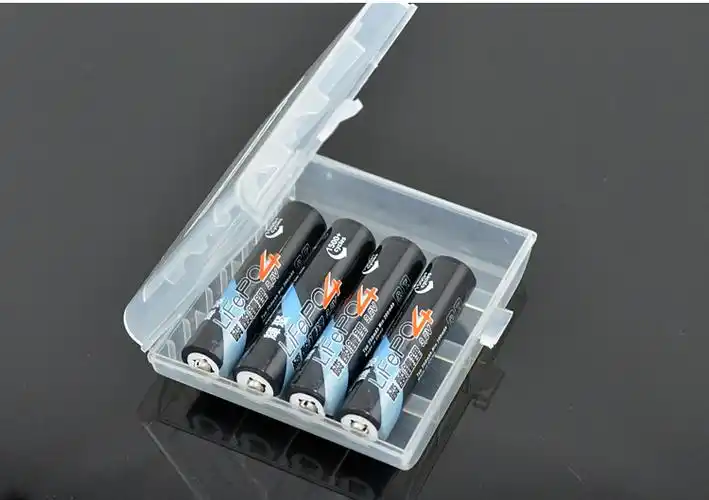
A battery marked “lithium” is not automatically rechargeable, and a rechargeable AAA battery is not automatically right for every device. The important question is whether the cell's voltage, charging method, and discharge behavior match the equipment you plan to use.
That distinction matters with wireless mice, smart locks, headlamps, toys, medical accessories, cameras, and older electronics. A well-chosen rechargeable AAA can be convenient and economical. The wrong battery or charger can cause poor runtime, false low-battery readings, leakage, damage, or a safety risk.
Table of contents
- Quick answer: which AAA battery should you buy?
- The three AAA battery types people confuse
- 1.5V rechargeable lithium vs. NiMH vs. disposable lithium
- How to check whether your device is compatible
- How to compare mWh and mAh honestly
- How to charge rechargeable AAA lithium batteries safely
- Storage, maintenance, and end-of-life handling
- Common buying and use mistakes
- Frequently asked questions
Which rechargeable AAA battery is the right choice?
Choose a regulated 1.5V rechargeable lithium AAA when the device truly needs a 1.5V supply, you want a compact USB-charging option, or the device becomes unreliable with ordinary 1.2V NiMH cells. Choose low-self-discharge NiMH AAA batteries when you want a mature, widely compatible rechargeable system and already own a proper NiMH charger.
Use a disposable lithium AAA only when the product manual allows it and you need a long-stored emergency battery, light weight, or cold-weather performance. Do not try to recharge it. Energizer's battery-care guidance is clear: a primary battery that is not specifically marked rechargeable should not be recharged because it can leak or rupture.
The simplest buying rule is this: read the device manual first, then buy a matched set of batteries and the charger specified for that exact battery chemistry.
What does “lithium AAA” actually mean?
The word lithium describes more than one battery category. Confusing those categories is the biggest avoidable mistake in this market.
Disposable 1.5V lithium AAA batteries are primary cells
These are single-use cells. They are often chosen for emergency kits, outdoor devices, and equipment that may sit unused for a long time. They are not the same product as lithium-ion rechargeables, even when both are sold in AAA size and both say 1.5V on the label.
Regulated 1.5V rechargeable lithium AAA batteries are electronic systems inside a small cell
Most rechargeable lithium AAA products marketed as 1.5V use a lithium-based rechargeable cell plus electronics that regulate the output for an AAA device. Some charge through a dedicated cradle; others have a USB-C or micro-USB port on the cell. Treat the battery and its supplied charging method as one system, not as a normal 1.2V rechargeable battery with a different label.
That design can give the device a steady 1.5V output for much of the discharge cycle. It also means the output may end more abruptly than the gradual voltage decline many devices expect. In a device that relies on voltage to estimate remaining battery life, the indicator can be less useful. For a security sensor, recorder, or anything that must not stop without warning, test one full cycle before relying on that behavior.
NiMH AAA batteries are the conventional rechargeable option
Nickel-metal hydride batteries are usually marked 1.2V. That is normal, not a fault. Panasonic's eneloop FAQ explains that rechargeable NiMH cells start at about 1.2V and maintain a relatively steady discharge level. They remain an excellent fit for many remotes, controllers, toys, flashlights, and household devices.
How do 1.5V rechargeable lithium, NiMH, and disposable lithium AAA batteries compare?
No type wins every time. The useful comparison is based on the device, not the marketing term on the package.
| Question | Regulated 1.5V rechargeable lithium | NiMH rechargeable | Disposable lithium |
|---|---|---|---|
| Can it be recharged? | Yes, but only with its specified USB method or lithium-compatible charger. | Yes, with a NiMH charger. | No. |
| Output seen by most devices | Usually regulated near 1.5V until cutoff; verify the individual product. | Nominally 1.2V with a familiar gradual discharge pattern. | Usually 1.5V nominal, with the discharge pattern of a primary cell. |
| Best fit | Voltage-sensitive equipment and users who value a compact charging setup. | General household reuse, predictable charger compatibility, and large device fleets. | Emergency, occasional, or cold-weather use where recharging is not practical. |
| Main limitation | Not compatible with every charger or every battery-level indicator. | Some 1.5V-only devices may report low battery early or refuse to run. | Higher waste and ongoing replacement cost; never recharge. |
| What to verify before buying | Output voltage, delivered energy in mWh, charging method, cutoff behavior, and manual compatibility. | Capacity, low-self-discharge claim, charge current, and charger quality. | Manual compatibility, expiry date, and local disposal guidance. |
For context, Panasonic lists its standard AAA eneloop NiMH cell at 1.2V and a minimum 750mAh capacity. That is one specific product, not a universal AAA benchmark, but it shows why a lower nominal voltage does not automatically mean poor runtime.
How can you tell whether a rechargeable lithium AAA will work in your device?
Check the device requirements before you compare brands. A battery that physically fits can still be a poor electrical match.
Start with the manual, not the battery listing
Look for the approved battery type, nominal voltage, and any warning about rechargeable cells. A device that says “AAA alkaline only” may have a low-voltage threshold, current draw profile, or battery indicator designed around alkaline cells. Do not assume that a regulated 1.5V lithium cell bypasses every limitation.
Test battery indicators before using a new chemistry in critical equipment
A 1.5V regulated lithium AAA can appear healthy until it reaches its internal cutoff. A wireless keyboard may simply stop working, which is inconvenient but manageable. A door sensor, trail camera, audio recorder, or medical-related accessory needs a more cautious test. Install a fully charged pair, watch the battery indicator through a normal cycle, and keep a proven backup pair available until you understand the device's warning behavior.
Check the current demand and the contact fit
High-drain devices, such as compact flash units or powerful headlamps, may demand current in short pulses. Check the battery's continuous and peak-discharge specifications if the maker publishes them. Also confirm that the battery length, positive terminal shape, and USB-port design do not prevent the compartment door from closing. A battery that is only slightly longer than a standard AAA can be a problem in a tight compartment.
Keep a matched pair together
For a device using two or more AAA batteries, buy identical cells at the same time, charge them together, and keep them paired. Label the pair with a small non-metal marker or keep it in one case slot. Do not combine a new battery with an old one, a NiMH cell with a lithium cell, or a partly depleted cell with a full cell. Mixed cells discharge unevenly and can create the weak link in the set.
Why is mWh more useful than mAh when comparing rechargeable AAA batteries?
Milliamp-hours measure electric charge. Milliwatt-hours measure energy. When two battery types operate at different voltages, energy is the fairer starting point.
The basic conversion is:
mWh = volts × mAh
For example, an 800mAh NiMH AAA at 1.2V represents about 960mWh of nominal energy. A rechargeable 1.5V lithium AAA rated at 600mWh represents about 400mAh when expressed at its 1.5V output. Those figures are only comparison aids; actual device runtime changes with load, cutoff voltage, temperature, conversion losses, age, and how the manufacturer measured the rating.
That is why a large mAh number on a lithium AAA listing deserves a second look. Find out whether it refers to the internal cell, the regulated 1.5V output, or a calculated equivalent. Prefer a product page that states both output voltage and energy in mWh, explains the charge method, and publishes a usable specification sheet.
Use a runtime test that matches your real device
Do not judge a battery by how long it powers a TV remote if you plan to use it in a headlamp. A better home test is simple: fully charge a matched pair, use the same device and mode, record the start time, and note when the device's warning appears and when it stops. Repeat once. The result is more useful than a marketplace capacity claim because it reflects your actual load.
How should you charge rechargeable AAA lithium batteries?
Use only the charging method specified by the battery manufacturer. A charger that accepts AAA size cells is not necessarily safe for every AAA chemistry.
- Confirm that the cell says rechargeable. If the label does not explicitly say it can be recharged, treat it as a primary battery.
- Use the supplied USB cable, dedicated cradle, or charger that explicitly supports that model. Do not put a 1.5V rechargeable lithium AAA into a NiMH-only charger.
- Inspect the battery before charging. Do not charge a swollen, cracked, leaking, corroded, crushed, or unusually hot battery.
- Charge on a clear, non-flammable surface at normal room temperature. Keep the charging area away from bedding, paper, direct sun, flammable liquids, and places where a damaged cell could go unnoticed.
- Stop if the battery, cable, or charger becomes abnormally hot, smells unusual, changes shape, or shows a damaged port. Do not keep troubleshooting a suspect cell by repeatedly reconnecting it.
- Remove completed batteries if the manufacturer instructs you to. Do not leave a damaged or questionable battery connected to power.
The U.S. Consumer Product Safety Commission notes that high-energy-density batteries need appropriate safety systems and should be tested with the intended product and charger as a system. That principle applies directly to tiny rechargeable lithium AAA cells: the right charger is part of the product, not an optional accessory.
What about a universal charger?
Only use a multi-chemistry charger when its manual explicitly lists the exact rechargeable lithium cell type or battery model you own. “AAA compatible” by itself is not enough. Many common household chargers are designed for NiMH cells only, and the charging algorithm is different.
Should you run lithium AAA batteries flat before recharging?
No deliberate deep-discharge routine is needed for rechargeable lithium cells. Charge according to the product instructions and recharge when convenient. If the device gives no useful warning because the battery maintains regulated voltage until cutoff, create your own habit: recharge after a known amount of use rather than waiting for a surprise shutdown.
How do you store, maintain, and dispose of rechargeable AAA lithium batteries?
Good battery care is mostly about preventing damage, heat exposure, accidental short circuits, and chemistry mix-ups.
Store cells protected and easy to identify
Keep loose batteries in a non-conductive case, away from coins, keys, metal tools, heat, direct sun, and damp areas. Store lithium rechargeable cells at the charge level and temperature range in their manual. Guidance for larger lithium-ion cells often favors moderate temperature and partial charge for long storage, but small regulated AAA products can have model-specific instructions and indicator limitations. Follow the product manual rather than trying to force every cell to a guessed percentage.
If a device will not be used for months, remove the batteries unless the equipment maker says otherwise. Check the cells before putting them back into service. A basic storage guide from Battery University also highlights the effect of temperature and state of charge on lithium-ion storage life.
Replace damaged batteries; do not repair or open them
Stop using a cell if its wrapper is damaged, its USB port is loose, it is swollen, it leaks, it has been crushed, or it becomes abnormally hot in normal use. Do not open the case, bridge the terminals, attach wires directly, or attempt to “wake up” an unresponsive lithium battery with another power source.
Recycle lithium AAA batteries separately
Do not put used rechargeable lithium batteries in household trash or mixed curbside recycling. The U.S. Environmental Protection Agency advises using a dedicated battery recycler or household hazardous-waste collection point and isolating terminals with non-conductive tape or separate plastic bags to reduce fire risk. Local rules vary, so use an approved collection program where you live.
What mistakes shorten the life of rechargeable AAA lithium batteries?
- Buying by the word “lithium” alone
- Fix: confirm whether the package says rechargeable, then identify the charging method and output voltage.
- Charging a lithium cell in a NiMH-only charger
- Fix: use only the charger or USB method named by the battery manufacturer.
- Comparing mAh across different voltages
- Fix: compare mWh first, then check how the maker defines the published value and what the device actually needs.
- Using constant-voltage cells in a critical device without testing alerts
- Fix: run a controlled cycle and learn whether the device warns early enough before relying on it.
- Mixing brands, chemistries, capacities, or ages in one device
- Fix: use identical, matched cells and keep multi-cell sets together.
- Leaving damaged batteries in a drawer
- Fix: isolate the terminals, keep the battery away from combustible materials, and use an approved disposal route.
What should you check before buying rechargeable AAA lithium batteries?
- The device manual allows rechargeable batteries or 1.5V regulated cells.
- The battery is clearly marked rechargeable and states its output voltage.
- The listing gives energy in mWh, not only a large mAh number without context.
- The charging method is explicit: USB-C, micro-USB, dedicated cable, or a named lithium-compatible charger.
- The product provides operating-temperature, safety, warranty, and disposal information.
- You are buying enough identical cells to create matched pairs or sets.
- You have a safe case for spare cells and a local recycling option for end-of-life batteries.
If a listing skips those details and relies only on a huge capacity claim or a vague cycle-life claim, choose a better documented option.
Frequently asked questions about rechargeable AAA lithium batteries
Are all AAA lithium batteries rechargeable?
No. Many AAA lithium batteries are primary, single-use cells. Recharge only batteries that are clearly marked rechargeable and only with their approved method.
Can I charge a rechargeable lithium AAA battery in a normal AAA charger?
Not unless the charger specifically supports that lithium battery type or model. Many AAA chargers are NiMH-only, and a physical fit does not make the charging profile compatible.
Are 1.5V rechargeable lithium AAA batteries better than 1.2V NiMH batteries?
They are better for some devices, not all. A regulated 1.5V cell can help where a device needs a higher, steady voltage. NiMH is often the simpler choice for general household use because the chemistry, chargers, and battery indicators are widely understood.
Why does my device show full battery and then stop suddenly?
A regulated lithium AAA can hold its output near 1.5V until it reaches its cutoff point. Devices that estimate charge from voltage may not provide a gradual warning. Test the battery behavior before using it in equipment where an unexpected shutdown matters.
How do I compare capacity between lithium AAA and NiMH AAA batteries?
Compare mWh when possible because it accounts for voltage. Use mAh only when both products are rated at the same voltage and under comparable test conditions.
Can I mix rechargeable lithium and NiMH AAA batteries in the same device?
No. Use identical batteries in every slot. Mixing chemistries or cells with different states of charge can create uneven discharge and poor performance.
Are USB rechargeable AAA batteries safe?
They can be safe when they are properly designed, undamaged, and charged exactly as instructed. Do not use a damaged cable, battery, or port, and do not substitute an unsupported charging method.
What should I do with a dead or damaged rechargeable lithium AAA battery?
Do not put it in the trash or a curbside recycling bin. Protect the terminals with non-conductive tape or a separate bag and take it to an appropriate battery recycler or household hazardous-waste program.
Contact Details
Lithium LiFePO4 Batteries and Lithium LiFePO4 Cells Supplier - LiFePO4 Battery Shop
Contact Person: Miss. Elena Wang
WhatsApp : +8615263269227
Skype : +8615263269227
WeChat :15263269227
Email : info@lifepo4batteryshop.com
All Products
- Forklift Battery Charger (0)
- TC Elcon Charger (5)
- Headway Lithium Battery (6)
- Blade Battery (10)
- Semi Solid State Battery (6)
- A123 Battery (6)
- Sinopoly Battery (7)
- GBS Battery (20)
- CALB Battery (26)
- Cylindrical Cell (14)
- Energy Storage System (0)
- Battery Management System (15)
- Sodium ion Battery Cell (4)
- Lithium Titanate Battery (23)
- Ternary Lithium Battery Cell (12)
- REPT Battery (10)
- BYD Battery (5)
- CATL Battery (15)
- Thunder Sky Winston Battery (26)
- EVE Battery (39)
- LiFePO4 Battery Cell (41)
Certification
Customer Reviews
- I have fond memories of our meeting in Shanghai with LiFePO4 Battery Shop Elena. Your company left a strong impression on me with its impressive growth and professionalism. We both value straightforwardness and honesty, which I believe are the most important qualities in any partnership. I am confident that we can build a successful collaboration based on these shared values. —— Robert from USA
- I've been working with LiFePO4 Battery Shop for years, and their reliability is unmatched. While other suppliers frequently change sales teams, LiFePO4 Battery Shop has consistently provided exceptional service with a stable team. Their commitment to quality and customer support truly sets them apart. —— Henry from Australia