
Blog
Understanding UPS Battery Types and Lifespan: Complete Selection Guide
2026-09-09 | Calvin
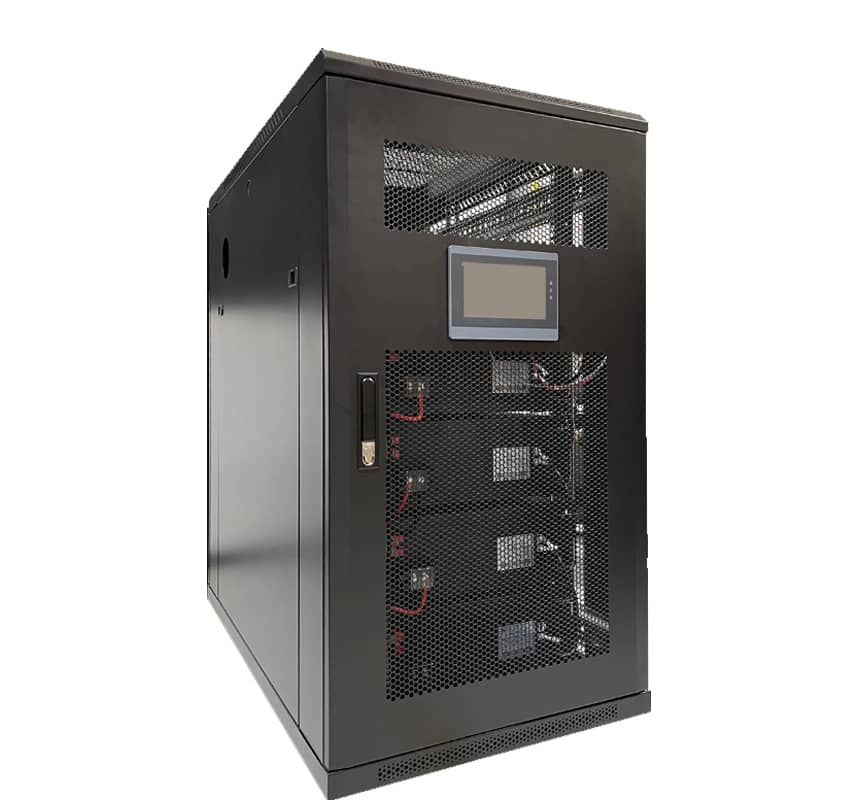
A UPS battery keeps critical equipment running when utility power fails, but every battery chemistry makes a different tradeoff among price, service life, space, temperature tolerance, and maintenance. For most small UPS units, a valve regulated lead acid battery is the lowest cost option and commonly lasts three to five years. A lithium ion UPS battery usually costs more at purchase, yet often provides at least twice the service life, faster charging, lower weight, and better monitoring.
The right choice is not simply the chemistry with the longest life. It is the battery system approved for the UPS, sized for the actual load, supported by the required safety controls, and capable of delivering the needed runtime near the end of its service life.
Contents
- UPS battery lifespan at a glance
- How a UPS battery works
- UPS battery types compared
- What affects battery life
- How to size runtime
- How to choose a battery
- Replacement and maintenance
- Frequently asked questions
How Long Do UPS Batteries Last?
Most sealed VRLA batteries in small UPS systems last about three to five years under normal conditions. Lithium ion systems commonly target eight to ten years or more. Vented lead acid and nickel cadmium installations can have longer design lives, but actual service life depends on the battery model, temperature, charging conditions, discharge history, and maintenance.
These ranges are planning guides, not replacement dates. Battery design life is a laboratory rating. Service life is the time the battery remains dependable in its real installation. Vertiv explains that application, installation, operating conditions, and maintenance all separate service life from the design figure on a data sheet. The battery should therefore be replaced according to condition, tested capacity, required runtime, and manufacturer guidance, not age alone.
| Battery type | Common lifespan expectation | Best fit | Main consideration |
|---|---|---|---|
| VRLA AGM | About 3 to 5 years in normal conditions | Home, office, network closet, small server room | Heat and repeated deep discharge shorten life |
| VRLA gel | Model and duty dependent | Selected stationary systems that specify gel batteries | Requires the correct charging profile |
| Vented lead acid | Usually longer than VRLA when properly maintained | Large critical facilities with dedicated battery rooms | Ventilation, water service, space, and trained maintenance |
| Lithium ion, including LiFePO4 | Often 8 to 10 years or more in a matched UPS system | Data centers, edge sites, remote sites, and space limited rooms | Higher purchase price and strict system compatibility |
| Nickel cadmium | Up to a 20 year design life for some industrial systems | Harsh industrial sites and high ambient temperatures | High cost, toxic materials, and controlled disposal |
Actual life varies by product and site. Eaton states that most UPS batteries last three to five years under normal conditions. Vertiv reports about five years for typical VRLA UPS batteries, at least twice the VRLA service life for lithium ion systems, and a 20 year design life for certain nickel cadmium systems.
What Is a UPS Battery and What Does It Do?
An uninterruptible power supply sits between utility power and protected equipment. During normal operation, the UPS conditions or passes power to the load and keeps its battery charged. When input power moves outside acceptable limits, the UPS draws direct current from the battery and its inverter supplies alternating current to the connected equipment.
The battery provides stored energy. It does not determine every aspect of power protection. The UPS topology controls how the system responds to disturbances:
- Standby UPS: Common for personal computers and basic electronics. It switches to the battery and inverter when input power fails.
- Line interactive UPS: Common for network equipment and small servers. It corrects some voltage changes without using the battery, which can reduce unnecessary cycling.
- Online double conversion UPS: Common for critical servers, data centers, medical systems, and industrial controls. The load receives continuously converted power, so the system provides strong isolation from input disturbances.
Topology and battery chemistry are separate choices. An online UPS may use VRLA, lithium ion, nickel cadmium, or another approved energy source. Always confirm the exact combinations supported by the UPS manufacturer.
UPS Battery Types Compared
1. Valve Regulated Lead Acid Batteries
Valve regulated lead acid, usually abbreviated VRLA, remains the standard battery in many home, office, and rack UPS products. The electrolyte is immobilized, and the case includes a pressure relief valve. These batteries are often described as sealed, although they can vent gas if internal pressure rises.
Absorbent glass mat, or AGM, is the most familiar VRLA construction. It places electrolyte in a glass fiber separator. Gel is another VRLA construction, but it is less common in mainstream UPS units. Both require a charging profile approved for the battery design.
Why choose VRLA:
- Low initial price
- Wide availability
- Proven performance in short runtime applications
- Simple replacement in UPS models with approved cartridges
What to watch:
- Shorter service life than many lithium ion systems
- Heavy weight and larger footprint
- Strong sensitivity to elevated temperature
- Gradual capacity loss that may remain hidden until an outage
2. Vented Lead Acid Batteries
Vented lead acid batteries, also called flooded or VLA batteries, use liquid electrolyte and allow generated gases to escape. They can provide long and dependable service in large stationary systems, but they need more space, ventilation, inspection, and water maintenance than VRLA batteries.
VLA is usually considered for a large facility with trained maintenance staff and a dedicated battery room. It is rarely practical for a desk, home office, or compact network rack.
3. Lithium Ion UPS Batteries
Lithium ion UPS systems store more energy in less space and include a battery management system that monitors voltage, current, temperature, and state of charge. Their longer service life can reduce battery changes during the operating life of the UPS. Faster recharge can also restore reserve capacity sooner when outages occur close together.
The term lithium ion covers several chemistries. Two important examples are:
- Lithium iron phosphate, or LiFePO4: Favored where thermal stability, cycle life, and long service are priorities.
- Nickel manganese cobalt, or NMC: Favored where high energy density and a compact footprint carry more weight.
A lithium ion UPS can be an attractive choice for data centers, edge computing, telecommunications, and remote equipment rooms.
Lithium is not a universal drop in replacement for lead acid. The charge profile, voltage limits, communication, firmware, fault controls, and thermal behavior differ. A safe conversion requires a UPS and battery system designed and approved to work together. A suitable battery management system is part of that design, not an optional accessory.
4. Nickel Cadmium Batteries
Nickel cadmium batteries tolerate high ambient temperatures, deep discharges, and demanding industrial service. Some products have a 20 year design life. They are used where harsh conditions justify their higher price.
The drawbacks are substantial. Cadmium is toxic, disposal is controlled, and both purchase and maintenance costs can be high. This chemistry is most relevant to industrial plants, transportation infrastructure, utilities, and other specialized sites.
Are Flywheels and Supercapacitors UPS Batteries?
No. Flywheels and supercapacitors can supply stored energy to a UPS, but they are not electrochemical batteries. A flywheel can bridge a short outage until a generator starts and can deliver a very high number of cycles. A supercapacitor serves a similarly brief power quality role in some systems. Neither is normally selected when the load must run for many minutes without another energy source.
Seven Factors That Control UPS Battery Lifespan
1. Ambient Temperature
Heat accelerates battery aging. Schneider Electric identifies 20 to 25 degrees Celsius, or 68 to 77 degrees Fahrenheit, as the optimal range for its lead acid UPS batteries. Its guidance says that every 8 degree Celsius rise above this range can cut expected life roughly in half. A battery expected to last four years at 25 degrees Celsius may last only about two years at 33 degrees Celsius.
Measure temperature at the battery, not only at the room thermostat. A closed cabinet, blocked air path, nearby server exhaust, or failed fan can expose the battery to more heat than the room sensor reports.
2. Discharge Frequency and Depth
Every discharge uses part of the battery's cycle life. A brief transfer during a power disturbance is less demanding than a deep discharge that continues to the shutdown threshold. Sites with frequent outages should compare cycle capability, recharge time, and generator support, not only calendar life.
3. Charging Quality
Overcharge causes heat and corrosion. Persistent undercharge can leave a lead acid battery sulfated and unable to deliver rated capacity. Lithium batteries require controlled cell voltage and balancing. The charger, temperature compensation, firmware, and BMS must match the battery chemistry and configuration.
4. Load Level
A heavily loaded UPS drains its battery faster and places more stress on the system. Load growth can make a healthy battery appear inadequate because the original runtime plan no longer matches the equipment attached to it. Record load in watts and review it whenever servers, switches, storage, or industrial controls change.
5. Storage and Time Before Commissioning
A battery ages in storage. Long periods without the specified recharge can cause permanent capacity loss. Check the manufacturing date, storage instructions, recharge interval, and state of charge before installation. Do not treat an unused old battery as new.
6. Cell Balance and Connection Quality
A series string is limited by its weakest battery or cell. Loose terminals create heat. Corrosion increases resistance. A poorly matched replacement can become the weak point in an otherwise healthy string. Large systems need consistent inspection and trend data across every unit.
7. Maintenance and Testing
A UPS self test can identify some faults, but it does not prove that the system will meet every required runtime. Critical facilities use inspection, voltage records, temperature monitoring, resistance or conductance trends, and scheduled discharge testing according to manufacturer instructions and site policy.
UPS Battery Lifespan Is Not the Same as Runtime
Lifespan is how many years or cycles a battery remains useful. Runtime is how long the UPS can support a specific load during one outage. A battery may have years of life remaining yet provide only five minutes because the attached load is large. An oversized battery bank may provide an hour of runtime but still need replacement when age or damage reduces its dependable capacity.
A Practical Runtime Estimate
For an early estimate, multiply the protected load in watts by the required runtime in hours. Then account for conversion loss, permitted depth of discharge, reserve margin, and aging.
Required nominal battery energy = load watts × runtime hours ÷ system efficiency ÷ usable capacity × aging margin
Suppose a network rack draws 900 watts and must run for 15 minutes. Fifteen minutes is 0.25 hour, so the load needs 225 watt hours of output energy. If the planning assumptions are 85 percent system efficiency, 80 percent usable battery capacity, and a 20 percent aging margin, the preliminary battery requirement is about 397 watt hours.
This figure is only a screening estimate. Battery voltage drops under high current, available capacity changes with discharge rate and temperature, and the UPS shuts down at a defined voltage. Final selection should use the manufacturer's runtime curve or calculator at the real load.
Measure Watts, Not Only VA
UPS power ratings often show both volt amperes and watts. The selected UPS must satisfy both limits. Build a load list from device nameplates or measured consumption, include startup or inrush behavior where relevant, and allow headroom for planned growth. Do not assume a 1500 VA UPS can always supply a 1500 watt load.
How to Choose the Best UPS Battery Type
Start with the protected load and the consequence of losing it. Chemistry comes after the operational requirement.
- Define the load. List every device, its watt demand, startup behavior, and power supply requirements.
- Set the runtime objective. Decide whether the UPS only needs time for an orderly shutdown, must bridge generator startup, or must support the load through a longer outage.
- Inspect the environment. Record battery temperature, available space, floor loading, ventilation, dust, access, and maintenance capability.
- Confirm compatibility. Use only battery modules, cabinets, chargers, firmware, and BMS configurations approved for the UPS.
- Compare total ownership cost. Include replacements, labor, cooling, monitoring, disposal, downtime risk, and the expected life of the UPS itself.
- Review safety and compliance. Check the applicable electrical, fire, transport, and stationary battery requirements for the installation location.
- Plan end of life. Define testing, replacement triggers, spare parts, service access, and recycling before commissioning.
| Application | Usually worth considering | Reason |
|---|---|---|
| Home computer or workstation | VRLA AGM | Low purchase cost and simple replacement suit occasional outages |
| Network closet or small server rack | VRLA AGM or lithium ion | Choose VRLA for budget or lithium for longer service, lower weight, and quicker recharge |
| Edge or remote site | Lithium ion | Remote monitoring and fewer replacement visits can justify the higher initial cost |
| Data center | VRLA, VLA, or lithium ion | The answer depends on uptime design, footprint, cooling, maintenance, fire strategy, and capital plan |
| Hot industrial location | Nickel cadmium or an approved lithium ion system | Temperature tolerance and service access may outweigh purchase price |
When Does LiFePO4 Make Sense for a UPS?
A LiFePO4 battery makes sense when long service life, frequent cycling, space, weight, and monitoring have real economic value. It is particularly useful when battery replacement requires a site visit or interrupts protected operations. Review the expected calendar life as well as cycle life because a standby UPS may cycle only a few times per year.
Check the complete system, not only the cells. Cell quality, matching, enclosure design, protection settings, thermal management, and communication all affect reliability.
Do Safety Certifications Matter?
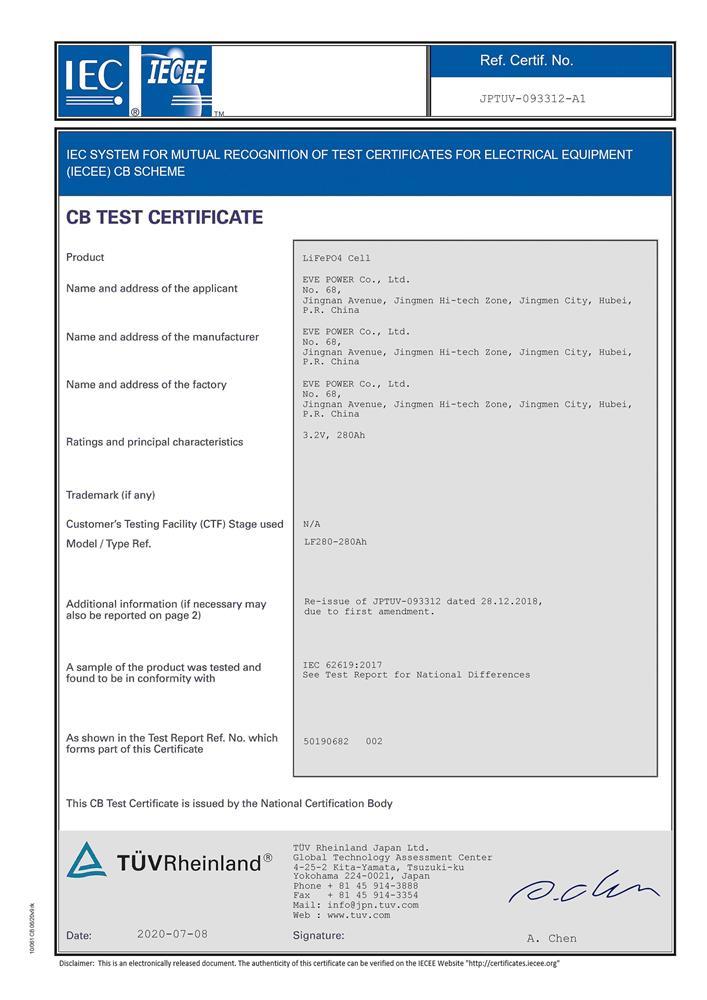
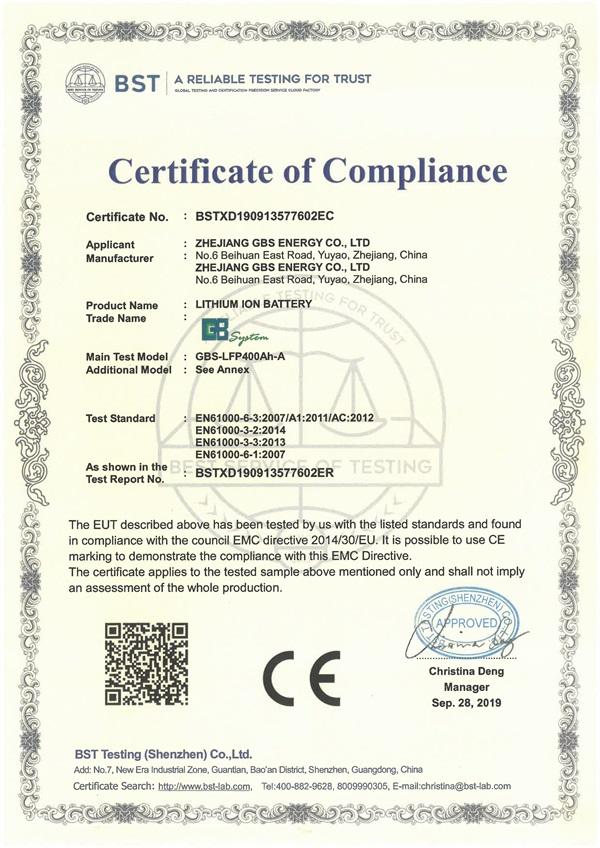
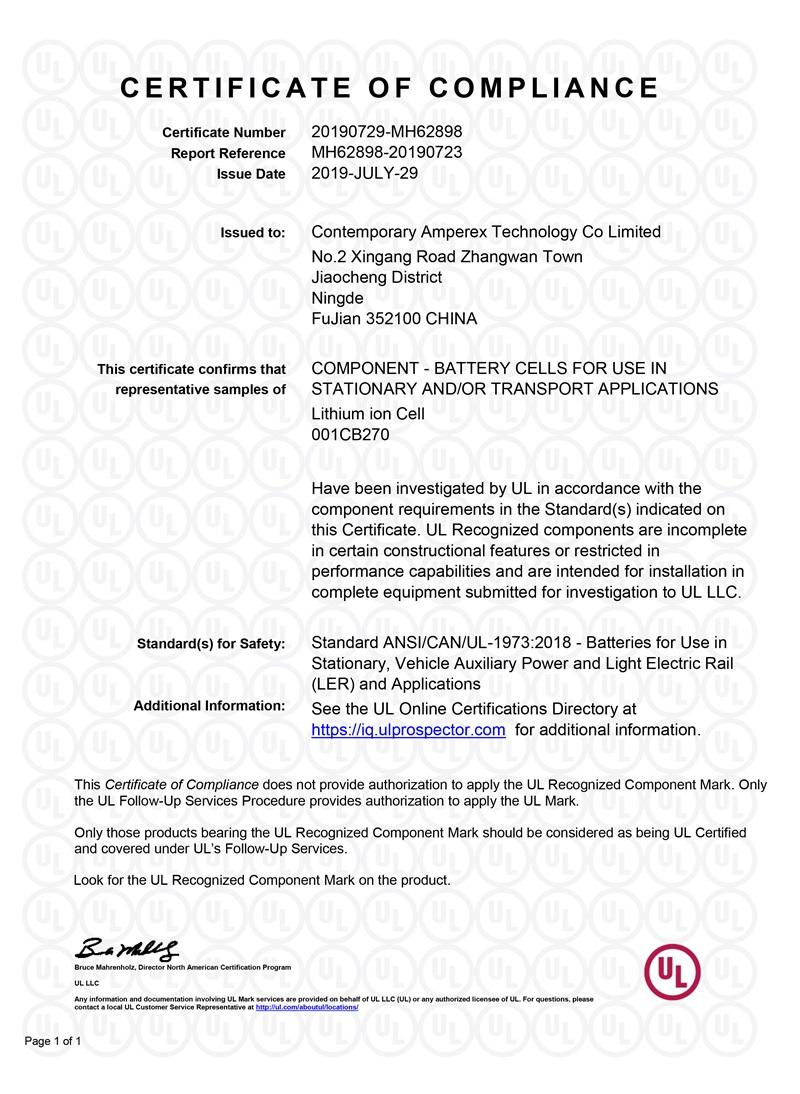
Yes. Applicable requirements depend on the country, facility, UPS size, and installation. IEC 62040 addresses UPS safety and performance. For stationary battery systems in North America, project specifications may also call for standards such as UL 1973. Certification does not remove the need for correct installation, but it helps demonstrate that the product has been evaluated against defined electrical, mechanical, and thermal safety requirements.
When Should a UPS Battery Be Replaced?
Replace a UPS battery when it can no longer provide the runtime required by the load, fails the approved test criteria, develops a physical defect, or reaches the replacement condition specified by the manufacturer or site maintenance plan.
Common warning signs include:
- A battery fault message or repeated alarm
- A failed UPS self test
- Runtime that is materially shorter than the established baseline
- Unusual heat, odor, noise, leakage, or corrosion
- A swollen or cracked case
- A unit with voltage, resistance, or temperature that differs from the rest of the string
- A battery that has reached the manufacturer's service interval even if no visible damage is present
A swollen, leaking, smoking, or unusually hot battery needs immediate attention. Do not open the case, puncture it, or continue charging it. Isolate the area if safe to do so and follow the UPS manufacturer and facility emergency procedures.
Safe Replacement Rules
- Use the exact replacement specified for the UPS model.
- Match chemistry, nominal voltage, capacity, connector, physical size, and quantity.
- Do not connect a generic lithium battery to a lead acid UPS unless the complete combination is explicitly approved.
- Do not mix old and new batteries or different models within a series string unless the manufacturer permits it.
- Follow the service manual for shutdown, bypass, personal protective equipment, torque, and post installation testing.
- Use a qualified technician for large, high voltage, hardwired, or three phase systems.
- Record the installation date, model, serial information, and baseline measurements.
Small UPS units may have a user replaceable cartridge. Larger systems can expose technicians to dangerous voltage, arc energy, heavy lifting, acid, and stored electrical energy even after input power is disconnected.
UPS Battery Maintenance Checklist
- Keep the battery area within the manufacturer's temperature and ventilation limits.
- Keep vents clear and remove dust without disturbing energized parts.
- Review alarms and event logs after every utility disturbance.
- Run automatic self tests at the interval specified by the UPS maker.
- Trend actual runtime, not only the battery status icon.
- Inspect for swelling, leakage, corrosion, loose connections, or heat damage.
- For critical systems, schedule capacity and electrical testing under a qualified maintenance program.
- Verify that replacement batteries and safe disposal are available before an urgent failure.
Recycle Spent UPS Batteries
UPS batteries do not belong in household waste. Use an authorized battery collection or recycling service and follow local rules for packaging, transport, and damaged batteries. Eaton directs owners of small single phase UPS batteries to a collection network and uses an environmental service provider for larger three phase systems. Your UPS supplier or local authority can identify the correct route in your region.
Frequently Asked Questions About UPS Batteries
What is the most common UPS battery type?
VRLA AGM is the most common battery in small UPS systems because it is proven, widely available, and inexpensive. Lithium ion use is growing where longer service life, lower weight, fast recharge, and monitoring justify a higher initial cost.
Should I leave a UPS plugged in all the time?
Yes, during normal use a UPS should remain connected to utility power so its charger can maintain the battery. Follow the manual if the unit will be stored, because battery chemistry and storage duration determine the required state of charge and recharge interval.
Can a UPS battery last ten years?
Some lithium ion UPS systems are designed for eight to ten years or more, and certain industrial batteries have longer design ratings. Service life still depends on the model and conditions. Most small VRLA UPS batteries should not be assumed to last ten years.
Can I put a higher capacity battery in my UPS?
Only if the UPS manufacturer approves that battery or external cabinet. More capacity changes charge time, heat, fault current, monitoring, and protection requirements. A battery that fits physically can still be electrically unsafe or incompatible.
Does a bigger UPS always provide longer runtime?
No. A larger power rating means the UPS can support a larger load, but runtime depends on battery energy and the actual connected load. Compare manufacturer runtime data at the same watt load.
How often should a UPS battery be tested?
Use the interval in the UPS and battery manuals. A small office UPS may rely on scheduled self tests and periodic runtime checks. A critical commercial system needs a documented inspection and testing program based on the battery chemistry, site risk, and applicable standards.
Is LiFePO4 better than lead acid for every UPS?
No. LiFePO4 offers long cycle life, low weight, and useful monitoring, but lead acid can be the more economical choice for a small UPS with infrequent outages. Compatibility is decisive. Never change chemistry unless the UPS, charger, firmware, BMS, and enclosure are approved for it.
What is the difference between UPS battery life and UPS life?
The battery is a replaceable energy storage component. The UPS also contains power electronics, fans, capacitors, relays, and controls that age on their own schedules. Replacing a worn battery can restore runtime, but it does not renew the rest of an old UPS.
Final Recommendation
Choose a UPS battery by working backward from the required outcome. Define the load, runtime, environment, maintenance plan, safety requirements, and acceptable risk. VRLA remains practical for low cost, lightly cycled installations. Lithium ion, including LiFePO4, is compelling when longer life, lower weight, fast recharge, and remote visibility reduce operating cost. VLA and nickel cadmium remain specialized choices for large or harsh installations.
Whatever the chemistry, buy a complete compatible system, size it with model specific runtime data, keep it cool, test it under a documented plan, and replace it before the required runtime is at risk.
- Next:DIY LiFePO4 Car Battery Guide: Can You Build One Safely?
- Previous:Nature Publishes Landmark Study: Dynamic Discharge Boosts Battery Life by 38%
Contact Details
Lithium LiFePO4 Batteries and Lithium LiFePO4 Cells Supplier - LiFePO4 Battery Shop
Contact Person: Miss. Elena Wang
WhatsApp : +8615263269227
Skype : +8615263269227
WeChat :15263269227
Email : info@lifepo4batteryshop.com
All Products
- Forklift Battery Charger (0)
- TC Elcon Charger (5)
- Headway Lithium Battery (6)
- Blade Battery (10)
- Semi Solid State Battery (6)
- A123 Battery (6)
- Sinopoly Battery (7)
- GBS Battery (20)
- CALB Battery (26)
- Cylindrical Cell (14)
- Energy Storage System (0)
- Battery Management System (15)
- Sodium ion Battery Cell (4)
- Lithium Titanate Battery (23)
- Ternary Lithium Battery Cell (12)
- REPT Battery (10)
- BYD Battery (5)
- CATL Battery (15)
- Thunder Sky Winston Battery (26)
- EVE Battery (39)
- LiFePO4 Battery Cell (40)
Certification
Customer Reviews
- I have fond memories of our meeting in Shanghai with LiFePO4 Battery Shop Elena. Your company left a strong impression on me with its impressive growth and professionalism. We both value straightforwardness and honesty, which I believe are the most important qualities in any partnership. I am confident that we can build a successful collaboration based on these shared values. —— Robert from USA
- I've been working with LiFePO4 Battery Shop for years, and their reliability is unmatched. While other suppliers frequently change sales teams, LiFePO4 Battery Shop has consistently provided exceptional service with a stable team. Their commitment to quality and customer support truly sets them apart. —— Henry from Australia