
Blog
Understanding C-Rate: The Key to Battery Performance
2025-12-11 | Calvin
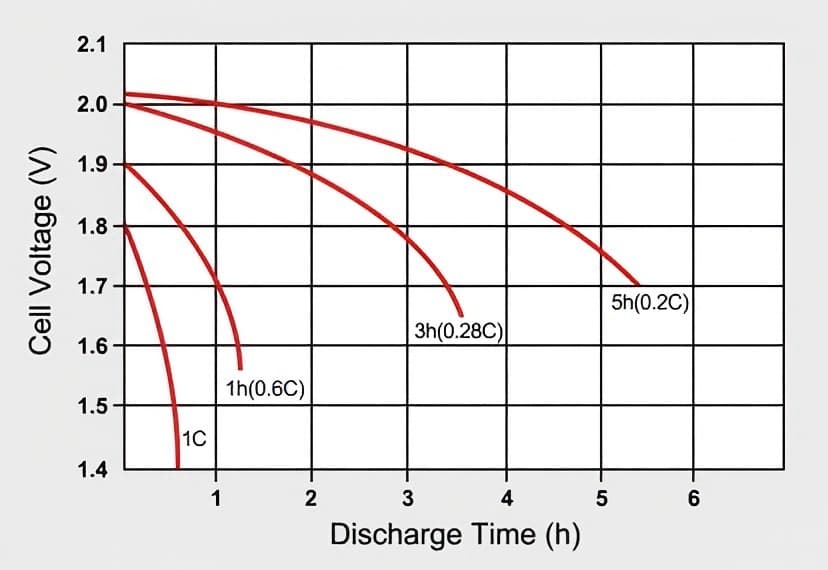
Table of Contents
- What is C-rate?
- How Does C-rate Work?
- C-rate Explained with Examples
- How to Measure Battery Capacity?
- The Impact of High C-rates on Battery Performance
- C-rate and Battery Lifespan
- Practical Applications of C-rate
- Conclusion
What is C-rate?
In battery technology, C-rate refers to the rate at which a battery is charged or discharged relative to its maximum capacity. The C-rate is a crucial factor in determining how quickly a battery can charge or discharge and plays a significant role in evaluating battery performance, lifespan, and efficiency.
How Does C-rate Work?
A battery’s capacity is commonly rated at 1C, meaning it can theoretically discharge 1 Ampere (A) for one hour. For example, a 1Ah (amp-hour) battery rated at 1C will provide 1A of current over one hour, discharging entirely. The same battery discharging at a 0.5C (half the current) would last for two hours, while discharging at 2C would deplete the battery in 30 minutes. This difference in discharge time is directly tied to the rate of current draw and is essential for understanding the battery's efficiency at different speeds.
C-rate Explained with Examples
To put it simply, a C-rate defines how fast a battery can be charged or discharged without compromising its performance. Here’s a breakdown of what different C-rates mean for typical batteries:
| C-rate | Time (for 1Ah battery) |
|---|---|
| 5C | 12 minutes |
| 2C | 30 minutes |
| 1C | 1 hour |
| 0.5C (C/2) | 2 hours |
| 0.2C (C/5) | 5 hours |
| 0.1C (C/10) | 10 hours |
| 0.05C (C/20) | 20 hours |
Table 1: C-rate and Service Times for a 1Ah Battery
The higher the C-rate, the faster the battery discharges. But rapid discharging (high C-rates) can result in energy losses due to internal resistance, which generates heat and reduces the total available capacity. In fact, charging and discharging at high C-rates often results in reduced efficiency and shorter overall battery life.
How to Measure Battery Capacity?
Battery capacity is often measured using a battery analyzer, which discharges a battery at a known C-rate while recording how long it takes to reach the battery's end-of-discharge voltage. For different types of batteries, the cutoff voltage varies:
- Lead-acid batteries: 1.75V per cell
- NiCd/NiMH batteries: 1.0V per cell
- Li-ion batteries: 3.0V per cell
For example, if a 1Ah battery discharges at 1A for one hour, it’s considered fully charged, or 100% capacity. But if it discharges faster, say at 2A (2C), the battery’s capacity will likely appear lower, typically around 95% of its nominal rating. Conversely, discharging more slowly (e.g., at 0.5C) may yield results above 100%, as slower discharges generally have fewer internal losses.
The Impact of High C-rates on Battery Performance
Fast charging or discharging at high C-rates is commonly associated with high-performance batteries, such as those used in electric vehicles (EVs) and other advanced technologies. For example, lithium-based Li-ion batteries are often rated for 1C (discharge in one hour), and this rate is the maximum recommended discharge in many cases.
However, not all batteries are capable of handling high C-rates efficiently. Lead-acid batteries, for instance, typically have a much lower C-rate limit, often rated around 0.2C or C/5, meaning they discharge more slowly over several hours. Even under these conditions, lead-acid batteries rarely achieve 100% capacity, as they tend to be overestimated during manufacturing.
C-rate and Battery Lifespan
One of the most critical considerations when choosing a battery is its lifespan, which can be significantly affected by the C-rate. Fast discharges (higher C-rates) cause increased internal resistance, leading to greater heat buildup and accelerated wear and tear. Over time, this reduces the battery's total cycle life, meaning it will require replacement sooner.
In contrast, slower discharges (lower C-rates) generally result in longer battery life, as the lower current reduces internal stress. However, the trade-off is longer charge/discharge times, which might not be suitable for applications requiring rapid energy delivery.
Practical Applications of C-rate
Different types of batteries are suited for different applications, depending on their ability to handle various C-rates:
- Lead-acid batteries are often used in applications where a slow discharge is acceptable, such as in backup power systems and uninterruptible power supplies (UPS).
- Nickel-based batteries (NiCd and NiMH) can tolerate higher C-rates and are used in power tools and RC vehicles.
- Li-ion batteries are popular in consumer electronics (like smartphones and laptops) and electric vehicles due to their ability to handle moderate to high C-rates while maintaining high energy density and long cycle life.
Some advanced battery chemistries, such as LiFePO4 (Lithium Iron Phosphate), can tolerate discharge rates up to 10C, making them ideal for high-demand applications like electric vehicles and power storage systems.
Conclusion
Understanding C-rate is essential for selecting the right battery for your needs. Whether you're considering batteries for energy storage, electric vehicles, or consumer electronics, the C-rate dictates how quickly the battery will discharge and recharge—and, ultimately, how well it will perform over time.
By carefully considering your battery's C-rate, you can ensure that it performs optimally, lasts longer, and meets the demands of your specific application.
- Next:Difference Between On-Board Charger and Off-Board Charger for Electric Vehicles
- Previous:Exploring the Cycle Life of LiFePO4 Batteries
Contact Details
Lithium LiFePO4 Batteries and Lithium LiFePO4 Cells Supplier - LiFePO4 Battery Shop
Contact Person: Miss. Elena Wang
WhatsApp : +8615263269227
Skype : +8615263269227
WeChat :15263269227
Email : info@lifepo4batteryshop.com
All Products
- Blade Battery (8)
- Semi Solid State Battery (0)
- A123 Battery (5)
- Sinopoly Battery (7)
- GBS Battery (16)
- CALB Battery (22)
- Cylindrical Cell (6)
- Energy Storage System (0)
- Battery Management System (2)
- Sodium ion Battery Cell (3)
- Lithium Titanate Battery (20)
- Ternary Lithium Battery Cell (11)
- REPT Battery (8)
- BYD Battery (2)
- CATL Battery (14)
- Thunder Sky Winston Battery (21)
- EVE Battery (29)
- LiFePO4 Battery Cell (4)
Certification
Customer Reviews
- I have fond memories of our meeting in Shanghai with LiFePO4 Battery Shop Elena. Your company left a strong impression on me with its impressive growth and professionalism. We both value straightforwardness and honesty, which I believe are the most important qualities in any partnership. I am confident that we can build a successful collaboration based on these shared values. —— Robert from USA
- I've been working with LiFePO4 Battery Shop for years, and their reliability is unmatched. While other suppliers frequently change sales teams, LiFePO4 Battery Shop has consistently provided exceptional service with a stable team. Their commitment to quality and customer support truly sets them apart. —— Henry from Australia