
Blog
8D Deep Cycle Battery Guide: AGM vs Lithium — The Honest Comparison
2026-07-05 | Calvin
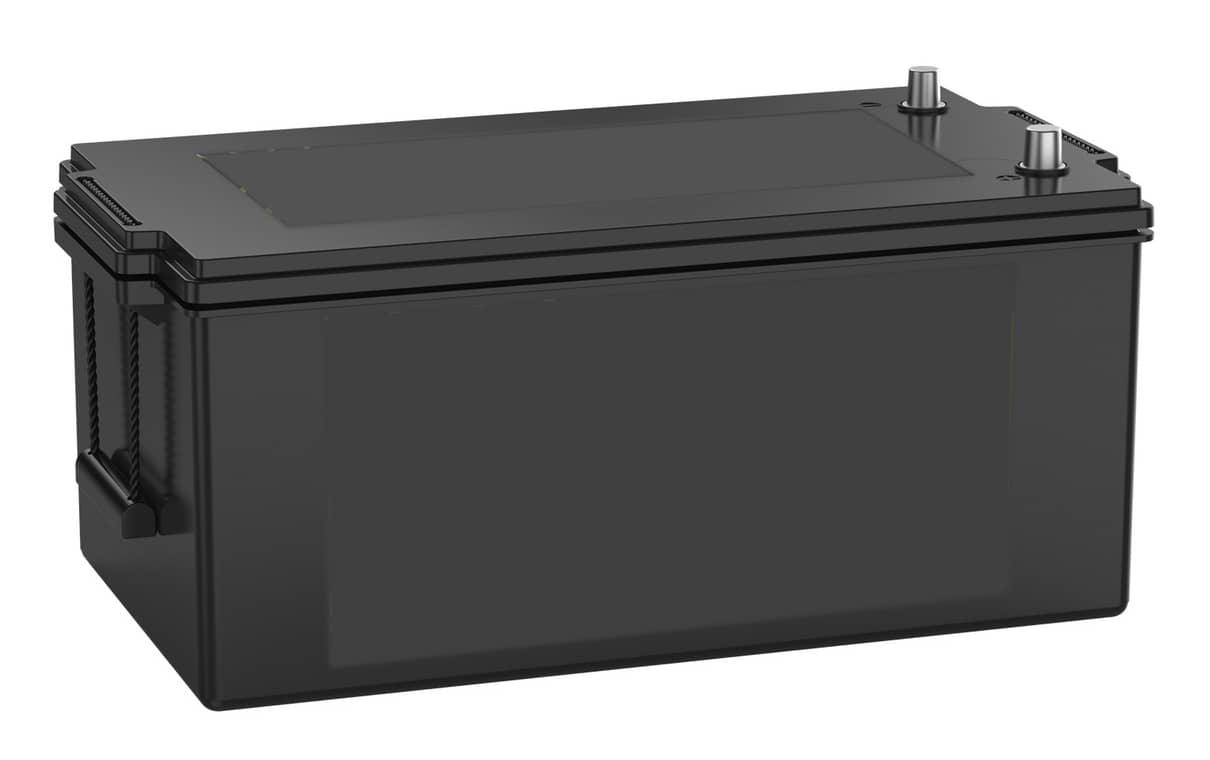
If you run a large marine house bank, an RV, or an off-grid solar system, the 8D battery is the heavyweight you reach for when smaller batteries can't keep up. The question almost every owner now faces isn't whether to use an 8D — it's whether to stick with a proven AGM lead-acid unit or pay more upfront for lithium (LiFePO4). Most guides answer this like a sales pitch: lithium wins, end of story. The reality is more useful. Lithium is the better battery for most demanding, high-cycle uses, but AGM still wins in specific situations, and the only way to choose well is to understand the trade-offs and run the actual numbers. This guide does both.
What Is an 8D Battery?
"8D" is a size designation, not a chemistry. It's a BCI Group size set by Battery Council International, the body that standardizes battery dimensions, terminal layout, and fitment in North America. Because the group number defines the physical case, any 8D battery — AGM, flooded, or lithium — shares roughly the same footprint and drops into the same tray.
Typical 8D specs:
- Dimensions: approximately 21″ L × 11″ W × 10″ H — one of the largest 12V cases sold to consumers.
- Capacity: commonly 230–300 amp-hours (Ah), depending on chemistry and brand.
- Weight: a traditional lead-acid 8D runs 120–180 lbs; a comparable LiFePO4 8D often weighs 60–90 lbs.
- Typical uses: marine house banks, large RVs, off-grid solar, and industrial or commercial standby power.
It's worth noting that some 8D batteries are built as starting batteries (high cold-cranking amps) and others as deep cycle (sustained discharge). Always confirm the spec matches your job — a deep-cycle 8D is what you want for house loads and solar storage, not engine starting.
AGM vs Lithium 8D at a Glance
Here's the head-to-head before we get into the detail. Figures are typical ranges for deep-cycle 8D-class units; always check the manufacturer datasheet for a specific model.
| Factor | AGM (Lead-Acid) | Lithium (LiFePO4) |
|---|---|---|
| Usable capacity | ~50% of rated | ~80–100% of rated |
| Cycle life | ~300–500 cycles (3–5 yrs) | ~3,000–5,000+ cycles (8–10+ yrs) |
| Weight | 120–180 lbs | 60–90 lbs |
| Charge speed | Slower; tapering absorption stage | Up to ~5× faster with the right charger |
| Maintenance | Largely maintenance-free (sealed) | Maintenance-free; BMS-protected |
| Cold-weather charging | Charges fine below freezing | Must not charge below ~32°F / 0°C without heater or low-temp cutoff |
| Upfront cost | Lower | Higher (2–4×) |
| Lifetime cost | Higher (more replacements) | Lower per usable cycle |
Where Lithium Wins
Usable capacity is the big one, and it's where the headline Ah number misleads people. A lead-acid 8D shouldn't be drawn below about 50% state of charge without shortening its life, so a 250Ah AGM gives you roughly 125Ah of usable energy. A LiFePO4 8D can be discharged to 80–100% depth of discharge safely, so a 250Ah lithium delivers closer to 200–250Ah usable. In practice, a lithium battery of the same rated capacity often gives you nearly double the energy you can actually use.
Cycle life compounds that advantage. AGM typically delivers a few hundred deep cycles before capacity fades; quality LiFePO4 is rated for thousands. For someone cycling a battery daily — a liveaboard boat, a full-time RV, a daily-cycled solar bank — that's the difference between replacing the battery every few years and keeping it for a decade.
Weight and charge speed round out the case. Cutting 60–100 lbs per battery matters on a boat or RV where payload and balance count, and faster recharge means less generator runtime and quicker turnaround between uses. For high-demand, high-cycle applications, lithium is the stronger battery — and the rest of this guide assumes you've understood why before deciding it's worth the premium.
Where AGM Still Makes Sense
This is the section the product-driven guides leave out. AGM remains the smarter buy in several real situations:
- Cold-weather charging. LiFePO4 cells can be damaged if charged below roughly 32°F/0°C without an internal heater or a BMS that blocks low-temp charging. AGM has no such restriction and charges reliably in sub-freezing conditions — a genuine advantage for unheated installations in cold climates.
- Low upfront budget. If cash flow is the constraint and the battery will see light or occasional use, AGM's lower purchase price wins. The lifetime-cost argument for lithium only pays off when you actually cycle the battery enough to use its longevity.
- Low-cycle or standby duty. For backup power that rarely discharges deeply — emergency lighting, occasional-use setups — AGM's shorter cycle life is largely irrelevant, and you're paying a premium for lithium endurance you'll never consume.
- Simpler charging. AGM works with conventional lead-acid chargers and alternators without reprogramming. Lithium needs a lithium-specific charge profile to perform and last.
The Real Cost Comparison (Total Cost of Ownership)
"Lithium has a lower lifetime cost" gets repeated everywhere but rarely shown. Here's the logic, with round illustrative numbers — plug in your own prices and usage.
Say an AGM 8D costs around $400 and a comparable LiFePO4 8D costs around $1,200. If you cycle the battery daily, the AGM might last roughly 3 years before replacement, while the lithium lasts 10+ years. Over a 10-year horizon you'd buy the AGM roughly 3 times (~$1,200 total) versus the lithium once (~$1,200) — and that's before accounting for the fact that the lithium delivers nearly twice the usable energy per cycle. On a cost-per-usable-kWh-cycle basis, lithium comes out clearly cheaper for heavy use.
Flip the usage assumption, though, and the math flips too. If the battery only discharges occasionally — a few dozen cycles a year — the AGM may last close to its calendar limit regardless of cycling, and you'll have paid three times the price for lithium endurance you never used. Cycle frequency is the deciding variable. The more you cycle, the more lithium's economics dominate; the less you cycle, the more AGM's lower upfront cost holds up.
What Searchers Often Get Wrong
A few persistent misconceptions are worth clearing up before you buy:
- "Lithium is a drop-in replacement." Physically, yes — same 8D footprint. Electrically, not quite. You'll generally need a lithium-compatible charge profile, and your existing charger, alternator, or solar charge controller may need new settings or a DC-DC charger to charge lithium correctly.
- The voltage curve affects your fuel gauge. Lithium holds a flat voltage across most of its discharge, which is great for stable output but means a traditional voltage-based "fuel gauge" reads inaccurately. A coulomb-counting battery monitor gives a true state of charge.
- The cold-charging limit is real. It bears repeating: don't charge bare LiFePO4 below freezing. Choose a model with a built-in heater or low-temp cutoff if your installation gets cold.
Which Should You Choose?
A quick framework by use case:
- Marine house bank (cruising / liveaboard): Lithium — high daily cycling, weight savings, and fast recharge all favor it.
- RV boondocking / full-time RV: Lithium — usable capacity and longevity earn back the premium quickly.
- Off-grid solar (daily cycling): Lithium — depth of discharge and cycle life are decisive here.
- Industrial / standby backup (rare discharge): AGM — low cycle count makes lithium's endurance largely wasted.
- Cold-climate, unheated install: AGM, unless you choose a self-heating lithium model.
- Tight budget / light use: AGM — lower upfront cost wins when cycling is minimal.
FAQ
How long do 8D batteries last?
An AGM 8D typically lasts 3–5 years, or roughly 300–500 deep cycles. A LiFePO4 8D commonly lasts 8–10+ years, or several thousand cycles, depending on depth of discharge and usage.
Are 8D batteries deep cycle?
Not always. 8D refers to the size, not the purpose. Many 8D batteries are built for deep cycling, but some are starting or dual-purpose units. Check the datasheet to confirm the model is a deep-cycle type for house or solar loads.
What are the dimensions of an 8D battery?
Approximately 21″ long × 11″ wide × 10″ tall, making it one of the largest 12V batteries available. This footprint is standardized under the BCI Group 8D designation, so units from different makers fit the same tray.
Can I replace an AGM 8D with lithium directly?
It will fit the same space, but it's not purely plug-and-play. You'll generally need a lithium-appropriate charge profile and may need to adjust or upgrade your charger, alternator setup, or solar charge controller. Confirm cold-temperature charging protection if your installation gets near freezing.
The Bottom Line
For high-cycle, weight-sensitive applications — cruising boats, full-time RVs, daily-cycled solar — a lithium 8D is the better battery and, over its lifespan, usually the cheaper one per usable cycle. For occasional-use backup, cold unheated installs, or tight budgets, a quality AGM 8D remains a sensible, lower-risk choice. The right answer comes down to one question: how hard and how often will you actually cycle the battery? Answer that honestly, run the cost math on your own prices, and the choice becomes clear.
- Next:Should You Charge a LiFePO4 Battery to 100% or 80%?
- Previous:LiFePO4 Battery: Complete Guide to Pros, Cons, Lifespan, Safety and Best Uses
Contact Details
Lithium LiFePO4 Batteries and Lithium LiFePO4 Cells Supplier - LiFePO4 Battery Shop
Contact Person: Miss. Elena Wang
WhatsApp : +8615263269227
Skype : +8615263269227
WeChat :15263269227
Email : info@lifepo4batteryshop.com
All Products
- TC Elcon Charger (0)
- Headway Lithium Battery (6)
- Blade Battery (10)
- Semi Solid State Battery (6)
- A123 Battery (6)
- Sinopoly Battery (7)
- GBS Battery (16)
- CALB Battery (26)
- Cylindrical Cell (14)
- Energy Storage System (0)
- Battery Management System (15)
- Sodium ion Battery Cell (4)
- Lithium Titanate Battery (23)
- Ternary Lithium Battery Cell (12)
- REPT Battery (10)
- BYD Battery (5)
- CATL Battery (15)
- Thunder Sky Winston Battery (26)
- EVE Battery (37)
- LiFePO4 Battery Cell (37)
Certification
Customer Reviews
- I have fond memories of our meeting in Shanghai with LiFePO4 Battery Shop Elena. Your company left a strong impression on me with its impressive growth and professionalism. We both value straightforwardness and honesty, which I believe are the most important qualities in any partnership. I am confident that we can build a successful collaboration based on these shared values. —— Robert from USA
- I've been working with LiFePO4 Battery Shop for years, and their reliability is unmatched. While other suppliers frequently change sales teams, LiFePO4 Battery Shop has consistently provided exceptional service with a stable team. Their commitment to quality and customer support truly sets them apart. —— Henry from Australia