
Blog
NMC 811 Battery: High Energy Density Benefits, Tradeoffs, and Best Uses
2026-10-08 | Calvin
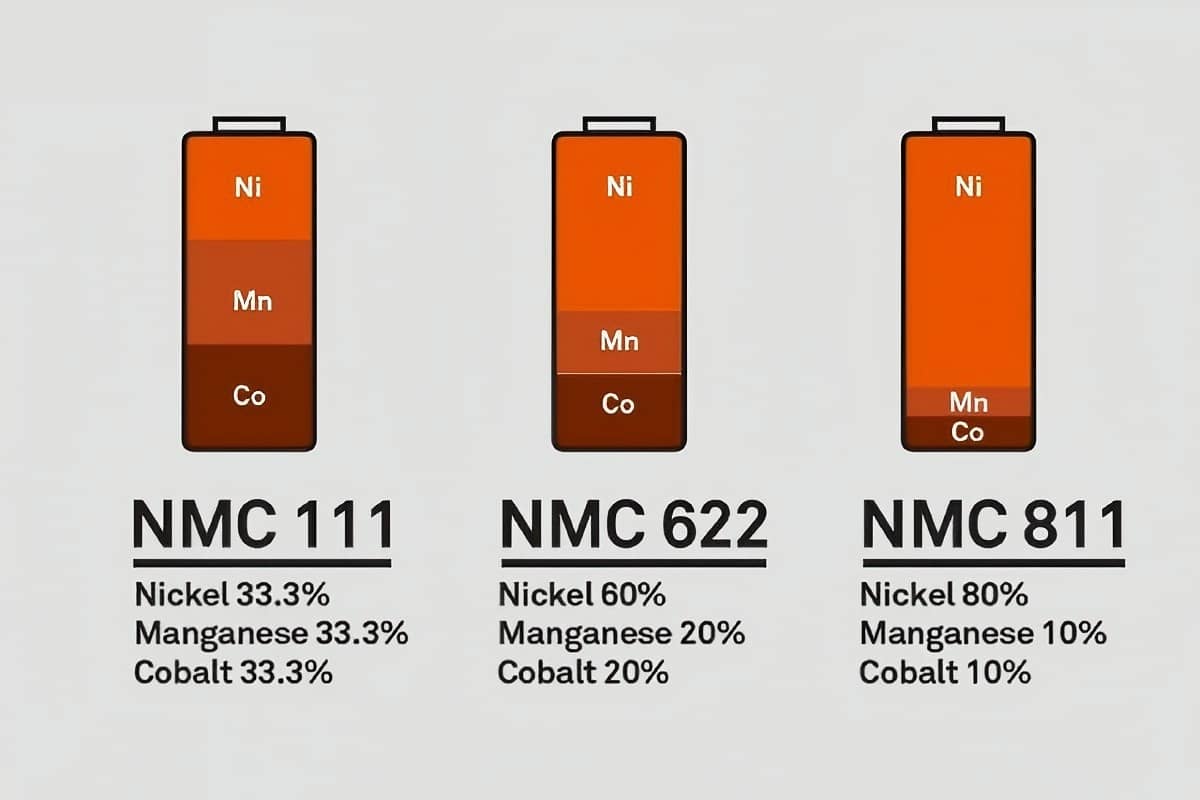
An NMC 811 battery is a lithium-ion battery that uses a nickel manganese cobalt oxide cathode with an 8:1:1 ratio of nickel, manganese, and cobalt. In plain terms, the cathode is about 80% nickel, 10% manganese, and 10% cobalt. The higher nickel content helps raise specific energy, which is why NMC 811 is used in applications where weight, range, and runtime matter.
It is not a perfect chemistry for every job. NMC 811 can deliver excellent energy density, but it needs careful cell manufacturing, electrolyte control, pack design, cooling, BMS protection, and voltage management. For buyers, engineers, and battery project managers, the real question is not whether NMC 811 is the best battery chemistry. The better question is where its energy advantage is worth the added safety, aging, and supply-chain requirements.
What does NMC 811 mean?
NMC stands for nickel manganese cobalt. The numbers show the approximate metal ratio in the cathode. NMC 111 uses an equal 1:1:1 balance. NMC 523 increases nickel and reduces cobalt. NMC 622 goes further in the same direction. NMC 811 is a nickel-rich version with a much higher nickel share and lower cobalt content.
| Chemistry | Nickel | Manganese | Cobalt | General purpose |
|---|---|---|---|---|
| NMC 111 | 1 part | 1 part | 1 part | Balanced early NMC chemistry |
| NMC 523 | 5 parts | 2 parts | 3 parts | Higher energy with reduced cobalt |
| NMC 622 | 6 parts | 2 parts | 2 parts | EV and industrial cells needing improved energy density |
| NMC 811 | 8 parts | 1 part | 1 part | High-energy cells for range-sensitive or weight-sensitive applications |
The full cathode formula is commonly written as LiNi0.8Mn0.1Co0.1O2. Battery material suppliers describe NMC811 as a layered oxide cathode material with an 8:1:1 nickel, manganese, and cobalt ratio used for high specific energy lithium-ion applications.
Why nickel-rich NMC 811 improves energy density
Nickel is the main reason NMC 811 attracts attention. In NMC cathodes, nickel contributes strongly to capacity and specific energy. More nickel generally allows the cathode to store more lithium and deliver more energy for the same cell mass. That is why NMC 811 is attractive for electric vehicles, drones, eVTOL development, premium portable equipment, and other designs where every kilogram matters.
Battery University explains that NMC chemistry can be tailored for energy cells or power cells, and that nickel is known for high specific energy while manganese improves stability and internal resistance. It also notes that cobalt stabilizes nickel and that manufacturers have been reducing cobalt content with some performance compromises.
This is the key tradeoff: raising nickel helps energy density, but reducing cobalt and manganese gives engineers less built-in stabilizing support. Good NMC 811 performance therefore depends heavily on coating, doping, electrolyte additives, formation process, moisture control, electrode design, and pack-level thermal management.
Main benefits of NMC 811 batteries
Higher energy density for longer runtime
The main benefit of NMC 811 is high energy density. In a vehicle, that can mean longer range without increasing pack size as much. In a drone, it can mean longer flight time or more payload for the same battery weight. In portable industrial equipment, it can make a product lighter while keeping runtime competitive.
Real energy density depends on the complete cell design, not just the cathode. Cell format, anode type, electrolyte, separator, electrode loading, safety margin, and pack construction all affect the final Wh/kg and Wh/L. For that reason, it is better to compare actual cell data sheets than to assume every NMC 811 cell reaches the same number.
Lower cobalt content than older NMC and LCO chemistries
Cobalt is useful because it helps stabilize layered oxide cathodes, but it is expensive and exposed to supply-chain risk. USGS states that the leading global use of cobalt is in rechargeable battery electrodes, which helps explain why battery manufacturers keep looking for lower-cobalt cathode designs.
NMC 811 does not remove cobalt completely. It reduces cobalt compared with NMC 111, NMC 523, NMC 622, and lithium cobalt oxide. That can help lower cobalt dependence while keeping higher energy density than cobalt-free chemistries such as LFP in many cell designs.
Good fit for long-range EV packs
Long-range EVs need high usable energy without making the pack too heavy. This is where nickel-rich cathodes can be useful. The International Energy Agency notes that larger EV batteries have a direct impact on critical mineral demand, including nickel, cobalt, lithium, and manganese. It also notes that battery size affects charging time, grid pressure, and material use.
NMC 811 can help reduce pack mass for a given range target, but the final result depends on the vehicle platform. Aerodynamics, motor efficiency, thermal management, software, and pack architecture can matter as much as chemistry.
Useful for drones and other weight-sensitive systems
Drones, UAVs, robotics, and mobile inspection tools are sensitive to battery weight. A small increase in battery mass can reduce payload or flight time. NMC 811 can be useful when the system needs high energy per kilogram and the discharge rate is within the cell's design limits.
For high-power racing drones or aggressive discharge applications, chemistry alone is not enough. The cell must be designed for the required C-rate, thermal rise, voltage sag, and cycle profile. An energy-optimized NMC 811 cell is not automatically a high-power cell.
Better energy density than LFP in many designs
LFP is widely used because it is stable, long-lived, cobalt-free, and often lower cost. Its drawback is lower specific energy. Battery University describes Li-phosphate as strong in safety and cycle life, but with lower specific energy than cobalt-blended lithium-ion systems. That is why LFP is common in stationary storage, entry EVs, and applications where weight is less critical, while NMC 811 is more attractive where energy density is the priority.
NMC 811 is not automatically safer than other chemistries
One common mistake is calling NMC 811 both high-energy and highly safe without qualification. Higher energy density means more stored energy in a smaller space. Nickel-rich cathodes also require stronger control of heat, high state of charge, overcharge, and cell quality. NMC 811 can be safe in a well-designed pack, but safety is a system outcome, not only a cathode label.
Researchers describe nickel-rich NMC811 cathodes as promising for high-energy lithium-ion batteries, but also point to surface instability, structural degradation, and high-voltage or high-temperature stress as problems that must be managed.
In practical battery packs, safety depends on:
- Cell quality and manufacturing consistency
- Separator and electrolyte stability
- Cell balancing and voltage monitoring
- Overcharge and over-discharge protection
- Thermal sensors and cooling design
- Module spacing and propagation barriers
- Mechanical protection against crush, vibration, and puncture
- Certification testing and traceable production controls
NMC 811 vs LFP, NMC 622, NCA, and LCO
The best chemistry depends on the job. NMC 811 is usually selected when energy density carries more value than maximum cycle life or lowest cost. LFP is often selected when safety margin, long cycle life, and lower cost are more important than compactness. NCA is another high-energy nickel-rich chemistry. LCO is common in consumer electronics but is less attractive for large power packs because of cobalt content and safety limitations.
| Chemistry | Strength | Weakness | Best-fit applications |
|---|---|---|---|
| NMC 811 | High energy density and reduced cobalt compared with older NMC | Needs strong thermal, voltage, and quality control | Long-range EVs, drones, high-end portable power, robotics |
| NMC 622 | Balanced energy and stability | Lower nickel advantage than NMC 811 | EVs, e-bikes, industrial packs, general-purpose lithium-ion systems |
| LFP | Good thermal stability, long cycle life, cobalt-free chemistry | Lower energy density in many designs | Energy storage, buses, entry EVs, marine, RV, backup power |
| NCA | High energy density and good power potential | Higher safety and cost management requirements | EVs and industrial applications where high specific energy matters |
| LCO | High specific energy for small electronics | High cobalt content, lower thermal stability, limited high-load use | Phones, laptops, cameras, compact consumer devices |
Where NMC 811 works best
Electric vehicles that need long range
NMC 811 makes the most sense when a vehicle needs more range without a much larger battery pack. It is often better suited to passenger EVs, premium vehicles, or performance models than to low-speed utility vehicles where cost and cycle life matter more than pack mass.
Drones, UAVs, and eVTOL development
Aircraft and drones care deeply about weight. A lighter pack can improve endurance, payload, or responsiveness. NMC 811 can be useful here, provided the cells are chosen for the required discharge rate and the pack has suitable cooling, protection, and charge control.
Portable industrial equipment
Inspection tools, field robotics, medical transport devices, and rugged portable power systems may benefit from high energy density when workers need long runtime without carrying a heavier pack.
Premium consumer electronics
Thin, lightweight products can benefit from high-energy lithium-ion cells, but manufacturers must balance capacity against cycle life, fast charging, heat, and long-term swelling risk.
Where NMC 811 may not be the best choice
NMC 811 is not always the best battery chemistry. It may be the wrong choice when a project needs the lowest cost, the highest abuse tolerance, the longest cycle life, or simple thermal management.
- Stationary storage: LFP often makes more sense because pack weight is less important and cycle life is valuable.
- Marine and RV house batteries: LFP is usually preferred because users want long cycle life, lower fire risk, and easier daily operation.
- Low-cost mobility: LFP or sodium-ion may be a better fit where cost matters more than top range.
- High-temperature sites: Nickel-rich cells need careful heat management, especially at high state of charge.
- Simple replacement projects: NMC 811 should not be dropped into a system designed for another chemistry without verifying charger, BMS, enclosure, and certification requirements.
Cycle life and aging: what affects NMC 811 lifespan?
NMC 811 cycle life is not a fixed number. It changes with charge voltage, depth of discharge, temperature, C-rate, cell design, and how long the battery sits at high state of charge. The same cathode chemistry can perform very differently in two different cells.
The biggest aging accelerators are:
- High operating temperature
- Long storage at 100% state of charge
- Repeated fast charging without proper thermal control
- Deep cycling to low voltage limits
- High voltage operation for maximum capacity
- Poor cell balancing in series packs
- Moisture or contamination during manufacturing
For EVs and industrial packs, conservative software can extend service life by limiting everyday charge level, controlling pack temperature, and reserving capacity at the top and bottom of the state-of-charge window.
Charging considerations for NMC 811 batteries
NMC 811 packs need a charger and BMS designed for the exact cell configuration. Do not use charging values from one NMC 811 cell for another unless the manufacturer approves them. Cathode chemistry is only one part of the charge specification.
Good charging practice usually includes:
- Using the manufacturer-specified maximum charge voltage
- Limiting charge current when the pack is cold or hot
- Avoiding long storage at 100% charge when full capacity is not needed
- Allowing cell balancing when the BMS requires it
- Using thermal sensors near the cells, not only near the charger
- Stopping charge immediately if the BMS reports overvoltage, overtemperature, or cell imbalance
Battery University notes that heat and high charge voltage add stress to lithium-ion batteries. That principle is especially important for high-energy packs.
Buyer checklist for NMC 811 battery cells or packs
If you are evaluating NMC 811 cells or battery packs, ask for evidence rather than only headline energy density. A strong supplier should be able to document the cell, pack, and safety limits clearly.
- Cell data sheet with nominal capacity, voltage range, charge current, discharge current, and temperature limits
- Cycle-life test conditions, including depth of discharge, temperature, charge rate, and end-of-life definition
- Thermal runaway and propagation test information for the pack, not only the cell
- UN 38.3 transport test evidence for lithium battery shipping
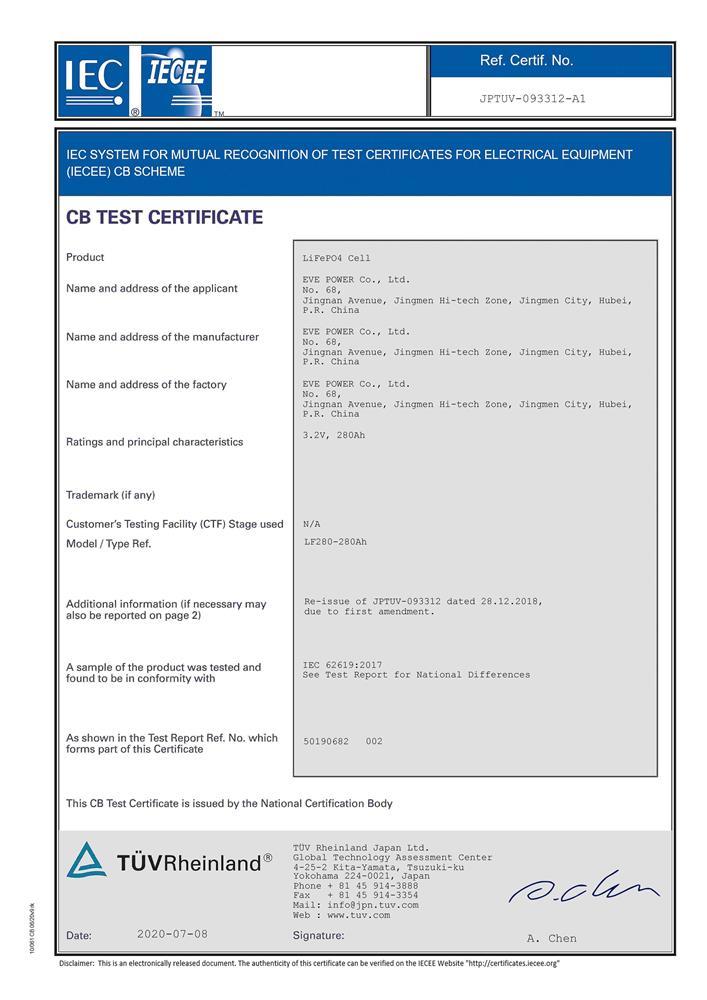
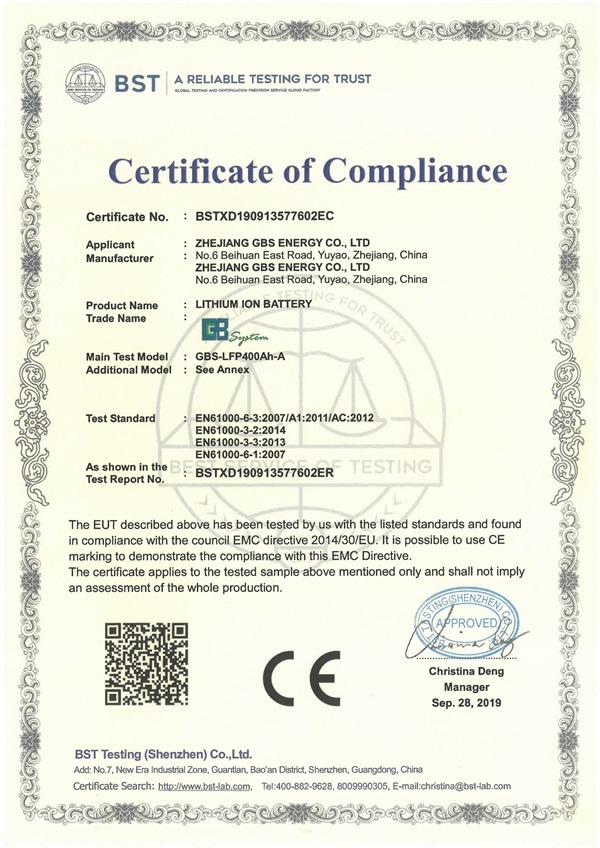
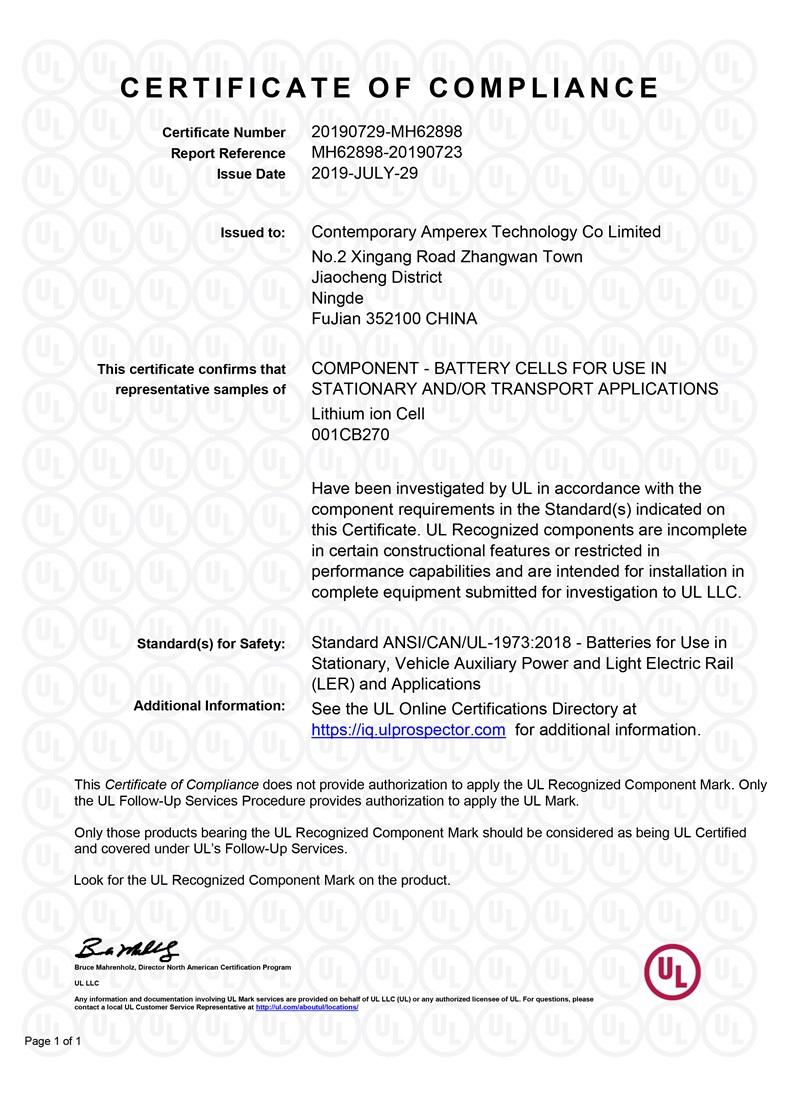
- IEC, UL, CE, or other certifications relevant to the application and market
- BMS functions, including overvoltage, undervoltage, overcurrent, short-circuit, overtemperature, and balancing
- Mechanical protection against vibration, shock, crush, water ingress, and corrosion
- Warranty terms tied to realistic operating conditions
- Traceability for cell batch, pack assembly, and quality inspection
Frequently asked questions
What is an NMC 811 battery?
An NMC 811 battery is a lithium-ion battery that uses a nickel manganese cobalt oxide cathode with an approximate 8:1:1 ratio of nickel, manganese, and cobalt. It is a high-nickel NMC chemistry designed to improve energy density while reducing cobalt content compared with older NMC chemistries.
Is NMC 811 better than LFP?
NMC 811 is usually better when high energy density and lower weight are the main goals. LFP is usually better when safety margin, cycle life, lower cost, and daily durability matter more than compact size or maximum range.
Why does NMC 811 use so much nickel?
Nickel helps increase cathode capacity and specific energy. More nickel allows the cell to store more energy for a given mass, but it also makes stability, coating, electrolyte, and thermal control more important.
Is NMC 811 safe?
NMC 811 can be safe when used in a well-designed battery pack with strong BMS protection, thermal management, quality cells, and proper certification. It should not be described as inherently safer than LFP. Its safety depends heavily on cell quality and pack design.
What are the disadvantages of NMC 811 batteries?
The main disadvantages are higher thermal management requirements, sensitivity to high voltage and high temperature, potential cycle-life tradeoffs, reliance on nickel and cobalt supply chains, and the need for careful manufacturing control.
What is NMC 811 used for?
NMC 811 is used in applications that value high energy density, including long-range electric vehicles, drones, UAVs, robotics, portable equipment, eVTOL development, and premium lithium-ion battery systems.
Does NMC 811 have a long cycle life?
It can have good cycle life, but the number depends on temperature, charge voltage, depth of discharge, current, cell design, and BMS strategy. LFP usually has an advantage when maximum cycle life is the main requirement.
Is NMC 811 cobalt-free?
No. NMC 811 reduces cobalt compared with older NMC and LCO chemistries, but it still contains about 10% cobalt in the cathode metal ratio.
Final takeaway
NMC 811 is important because it pushes lithium-ion batteries toward higher energy density with lower cobalt content than older cobalt-rich chemistries. That makes it valuable for long-range EVs, drones, and other systems where weight and runtime matter. The tradeoff is that high-nickel chemistry needs stronger engineering discipline. For the right use case, NMC 811 can be an excellent high-energy option. For stationary storage, budget mobility, or maximum cycle-life applications, LFP or another chemistry may be the smarter choice.
- Next:How to Charge a Deep Cycle Marine Battery Properly
- Previous:DIY Home Energy Storage Batteries: Benefits, Costs, Safety, and Setup Tips
Contact Details
Lithium LiFePO4 Batteries and Lithium LiFePO4 Cells Supplier - LiFePO4 Battery Shop
Contact Person: Miss. Elena Wang
WhatsApp : +8615263269227
Skype : +8615263269227
WeChat :15263269227
Email : info@lifepo4batteryshop.com
All Products
- Forklift Battery Charger (0)
- TC Elcon Charger (5)
- Headway Lithium Battery (6)
- Blade Battery (10)
- Semi Solid State Battery (6)
- A123 Battery (6)
- Sinopoly Battery (7)
- GBS Battery (20)
- CALB Battery (26)
- Cylindrical Cell (14)
- Energy Storage System (0)
- Battery Management System (15)
- Sodium ion Battery Cell (4)
- Lithium Titanate Battery (23)
- Ternary Lithium Battery Cell (12)
- REPT Battery (10)
- BYD Battery (5)
- CATL Battery (15)
- Thunder Sky Winston Battery (26)
- EVE Battery (39)
- LiFePO4 Battery Cell (41)
Certification
Customer Reviews
- I have fond memories of our meeting in Shanghai with LiFePO4 Battery Shop Elena. Your company left a strong impression on me with its impressive growth and professionalism. We both value straightforwardness and honesty, which I believe are the most important qualities in any partnership. I am confident that we can build a successful collaboration based on these shared values. —— Robert from USA
- I've been working with LiFePO4 Battery Shop for years, and their reliability is unmatched. While other suppliers frequently change sales teams, LiFePO4 Battery Shop has consistently provided exceptional service with a stable team. Their commitment to quality and customer support truly sets them apart. —— Henry from Australia