
Blog
DIY Home Energy Storage Batteries: Benefits, Costs, Safety, and Setup Tips
2026-10-11 | Calvin
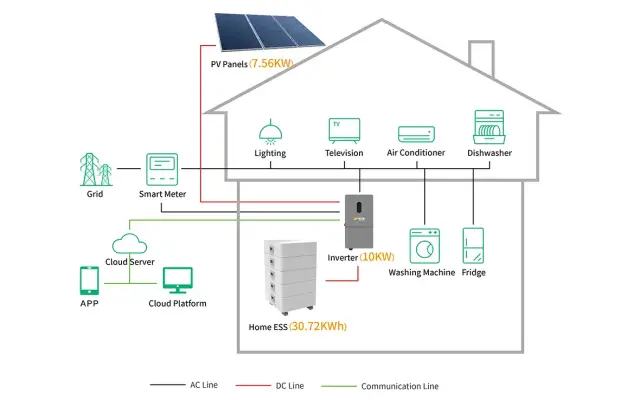
A DIY home energy storage battery can help you store solar power, reduce peak-rate electricity use, and keep essential loads running during outages. The best projects are not improvised battery boxes. They are carefully planned residential energy storage systems with the right chemistry, inverter, battery management system, protection devices, permits, and installation support.
This guide explains when a DIY battery system makes sense, what benefits are realistic, how to size a system, and where homeowners should draw the line between hands-on planning and licensed electrical work.
Table of Contents
- Quick answer
- What a DIY home energy storage battery means
- Key benefits
- When it makes financial sense
- Core components
- Battery chemistry choices
- How to size a system
- Safety, permits, and code considerations
- Real-world use cases
- Common mistakes
- Planning checklist
- FAQ
Quick Answer: Is a DIY Home Battery Worth It?
A DIY home energy storage battery is worth considering if you already have solar panels, face regular outages, live with time-of-use electricity rates, or want a backup system sized around critical loads instead of a full whole-home battery package. It is less attractive if your utility has low flat-rate electricity, strong net metering, few outages, or if your local rules require a fully listed, professionally installed system.
The biggest benefits are control and customization. You can choose how much capacity you need, which loads to protect, and whether the system is designed for daily solar self-consumption, emergency backup, or off-grid use. The biggest risks are electrical safety, fire safety, permitting, warranty loss, and poor component matching.
Energy storage is useful because it stores electricity and discharges it when needed. The U.S. Energy Information Administration describes energy storage systems as tools that can support grid reliability, shift electricity from low-demand periods to high-demand periods, store renewable energy, and provide backup power during outages.
What a DIY Home Energy Storage Battery Actually Means
"DIY" can mean several different things. For a homeowner, the safest definition is usually self-planned and owner-managed, not fully self-wired. You may compare batteries, calculate loads, build a budget, mount low-voltage monitoring hardware, and configure software. The grid connection, transfer equipment, service-panel work, and code inspection should be handled by qualified professionals where required.
A residential battery system typically stores DC electricity in a battery bank and converts it to AC electricity through an inverter or hybrid inverter. It can charge from solar panels, the grid, or both. During an outage, a properly designed system can disconnect from the grid and supply selected circuits such as refrigeration, lighting, internet equipment, medical devices, a well pump, or a small HVAC load.
The important distinction is this: a battery is only one part of a home energy storage system. A safe system also needs a battery management system, overcurrent protection, disconnects, appropriate wire sizing, ventilation or thermal management, enclosure protection, grounding, monitoring, and an installation method that meets local electrical and fire rules.
7 Practical Benefits of DIY Home Energy Storage
1. Better Control Over System Size
Prebuilt home battery packages are convenient, but they often come in fixed capacities. A DIY-planned system lets you size storage around the loads you actually care about. Many homeowners do not need to power every circuit during an outage. They need refrigeration, lights, communications, a garage door opener, a sump pump, or short-term cooking power.
This matters because the average U.S. household uses about 10,500 kWh of electricity per year, but usage varies widely by region and home type. Air conditioning, space heating, and water heating are among the largest residential electricity uses, so backing up an entire home requires far more capacity than backing up essential circuits.
2. Lower Cost Potential Through Component Choice
DIY energy storage can reduce costs when you compare compatible components, avoid oversizing, and choose modular batteries. The savings are not automatic. Once you include a quality inverter, listed batteries, protection equipment, electrical labor, permits, shipping, and monitoring, the final price can be closer to a packaged system than expected.
Market pricing also changes quickly. EnergySage reported in 2026 that the average quoted home battery cost on its marketplace was about $1,159 per kWh of stored energy, or $15,647 installed for a 13.5 kWh battery before local incentives. A DIY approach should be compared against installed quotes, not just the battery-cell price.
3. More Solar Self-Consumption
Solar panels produce the most electricity during the day, while many households use more electricity in the evening. A battery lets you store midday solar production and use it after sunset. This is especially valuable in areas where exported solar power earns less than imported electricity costs.
For example, a household with a 6 kW solar array may export power at noon but buy grid power at 7 p.m. A battery can shift some of that excess solar into the evening, improving solar self-consumption and reducing exposure to peak-rate periods.
4. Backup Power During Outages
Outage resilience is one of the strongest reasons to build or install a home battery system. In 2024, U.S. electricity customers experienced an average of 11 hours of electricity interruptions, nearly twice the average of the prior decade, with major weather events accounting for most outage hours that year.
A battery cannot make a home invincible, but it can turn a disruptive outage into a manageable one. A properly sized battery can keep food cold, phones charged, routers online, lights working, and critical devices running without the noise, fuel storage, and exhaust concerns of a combustion generator.
5. Better Use of Time-of-Use Electricity Rates
Some utilities charge more during afternoon and evening peak periods. A battery can charge when electricity is cheaper and discharge when rates are higher. The EIA notes that electricity supply costs change minute by minute and that some utilities offer time-of-day pricing to reduce peak demand.
This benefit depends heavily on your local tariff. If the difference between off-peak and peak pricing is small, battery arbitrage may not justify the cost. If the spread is large, or if demand charges apply, storage can be much more attractive.
6. Modular Expansion
A thoughtfully designed DIY home battery bank can start small and expand later. This helps homeowners avoid buying more capacity than they need on day one. A common path is to begin with a critical-loads backup system, then add capacity after reviewing real usage data from the first outage season or first full year of solar production.
Expansion only works well if the original inverter, busbars, protection devices, enclosure, and battery platform were selected with future capacity in mind. Mixing old and new cells, different chemistries, or incompatible battery modules can create performance and safety problems.
7. Deeper Energy Awareness
Homeowners who plan an energy storage system usually become better at understanding their electricity use. They learn which appliances draw constant loads, which devices create short surges, and which circuits matter most during outages. That knowledge often leads to cheaper improvements, such as replacing inefficient refrigerators, adding smart plugs, or moving discretionary loads away from peak hours.
When DIY Home Battery Storage Makes Financial Sense
The economics of home energy storage depend on your use case. A battery bought only for emergency peace of mind is evaluated differently from a battery used every day for solar self-consumption or time-of-use savings.
| Situation | DIY battery potential | Why it matters |
|---|---|---|
| Frequent outages | High | Backup value is easier to justify when outages affect food, work, medical devices, water pumps, or security systems. |
| Solar with weak export compensation | High | Storage can keep more solar energy on-site instead of exporting it at a low rate. |
| Time-of-use rates | Medium to high | The battery can discharge during expensive hours if the price difference is large enough. |
| Flat low electricity rates and strong net metering | Low to medium | Financial payback may be weak unless backup power has high personal value. |
| Full off-grid home | Complex | Requires more battery capacity, larger solar generation, backup charging, and careful seasonal planning. |
Incentives can also change the math. In the United States, the IRS says the Residential Clean Energy Credit covered qualifying battery storage technology beginning in 2023, but the current IRS page also states that the credit is not available for property placed in service after December 31, 2025. Battery storage must have at least 3 kWh of capacity to meet the battery-storage requirement. Because incentive rules are location-specific and change over time, homeowners should verify federal, state, utility, and local programs before buying equipment.
Core Components in a DIY Home Energy Storage System
A reliable DIY energy storage system starts with compatible parts. Do not choose the battery first and hope the rest of the system fits. The inverter, battery voltage, BMS communication protocol, surge rating, solar charge controller, and protection devices all need to work together.
| Component | What it does | What to check |
|---|---|---|
| Battery modules | Store electricity for later use. | Capacity, voltage, chemistry, cycle life, certification, warranty, temperature range, and expandability. |
| Battery management system | Monitors cell voltage, temperature, charge, discharge, and protection limits. | Compatibility with battery chemistry, current rating, inverter communication, low-temperature charging protection, and fault logging. |
| Hybrid inverter or inverter-charger | Converts battery DC power into home AC power and manages charging sources. | Continuous power, surge power, grid-interactive approval, islanding function, solar input, and battery voltage range. |
| Solar charge controller | Regulates solar charging for batteries when not built into the inverter. | PV voltage, charge current, battery voltage, MPPT support, and temperature compensation when applicable. |
| Critical-loads panel | Separates backed-up circuits from nonessential circuits. | Which circuits are included, load calculations, transfer method, inspection requirements, and room for future additions. |
| Fuses, breakers, and disconnects | Protect wiring and allow safe shutdown. | DC ratings, interrupt capacity, conductor size, enclosure rating, and code compliance. |
| Monitoring system | Shows state of charge, solar production, load, faults, and history. | Local display, app access, data export, alarms, and privacy preferences. |
Best Battery Chemistry for DIY Home Energy Storage
For most residential DIY energy storage projects, lithium iron phosphate, also called LiFePO4 or LFP, is the preferred chemistry. It has lower energy density than some lithium-ion chemistries, but it offers strong cycle life, good thermal stability, and a safety profile that fits stationary storage. Battery University describes Li-phosphate as having high current rating, long cycle life, good thermal stability, enhanced safety, and tolerance if abused compared with many other lithium-ion systems.
| Chemistry | Strengths | Tradeoffs | Typical fit |
|---|---|---|---|
| LiFePO4 (LFP) | Long cycle life, stable chemistry, good safety profile, common in stationary storage. | Lower energy density than NMC, performance drops in cold weather, needs a quality BMS. | Most home battery banks, solar storage, backup systems, off-grid cabins. |
| NMC lithium-ion | Higher energy density and compact size. | More demanding thermal management and less forgiving safety profile than LFP. | Space-constrained applications and professionally engineered systems. |
| Lead-acid or AGM | Lower upfront cost, familiar technology, easy availability. | Heavy, shorter cycle life, lower usable capacity, more maintenance in some types. | Budget backup, legacy systems, low-cycle applications. |
| LTO | Very long cycle life and strong low-temperature performance. | High cost and lower energy density. | Specialized systems where cycle life and cold performance matter more than cost. |
How to Size a DIY Home Battery System
Start with loads, not battery capacity. A battery that looks large on paper may disappoint if it cannot handle surge power from motors, pumps, compressors, or induction appliances. A smaller battery can perform very well if it is connected to the right critical loads.
Step 1: List Critical Loads
Write down the devices you want to run during an outage and estimate daily energy use in kWh. For example:
- Refrigerator: 1.0 to 2.0 kWh per day
- Internet router and modem: 0.2 to 0.5 kWh per day
- LED lights: 0.2 to 0.8 kWh per evening
- Laptop and phone charging: 0.2 to 0.6 kWh per day
- Sump pump: highly variable, depends on runtime and surge power
- Well pump: variable, often requires a strong inverter surge rating
Step 2: Use a Practical Sizing Formula
Use this basic estimate:
Battery capacity needed = daily critical-load energy x backup days / usable depth of discharge / inverter efficiency
Example: if your essential loads use 5 kWh per day, you want one day of backup, your battery has 90% usable depth of discharge, and inverter efficiency is 92%, the calculation is:
5 / 0.90 / 0.92 = about 6.0 kWh of battery capacity
Step 3: Check Power, Not Just Energy
Energy capacity tells you how long a battery can run loads. Power rating tells you what it can run at the same time. A 5 kWh battery with a 3 kW inverter may run lights and a refrigerator, but it may not start a large well pump or central air conditioner. Always check continuous watts, surge watts, and motor starting requirements.
Step 4: Decide Between Critical-Load Backup and Whole-Home Backup
Critical-load backup is usually the better DIY target. Whole-home backup requires a larger inverter, more battery capacity, more complex load management, and careful treatment of high-demand appliances such as electric ovens, heat pumps, dryers, EV chargers, and central air conditioning.
Safety, Permits, and Code Considerations
Home energy storage involves high current, stored energy, and grid interaction. Mistakes can cause shock, fire, damaged equipment, failed inspections, denied insurance claims, or unsafe conditions for utility workers. The safest path is to treat DIY as planning and system ownership, while using licensed professionals for grid-connected wiring and permitted electrical work.
NFPA 855 is the major standard for stationary energy storage installations, and NFPA describes it as providing minimum requirements for mitigating hazards associated with energy storage systems. NFPA guidance for residential energy storage also discusses location limits, stored-energy thresholds, fire detection, vehicle impact protection, and installation locations such as garages, detached structures, exterior walls, and outdoor areas.
UL also notes that NFPA 855 and UL 9540A play central roles in installation practices and testing protocols for battery energy storage systems, including thermal runaway and fire-propagation evaluation.
Safety Rules Homeowners Should Follow
- Use listed battery modules and inverters that are intended for residential energy storage.
- Do not mix battery chemistries, cell ages, capacities, or unknown used cells.
- Use a BMS designed for the battery chemistry and maximum current.
- Install DC-rated fuses, breakers, and disconnects in the correct locations.
- Keep battery systems away from living spaces unless the equipment and local code allow that location.
- Protect garage-mounted batteries from vehicle impact where required.
- Provide clear labeling and shutdown instructions.
- Do not bypass anti-islanding protection or connect a battery system to the grid without approved transfer equipment.
- Confirm permit, inspection, utility interconnection, and insurance requirements before purchasing equipment.
Real-World DIY Home Battery Use Cases
Use Case 1: Solar Home With Low Export Credit
A homeowner has rooftop solar but receives limited value for exported power. A 10 kWh LFP battery charges during midday solar production and discharges from 5 p.m. to 10 p.m. The main benefit is higher solar self-consumption, with backup power as a secondary benefit.
Use Case 2: Outage-Prone Suburban Home
A family experiences several outages each year. Instead of backing up the whole house, they install a critical-load panel for refrigeration, lights, internet, garage access, and a gas furnace blower. A moderate battery provides quiet overnight backup and avoids running a fuel generator for short outages.
Use Case 3: Off-Grid Cabin
A cabin has no grid connection. Solar panels charge an LFP battery bank through an MPPT controller, and an inverter supplies AC power. The system is sized for lights, a refrigerator, a water pump, and device charging. A generator input is kept for cloudy stretches and winter use.
Use Case 4: Electrified Home With Heat Pump and EV
A home with a heat pump, induction cooking, and an EV charger has high electrical demand. A DIY-sized battery can still help with peak-rate control and backup, but whole-home backup may require load-shedding controls, a larger inverter, multiple batteries, and professional design.
Common DIY Battery Mistakes to Avoid
- Buying capacity before measuring loads: Guessing often leads to overspending or underperformance.
- Ignoring surge power: Pumps, refrigerators, freezers, and motors can need much more startup power than running power.
- Using unverified second-life cells: Cheap used cells can have uneven capacity, hidden damage, and unknown history.
- Skipping permits: Unpermitted grid-connected systems can create resale, insurance, utility, and safety problems.
- Mixing incompatible equipment: Battery-to-inverter communication matters for charging limits, state of charge, and fault handling.
- Installing in the wrong location: Heat, cold, moisture, impact risk, and access requirements can shorten life or violate code.
- Expecting solar panels alone to run during outages: Most grid-tied solar systems shut down during outages unless paired with approved islanding equipment and storage.
DIY Home Energy Storage Planning Checklist
- Collect 12 months of electric bills and note seasonal peaks.
- List critical loads and estimate daily kWh use.
- Measure or estimate surge loads for pumps, refrigerators, and compressors.
- Decide whether the goal is backup power, solar self-consumption, time-of-use savings, off-grid power, or a mix.
- Choose battery chemistry, usually LFP for stationary residential storage.
- Select an inverter that matches battery voltage, output power, surge needs, and grid requirements.
- Confirm BMS-to-inverter communication and charge/discharge limits.
- Plan fuses, breakers, disconnects, busbars, wire sizes, grounding, and enclosure ratings.
- Check local building, electrical, fire, utility, and homeowners association requirements.
- Ask a licensed electrician or qualified solar-storage installer to review the design before purchasing major components.
FAQ About DIY Home Energy Storage Batteries
Can I build my own home battery bank?
You can plan and assemble some parts of a battery storage project, but grid-connected electrical work, service-panel changes, transfer equipment, and permitted installation should be handled by qualified professionals where required. For residential use, listed battery modules are usually safer and easier to permit than loose-cell packs.
What is the best battery for DIY solar storage?
LiFePO4 is usually the best choice for DIY solar storage because it offers long cycle life, good thermal stability, and strong safety characteristics for stationary applications. It still needs a quality BMS, proper charging limits, and code-compliant installation.
How many kWh of battery storage does a house need?
For critical loads, many homes can start with 5 to 15 kWh. Whole-home backup may require 20 kWh, 30 kWh, or more, especially if the home uses electric heating, air conditioning, well pumps, or EV charging. The right number depends on daily load, backup duration, usable depth of discharge, and inverter efficiency.
Can a home battery run an air conditioner?
Yes, but only if the inverter and battery can handle both running power and startup surge. Central air conditioning can quickly drain a small battery. Mini-splits, soft starters, load management, and larger battery banks can improve performance.
Can I add a battery to an existing solar system?
Often yes, but the best method depends on your inverter. Some systems use DC-coupled batteries with a hybrid inverter. Others use AC-coupled batteries that connect on the home AC side. Existing grid-tied systems may need additional equipment for outage backup.
Is DIY battery storage cheaper than a prebuilt home battery?
It can be cheaper, especially for off-grid or modular systems, but the comparison must include inverter hardware, protection equipment, enclosures, permits, labor, shipping, monitoring, and inspection. A low battery-module price alone does not show the true installed cost.
Do I need permits for a DIY home battery?
Most grid-connected residential battery systems require permits and inspection. Requirements vary by city, state, country, utility, and equipment type. Check local rules before buying hardware, not after installation.
How long do home energy storage batteries last?
Many lithium home batteries are designed for roughly 10 to 15 years, but life depends on chemistry, temperature, depth of discharge, cycle count, charging limits, and product quality. Keeping batteries within recommended voltage and temperature ranges helps extend service life.
Final Takeaway
A DIY home energy storage battery can be a smart project when it is designed around real loads, safe equipment, and local code requirements. The strongest benefits are backup power, improved solar self-consumption, time-of-use savings, modular expansion, and deeper control over household energy use.
The smartest DIY approach is not to cut corners. It is to do the homework that many buyers skip: calculate loads, choose the right chemistry, verify component compatibility, plan safety protection, and bring in licensed help for the parts that affect the home electrical system. Done that way, a home battery can be more than a project. It can become a practical resilience asset for years.
- Next:NMC 811 Battery: High Energy Density Benefits, Tradeoffs, and Best Uses
- Previous:AGM vs Lithium vs Lead-Acid Batteries: Which One Should You Choose?
Contact Details
Lithium LiFePO4 Batteries and Lithium LiFePO4 Cells Supplier - LiFePO4 Battery Shop
Contact Person: Miss. Elena Wang
WhatsApp : +8615263269227
Skype : +8615263269227
WeChat :15263269227
Email : info@lifepo4batteryshop.com
All Products
- Forklift Battery Charger (0)
- TC Elcon Charger (5)
- Headway Lithium Battery (6)
- Blade Battery (10)
- Semi Solid State Battery (6)
- A123 Battery (6)
- Sinopoly Battery (7)
- GBS Battery (20)
- CALB Battery (26)
- Cylindrical Cell (14)
- Energy Storage System (0)
- Battery Management System (15)
- Sodium ion Battery Cell (4)
- Lithium Titanate Battery (23)
- Ternary Lithium Battery Cell (12)
- REPT Battery (10)
- BYD Battery (5)
- CATL Battery (15)
- Thunder Sky Winston Battery (26)
- EVE Battery (39)
- LiFePO4 Battery Cell (41)
Certification
Customer Reviews
- I have fond memories of our meeting in Shanghai with LiFePO4 Battery Shop Elena. Your company left a strong impression on me with its impressive growth and professionalism. We both value straightforwardness and honesty, which I believe are the most important qualities in any partnership. I am confident that we can build a successful collaboration based on these shared values. —— Robert from USA
- I've been working with LiFePO4 Battery Shop for years, and their reliability is unmatched. While other suppliers frequently change sales teams, LiFePO4 Battery Shop has consistently provided exceptional service with a stable team. Their commitment to quality and customer support truly sets them apart. —— Henry from Australia