
Blog
NiMH vs. Li-ion vs. LiFePO4: Which Battery Actually Lasts Longest?
2026-07-12 | Calvin
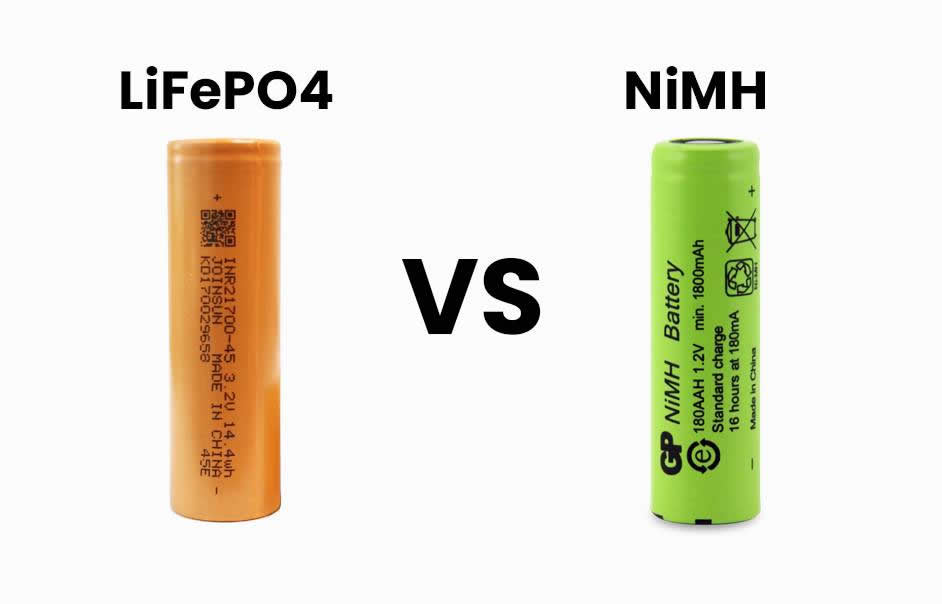
The short answer: For raw lifespan, LiFePO4 wins decisively — typically 2,000–7,000+ cycles versus 500–1,000 for standard Li-ion and NiMH. But "longest lasting" and "best for your device" aren't the same question. NiMH still makes sense for a TV remote; you'd never put LiFePO4 in a phone. Below is the honest, number-by-number comparison — including the self-discharge and cost-per-cycle math most guides skip.
Quick comparison table
| Metric | NiMH | Li-ion (NMC/LCO) | LiFePO4 (LFP) |
|---|---|---|---|
| Nominal voltage (per cell) | 1.2 V | 3.6–3.7 V | 3.2 V |
| Energy density | 60–120 Wh/kg | 150–250 Wh/kg | 90–160 Wh/kg |
| Cycle life (to 80%) | ~500–1,000 | 500–1,000 | 2,000–7,000+ |
| Self-discharge / month | 15–30% (std) | 1–3% | 1–3% |
| Usable depth of discharge | ~80% | ~80–90% | ~90–100% |
| Thermal stability / safety | Moderate | Moderate–low | Very high |
| Operating temp range | Moderate | Narrow in cold | −20 °C to +60 °C |
| Cobalt in cathode | No | Usually yes | No |
| Upfront cost | Low | Moderate | Higher |
| Cost per cycle | Low–moderate | Moderate | Lowest |
The three chemistries in plain terms
Think of battery chemistry like choosing an engine, not just a fuel tank. Each is optimized for a different job — energy density, cost, cycle life, or safety — and no single chemistry wins on all four.
Nickel-Metal Hydride (NiMH): still useful, often misunderstood
NiMH has powered remotes, flashlights, and low-drain electronics for decades. It's inexpensive, contains no toxic cadmium, and handles high discharge currents well.
Its real weakness isn't the one most articles cite. You'll often read that NiMH suffers from "memory effect" — that partial charges permanently reduce capacity. For modern NiMH, that's largely a myth carried over from older NiCd cells. Multiple manufacturers confirm today's NiMH can be charged at any state of discharge without meaningful capacity loss.
The genuine drawback is self-discharge. A standard NiMH cell can lose 15–30% of its charge per month sitting in a drawer. (Low-self-discharge "LSD" variants like Eneloop improved this dramatically, which is why they dominate the category.) That, plus low energy density, is why NiMH gets designed out of anything demanding.
Lithium-Ion (Li-ion): the energy-density champion
Li-ion — here meaning the high-density NMC, NCA, and LCO chemistries — is the standard in phones, laptops, drones, and most EVs. Its advantage is specific energy: commonly 150–250 Wh/kg, letting devices stay thin and light. Self-discharge is excellent at roughly 1–3% per month.
The trade-offs are cycle life (often 500–1,000 cycles before hitting 80% capacity) and safety. Because these cathodes can release oxygen under abuse, a damaged or overcharged cell can enter thermal runaway. A robust Battery Management System (BMS) is non-negotiable. Many also rely on cobalt, which carries supply-chain and ethical concerns the IEA has flagged.
Lithium Iron Phosphate (LiFePO4 / LFP): the endurance specialist
LiFePO4 trades some energy density for two things that matter enormously in stationary and cyclic applications: lifespan and safety. Its olivine crystal structure resists oxygen release, so LFP cells pass nail-penetration and crush tests without igniting — a level of thermal stability the other two can't match.
Cycle life is the headline: commonly 2,000–4,000 cycles, with premium cells rated past 6,000. Some portable power stations now advertise thousands of cycles to 80% capacity — EcoFlow rates certain units at 3,000+ cycles to 80%. LFP also tolerates a wide −20 °C to +60 °C range and, like NMC, self-discharges at only ~1–3% per month.
The costs: it's heavier per watt-hour and pricier upfront. In cold extremes it loses more usable capacity than NMC. For a phone, those trade-offs are dealbreakers. For a solar bank cycled daily for a decade, they're irrelevant.
The metric most comparisons skip: cost per cycle
Upfront price is the wrong number to shop on for anything you'll recharge regularly. What matters is cost per usable cycle — the sticker price divided by how many cycles you actually get.
Here's the arithmetic that makes LiFePO4's case better than any adjective:
Worked example — a 100Ah, 12V battery:
- A quality LiFePO4 pack at ~$300 rated for 4,000 cycles = $0.075 per cycle.
- A comparable NMC Li-ion pack at ~$250 rated for 1,000 cycles = $0.25 per cycle.
The LiFePO4 costs 20% more to buy and roughly 70% less to own over its life. Cycle for cycle, it's the cheapest of the three.
This is also why "which lasts longest" has a clear winner but "which is cheapest" does not: for a device you cycle a few times a year, NiMH's low sticker price wins on total cost; for daily cycling, LiFePO4 wins on cost per cycle.
Which battery should you actually choose?
Match the chemistry to the job:
- Choose NiMH for low-drain, low-cost, replaceable-cell devices: remotes, wall clocks, flashlights, kids' toys, basic cameras. Use LSD cells if the device sits unused for long stretches.
- Choose Li-ion (NMC/NCA) where weight and size dominate: smartphones, laptops, drones, cordless power tools, and performance EVs where range-per-kilogram is king.
- Choose LiFePO4 for anything cycled hard over years where safety and longevity beat weight: solar and home energy storage, RVs, marine and trolling-motor setups, golf carts, off-grid systems, and backup power.
A useful rule of thumb: if the battery lives inside something you carry, lean Li-ion. If it lives inside something you power, lean LiFePO4.
Conclusion
If the question is strictly which battery lasts longest, LiFePO4 wins — on cycle life, safety, temperature tolerance, and cost per cycle. Li-ion remains unbeaten where energy density per gram is the priority, and NiMH is still the sensible, cheap choice for low-drain everyday gadgets.
Buy on the metric that matches your use case, not on sticker price alone — and for anything you'll recharge for years, run the cost-per-cycle math before you decide.
FAQs
Is LiFePO4 safer than regular lithium-ion?
Yes. Its iron-phosphate cathode is thermally stable and resists the oxygen release that drives thermal runaway, so LFP cells typically survive puncture and crush tests without catching fire — unlike NMC/LCO cells.
How long do LiFePO4 batteries last?
Commonly 2,000–4,000 charge cycles to 80% capacity, with premium cells exceeding 6,000. In daily-cycling use that often translates to 8–10+ years.
Does NiMH really have a "memory effect"?
Not meaningfully. That's mostly a holdover from older NiCd batteries. Modern NiMH can be charged at any state of charge without significant capacity loss. Its real weakness is high self-discharge — up to 15–30% per month for standard cells.
Why is LiFePO4 more expensive upfront?
You're paying for longer cycle life, superior safety, and cobalt-free materials. Over the battery's life, the higher cycle count usually makes it the cheapest option per cycle.
Which is the most environmentally friendly?
LiFePO4 generally leads: no cobalt, non-toxic cathode materials, long service life (less waste), and good recyclability.
Can I replace a Li-ion pack with LiFePO4?
Only with matched voltage and a compatible charger/BMS — LiFePO4's 3.2 V nominal cell voltage and charge profile differ from Li-ion's 3.6–3.7 V. Never swap chemistries without confirming the charging system supports it.
- Next:Square Battery Guide: Types, Sizes, Chemistries, and How to Choose the Right One
- Previous:CR2032 Lithium 3V Coin Battery: Uses, Specs, Lifespan, Safety, and Buying Guide
Contact Details
Lithium LiFePO4 Batteries and Lithium LiFePO4 Cells Supplier - LiFePO4 Battery Shop
Contact Person: Miss. Elena Wang
WhatsApp : +8615263269227
Skype : +8615263269227
WeChat :15263269227
Email : info@lifepo4batteryshop.com
All Products
- TC Elcon Charger (2)
- Headway Lithium Battery (6)
- Blade Battery (10)
- Semi Solid State Battery (6)
- A123 Battery (6)
- Sinopoly Battery (7)
- GBS Battery (16)
- CALB Battery (26)
- Cylindrical Cell (14)
- Energy Storage System (0)
- Battery Management System (15)
- Sodium ion Battery Cell (4)
- Lithium Titanate Battery (23)
- Ternary Lithium Battery Cell (12)
- REPT Battery (10)
- BYD Battery (5)
- CATL Battery (15)
- Thunder Sky Winston Battery (26)
- EVE Battery (37)
- LiFePO4 Battery Cell (37)
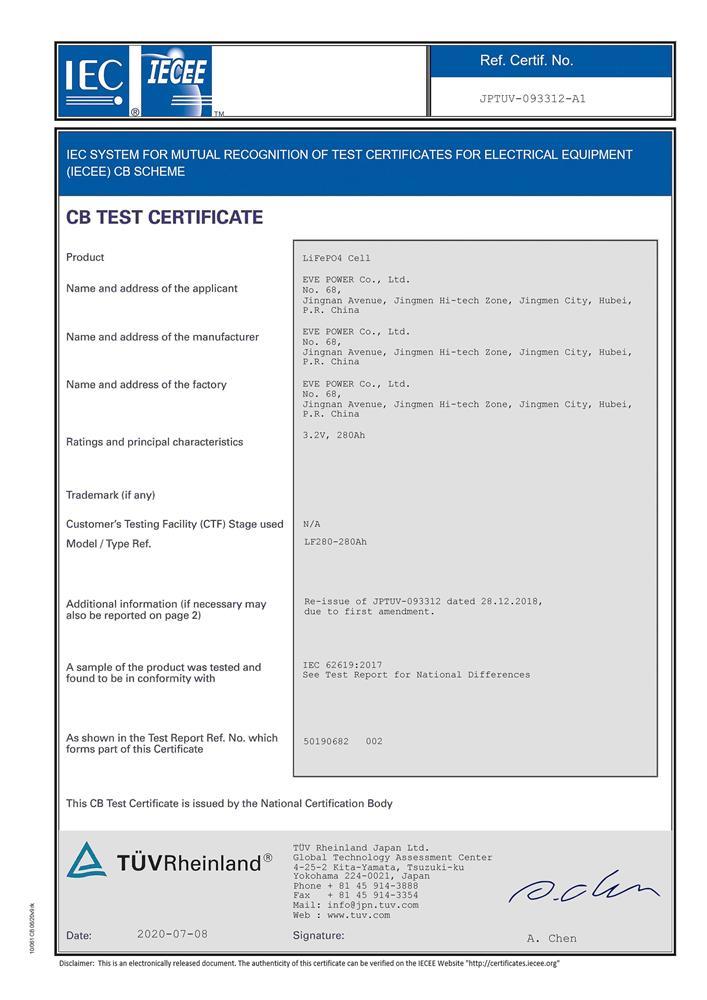
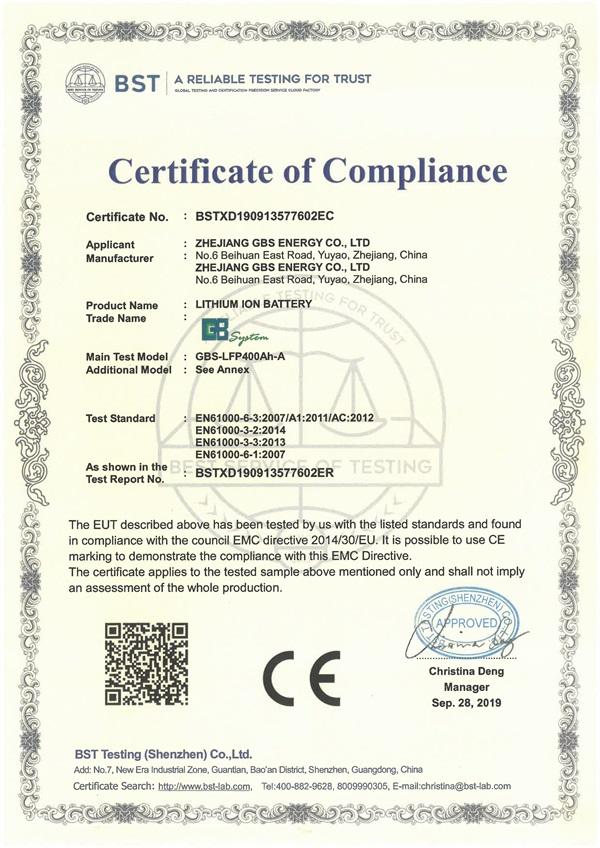
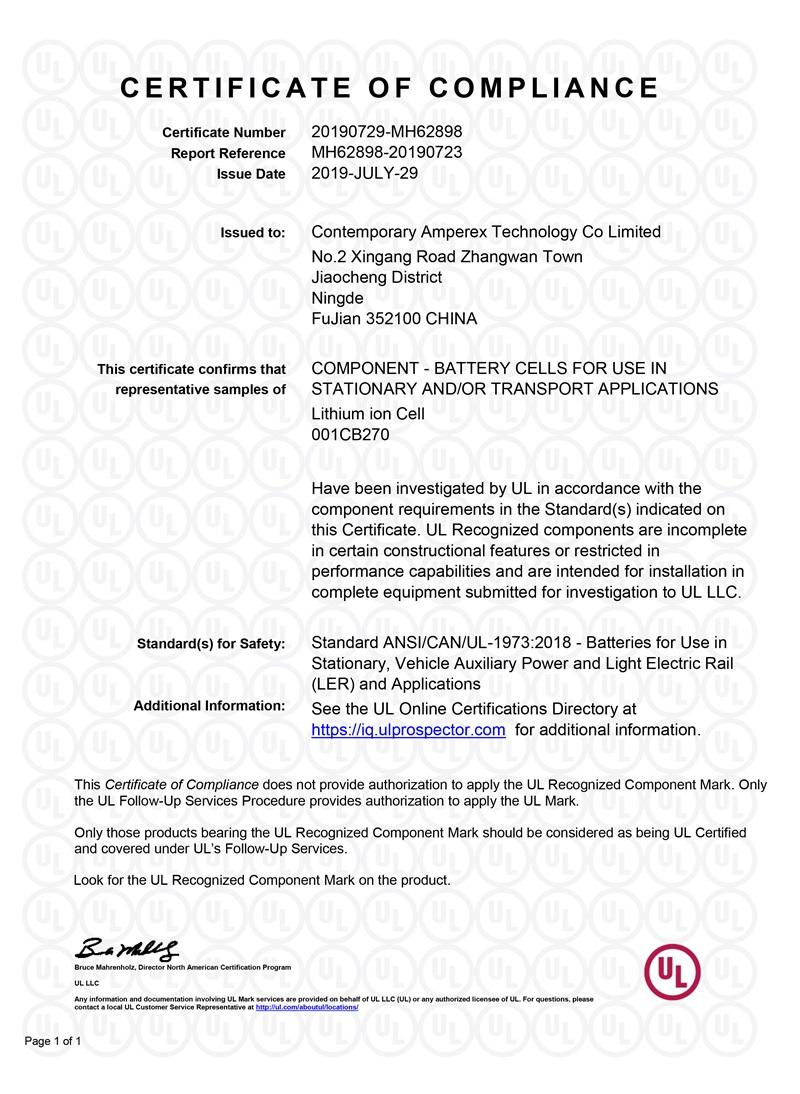
Certification
Customer Reviews
- I have fond memories of our meeting in Shanghai with LiFePO4 Battery Shop Elena. Your company left a strong impression on me with its impressive growth and professionalism. We both value straightforwardness and honesty, which I believe are the most important qualities in any partnership. I am confident that we can build a successful collaboration based on these shared values. —— Robert from USA
- I've been working with LiFePO4 Battery Shop for years, and their reliability is unmatched. While other suppliers frequently change sales teams, LiFePO4 Battery Shop has consistently provided exceptional service with a stable team. Their commitment to quality and customer support truly sets them apart. —— Henry from Australia