
Blog
NiMH Battery vs Lithium-Ion: Complete Comparison, Differences, Pros and Cons
2026-07-18 | Calvin
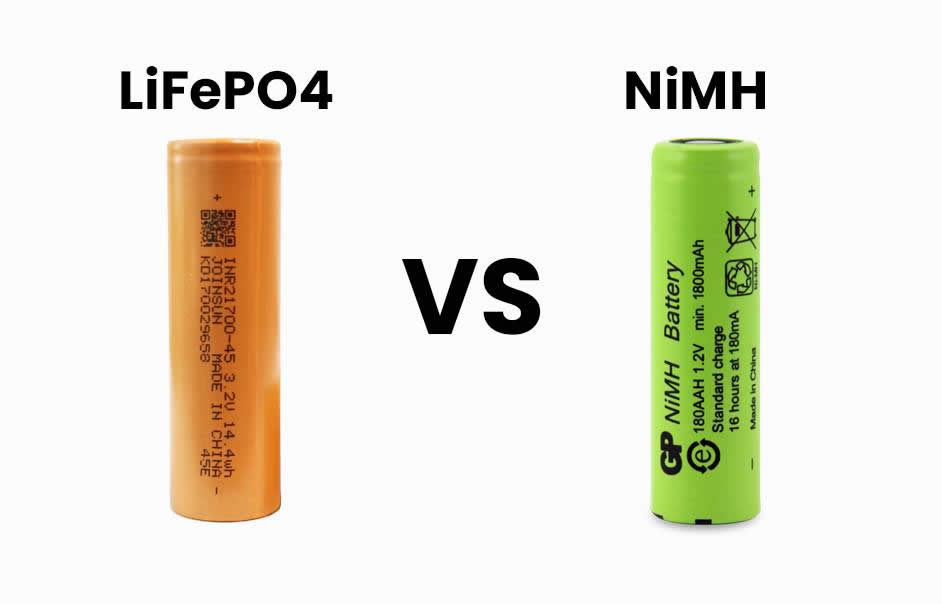
Choosing between a NiMH battery and a lithium-ion battery depends on the application, performance requirements, budget, and safety considerations. Both battery technologies are widely used in rechargeable devices, vehicles, and energy systems, but they have very different characteristics.
Lithium-ion batteries have become the dominant choice for smartphones, laptops, electric vehicles, and modern energy storage because of their high energy density and lightweight design. However, NiMH batteries remain popular in applications such as hybrid vehicles, consumer electronics, and situations where durability and safety are important.
This guide compares NiMH vs lithium-ion batteries in terms of energy density, lifespan, charging speed, safety, cost, environmental impact, and practical applications to help you understand which battery technology is the better choice for your needs.
What Is a NiMH Battery?
A Nickel-Metal Hydride (NiMH) battery is a rechargeable battery technology that uses nickel oxyhydroxide as the positive electrode and a hydrogen-absorbing metal alloy as the negative electrode. NiMH batteries were developed as an improvement over older nickel-cadmium (NiCd) batteries by offering higher capacity and avoiding toxic cadmium materials.
NiMH batteries became widely used in digital cameras, rechargeable household batteries, medical devices, and hybrid electric vehicles. Their ability to handle repeated charging cycles and their strong safety characteristics made them a reliable alternative before lithium-ion technology became mainstream.
Advantages of NiMH Batteries
- Lower cost compared with many lithium-ion battery systems
- Good safety performance with lower risk of thermal runaway
- Reliable operation in demanding environments
- Less sensitive to overcharging compared with lithium-ion batteries
- Suitable for hybrid vehicles and moderate-power applications
Disadvantages of NiMH Batteries
- Lower energy density compared with lithium-ion batteries
- Heavier and larger for the same amount of stored energy
- Higher self-discharge rate
- Slower charging speed
- Reduced performance in some high-power applications
What Is a Lithium-Ion Battery?
A lithium-ion battery is a rechargeable battery that uses lithium ions moving between the cathode and anode during charging and discharging. The technology became widely adopted because it provides significantly higher energy storage capacity while maintaining a lightweight structure.
Today, lithium-ion batteries power most portable electronics, electric vehicles, drones, power tools, and large-scale energy storage systems. Different lithium-ion chemistries, such as lithium iron phosphate (LFP) and nickel manganese cobalt (NMC), are designed for different performance requirements.
Advantages of Lithium-Ion Batteries
- High energy density and lightweight construction
- Fast charging capability
- Low self-discharge rate
- Excellent power output for demanding applications
- Long service life when properly managed
- Ideal for electric vehicles and portable electronics
Disadvantages of Lithium-Ion Batteries
- Higher manufacturing cost
- Requires battery management systems for safety
- Performance decreases with age and usage cycles
- Sensitive to extreme temperatures
- Requires careful recycling and material management
NiMH Battery vs Lithium-Ion Battery: Key Differences
The biggest difference between NiMH and lithium-ion batteries is energy efficiency. Lithium-ion technology stores much more energy in a smaller and lighter package, which is why it dominates modern portable devices and electric vehicles.
| Feature | NiMH Battery | Lithium-Ion Battery |
|---|---|---|
| Chemistry | Nickel-metal hydride | Lithium-based compounds |
| Energy Density | Lower | Higher |
| Weight | Heavier | Lighter |
| Charging Speed | Slower | Faster |
| Self-Discharge | Higher | Lower |
| Cycle Life | Good | Very good when managed properly |
| Safety | Generally very stable | Requires protection systems |
| Cost | Usually lower | Usually higher |
| Best Applications | Hybrid vehicles, household rechargeable devices | EVs, smartphones, laptops, storage systems |
Energy Density: Why Lithium-Ion Batteries Store More Power
Energy density is one of the most important differences between NiMH and lithium-ion batteries. It describes how much energy a battery can store compared with its size and weight.
Lithium-ion batteries have a significantly higher energy density than NiMH batteries. This means a lithium-ion battery can store more electricity while taking up less space. This advantage is especially important in applications where weight and size matter, such as smartphones, laptops, drones, and electric vehicles.
For example, an electric vehicle using lithium-ion battery technology can achieve longer driving ranges without requiring a much larger battery pack. A similar vehicle using NiMH technology would require a heavier and bulkier battery system to store the same amount of energy.
Why Lithium-Ion Has Higher Energy Density
- Lithium is a lightweight element with high electrochemical potential
- Lithium-ion chemistry allows more energy storage per kilogram
- Modern lithium-ion designs use advanced cathode materials to improve performance
- Battery management systems optimize charging and energy usage
NiMH batteries remain reliable, but their lower energy density limits their use in applications where maximum power and minimum weight are required.
Battery Lifespan: Which Battery Lasts Longer?
Battery lifespan depends on many factors, including charging habits, operating temperature, depth of discharge, and battery management. Neither NiMH nor lithium-ion batteries automatically lasts longer in every situation.
NiMH batteries are known for their durability and ability to tolerate repeated charging cycles. This is one reason they were widely used in hybrid vehicles such as early generations of hybrid cars.
Lithium-ion batteries typically provide better long-term performance in modern applications because they have higher efficiency, lower self-discharge, and advanced battery management systems that protect the cells from harmful operating conditions.
| Lifespan Factor | NiMH | Lithium-Ion |
|---|---|---|
| Typical Cycle Life | Hundreds to over 1,000 cycles depending on use | Hundreds to several thousand cycles depending on chemistry and management |
| Capacity Loss | Gradual degradation | Gradual degradation affected by age and temperature |
| Storage Performance | Higher self-discharge | Lower self-discharge |
| Temperature Sensitivity | Generally tolerant | Requires better thermal management |
Charging Speed Comparison: NiMH vs Lithium-Ion
Lithium-ion batteries are the clear winner when it comes to charging speed. Modern lithium-ion battery systems can often recharge much faster because their chemistry supports higher charging currents.
NiMH batteries usually require slower charging to prevent overheating and maintain battery health. Although newer NiMH chargers have improved significantly, they generally cannot match the charging speed of lithium-ion systems.
Example: Everyday Charging Differences
- Smartphone: Lithium-ion batteries can support fast charging technologies that restore significant capacity within minutes.
- Rechargeable household batteries: NiMH batteries may require several hours for a complete charge.
- Electric vehicles: Lithium-ion battery packs support high-speed charging networks.
Safety Comparison: Are NiMH Batteries Safer Than Lithium-Ion?
Safety is one area where NiMH batteries have traditionally had an advantage. Their chemistry is more stable and they are less likely to experience thermal runaway, a condition where increasing heat can create a chain reaction inside a battery cell.
Lithium-ion batteries require more advanced safety controls because damaged or improperly managed cells can overheat. However, modern lithium-ion battery systems include battery management systems (BMS), temperature monitoring, protective circuits, and improved cell designs to significantly improve safety.
NiMH Safety Advantages
- Stable chemistry
- Lower risk of thermal runaway
- Tolerates some charging mistakes better
- Suitable for safety-focused applications
Lithium-Ion Safety Improvements
- Battery management systems monitor voltage and temperature
- Advanced materials improve stability
- Modern designs include multiple protection layers
- Different lithium-ion chemistries provide different safety characteristics
Cost Comparison: NiMH vs Lithium-Ion
NiMH batteries are usually cheaper upfront because the technology is mature and uses widely available materials. For simple rechargeable applications, NiMH can provide excellent value.
Lithium-ion batteries generally cost more because they require advanced manufacturing processes, precise cell production, and battery management electronics. However, their higher energy density and longer useful performance often justify the additional cost.
| Cost Factor | NiMH Battery | Lithium-Ion Battery |
|---|---|---|
| Initial Price | Lower | Higher |
| Energy Stored per Weight | Lower | Higher |
| Long-Term Efficiency | Good | Excellent |
| Maintenance Requirements | Simple | Requires protection systems |
NiMH vs Lithium-Ion Batteries for Electric Vehicles
Electric vehicles have changed the battery industry by increasing the demand for lightweight, high-capacity, and efficient energy storage systems. Today, lithium-ion batteries are the preferred technology for most electric vehicles because they provide higher energy density, longer driving range, and faster charging capability.
However, NiMH batteries played an important role in the development of hybrid vehicles. Many early hybrid cars used NiMH battery packs because of their reliability, durability, and strong safety performance.
Why Electric Vehicles Use Lithium-Ion Batteries
- Higher energy density allows longer driving ranges
- Lower weight improves vehicle efficiency
- Supports fast charging infrastructure
- Provides higher power output for acceleration
- Better suited for fully electric vehicles
Why Some Hybrid Vehicles Still Use NiMH Batteries
- Excellent durability over many years
- Stable performance in repeated charge and discharge cycles
- Proven reliability in hybrid systems
- Lower safety concerns in certain designs
For modern battery electric vehicles (BEVs), lithium-ion technology is usually the better choice. For some hybrid applications where reliability and proven performance are the priority, NiMH batteries can still be effective.
NiMH vs Lithium-Ion: Best Applications Compared
The best battery technology depends on how the battery will be used. A battery that is ideal for a smartphone may not be the best choice for industrial equipment or vehicles.
| Application | Better Choice | Reason |
|---|---|---|
| Smartphones and Tablets | Lithium-Ion | Lightweight design and high energy capacity |
| Laptops | Lithium-Ion | Long runtime and fast charging |
| Electric Vehicles | Lithium-Ion | Higher range and power output |
| Hybrid Vehicles | NiMH or Lithium-Ion | Depends on vehicle design and performance requirements |
| Rechargeable Household Batteries | NiMH | Affordable and reliable for moderate use |
| Drones and Power Tools | Lithium-Ion | High power output and lightweight construction |
| Backup Power Systems | Depends on requirements | Cost, safety, and capacity determine the best choice |
Environmental Impact: NiMH vs Lithium-Ion
Both NiMH and lithium-ion batteries have environmental advantages and challenges. Responsible manufacturing, recycling, and material recovery are important for reducing the environmental impact of rechargeable batteries.
NiMH Environmental Considerations
- Does not contain toxic cadmium found in older NiCd batteries
- Can be recycled to recover valuable materials
- Uses nickel and rare earth materials that require mining
Lithium-Ion Environmental Considerations
- Requires lithium, cobalt, nickel, and other materials depending on chemistry
- Recycling infrastructure continues to improve
- Longer service life can reduce replacement frequency
- Newer chemistries such as LFP reduce dependence on some materials
Neither technology is completely impact-free. The environmental performance of a battery depends on how materials are sourced, how long the battery lasts, and whether it is properly recycled at the end of its useful life.
Which Battery Is Better: NiMH or Lithium-Ion?
There is no single winner for every situation. The better choice depends on your specific requirements.
Choose NiMH Batteries If You Need:
- A lower-cost rechargeable battery option
- Strong reliability and safety
- A battery for moderate-power devices
- A technology proven in hybrid vehicle applications
Choose Lithium-Ion Batteries If You Need:
- Maximum energy storage in a small package
- Fast charging performance
- Lightweight battery design
- High power output
- Electric vehicle or portable electronic applications
Frequently Asked Questions About NiMH vs Lithium-Ion Batteries
Is lithium-ion better than NiMH?
Lithium-ion batteries are generally better for applications that require high energy density, lightweight design, and fast charging. NiMH batteries remain useful where durability, lower cost, and safety are more important.
Which battery lasts longer, NiMH or lithium-ion?
Both battery types can last many years when properly maintained. Lithium-ion batteries often provide better performance because of improved efficiency and battery management systems, while NiMH batteries are known for durability and stable operation.
Are NiMH batteries safer than lithium-ion batteries?
NiMH batteries are naturally more stable and have historically been considered safer. Modern lithium-ion batteries are also highly safe when designed with proper protection systems, battery management technology, and quality manufacturing.
Can I replace a NiMH battery with a lithium-ion battery?
Not always. Battery chemistry, voltage requirements, charging systems, and device electronics must be compatible. A direct replacement without proper engineering can damage equipment or create safety risks.
Why are electric cars using lithium-ion instead of NiMH?
Electric cars require high energy density, low weight, and fast charging capability. Lithium-ion batteries provide better performance for fully electric vehicles, which is why they have become the dominant technology in the EV industry.
Final Comparison: NiMH Battery vs Lithium-Ion Battery
NiMH and lithium-ion batteries both have important advantages. NiMH remains a reliable option for applications where safety, affordability, and durability are priorities. Lithium-ion has become the preferred technology for modern electronics, electric vehicles, and energy storage because of its superior energy density, charging speed, and performance.
For most modern high-performance applications, lithium-ion batteries are the better choice. However, NiMH batteries continue to serve specific markets where their stability and proven reliability provide real value.
- Next:Lithium Polymer vs Lithium-Ion Battery Lifespan: Which Really Lasts Longer?
- Previous:Li-ion vs Li-SOCl2 Batteries: Complete Comparison, Differences & Applications
Contact Details
Lithium LiFePO4 Batteries and Lithium LiFePO4 Cells Supplier - LiFePO4 Battery Shop
Contact Person: Miss. Elena Wang
WhatsApp : +8615263269227
Skype : +8615263269227
WeChat :15263269227
Email : info@lifepo4batteryshop.com
All Products
- TC Elcon Charger (2)
- Headway Lithium Battery (6)
- Blade Battery (10)
- Semi Solid State Battery (6)
- A123 Battery (6)
- Sinopoly Battery (7)
- GBS Battery (16)
- CALB Battery (26)
- Cylindrical Cell (14)
- Energy Storage System (0)
- Battery Management System (15)
- Sodium ion Battery Cell (4)
- Lithium Titanate Battery (23)
- Ternary Lithium Battery Cell (12)
- REPT Battery (10)
- BYD Battery (5)
- CATL Battery (15)
- Thunder Sky Winston Battery (26)
- EVE Battery (37)
- LiFePO4 Battery Cell (37)
Certification
Customer Reviews
- I have fond memories of our meeting in Shanghai with LiFePO4 Battery Shop Elena. Your company left a strong impression on me with its impressive growth and professionalism. We both value straightforwardness and honesty, which I believe are the most important qualities in any partnership. I am confident that we can build a successful collaboration based on these shared values. —— Robert from USA
- I've been working with LiFePO4 Battery Shop for years, and their reliability is unmatched. While other suppliers frequently change sales teams, LiFePO4 Battery Shop has consistently provided exceptional service with a stable team. Their commitment to quality and customer support truly sets them apart. —— Henry from Australia