
Blog
Lithium Polymer vs Lithium-Ion Battery Lifespan: Which Really Lasts Longer?
2026-07-15 | Calvin
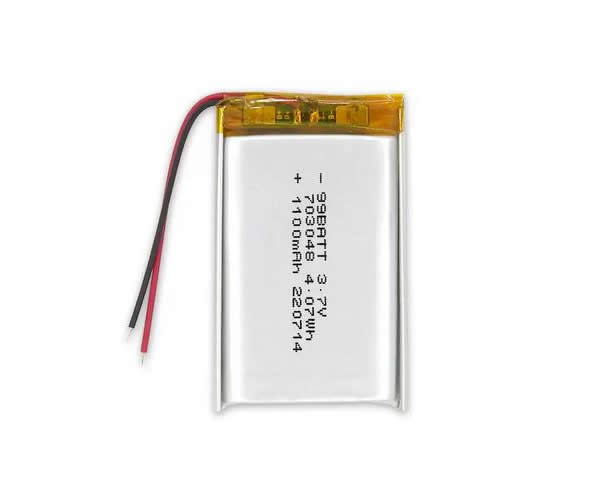
Here is the answer most comparison guides get wrong: lithium polymer (LiPo) is not a rival technology to lithium-ion — it is a type of lithium-ion battery. The real driver of battery lifespan is not whether the electrolyte is liquid or gel, but the cell chemistry inside. A typical LiPo pouch cell lasts 300–800 charge cycles, a standard cobalt-based lithium-ion cell 500–1,000 cycles, and a lithium iron phosphate (LiFePO4) cell — also a member of the lithium-ion family — 3,000 to 6,000 cycles or more. This guide explains what those numbers mean in practice and how to choose the right battery for your application.
LiPo Is a Lithium-Ion Battery — Why That Changes the Comparison
Every rechargeable lithium battery on the market today works the same way: lithium ions shuttle between a cathode and an anode through an electrolyte. What separates a "lithium polymer" battery from a conventional "lithium-ion" battery is packaging, not chemistry. LiPo cells use a gel polymer electrolyte inside a flexible pouch, which allows thin, lightweight, custom-shaped designs. Conventional lithium-ion cells use a liquid electrolyte inside a rigid cylindrical or prismatic metal case.
The cathode material — lithium cobalt oxide (LCO), nickel manganese cobalt (NMC), or lithium iron phosphate (LFP) — can be used in either format. That is why comparing "LiPo vs lithium-ion lifespan" as if they were two chemistries produces misleading numbers. A LiPo pouch built with an LCO cathode ages like any other LCO cell. An LFP cell outlasts both by a wide margin, whether it comes in a pouch, a cylinder, or a prismatic case.
Cycle Life Compared: Realistic Numbers by Chemistry
A charge cycle is one full discharge and recharge of the battery's capacity. Industry convention considers a battery at "end of life" when it retains 80% of its original capacity. Here are realistic cycle-life figures under normal operating conditions:
| Battery type | Typical chemistry | Cycle life (to 80% capacity) | Energy density | Typical service life |
|---|---|---|---|---|
| LiPo pouch cell | LCO / NMC | 300–800 cycles | 150–200 Wh/kg | 2–3 years |
| Standard lithium-ion | LCO | 500–1,000 cycles | 150–250 Wh/kg | 2–4 years |
| High-quality lithium-ion | NMC | 1,000–2,000 cycles | 150–220 Wh/kg | 4–6 years |
| Lithium iron phosphate | LiFePO4 (LFP) | 3,000–6,000+ cycles | 90–160 Wh/kg | 8–10+ years |
Two practical conclusions follow. First, if you compare a LiPo pouch and a standard lithium-ion cell built on the same cobalt-based chemistry, their lifespans are broadly similar — the pouch format offers no meaningful longevity advantage, and high-drain use (as in drones and RC models) usually pushes LiPo packs toward the lower end of the range. Second, if lifespan is your priority, the decisive choice is not pouch versus cylinder but cobalt-based chemistry versus LFP.
Cycle Aging vs Calendar Aging: Two Clocks Running at Once
Batteries degrade in two independent ways, and most comparison articles mention only one.
Cycle aging is wear caused by charging and discharging. Each cycle produces small structural changes in the electrodes and consumes a little of the electrolyte. The cycle-life figures above measure this form of aging.
Calendar aging happens even when the battery sits unused. Parasitic chemical reactions slowly consume active lithium, and the rate accelerates at high states of charge and high temperatures. A LiPo battery stored fully charged in a hot garage can lose significant capacity in a year without completing a single cycle. LFP chemistry ages more slowly on the calendar clock as well, which is one reason LiFePO4 batteries routinely deliver 8–10 years of real-world service in solar storage, RVs, and marine installations.
What Actually Determines How Fast a Battery Degrades
Depth of discharge (DoD). Draining a battery to 0% before recharging stresses it far more than shallow cycling. Cobalt-based cells last dramatically longer when kept between 20% and 80% charge. LFP cells are far more tolerant: they are routinely rated for thousands of cycles even at 80–100% DoD, which means you can actually use the capacity you paid for.
Temperature. Heat is the primary accelerant of both aging clocks. Sustained operation above 40°C speeds up electrolyte breakdown and capacity fade in every lithium chemistry, though LFP's stable olivine cathode structure withstands thermal stress better than cobalt-based cathodes.
Charge rate and cutoff. Aggressive fast charging and holding cells at maximum voltage both shorten life. A quality battery management system (BMS) mitigates this by controlling charge current, balancing cells, and preventing overcharge.
Discharge profile. Interestingly, real-world varied usage may be gentler than laboratory constant-current draining: a 2024 study published in Nature Energy found that dynamic discharge profiles resembling everyday use extended battery lifetime by up to 38% compared with constant-current cycling.
Where LiFePO4 Fits: The Lifespan Champion of the Lithium-Ion Family
Lithium iron phosphate is the chemistry to know if longevity drives your decision. Its iron phosphate cathode is structurally more stable than cobalt-based alternatives: it resists oxygen release under stress (the mechanism behind thermal runaway), tolerates deep discharge, and wears far more slowly per cycle.
The trade-off is energy density. An LFP pack storing the same energy is larger and heavier than a LiPo pack, which is why LFP will not appear in your smartphone or racing drone. But for stationary and semi-stationary applications — solar energy storage, RVs, campervans, boats, golf carts, and off-grid systems — weight matters little and cycle life matters enormously. There, LiFePO4 is the clear economic winner: one LFP battery typically outlives three to five cobalt-based replacements, so its cost per cycle ends up a fraction of the alternatives despite a higher purchase price.
Which Battery Should You Choose?
Smartphones, tablets, wearables: LiPo. Slim custom shapes and high energy density outweigh the shorter cycle life, and devices are typically replaced within the battery's 2–3 year window anyway.
Drones and RC models: LiPo. Nothing else delivers comparable discharge rates and power-to-weight ratio. Treat the 300–500 cycle lifespan as a consumable cost of the hobby.
Laptops and power banks: Standard lithium-ion or LiPo, depending on form factor. Cycle life is similar; buy on capacity and build quality.
Solar storage, RVs, marine, off-grid, golf carts, backup power: LiFePO4, without hesitation. The 3,000–6,000 cycle life, tolerance for deep discharge, thermal stability, and 8–10+ year service life make it the lowest total-cost option for any application that cycles regularly.
How to Extend Any Lithium Battery's Life
- Avoid full discharges; recharge before the battery drops below 20% (LFP excepted — it tolerates deep cycling by design).
- For cobalt-based batteries, stop charging at 80–90% when maximum runtime is not needed.
- Keep batteries out of hot cars, direct sunlight, and enclosed spaces above 40°C.
- Store batteries long-term at roughly 50% charge in a cool, dry place — never full and never empty.
- Use chargers with the correct voltage profile: LiFePO4 charges to 3.65 V per cell, cobalt-based lithium-ion to 4.2 V per cell. The two are not interchangeable.
- Choose batteries with a quality built-in BMS; it silently prevents the overcharge, over-discharge, and imbalance events that kill packs early.
Frequently Asked Questions
Is lithium polymer the same as lithium-ion?
Chemically, yes — LiPo is a subtype of lithium-ion battery. The difference is the gel polymer electrolyte and flexible pouch packaging, which enable thin and custom shapes. Cycle life depends on the cathode chemistry inside, not on the pouch.
How many years does a LiPo battery last?
Typically 2 to 3 years, or 300–800 charge cycles, whichever comes first. High-drain use, heat, and storage at full charge shorten this considerably.
Which lithium battery has the longest lifespan?
Lithium iron phosphate (LiFePO4). Quality LFP cells deliver 3,000–6,000+ cycles and commonly 8–10 years of service — roughly four to five times the cycle life of cobalt-based LiPo or standard lithium-ion cells.
Does fast charging shorten battery lifespan?
Yes, to a degree. High charge currents generate heat and stress the electrodes, accelerating capacity fade. Occasional fast charging is fine; making it the daily default measurably shortens cycle life, especially in cobalt-based cells.
Should I store lithium batteries fully charged?
No. Storage at 100% charge accelerates calendar aging. For any lithium chemistry, store at around 50% charge in a cool place and top up every few months.
Why do LiPo batteries swell?
Swelling is caused by gas generated inside the pouch as the electrolyte decomposes — a result of age, heat, overcharge, or over-discharge. A swollen LiPo battery is a safety hazard and should be taken out of service and recycled properly.
Conclusion
Framed correctly, the "lithium polymer vs lithium-ion" lifespan question dissolves: they are the same family, and pouch cells hold no inherent longevity advantage. If you need thin, light, high-power cells for electronics or drones, LiPo is the right tool and 300–800 cycles is the honest expectation. If you need a battery that cycles daily for a decade — in a solar system, RV, boat, or off-grid installation — lithium iron phosphate outlasts every other mainstream lithium chemistry by a factor of four or more, and its cost per cycle makes it the cheapest battery you can own.
- Next:CR2032 Lithium 3V Coin Battery: Uses, Specs, Lifespan, Safety, and Buying Guide
- Previous:NiMH Battery vs Lithium-Ion: Complete Comparison, Differences, Pros and Cons
Contact Details
Lithium LiFePO4 Batteries and Lithium LiFePO4 Cells Supplier - LiFePO4 Battery Shop
Contact Person: Miss. Elena Wang
WhatsApp : +8615263269227
Skype : +8615263269227
WeChat :15263269227
Email : info@lifepo4batteryshop.com
All Products
- TC Elcon Charger (2)
- Headway Lithium Battery (6)
- Blade Battery (10)
- Semi Solid State Battery (6)
- A123 Battery (6)
- Sinopoly Battery (7)
- GBS Battery (16)
- CALB Battery (26)
- Cylindrical Cell (14)
- Energy Storage System (0)
- Battery Management System (15)
- Sodium ion Battery Cell (4)
- Lithium Titanate Battery (23)
- Ternary Lithium Battery Cell (12)
- REPT Battery (10)
- BYD Battery (5)
- CATL Battery (15)
- Thunder Sky Winston Battery (26)
- EVE Battery (37)
- LiFePO4 Battery Cell (37)
Certification
Customer Reviews
- I have fond memories of our meeting in Shanghai with LiFePO4 Battery Shop Elena. Your company left a strong impression on me with its impressive growth and professionalism. We both value straightforwardness and honesty, which I believe are the most important qualities in any partnership. I am confident that we can build a successful collaboration based on these shared values. —— Robert from USA
- I've been working with LiFePO4 Battery Shop for years, and their reliability is unmatched. While other suppliers frequently change sales teams, LiFePO4 Battery Shop has consistently provided exceptional service with a stable team. Their commitment to quality and customer support truly sets them apart. —— Henry from Australia