
Blog
Li-ion vs Li-SOCl2 Batteries: Complete Comparison, Differences & Applications
2026-07-19 | Calvin
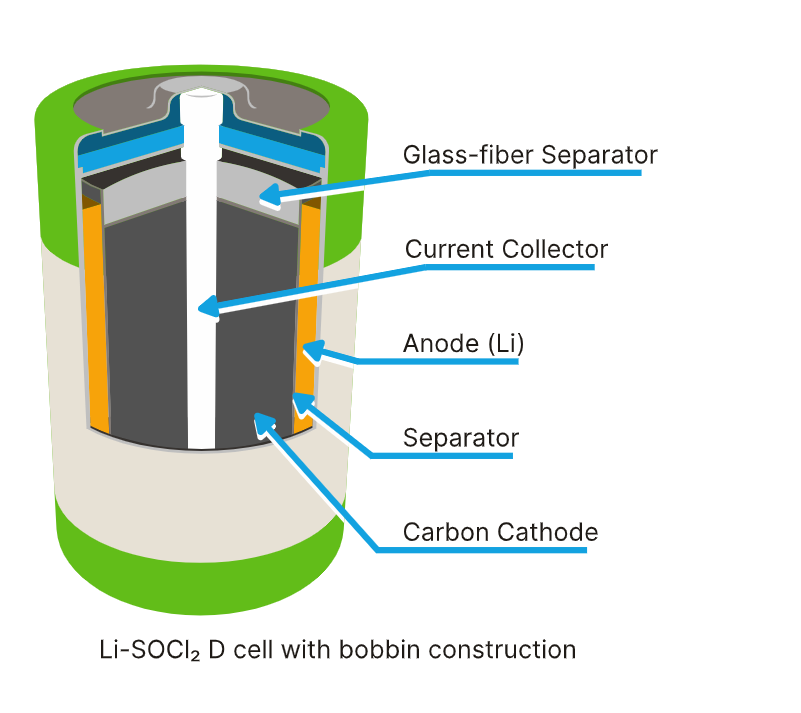
Lithium batteries are used in almost every modern industry, but not all lithium battery technologies are designed for the same purpose. Lithium-ion (Li-ion) batteries and lithium-thionyl chloride (Li-SOCl2) batteries both use lithium chemistry, yet they are built for completely different applications.
Lithium-ion batteries are rechargeable power solutions commonly found in smartphones, laptops, electric vehicles, and energy storage systems. Li-SOCl2 batteries are primary lithium batteries designed for extremely long operating life, low maintenance, and reliable performance in remote industrial devices.
Choosing between Li-ion and Li-SOCl2 depends on factors such as rechargeability, power requirements, operating environment, lifespan, and application type. This guide explains the key differences between Li-ion vs Li-SOCl2 batteries and helps you determine which technology is the right choice for your project.
Li-ion vs Li-SOCl2 Batteries: Quick Comparison
| Feature | Lithium-Ion (Li-ion) | Lithium-Thionyl Chloride (Li-SOCl2) |
|---|---|---|
| Battery Type | Rechargeable secondary battery | Primary non-rechargeable lithium battery |
| Recharge Cycles | Hundreds to thousands of cycles depending on chemistry and usage | Single-use battery designed for long-term operation |
| Nominal Voltage | Approximately 3.6–3.7V per cell | Approximately 3.6V per cell |
| Energy Density | High | Extremely high for primary batteries |
| Self-Discharge | Higher than Li-SOCl2 | Extremely low, often below 1% per year |
| Shelf Life | Usually several years depending on storage conditions | Can provide 10+ years of storage life |
| Charging | Fast charging supported | Cannot be recharged |
| Best Applications | Electronics, EVs, power tools, energy storage | IoT sensors, smart meters, remote monitoring systems |
What Is a Lithium-Ion (Li-ion) Battery?
A lithium-ion battery is a rechargeable battery that stores and releases energy through the movement of lithium ions between the cathode and anode during charging and discharging.
During charging, lithium ions move toward the anode where they are stored. During discharge, the ions move back toward the cathode while electrons flow through an external circuit to provide electrical power.
Li-ion batteries are widely used because they offer a strong balance between energy density, power output, rechargeability, and size. Different lithium-ion chemistries, including lithium iron phosphate (LFP) and nickel manganese cobalt (NMC), are optimized for different requirements.
Advantages of Lithium-Ion Batteries
- Rechargeable thousands of times depending on chemistry and usage conditions
- High energy density compared with many traditional rechargeable batteries
- Lightweight design for portable applications
- Supports fast charging technologies
- Provides high power output for demanding devices
- Available in many shapes, sizes, and configurations
Common Applications of Li-ion Batteries
- Smartphones and tablets
- Laptops and portable electronics
- Electric vehicles
- Drones
- Power tools
- Solar and energy storage systems
What Is a Li-SOCl2 (Lithium-Thionyl Chloride) Battery?
A lithium-thionyl chloride battery, commonly called Li-SOCl2, is a primary lithium battery designed for long-term, low-maintenance power applications. Unlike lithium-ion batteries, Li-SOCl2 batteries cannot be recharged after their stored energy is used.
Li-SOCl2 batteries use metallic lithium as the anode and thionyl chloride as the cathode material and electrolyte. This chemistry provides extremely low self-discharge, high energy density, and excellent long-term reliability.
Because of these characteristics, Li-SOCl2 batteries are widely used in devices that must operate for years without battery replacement, especially in remote locations where maintenance is difficult.
Advantages of Li-SOCl2 Batteries
- Very low self-discharge rate
- Long shelf life and operational lifespan
- Stable voltage output during most of discharge
- Excellent performance in harsh environments
- High energy storage capacity for compact devices
- Ideal for low-power applications requiring long-term reliability
Common Applications of Li-SOCl2 Batteries
- Smart electricity meters
- Water and gas meters
- IoT sensors
- GPS tracking devices
- Industrial monitoring systems
- Remote communication equipment
- Security and emergency devices
Main Differences Between Li-ion and Li-SOCl2 Batteries
Although both Li-ion and Li-SOCl2 batteries use lithium-based chemistry, they are designed for completely different operating requirements. The biggest difference is that Li-ion batteries are built for repeated charging and high power demand, while Li-SOCl2 batteries are designed for extremely long service life with minimal maintenance.
1. Rechargeability: Li-ion vs Li-SOCl2
The most important difference between these two battery technologies is rechargeability.
Lithium-ion batteries are rechargeable. They are designed to complete hundreds or thousands of charge and discharge cycles depending on the battery chemistry, operating temperature, and usage conditions.
Li-SOCl2 batteries are primary batteries, meaning they are designed for one-time use. Once the stored chemical energy is consumed, the battery must be replaced instead of recharged.
| Feature | Li-ion Battery | Li-SOCl2 Battery |
|---|---|---|
| Rechargeable | Yes | No |
| Best Usage Pattern | Frequent charging and discharging | Long-term continuous operation |
| Replacement Frequency | Depends on charging cycles | Often measured in years or decades |
2. Energy Density Comparison
Energy density measures how much energy a battery can store compared with its size and weight. It is one of the most important factors when selecting a battery for a specific application.
Li-ion batteries provide high energy density and are optimized for applications that require both energy storage and repeated usage. This makes them suitable for devices such as smartphones, electric vehicles, and portable equipment.
Li-SOCl2 batteries can achieve extremely high energy density because they are designed as primary cells with very efficient chemical reactions. Their biggest advantage is delivering stored energy slowly over a very long period rather than providing frequent high-power cycles.
| Energy Density Factor | Li-ion | Li-SOCl2 |
|---|---|---|
| Energy Storage | High | Very high for primary batteries |
| Main Advantage | Rechargeable high-performance power | Long-lasting stored energy |
| Typical Use | Devices used daily | Devices expected to operate for years |
3. Voltage Characteristics
Both battery technologies operate around similar voltage levels, but their voltage behavior during discharge is different.
Lithium-ion batteries usually have a nominal voltage between 3.6V and 3.7V depending on chemistry. Their voltage gradually decreases as the battery loses charge.
Li-SOCl2 batteries typically provide around 3.6V and are known for maintaining a very stable voltage output throughout most of their operating life. This stable discharge profile is valuable for electronic devices that require consistent power.
4. Discharge Performance
The discharge behavior of a battery determines how consistently it can deliver power to a device.
Li-ion Discharge Characteristics
- Designed for higher current output
- Suitable for devices requiring bursts of power
- Supports acceleration and fast response applications
- Used in EV motors, smartphones, and power tools
Li-SOCl2 Discharge Characteristics
- Designed for low and steady energy consumption
- Maintains stable voltage for long periods
- Ideal for sensors and monitoring equipment
- Not naturally optimized for sudden high-current demand
5. Self-Discharge Rate
Self-discharge describes how quickly a battery loses stored energy while not being used.
Li-SOCl2 batteries have one of the lowest self-discharge rates among battery technologies. This allows them to remain stored for many years while maintaining most of their original capacity.
Lithium-ion batteries have a higher self-discharge rate, especially when compared with Li-SOCl2 cells. They are designed for active usage rather than extremely long storage periods.
| Feature | Li-ion | Li-SOCl2 |
|---|---|---|
| Self-Discharge | Higher | Extremely low |
| Long-Term Storage | Requires proper management | Excellent |
| Best For | Frequently used devices | Remote devices with minimal maintenance |
6. Lifespan and Shelf Life
Battery lifespan depends on how the battery is used. Li-ion and Li-SOCl2 batteries are designed for different definitions of "long life."
For lithium-ion batteries, lifespan usually refers to the number of charge cycles before capacity decreases significantly. Proper charging habits, temperature control, and battery management systems help extend their useful life.
For Li-SOCl2 batteries, lifespan is measured by how long the battery can continuously provide reliable power. Their extremely low self-discharge makes them suitable for applications requiring 10 years or more of operation.
7. Temperature Performance
Operating environment is another important factor when selecting battery technology.
Li-ion batteries perform well in normal operating conditions but require thermal management in extreme environments. Very high or very low temperatures can reduce performance and accelerate degradation.
Li-SOCl2 batteries are widely used in industrial and outdoor environments because many designs can operate effectively across a wide temperature range.
| Temperature Factor | Li-ion | Li-SOCl2 |
|---|---|---|
| Normal Electronics | Excellent | Excellent |
| Extreme Environments | Requires protection | Strong performance |
| Industrial Remote Applications | Less common | Highly suitable |
Li-ion vs Li-SOCl2 Battery Applications
The best battery technology depends on the requirements of the device. Li-ion and Li-SOCl2 batteries are not direct replacements for each other because they are designed for different operating conditions.
Li-ion batteries are optimized for applications that require frequent charging, high power output, and flexible energy delivery. Li-SOCl2 batteries are designed for applications where reliability, long service life, and minimal maintenance are more important than rechargeability.
Applications Where Li-ion Batteries Are Better
Lithium-ion batteries are the preferred choice for devices that consume significant amounts of energy and need to be recharged regularly.
- Smartphones and laptops: Li-ion provides high energy density in a compact size, allowing longer usage time without making devices too large or heavy.
- Electric vehicles: EV manufacturers use lithium-ion battery packs because they provide the energy capacity and power output required for driving range and acceleration.
- Power tools: Drills, saws, and other cordless tools require high current output, which makes Li-ion technology suitable.
- Drones and robotics: Lightweight design and high power delivery are critical for moving systems.
- Energy storage systems: Rechargeable capability makes Li-ion suitable for solar storage and backup power applications.
Applications Where Li-SOCl2 Batteries Are Better
Li-SOCl2 batteries are designed for devices that may need to operate continuously for many years without human intervention.
- Smart meters: Electricity, gas, and water meters often use Li-SOCl2 batteries because replacing batteries frequently is expensive and inconvenient.
- IoT sensors: Remote sensors installed in factories, agriculture, and infrastructure require reliable power over long periods.
- GPS tracking devices: Tracking equipment often operates in locations where maintenance access is limited.
- Industrial monitoring systems: Sensors monitoring temperature, pressure, and equipment status benefit from long shelf life and stable voltage.
- Emergency equipment: Devices used only occasionally require batteries that remain reliable after years of storage.
Why Li-SOCl2 Batteries Are Popular for IoT Devices
The growth of the Internet of Things (IoT) has increased demand for batteries that can operate for years without replacement. Many IoT devices collect small amounts of data and transmit information occasionally rather than consuming large amounts of power continuously.
Li-SOCl2 batteries are well suited for these applications because they combine low self-discharge with high energy density. A sensor installed in a remote location can continue operating for many years without requiring regular maintenance.
Example: Smart Water Meter
A smart water meter may spend most of its life in a low-power sleep mode while occasionally transmitting usage data. A rechargeable Li-ion battery would require periodic charging or replacement, while a Li-SOCl2 battery can provide long-term unattended operation.
Example: Industrial Sensor Network
A factory may deploy thousands of sensors to monitor equipment conditions. Replacing thousands of batteries regularly creates high maintenance costs. Long-life Li-SOCl2 batteries reduce service requirements and improve system reliability.
Safety Comparison: Li-ion vs Li-SOCl2
Safety requirements vary depending on the application. Both battery types require proper design, handling, and protection, but their safety characteristics are different.
Li-ion Battery Safety
Lithium-ion batteries store large amounts of energy and can deliver high power. Because of this, they require battery management systems (BMS) to monitor voltage, temperature, and charging conditions.
- Requires protection circuits
- Needs controlled charging systems
- Can experience thermal issues if damaged or improperly managed
- Modern designs include multiple safety protections
Li-SOCl2 Battery Safety
Li-SOCl2 batteries are chemically different from rechargeable lithium-ion systems. They are designed for long-term stability, but they also require careful handling because they contain reactive lithium and chemical electrolyte materials.
- Excellent long-term stability
- Low self-discharge reduces energy loss during storage
- Requires proper storage and disposal procedures
- Must be selected according to application requirements
Cost Comparison: Which Battery Is More Affordable?
The cost comparison between Li-ion and Li-SOCl2 depends on the complete lifecycle rather than only the initial purchase price.
Li-ion batteries are usually more economical for devices that are used frequently because they can be recharged many times. The cost is distributed over many charging cycles.
Li-SOCl2 batteries have a higher upfront cost in many applications, but their long operating life can reduce maintenance expenses. For remote equipment, replacing batteries less frequently can provide significant savings.
| Cost Factor | Li-ion | Li-SOCl2 |
|---|---|---|
| Initial Battery Cost | Usually lower due to mass production | Usually higher |
| Recharge Value | Excellent | Not applicable |
| Maintenance Cost | Higher if frequent replacement is needed | Low for long-term deployments |
| Best Economic Use | Daily-use devices | Remote long-life systems |
Environmental Considerations
Both battery technologies require responsible manufacturing, recycling, and disposal. The environmental impact depends on material sourcing, battery lifespan, and recycling practices.
Li-ion Environmental Factors
- Large recycling industry developing worldwide
- Longer battery life reduces replacement frequency
- Material recovery is important because some chemistries use valuable metals
Li-SOCl2 Environmental Factors
- Long service life reduces the number of replacements
- Requires specialized disposal because of chemical contents
- Recycling and safe handling are important at end of life
How to Choose Between Li-ion and Li-SOCl2 Batteries
Selecting the correct battery technology starts by understanding how your device operates.
Choose Li-ion If:
- Your device needs regular charging
- You require high power output
- Fast charging is important
- The battery will be used daily
- Weight and size are critical factors
Choose Li-SOCl2 If:
- Your device must operate for many years without maintenance
- The battery cannot easily be replaced
- The device uses very low power
- Long shelf life is important
- The application is remote or difficult to access
Frequently Asked Questions About Li-ion vs Li-SOCl2 Batteries
Are Li-ion and Li-SOCl2 batteries the same?
No. Although both batteries use lithium-based chemistry, they are designed for different purposes. Lithium-ion batteries are rechargeable and designed for repeated use, while Li-SOCl2 batteries are primary lithium batteries designed for long-term, single-use operation.
Which battery lasts longer, Li-ion or Li-SOCl2?
The answer depends on how lifespan is measured. Li-ion batteries can last many charging cycles, making them suitable for daily-use devices. Li-SOCl2 batteries can operate for many years because of their extremely low self-discharge rate and are better for applications where battery replacement is difficult.
Can a Li-SOCl2 battery replace a lithium-ion battery?
Usually, no. These batteries are designed for different applications and have different charging, power output, and electrical requirements. Replacing one with the other requires careful evaluation of voltage, current demand, charging requirements, and device design.
Why are Li-SOCl2 batteries used in IoT devices?
Li-SOCl2 batteries are popular in IoT applications because many sensors consume very little power but need to operate for years without maintenance. Their low self-discharge and long shelf life make them suitable for remote monitoring systems, smart meters, and industrial sensors.
Are Li-ion batteries more powerful than Li-SOCl2 batteries?
Li-ion batteries generally provide higher power output and are better for applications requiring rapid energy delivery, such as electric vehicles and power tools. Li-SOCl2 batteries are optimized for long-duration energy delivery rather than high-power bursts.
Which battery is better for smart meters?
Li-SOCl2 batteries are usually better suited for smart meters because these devices often require reliable operation for many years with minimal maintenance. Their low self-discharge allows them to remain functional for long periods.
Li-ion vs Li-SOCl2: Final Verdict
Li-ion and Li-SOCl2 batteries are both advanced lithium battery technologies, but they solve different problems.
Lithium-ion batteries are the better choice when you need rechargeable energy, high power output, fast charging, and frequent daily usage. They are ideal for smartphones, laptops, electric vehicles, drones, and energy storage systems.
Lithium-thionyl chloride batteries are the better choice when reliability, long service life, and minimal maintenance are the priority. They are commonly used in IoT devices, smart meters, industrial sensors, and remote monitoring equipment where replacing batteries frequently is impractical.
The right battery technology depends on your application's power requirements, operating environment, maintenance limitations, and expected lifespan. Instead of choosing the battery with the highest specifications, select the chemistry that matches the actual needs of your device.
- Next:NiMH Battery vs Lithium-Ion: Complete Comparison, Differences, Pros and Cons
- Previous:How to Choose the Right Lithium Battery for Your E-Bike: Complete Guide
Contact Details
Lithium LiFePO4 Batteries and Lithium LiFePO4 Cells Supplier - LiFePO4 Battery Shop
Contact Person: Miss. Elena Wang
WhatsApp : +8615263269227
Skype : +8615263269227
WeChat :15263269227
Email : info@lifepo4batteryshop.com
All Products
- TC Elcon Charger (2)
- Headway Lithium Battery (6)
- Blade Battery (10)
- Semi Solid State Battery (6)
- A123 Battery (6)
- Sinopoly Battery (7)
- GBS Battery (16)
- CALB Battery (26)
- Cylindrical Cell (14)
- Energy Storage System (0)
- Battery Management System (15)
- Sodium ion Battery Cell (4)
- Lithium Titanate Battery (23)
- Ternary Lithium Battery Cell (12)
- REPT Battery (10)
- BYD Battery (5)
- CATL Battery (15)
- Thunder Sky Winston Battery (26)
- EVE Battery (37)
- LiFePO4 Battery Cell (37)
Certification
Customer Reviews
- I have fond memories of our meeting in Shanghai with LiFePO4 Battery Shop Elena. Your company left a strong impression on me with its impressive growth and professionalism. We both value straightforwardness and honesty, which I believe are the most important qualities in any partnership. I am confident that we can build a successful collaboration based on these shared values. —— Robert from USA
- I've been working with LiFePO4 Battery Shop for years, and their reliability is unmatched. While other suppliers frequently change sales teams, LiFePO4 Battery Shop has consistently provided exceptional service with a stable team. Their commitment to quality and customer support truly sets them apart. —— Henry from Australia