
Blog
Lithium-Ion Battery Weight and Energy Density: Formulas, Data & Chemistry Comparison
2026-06-08 | Calvin
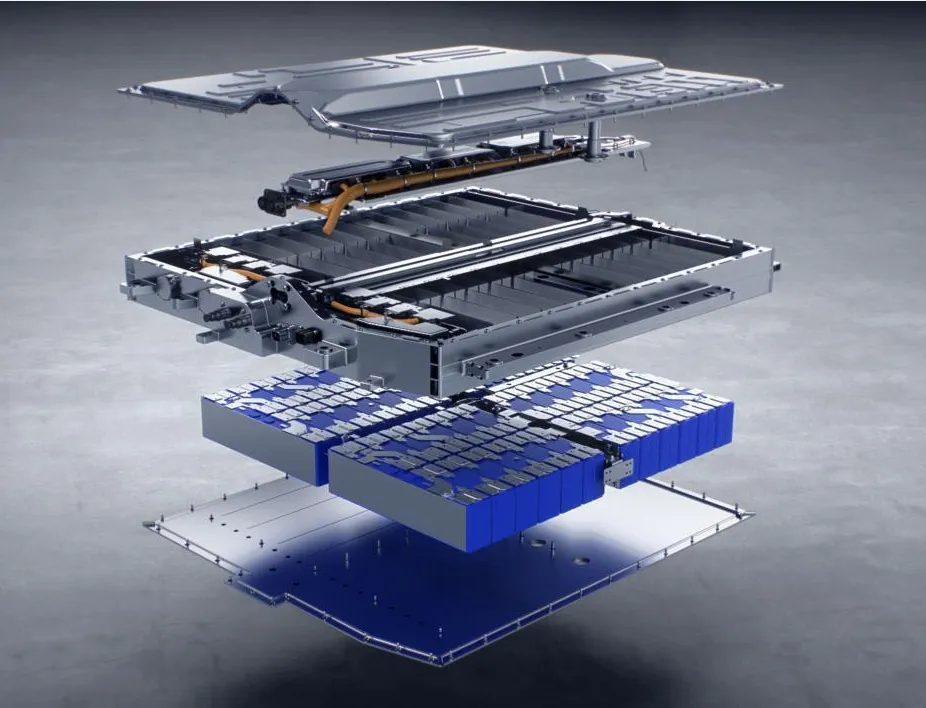
Lithium-ion battery weight and energy density determine how much power a system can store without penalty in size or mass. In electric vehicles, a 10% improvement in pack energy density translates to roughly 10% more range with no added weight. In drones and portable electronics, it is the difference between a device that works for hours and one that works for minutes.
This article will help you easily understand gravimetric energy density and volumetric energy density. Beyond basic conceptual explanations, it walks you through practical battery weight calculation formulas, clarifies the deviation between datasheet cell parameters and actual finished pack performance, interprets 2025 industry research data on real-world pack energy density across different battery chemistries, and guides you to pick the optimal cell chemistry matching your specific application scenarios.
Part 1: Gravimetric vs. Volumetric Energy Density — What Each Measures
Energy density is not a single number. Two distinct metrics are used, and confusing them leads to serious design errors.
Gravimetric energy density (specific energy) measures how much energy a battery stores per unit of mass. Unit: Wh/kg. This is the dominant metric for weight-sensitive applications — electric vehicles, aircraft, drones, portable devices. When manufacturers claim "high energy density," they almost always mean gravimetric.
Volumetric energy density measures how much energy a battery stores per unit of volume. Unit: Wh/L (watt-hours per liter). This is the critical metric for space-constrained applications — smartphones, implantable medical devices, slim-profile electronics, robotics with tight enclosure constraints.
The two metrics are related but do not move together. A pouch cell achieves higher volumetric efficiency than a cylindrical cell of the same chemistry because the pouch wastes no volume on a rigid metal case. Conversely, a large-format prismatic LFP cell achieves excellent volumetric density at pack level because its rectangular geometry tiles without gaps.
Which metric governs your application:
- Weight matters most (EVs, drones, aircraft, wearables): optimize for Wh/kg
- Space matters most (smartphones, robotics, sealed enclosures): optimize for Wh/L
- Both matter (portable power stations, e-bikes): balance both, typically favoring Wh/kg
Part 2: How to Calculate Battery Weight — The Formula and Worked Examples
The standard formula for estimating battery weight from energy density is:
Battery Weight (kg) = Total Energy (Wh) ÷ Energy Density (Wh/kg)
Or equivalently, starting from capacity and voltage:
Battery Weight (kg) = Capacity (Ah) × Nominal Voltage (V) ÷ Energy Density (Wh/kg)
This formula calculates cell-level weight. For a complete battery pack, apply the cell-to-pack factor (covered in Part 4).
Worked Example 1: RV House Battery (LFP)
A 12V/200Ah LFP battery bank for an RV application.
- Total energy: 200Ah × 12.8V = 2,560 Wh
- LFP cell energy density: 150 Wh/kg (mid-range for quality prismatic cells)
- Cell-level weight estimate: 2,560 ÷ 150 = 17.1 kg
- With pack overhead factor (~85% cell mass fraction for a well-integrated prismatic pack): 17.1 ÷ 0.85 = ~20.1 kg total pack weight
An equivalent lead-acid bank (100Ah usable from a 200Ah bank at 50% DoD) weighs approximately 56 kg. The LFP system delivers the same usable energy at 36% of the weight.
Worked Example 2: Electric Vehicle Pack (NMC)
A 75 kWh NMC EV battery pack.
- Total energy: 75,000 Wh
- NMC cell energy density: 230 Wh/kg (mid-range for automotive cells)
- Cell-level weight: 75,000 ÷ 230 = 326 kg in cells
- With typical automotive pack overhead (cells represent ~65–70% of pack mass in a module-based design): 326 ÷ 0.67 = ~487 kg total pack weight
This aligns with real-world EV pack weights: the 75 kWh pack in the Tesla Model 3 Long Range weighs approximately 478 kg, confirming the estimate.
Part 3: Energy Density by Chemistry — Full Comparison Table
Chemistry choice is the single biggest lever on both energy density and weight. The trade-offs are real and application-specific.
| Chemistry | Gravimetric (Cell) | Volumetric (Cell) | Pack-Level Grav. | Cycle Life | Thermal Safety |
|---|---|---|---|---|---|
| LFP (LiFePO4) | 90–205 Wh/kg | 227–396 Wh/L | 125–145 Wh/kg | 3,000–9,000 | Excellent (onset ~270°C) |
| NMC (Nickel Manganese Cobalt) | 150–300 Wh/kg | 500–700 Wh/L | 140–180 Wh/kg | 1,000–3,000 | Moderate (onset ~210°C) |
| NCA (Nickel Cobalt Aluminum) | 200–260 Wh/kg | 500–680 Wh/L | 150–174 Wh/kg | 500–1,500 | Moderate |
| LCO (Lithium Cobalt Oxide) | 150–200 Wh/kg | 400–560 Wh/L | 130–160 Wh/kg | 500–1,000 | Poor |
| LTO (Lithium Titanate) | 60–120 Wh/kg | 130–200 Wh/L | 50–90 Wh/kg | 10,000–20,000+ | Excellent |
| Lead-Acid (AGM/GEL) | 30–50 Wh/kg | 60–90 Wh/L | 30–50 Wh/kg | 300–500 | Good (no Li hazard) |
Pack-level gravimetric figures from: World Electric Vehicle Journal 2025, 16, 484 (peer-reviewed empirical analysis of production battery packs).
Notable data points from the 2025 peer-reviewed analysis:
- LFP packs at pack level: 125–145 Wh/kg — lower than NMC/NCA pack-level values, but with significantly lower thermal management overhead requirements
- NMC packs at pack level: 140–180 Wh/kg — the chemistry overhead is higher because thermal management requirements (cooling plates, safety barriers) add proportionally more mass to NMC packs
- NCA packs at pack level: 150–174 Wh/kg — highest pack-level gravimetric density among production packs surveyed
A critical finding: NMC and NCA cells experience significantly higher energy density losses during pack integration than LFP cells. LFP's simpler thermal management requirements mean the cell-to-pack factor is better for LFP — partially closing the cell-level density gap at the system level.
Part 4: The Cell-to-Pack Factor — Why Datasheet Numbers Don't Reach Your System
Every engineer making battery weight estimates needs to account for the gap between cell-level energy density (what the datasheet shows) and pack-level energy density (what the complete assembled system actually delivers).
Why pack density is always lower than cell density:
Battery packs include substantial non-cell mass: the BMS and electronics, thermal management hardware (cooling plates, heat pipes, coolant), structural housing and enclosure, busbars and wiring harness, contactors, fuses, sensors, and module framing. All of this adds weight without adding energy storage.
Typical cell-to-pack mass fractions (cells as % of total pack mass):
| Pack Design | Cell Mass Fraction | Pack Energy Density vs. Cell |
|---|---|---|
| Simple prismatic LFP (passive cooling) | 80–90% | ~85% of cell Wh/kg |
| Modular EV pack (NMC, active liquid cooling) | 60–70% | ~60–70% of cell Wh/kg |
| Cell-to-pack (CTP, e.g., BYD Blade architecture) | 85–90% | ~80–85% of cell Wh/kg |
| Lead-acid (cells + case, minimal overhead) | 90–95% | ~90% of cell Wh/kg |
BYD Han 2023 CTP pack achieves 90% cell-to-pack mass ratio — a benchmark for integration efficiency per batterydesign.net.
The practical rule: multiply cell-level energy density by 0.65–0.85 to estimate pack-level density, depending on whether the pack is a simple passive system (higher factor) or an actively cooled automotive pack (lower factor).
Part 5: What Drives Differences in Battery Weight — Beyond Chemistry
Chemistry is the largest variable, but four additional factors materially affect battery weight in real systems.
Cell format. Cylindrical cells waste 25–40% of pack volume in unavoidable air gaps between round cells. Prismatic cells tile with near-zero gap, achieving better volumetric utilization. Pouch cells achieve the highest volumetric density at the cell level by eliminating case mass, but require additional external compression structure.
Electrode design. Thicker electrodes hold more active material (higher energy density) but limit ion transport rate (lower C-rate). Thin-electrode high-rate cells trade Wh/kg for power delivery speed. This is why a 5C power cell of the same chemistry as a 1C energy cell will weigh more per usable Wh.
Pack architecture. Traditional cell → module → pack designs have lower cell mass fractions (~60–70%) due to module framing overhead. Cell-to-pack (CTP) designs — which eliminate the module layer — push cell mass fractions to 85–90%. This is the primary engineering motivation behind BYD's Blade format and CATL's Qilin battery architecture.
BMS and thermal system mass. NMC packs require active liquid cooling due to higher thermal runaway risk and heat generation. LFP packs can often use passive air cooling. The thermal management delta can add 5–10% to total pack mass in large EV packs — another factor that partially offsets LFP's cell-level energy density disadvantage at the system level.
Part 6: Chemistry Selection by Application
| Application | Best Chemistry | Why |
|---|---|---|
| Long-range premium EV | NMC (300+ Wh/kg) | Maximum range per kg; pack-level overhead justified |
| Mass-market EV / electric bus | LFP | Lower cost, longer cycle life, simpler thermal management |
| Residential solar storage | LFP | Cycle life (10+ years), safety in enclosed spaces, cost |
| Drone / aerospace | NMC or NCA | Every gram costs altitude, range, or payload |
| Consumer electronics (phone, laptop) | NMC / LCO | Thin form factor, volumetric density priority |
| Industrial UPS / rapid cycling | LTO | 10,000–20,000 cycles, -30°C to 55°C operation |
| Budget backup power | Lead-acid or LFP | Cycle count determines which is more cost-effective |
Frequently Asked Questions
What is the energy density of a LiFePO4 battery?
LFP cells range from 90–205 Wh/kg gravimetrically at the cell level. Standard commercial prismatic cells (100–314Ah) typically achieve 130–160 Wh/kg. CATL's latest generation LFP cells claim up to 205 Wh/kg. At the pack level, empirical data from production EV and storage systems places LFP packs at 125–145 Wh/kg — lower than cell level because of thermal management, BMS, and structural overhead.
How do I calculate how much my battery pack will weigh?
Use the formula: Pack Weight (kg) = Total Energy (Wh) ÷ Cell Energy Density (Wh/kg) ÷ Cell Mass Fraction. Start with your required energy (Ah × V = Wh), divide by the cell's rated energy density, then divide again by the cell mass fraction (typically 0.80–0.85 for simple LFP packs; 0.65–0.70 for actively cooled NMC automotive packs). The result is total pack weight including all non-cell components.
Why is pack energy density lower than cell energy density?
Battery packs include substantial non-cell mass: BMS electronics, cooling plates or coolant systems, structural housing, busbars, wiring harness, contactors, and fuses. This overhead adds weight without adding stored energy. A well-designed passive LFP pack retains ~80–85% of cell-level energy density at the pack level. An actively cooled NMC automotive pack typically retains 60–70%. Cell-to-pack (CTP) architectures — which eliminate the module layer — push the cell mass fraction back toward 85–90%.
Is LFP or NMC better for energy density?
NMC has higher cell-level energy density (150–300 Wh/kg vs. 90–205 Wh/kg for LFP). However, a 2025 peer-reviewed study in the World Electric Vehicle Journal found that NMC and NCA cells lose significantly more energy density during pack integration than LFP cells, because NMC packs require more thermal management mass. At the pack level, the gap narrows: LFP packs achieve 125–145 Wh/kg vs. 140–180 Wh/kg for NMC. For applications where weight is not the primary constraint — solar storage, buses, stationary backup — LFP's advantages in cycle life, safety, and cost per kWh outweigh the density gap. For applications where weight is paramount — long-range passenger EVs, aircraft — NMC remains the correct choice.
Conclusion
Battery weight and energy density are engineering inputs, not marketing claims. Getting them right requires understanding both metrics (Wh/kg and Wh/L), choosing the correct chemistry for the application's actual constraints, applying a realistic cell-to-pack overhead factor, and using the weight formula to pressure-test sizing decisions before committing to hardware.
The 2025 data reinforces a nuanced picture: NMC leads at the cell level, but LFP closes much of the gap at the pack level thanks to simpler thermal management requirements. For anything requiring maximum longevity, safety in enclosed spaces, or minimum cost per cycle — LFP is still the correct answer, even if it weighs somewhat more per kilowatt-hour.
- Next:Understanding the Different Types of LiFePO4 Batteries
- Previous:Automotive Battery Manufacturer – Comparison and Battery Brands
Contact Details
Lithium LiFePO4 Batteries and Lithium LiFePO4 Cells Supplier - LiFePO4 Battery Shop
Contact Person: Miss. Elena Wang
WhatsApp : +8615263269227
Skype : +8615263269227
WeChat :15263269227
Email : info@lifepo4batteryshop.com
All Products
- TC Elcon Charger (0)
- Headway Lithium Battery (6)
- Blade Battery (10)
- Semi Solid State Battery (6)
- A123 Battery (6)
- Sinopoly Battery (7)
- GBS Battery (16)
- CALB Battery (25)
- Cylindrical Cell (11)
- Energy Storage System (0)
- Battery Management System (15)
- Sodium ion Battery Cell (4)
- Lithium Titanate Battery (22)
- Ternary Lithium Battery Cell (12)
- REPT Battery (10)
- BYD Battery (5)
- CATL Battery (15)
- Thunder Sky Winston Battery (26)
- EVE Battery (37)
- LiFePO4 Battery Cell (26)
Certification
Customer Reviews
- I have fond memories of our meeting in Shanghai with LiFePO4 Battery Shop Elena. Your company left a strong impression on me with its impressive growth and professionalism. We both value straightforwardness and honesty, which I believe are the most important qualities in any partnership. I am confident that we can build a successful collaboration based on these shared values. —— Robert from USA
- I've been working with LiFePO4 Battery Shop for years, and their reliability is unmatched. While other suppliers frequently change sales teams, LiFePO4 Battery Shop has consistently provided exceptional service with a stable team. Their commitment to quality and customer support truly sets them apart. —— Henry from Australia