Blog
Automotive Battery Manufacturer – Comparison and Battery Brands
2026-06-09 | Calvin
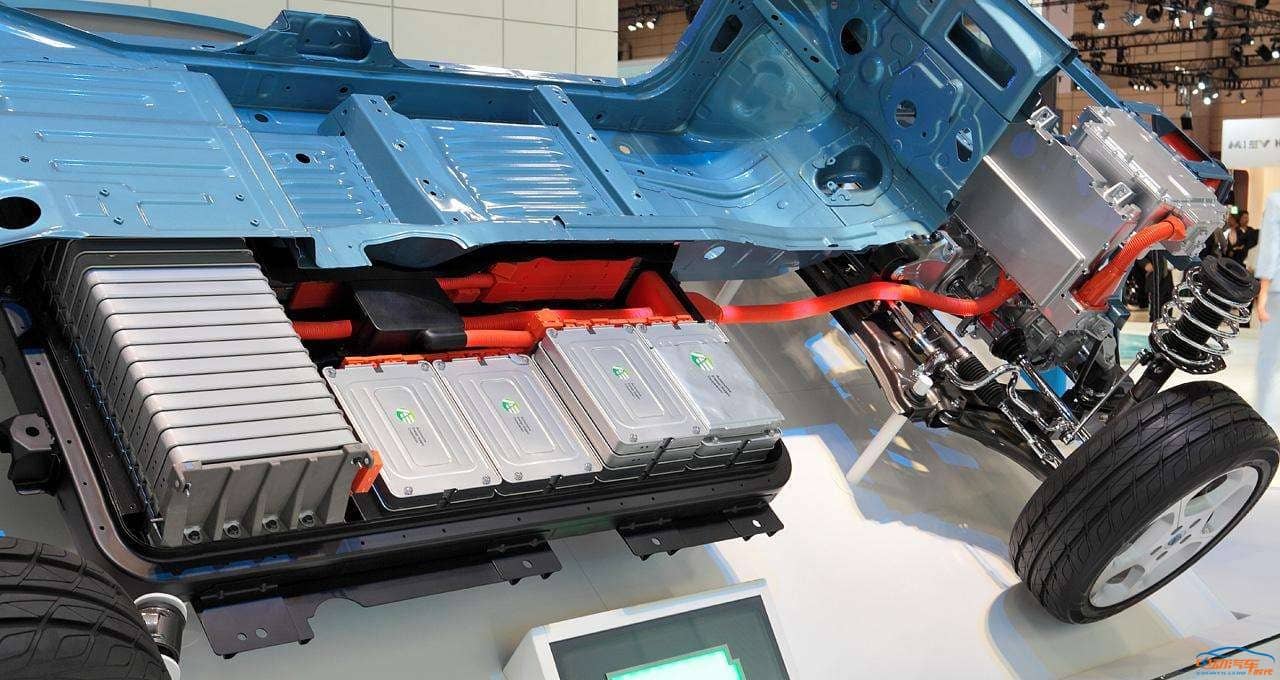
Batteries are some of the critical components of any car. Without a battery, you will be unable to move your car as it helps keep your car moving. The health of your car battery determines how smoothly it will run and operate. Therefore, buying the best car battery that is suitable for your specific car model is among the important factors to consider during car maintenance. A good car battery ensures you get the optimal performance you deserve and prevents unnecessary damage to other parts of your car. Nowadays, it becomes hard for one to choose a reliable battery manufacturer or even brand.
Below, we discuss with you everything you need to know about automotive battery manufacturers. We give you a list of the best manufacturers and some of the reliable brands to buy. Let’s get started.
2025 Global EV Battery Market Share — Full Rankings
Source: SNE Research, full-year 2025 data (published February 2026).
| Rank | Manufacturer | Country | 2025 GWh | 2025 Market Share |
|---|---|---|---|---|
| 1 | CATL | China | 464.7 GWh | 39.2% |
| 2 | BYD | China | 194.8 GWh | 16.4% |
| 3 | LG Energy Solution | South Korea | 108.8 GWh | 9.2% |
| 4 | CALB | China | 62.8 GWh | 5.3% |
| 5 | Gotion High-Tech | China | 53.4 GWh | 4.5% |
| 6 | SK On | South Korea | 43.9 GWh | 3.7% |
| 7 | Panasonic | Japan | 43.9 GWh | 3.7% |
| 8 | EVE Energy | China | 30.9 GWh | 2.6% |
| 9 | Samsung SDI | South Korea | 28.5 GWh | 2.4% |
| 10 | Svolt Energy | China | 28.5 GWh | 2.4% |
The structural shift in 2025: Chinese manufacturers collectively controlled approximately 69% of the global EV battery market in 2025 — up from roughly 65% in 2024. South Korean manufacturers (LG Energy Solution, SK On, Samsung SDI) held a combined 15.3% share, down 3.5 percentage points year-over-year despite absolute growth in production. CATL remains the only battery manufacturer with a market share above 20% — or even 30%.
Manufacturer Profiles
1. CATL — Contemporary Amperex Technology Co. (39.2% share)
Headquarters: Ningde, Fujian, China | Founded: 2011
CATL has led global EV battery installations for seven consecutive years. Its 464.7 GWh installed in 2025 represents 35.7% year-over-year growth — faster than the overall market's 31.7% expansion, meaning CATL is gaining share while the market grows.
Key technologies (2025):
- Qilin Battery (CTP 3.0): Cell-to-pack architecture achieving 255 Wh/kg for NMC and 160 Wh/kg for LFP at pack level — the highest reported LFP pack density in production
- Shenxing 2nd Generation: 12C peak charging rate, 1.3 MW peak power, enabling 520 km range from a 5-minute charge — the world's fastest-charging LFP battery in mass production as of 2025
- Naxtra sodium-ion battery: 175 Wh/kg energy density — the highest globally for sodium-ion — entering mass production December 2025
Primary OEM customers: Tesla, BMW, Mercedes-Benz, Volkswagen, Volvo, Honda, Toyota, Stellantis, Zeekr, Li Auto, Xiaomi
Competitive moat: Breadth of OEM relationships, manufacturing scale, and innovation cadence. CATL holds more active OEM supply contracts than any competitor. Its $4.6 billion Hong Kong listing in 2025 and ongoing $7.3 billion Hungarian gigafactory construction reinforce its global manufacturing ambition.
2. BYD — Build Your Dreams (16.4% share)
Headquarters: Shenzhen, Guangdong, China | Founded: 1995
BYD is the world's only major automotive battery manufacturer that is also a top-volume vehicle OEM — it both makes batteries and installs them in its own vehicles. This vertical integration from lithium procurement through cells to vehicle assembly is its primary strategic differentiator.
Key technologies (2025):
- Blade Battery (Gen 1): Ultra-thin prismatic LFP cell (965 × 90 × 14mm), 150 Wh/kg at pack level, cell-to-pack architecture — the design that established BYD's technology credibility in EVs
- Blade Battery (Gen 2): Energy density targeting 210 Wh/kg — a 40% improvement over Gen 1 — in preparation for launch
- e-Platform 4.0 / Cell-to-Body: Takes cell-to-pack integration further, incorporating the battery pack as a structural element of the vehicle chassis
Primary OEM customers: BYD's own EV lineup (Seal, Han, Atto, Dolphin, Seagull), plus external supply to Toyota, Ford, and others
Competitive moat: Full supply chain vertical integration provides cost control and resilience. BYD's batteries powered a 216% year-over-year increase in European installations in 2025. The company's manufacturing cost per kWh is among the lowest in the industry due to in-house production of cells, BMS, motors, and semiconductors.
3. LG Energy Solution (9.2% share)
Headquarters: Seoul, South Korea | Battery division spun off from LG Chem: 2020
LG Energy Solution is the leading non-Chinese battery manufacturer and the primary supplier for Western automakers who prefer not to depend on Chinese supply chains. Its 108.8 GWh in 2025 represents 11.3% growth year-over-year, though its share slipped from 10.9% in 2024 due to faster growth by Chinese competitors.
Key technologies (2025):
- Pouch and cylindrical formats (21700, 46-series) in NMC and LFP chemistries
- Large-scale production facility in Arizona (EV cylindrical cells and ESS LFP batteries)
- Secured a $4.3 billion supply agreement with Tesla to deliver US-built LFP batteries from 2027 through 2030
Primary OEM customers: GM, Ford, Hyundai, Kia, Volkswagen Group, Stellantis, Renault, Honda, Tesla
Competitive advantage: Strongest localized manufacturing footprint in North America and Europe among the top-tier suppliers — critical for automakers requiring domestic content compliance under the US Inflation Reduction Act.
4. CALB — China Aviation Lithium Battery (5.3% share)
Headquarters: Luoyang, Henan, China | Founded: 2007
CALB ranks fourth globally with 62.8 GWh installed in 2025, up from a 4.9% share in January–November to 5.3% for the full year. Originally a supplier to aviation and defense applications, CALB has expanded rapidly into commercial EVs and energy storage.
Key technologies: Large-format prismatic LFP and NMC cells, including the 314Ah cell capacity tier unveiled in 2023 with a claimed 15,000+ cycle rating. Strong performance in commercial vehicle (bus, truck) applications.
Primary OEM customers: Li Auto, Leapmotor, Chery, Neta, and commercial vehicle manufacturers
5. Panasonic (3.7% share)
Headquarters: Osaka, Japan | Founded: 1918
Panasonic's battery history traces to its early NiMH and lithium-ion cell production, and its exclusive partnership with Tesla (through the Nevada Gigafactory) defined its modern profile. The relationship has since diversified.
Key technologies (2025):
- 2170 cylindrical cells (21mm × 70mm, NMC) — primary format for Tesla Model 3/Y
- 4680 cylindrical format in development and early production
- New Kansas gigafactory opened July 2025: 32 GWh annual capacity, 2170 cells, targeting 500,000 EVs per year — one of the largest battery investments in Panasonic's 107-year history
Primary OEM customers: Tesla (primary), Toyota, Subaru
Competitive position: Panasonic's cylindrical NMC cells set the standard for energy density in premium EVs, but its market share has declined as the overall market shifts toward LFP and Chinese manufacturers capture commercial EV volume. Its Kansas expansion signals commitment to North American supply chain independence.
6. Samsung SDI (2.4% share)
Headquarters: Gyeonggi-do, South Korea | Battery operations since: 1970
Samsung SDI posted 28.5 GWh in 2025, a slight year-over-year decline, partly due to Rivian switching some models to Gotion's LFP batteries. Its European business (BMW i4, i5, i7, iX; Audi Q6 e-tron) provided stability.
Key technologies: Prismatic and cylindrical NMC cells; solid-state battery development targeting commercialization; 46-series cylindrical cells moving toward mass production.
Primary OEM customers: BMW, Audi, Rivian, Stellantis
- Next:Lithium-Ion Battery Weight and Energy Density: Formulas, Data & Chemistry Comparison
- Previous:What Does a DC-DC Battery Charger Do? How It Works, Types & Sizing Guide (2026)
Contact Details
Lithium LiFePO4 Batteries and Lithium LiFePO4 Cells Supplier - LiFePO4 Battery Shop
Contact Person: Miss. Elena Wang
WhatsApp : +8615263269227
Skype : +8615263269227
WeChat :15263269227
Email : info@lifepo4batteryshop.com
All Products
- TC Elcon Charger (0)
- Headway Lithium Battery (6)
- Blade Battery (10)
- Semi Solid State Battery (6)
- A123 Battery (6)
- Sinopoly Battery (7)
- GBS Battery (16)
- CALB Battery (25)
- Cylindrical Cell (11)
- Energy Storage System (0)
- Battery Management System (15)
- Sodium ion Battery Cell (4)
- Lithium Titanate Battery (22)
- Ternary Lithium Battery Cell (12)
- REPT Battery (10)
- BYD Battery (5)
- CATL Battery (15)
- Thunder Sky Winston Battery (26)
- EVE Battery (37)
- LiFePO4 Battery Cell (26)
Certification
Customer Reviews
- I have fond memories of our meeting in Shanghai with LiFePO4 Battery Shop Elena. Your company left a strong impression on me with its impressive growth and professionalism. We both value straightforwardness and honesty, which I believe are the most important qualities in any partnership. I am confident that we can build a successful collaboration based on these shared values. —— Robert from USA
- I've been working with LiFePO4 Battery Shop for years, and their reliability is unmatched. While other suppliers frequently change sales teams, LiFePO4 Battery Shop has consistently provided exceptional service with a stable team. Their commitment to quality and customer support truly sets them apart. —— Henry from Australia