
Blog
LiFePO4 vs Ternary Lithium Battery Safety: Which Is Safer?
2026-09-21 | Calvin
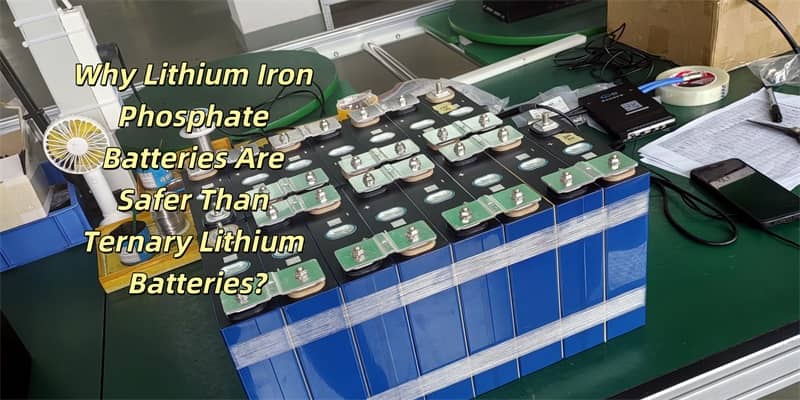
Lithium iron phosphate (LiFePO4 or LFP) is generally the safer chemistry at cell level because its cathode is more thermally stable and less likely to release oxygen during abuse. Ternary lithium batteries, usually nickel manganese cobalt (NMC or NCM), normally offer higher energy density but can enter thermal runaway more readily and release energy more aggressively when severely damaged or overheated.
That does not make every LFP battery safe or every NMC battery unsafe. A complete battery system also depends on cell quality, state of charge, electrical protection, cooling, mechanical protection, enclosure design, fault detection, and whether one failed cell can heat neighboring cells.
This guide compares the two chemistries without relying on a single headline temperature or a staged nail test. It also explains what buyers should check before selecting a battery for energy storage, vehicles, marine equipment, backup power, or mobile applications.
Contents
- Quick safety verdict
- What LFP and ternary lithium mean
- Safety comparison table
- Why LFP is more thermally stable
- Why thermal runaway temperatures differ
- What happens when either chemistry fails
- Why pack design can outweigh chemistry
- Which chemistry fits each application
- Battery safety checklist
- Warning signs and safe response
- Frequently asked questions
Which Is Safer: LiFePO4 or Ternary Lithium?
LiFePO4 is usually safer when the comparison is limited to the inherent thermal stability of the cell chemistry. It generally needs more severe abuse or more heat to trigger a rapid self-heating reaction, and its failure is often less energetic than a comparable high-nickel ternary cell.
Ternary lithium still has valid uses. NMC batteries are common where weight, size, range, and high specific energy matter. Manufacturers can manage their higher intrinsic risk with high-quality cells, conservative operating limits, active cooling, strong enclosures, early fault detection, and barriers that prevent cell-to-cell propagation.
The practical verdict is:
- Choose LFP when safety margin, long service life, and thermal stability matter more than minimum weight or volume.
- Consider NMC when higher energy density is essential and the complete pack has verified protection and application-specific safety testing.
- Do not select either chemistry by name alone. Review the cell, module, pack, charger, installation, and test evidence as one system.
What Do LiFePO4 and Ternary Lithium Mean?
The terms identify different positive-electrode materials inside rechargeable lithium-ion cells. That cathode chemistry affects voltage, energy density, thermal behavior, cost, aging, and the protection a battery needs.
LiFePO4 uses an iron phosphate cathode
LFP is short for lithium iron phosphate. Its olivine crystal structure contains strong phosphorus-oxygen bonds. This structure holds oxygen more tightly as temperature rises, which helps slow the exothermic reactions that can drive thermal runaway.
An LFP cell has a lower nominal voltage and generally lower energy density than an NMC cell. The tradeoff is usually greater thermal stability, long cycle life, and less reliance on nickel and cobalt.
Ternary lithium usually means NMC or NCM
Ternary lithium most often refers to a cathode containing nickel, manganese, and cobalt. NMC and NCM describe the same three elements in a different order. Formulations such as NMC 111, NMC 532, NMC 622, and NMC 811 use different proportions, so “ternary lithium” is not one uniform chemistry.
Some market discussions also group nickel cobalt aluminum (NCA) with ternary cathodes because it also combines three principal metals. Buyers should ask for the exact chemistry and formulation instead of accepting the broad label.
Higher nickel content can improve capacity and reduce cobalt use, but it can also reduce thermal stability. Results from one NMC formulation should not automatically be applied to every ternary cell.
How Do LFP and Ternary Lithium Compare on Safety?
LFP has the stronger inherent safety profile, while NMC trades some thermal stability for higher energy density. The differences below describe common tendencies, not guarantees for every product.
| Safety factor | LiFePO4 (LFP) | Ternary lithium (usually NMC) | Why it matters |
|---|---|---|---|
| Intrinsic cathode stability | Generally higher | Generally lower, especially in some high-nickel formulations | Affects how readily severe heating can become self-sustaining |
| Oxygen release from cathode during decomposition | Lower tendency | Greater tendency under severe heating | Released oxygen can intensify electrolyte combustion |
| Thermal runaway onset | Often requires a higher temperature or more abuse | Often occurs at a lower temperature under comparable tests | Creates a larger or smaller margin for detection and intervention |
| Failure energy and temperature rise | Often lower | Often higher | Affects fire intensity and the chance of heating adjacent cells |
| Cell-to-cell propagation | Generally easier to limit, but still possible | Can be more difficult to contain | A single-cell fault becomes a pack-level incident if it spreads |
| Vented gas | Can be flammable, toxic, and pressurizing | Can be flammable, toxic, and pressurizing | Neither chemistry is safe to vent into an occupied sealed space |
| Energy density | Usually lower | Usually higher | A smaller, lighter NMC pack can store the same nominal energy |
| Dependence on pack protection | Essential | Essential | No lithium-ion chemistry removes the need for a BMS and correct system design |
Why Is LiFePO4 More Thermally Stable?
LFP is more thermally stable because its phosphate-based cathode structure resists oxygen release and breaks down less readily under heat. That reduces one of the mechanisms that can accelerate electrolyte combustion inside a failing cell.
Thermal runaway is a chain of exothermic reactions. Heat damages internal layers, the separator can shrink or fail, internal short circuits may develop, electrolyte and electrode materials react, and the rising temperature accelerates further reactions. If heat is generated faster than it can leave the cell, the process becomes self-sustaining.
Comparative research commonly finds a higher trigger temperature for LFP than for NMC under the same test method. For example, a 2023 experimental study comparing LFP and NCM cells reported thermal runaway trigger temperatures of about 180°C for the tested LFP cell and roughly 130–140°C for the tested NCM cell. Those figures describe those cells and that procedure, not universal limits for every battery.
The chemistry advantage buys time and reduces severity; it does not make LFP nonflammable. LFP cells still contain combustible electrolyte and stored electrical energy. A damaged, overcharged, internally shorted, or externally heated LFP cell can vent, burn, or enter thermal runaway.
What Is the Thermal Runaway Temperature of LFP and NMC?
There is no single thermal runaway temperature that applies to every LFP or NMC battery. Published values vary because researchers test different cells, states of charge, formats, heating rates, fault methods, and definitions of onset.
A battery may pass through several different temperatures before a full runaway event:
- Self-heating onset: internal reactions begin generating measurable heat.
- Venting: pressure opens a designed vent or ruptures the casing.
- Separator failure: internal isolation can weaken or collapse.
- Thermal runaway: temperature rises rapidly because internal heat generation has become self-sustaining.
- Peak temperature: the cell reaches its highest temperature after runaway begins.
Confusing peak flame or cell temperature with runaway onset can produce claims such as “LFP remains safe until 700–800°C.” That wording is misleading. A cell can vent or run away far below its eventual peak temperature.
State of charge changes the result
A highly charged cell generally contains more available energy and presents a more severe abuse response. Testing summarized by NASA found that venting and runaway onset tended to occur at higher temperatures as state of charge decreased, although the minimum state of charge for runaway varied by chemistry and cell format. The same work found superior thermal stability in the tested LFP cells and noted that protection devices and BMS functions helped minimize hazards.
Cell design and test method also change the result
Two cells with the same cathode label can fail differently. Capacity, electrode loading, electrolyte quantity, separator, casing, vent design, age, manufacturing defects, and cylindrical, pouch, or prismatic format all influence the outcome. External heating, nail penetration, crushing, overcharge, and internal short-circuit tests are not interchangeable.
For this reason, a buyer should compare test reports for the exact cell and pack being purchased rather than relying on a generic chemistry temperature copied from a chart.
What Happens When LFP or NMC Enters Thermal Runaway?
Both chemistries can release heat, smoke, flammable gas, toxic decomposition products, and hot particles during a serious failure. NMC is often more energetic, but LFP failure can still create fire, pressure, and exposure hazards.
Fire and heat are only part of the hazard
Vented gas can be dangerous before or without a visible flame. Carbon monoxide, hydrogen, hydrocarbons, carbon dioxide, and fluorine-containing compounds may be present, depending on the electrolyte and failure conditions. Gas accumulated in a cabinet, vehicle, room, or shipping container can create toxicity, pressure, and deflagration risks.
NASA notes that toxic gas release during lithium-ion thermal runaway is a significant hazard and that results depend heavily on cell composition and test conditions.
LFP can still burn or pressurize an enclosure
LFP should be described as more resistant to runaway, not fireproof. If an LFP cell is forced into failure, its electrolyte and vented gases can ignite. In a sealed enclosure, gas accumulation can raise pressure even when the cathode itself releases less oxygen than NMC.
This distinction matters in battery rooms, boats, RV compartments, UPS cabinets, and residential energy storage. Ventilation and enclosure design cannot be skipped just because the label says LiFePO4.
Propagation determines whether one fault becomes a large event
A pack is safer when one failing cell does not force adjacent cells into thermal runaway. Cell spacing, insulation, heat barriers, cooling plates, module partitions, pressure relief, and exhaust paths all influence propagation.
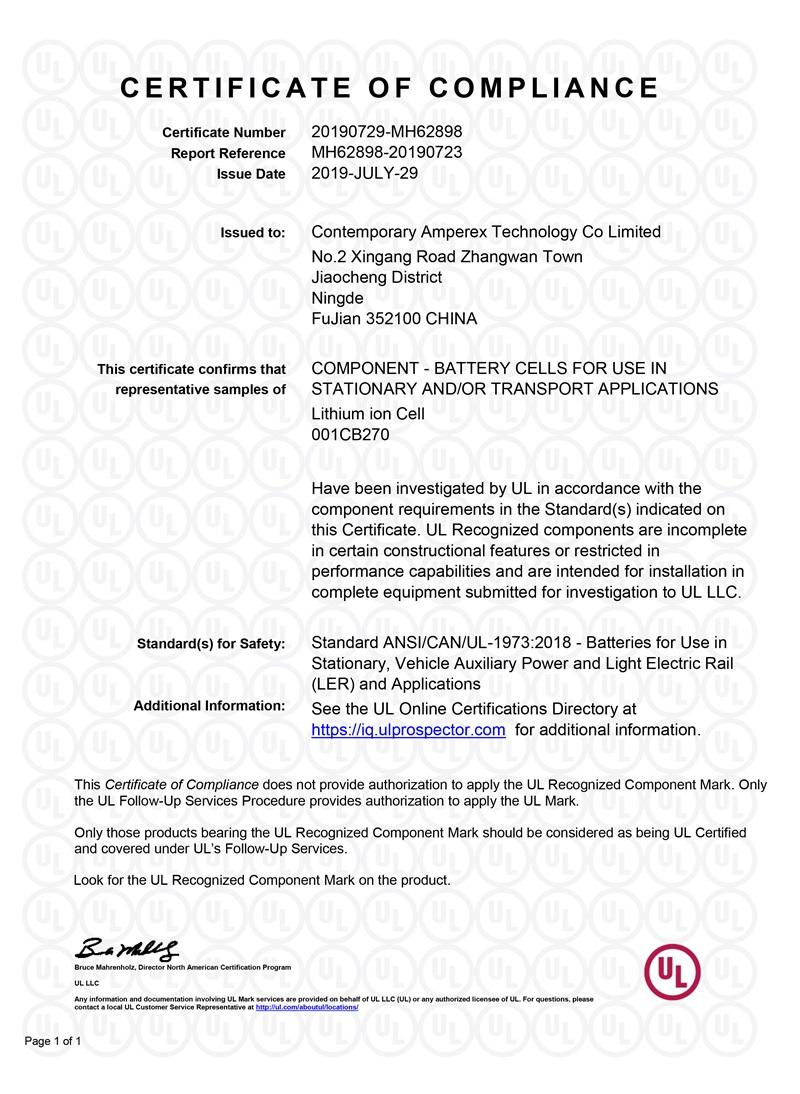
This is why system-scale evidence matters. The UL 9540A test method evaluates behavior in stages, including cell gas composition and flammability, module propagation, unit-level fire spread and gas release, and installation-level fire protection. A safe-looking cell demonstration is not a substitute for this system evidence in an energy storage installation.
Can a Well-Designed NMC Pack Be Safer Than a Poor LFP Pack?
Yes. Chemistry sets the starting risk, but engineering and manufacturing determine how that risk is controlled in the finished product. A traceable NMC pack with conservative limits, effective cooling, strong mechanical protection, and verified propagation control can present less practical risk than an untested LFP pack made from mismatched or low-quality cells.
The BMS must prevent electrical abuse
A suitable battery management system should monitor individual cell groups and disconnect the battery before electrical conditions become dangerous. Depending on the application, protection should cover:
- Cell overvoltage during charging
- Cell undervoltage during discharge
- Charge and discharge overcurrent
- External short circuit
- Excessive cell temperature
- Charging below the permitted cell temperature
- Large cell-voltage imbalance
- Sensor or contactor faults
A BMS reduces the probability of common failures, but it cannot make poor cells reliable or stop every mechanical and internal defect. Pack safety needs independent layers rather than one electronic control.
Thermal and mechanical design must contain faults
A safe pack keeps cells within their specified temperature range and limits damage if one cell fails. This can require cooling, flame-resistant materials, compression control for prismatic cells, impact protection, electrical isolation, properly sized fuses, contactors, pressure relief, and a vent path that does not direct hot gas toward occupants.
Quality control changes the real-world outcome
Cell consistency and manufacturing traceability are safety features. Mixed grades, hidden damage, poor busbar joints, loose terminals, contamination, weak insulation, or uneven compression can create local heating that chemistry alone cannot prevent.
As a practical example, compare two nominally identical LFP packs. One uses matched cells, insulated busbars, torque-controlled terminals, pack fusing, temperature sensors, and a documented BMS. The other has no cell traceability, one temperature sensor for the entire enclosure, and no accessible test report. The second pack does not inherit the first pack's safety merely because both use LFP.
Which Battery Chemistry Is Safer for Each Application?
LFP is usually preferred when space and weight are less important than thermal margin, while NMC remains useful when compact energy storage is a core requirement. The final choice should follow the application's duty cycle, installation environment, and applicable safety standard.
Stationary energy storage and solar batteries
LFP is generally the stronger default for residential, commercial, and utility storage. Its thermal stability and cycle-life characteristics fit equipment that stays near buildings and may remain at a high state of charge for long periods.
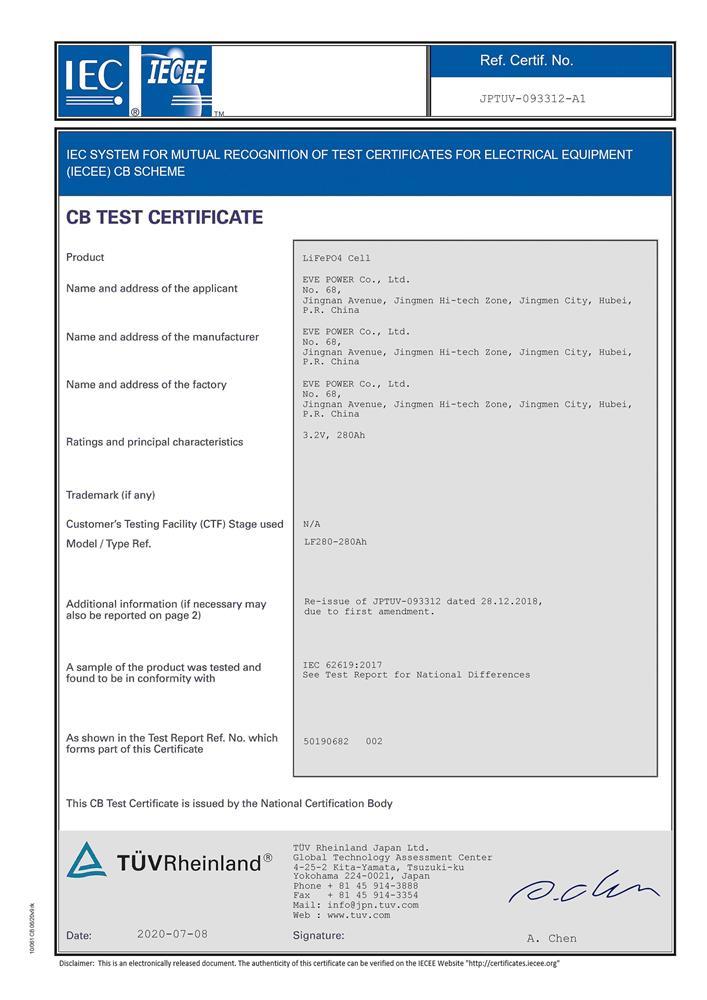
For stationary storage, do not stop at the cell chemistry. Ask for evidence covering the complete product. IEC 62619 specifies safety requirements and tests for secondary lithium cells and batteries used in industrial and stationary applications, as described by the International Electrotechnical Commission. North American projects may also require system certification and fire-propagation evidence such as UL 9540 and UL 9540A, depending on the installation and local code.
Electric vehicles
Both LFP and NMC can be appropriate for electric vehicles when the full traction battery is engineered and validated for the vehicle. LFP favors safety margin, durability, and cost. NMC favors lower pack mass and longer range within limited space.
A vehicle decision should account for crash structure, cooling, fast-charge strategy, usable state-of-charge window, diagnostic coverage, and propagation resistance. Compliance is assessed at vehicle and rechargeable energy storage system level, not by cathode name alone. UNECE publishes UN Regulation No. 100 for electric powertrain and rechargeable energy storage safety in applicable road vehicles.
RV, marine, and off-grid batteries
LFP is normally the safer practical choice for house batteries in RVs, boats, and off-grid systems. These applications value cycle life and thermal stability, while the battery's extra volume is often manageable.
The installation still needs correct overcurrent protection, cable sizing, isolation, charger settings, low-temperature charge protection, secure mounting, and ventilation appropriate to the enclosure. A drop-in label does not confirm compatibility with an alternator, shore charger, solar controller, or inverter.
Drones, portable electronics, and weight-sensitive equipment
NMC or related high-energy lithium-ion chemistries often remain preferable when every gram and cubic centimeter matters. LFP's safety advantage may not compensate for its lower energy density where flight time or portable runtime is the main design constraint.
These products need correctly matched chargers, physical protection, storage procedures, and close inspection after impact. A swollen, crushed, punctured, overheated, or water-damaged pack should not be returned to service simply because it still holds voltage.
How Can You Check Battery Safety Before Buying?
Ask for evidence tied to the exact model, not a generic claim that the chemistry is safe. A credible supplier should be able to identify the cells, protection design, operating limits, and standards used for the finished product.
-
Confirm the exact chemistry and cell model
“Lithium battery” and “ternary lithium” are not precise enough. Request the cathode formulation, cell manufacturer, model number, format, capacity, and production grade. Check that the test report names the same cell.
-
Match certification to the application
A transport test is not the same as product safety certification. Ask which cell, battery, and system standards apply to the intended use and country. IEC 62619 covers many industrial applications; road vehicles, portable products, marine systems, and stationary storage may require different evidence.
-
Review the safe operating window
The data sheet should state permitted charge voltage, discharge limits, current, and cell temperature. Confirm that the charger and load remain inside those limits, including during fast charging, regenerative charging, or cold weather.
-
Check BMS sensing and disconnect capability
The BMS should monitor the variables that can actually damage the selected cells. Ask how many temperature sensors are used, where they are located, whether every series group is monitored, what device interrupts current, and what happens if a sensor or contactor fails.
-
Ask about propagation, venting, and enclosure tests
Cell-level safety is not enough for a large pack. Determine whether a forced cell failure spreads, where gas exits, whether hot particles escape, and whether gas can accumulate in an enclosure.
-
Verify traceability and warranty conditions
A serial number, batch record, test report, installation manual, and written warranty make safety claims easier to verify. Avoid sellers that cannot identify the cell source or provide model-specific documentation.
A useful procurement question
Ask, “What happens after one cell is forced into thermal runaway in this exact module?” The answer reveals more than a statement that the product uses a safe chemistry. Look for test evidence covering propagation, gas release, enclosure pressure, detection, and shutdown.
What Warning Signs Mean a Lithium Battery Should Be Taken Out of Service?
Stop using or charging a battery if it shows swelling, cracking, unusual heat, hissing, leaking, a sharp chemical smell, smoke, repeated BMS trips, or unexplained voltage imbalance. Mechanical impact, flooding, incorrect charging, and signs of melted insulation also require professional assessment.
- Disconnect charging or load only if it can be done without approaching a hot, smoking, or venting battery.
- Keep people away and follow the product's emergency instructions.
- Do not puncture, compress, open, or place a damaged pack in household waste.
- Do not seal a venting battery inside an unventilated container.
- Contact local emergency services if there is smoke, fire, rapid heating, or danger to occupants.
- Use a qualified battery service or hazardous-waste facility for damaged-battery handling and disposal.
Large traction batteries and stationary systems can retain dangerous voltage even after shutdown. They should only be isolated, moved, or opened by trained personnel using the manufacturer's procedure.
Which Battery Safety Claims Should You Treat Carefully?
Be cautious with absolute claims, fixed temperatures, and dramatic demonstrations that omit the test conditions. The following statements usually need qualification:
- “LFP cannot catch fire.” LFP is more thermally stable, but its electrolyte and vent gas can burn.
- “NMC is unsafe.” NMC has a less favorable inherent thermal profile, but well-engineered NMC systems can meet demanding safety requirements.
- “The BMS makes the battery completely safe.” A BMS cannot prevent every internal defect, crash, coolant leak, bad connection, or external fire.
- “This cell is safe up to 800°C.” The figure may confuse peak temperature with the earlier onset of venting or runaway.
- “It passed a nail test, so the pack is safe.” One abuse test on one cell does not demonstrate pack-level propagation control or installation safety.
- “LFP produces no toxic gas.” Any lithium-ion battery failure can release hazardous decomposition products.
- “All NMC cells behave the same.” Formulation, nickel content, format, capacity, state of charge, and construction change the result.
Frequently Asked Questions
Is LiFePO4 safer than NMC?
Yes, LiFePO4 is generally more thermally stable and more resistant to runaway than NMC at cell level. The safety of a finished battery still depends on cell quality, BMS protection, cooling, enclosure design, manufacturing, and propagation control.
Can a LiFePO4 battery catch fire?
Yes. LFP is harder to push into thermal runaway, but it is not fireproof. Severe overcharge, an internal short circuit, crushing, external fire, incorrect assembly, or a defective cell can lead to venting, fire, or thermal runaway.
Are ternary lithium and NMC the same?
Ternary lithium commonly means NMC or NCM, which uses nickel, manganese, and cobalt in the cathode. The broad term may also include other three-metal cathodes in some markets, so confirm the exact formulation.
Does LFP have a higher thermal runaway temperature than NMC?
In comparable tests, LFP commonly reaches thermal runaway at a higher temperature than NMC. There is no universal threshold because the result changes with cell model, state of charge, age, format, heating rate, fault type, and the definition used by the test laboratory.
Does a lower state of charge make a lithium battery safer?
A lower state of charge usually reduces available energy and can reduce the severity or likelihood of thermal runaway. It does not eliminate short-circuit, gas, shock, or fire hazards, and safe storage limits must follow the manufacturer's instructions.
Is LFP always the best battery chemistry?
No. LFP is often preferred for stationary storage, RVs, marine house banks, and applications that value cycle life and thermal stability. NMC can be more suitable where low weight, compact size, or high energy density is essential.
What matters more than battery chemistry?
No single feature matters more in every case, but the finished system must combine quality cells, electrical protection, thermal management, mechanical protection, propagation control, and application-specific testing. Chemistry should be treated as one layer in that safety design.
Final Safety Verdict
LiFePO4 is the safer chemistry in a direct cell-level comparison, but chemistry alone cannot prove that a battery pack or installation is safe. LFP's stable phosphate cathode gives it a wider thermal margin and usually a less energetic abuse response than ternary NMC. NMC compensates with greater energy density and can be used safely when the pack has robust control, cooling, containment, and validated fault behavior.
For buyers, the best decision is not simply “LFP or NMC?” It is “Which complete battery system has the right chemistry, protection, test evidence, installation design, and operating limits for this application?”
- Next:UAV vs FPV Drone: What Is the Difference?
- Previous:Drone Battery Guide: Types, Specifications, Flight Time and Safety
Contact Details
Lithium LiFePO4 Batteries and Lithium LiFePO4 Cells Supplier - LiFePO4 Battery Shop
Contact Person: Miss. Elena Wang
WhatsApp : +8615263269227
Skype : +8615263269227
WeChat :15263269227
Email : info@lifepo4batteryshop.com
All Products
- Forklift Battery Charger (0)
- TC Elcon Charger (5)
- Headway Lithium Battery (6)
- Blade Battery (10)
- Semi Solid State Battery (6)
- A123 Battery (6)
- Sinopoly Battery (7)
- GBS Battery (20)
- CALB Battery (26)
- Cylindrical Cell (14)
- Energy Storage System (0)
- Battery Management System (15)
- Sodium ion Battery Cell (4)
- Lithium Titanate Battery (23)
- Ternary Lithium Battery Cell (12)
- REPT Battery (10)
- BYD Battery (5)
- CATL Battery (15)
- Thunder Sky Winston Battery (26)
- EVE Battery (39)
- LiFePO4 Battery Cell (41)
Certification
Customer Reviews
- I have fond memories of our meeting in Shanghai with LiFePO4 Battery Shop Elena. Your company left a strong impression on me with its impressive growth and professionalism. We both value straightforwardness and honesty, which I believe are the most important qualities in any partnership. I am confident that we can build a successful collaboration based on these shared values. —— Robert from USA
- I've been working with LiFePO4 Battery Shop for years, and their reliability is unmatched. While other suppliers frequently change sales teams, LiFePO4 Battery Shop has consistently provided exceptional service with a stable team. Their commitment to quality and customer support truly sets them apart. —— Henry from Australia