
Blog
Drone Battery Guide: Types, Specifications, Flight Time and Safety
2026-09-24 | Calvin
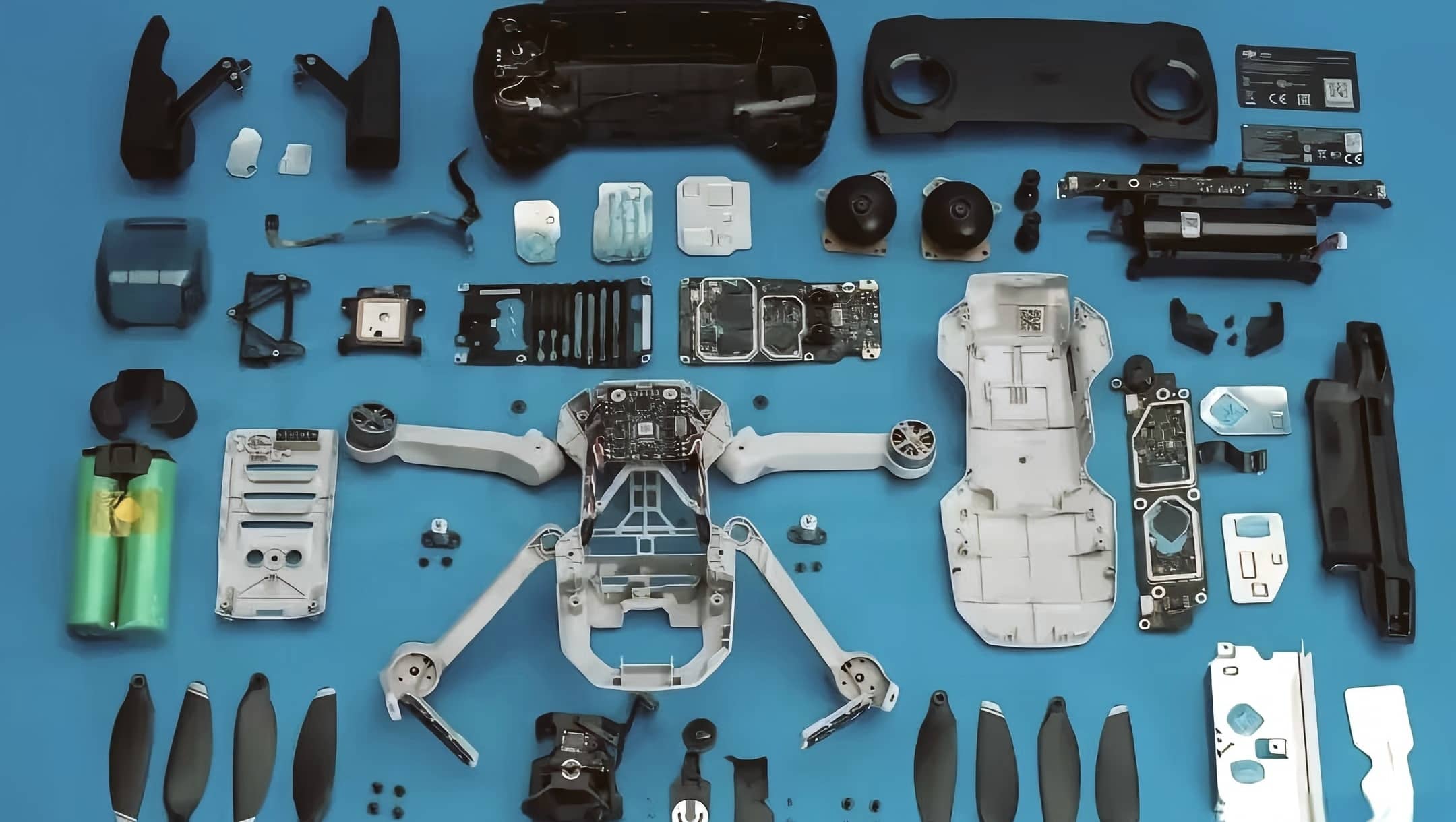
The right drone battery must match the aircraft's voltage, current demand, connector, physical space, weight limit and charging system. Capacity alone is not enough. A larger battery may store more energy, but its extra weight can reduce agility, increase motor load and deliver less additional flight time than expected.
Most racing and freestyle drones use lithium polymer packs because they can deliver high current with low weight. Long-range and endurance builds may use cylindrical lithium-ion packs when their lower current capability is sufficient. Consumer camera drones and many industrial UAVs use proprietary smart batteries with monitoring, balancing and communication built into the pack.
This guide explains the main drone battery types, how to read the label, how to calculate current and flight time, what changes battery life, and how to charge, store and transport packs without relying on vague rules.
Contents
- Quick battery selection checklist
- Drone battery types compared
- How to read a drone battery label
- How to confirm compatibility
- How to calculate flight time
- Best battery type by drone use
- Charging and storage practices
- Battery health and replacement signs
- Air travel and shipping rules
- Manufacturer and supplier checklist
- Frequently asked questions
How Do You Choose the Right Drone Battery?
Start with the drone or power-system specification, not with the biggest capacity that will fit. A suitable replacement or custom pack must pass every check below.
- Chemistry and charge voltage: Confirm whether the system requires standard LiPo or Li-ion, LiHV, LiFePO4 or a proprietary smart pack.
- Series count: Match the required cell count, such as 4S or 6S. The motor, ESC, voltage regulator and electronics must tolerate the pack's fully charged voltage.
- Current capability: The battery, wiring and connector must safely support expected continuous current and short peaks without excessive voltage sag or heat.
- Capacity and energy: Compare watt-hours as well as milliamp-hours. More capacity usually adds weight.
- Connector and polarity: Match the power connector, balance connector, pinout and polarity. A familiar plug shape does not guarantee the same wiring.
- Dimensions and mounting: Check length, width, height, cable exit, strap position and clearance from propellers, frames and moving parts.
- Weight and center of gravity: Confirm the aircraft remains within its allowable mass and balance limits.
- Communication: Smart drones may reject a pack that lacks the correct data interface, firmware or authentication.
- Charger compatibility: Use the charging method and maximum rate stated for that exact battery.
If one of these values is unknown, find the aircraft manual, original battery label or power-system data before buying. Guessing voltage, polarity or charge profile can damage the drone and create a fire risk.
What Types of Batteries Are Used in Drones?
Drone batteries fall into several practical groups: high-power LiPo, higher-voltage LiHV, energy-focused cylindrical lithium-ion, thermally stable LiFePO4 and proprietary smart packs. These categories can overlap. A smart battery describes the electronics and communication around the cells, not the cell chemistry itself.
Lithium polymer batteries suit high-power drones
LiPo packs are the standard choice for FPV racing, freestyle and other aircraft that need high current with minimum weight. They normally use flat pouch cells, which allow compact shapes and high discharge performance.
“Lithium polymer” is part of the broader lithium-ion family and does not fully identify the cathode chemistry. For compatibility, the important details are the specified per-cell voltage, series count, current rating, charging method and physical construction.
Common advantages include strong burst power, low pack weight and many available sizes. The tradeoffs are sensitivity to puncture, crushing, overcharge, deep discharge and long storage at full voltage. Many hobby LiPo packs have a balance lead but no full internal BMS, so the charger and aircraft settings provide much of the protection.
LiHV batteries use a higher charge voltage
LiHV packs are designed to charge above the 4.20 V per-cell limit used by many standard LiPo and lithium-ion cells. A common LiHV label shows about 3.8 V nominal and 4.35 V maximum per cell, but the printed data sheet is authoritative.
The extra charge voltage can provide more starting energy and voltage under load. It also means a standard LiPo charger profile is not automatically correct. Charging a standard 4.20 V cell with a LiHV program can overcharge it, while charging LiHV only to 4.20 V leaves some rated capacity unused.
Cylindrical lithium-ion packs favor endurance
Cylindrical lithium-ion packs can deliver high energy per unit mass, which makes them useful for long-range multirotors and fixed-wing UAVs with moderate current demand. Cells such as 18650 and 21700 formats are assembled in series and parallel to achieve the required voltage, capacity and current.
The limitation is power delivery. An energy-oriented cell may have excellent capacity but insufficient current for racing, rapid climbs or a heavy multirotor. The pack design must use the cell manufacturer's continuous-current limits and account for heat, voltage sag, welds, conductors and parallel-cell current sharing.
LiFePO4 prioritizes stability and cycle life
Lithium iron phosphate offers strong thermal stability and long service life, but its lower cell voltage and energy density limit its use in flight propulsion. It may suit ground stations, support equipment, specialized industrial platforms or applications where safety margin matters more than minimum mass.
An LFP pack is not a drop-in substitute for a LiPo pack with the same cell count. Standard LFP cells are commonly rated around 3.2 V nominal and 3.65 V fully charged, so the system voltage and charger profile are different.
Smart drone batteries add monitoring and communication
A smart battery combines rechargeable cells with control electronics that may measure voltage, temperature, current, state of charge and usage history. It may also balance cells, store fault data, perform automatic storage discharge or communicate with the aircraft and charger.
Smart features improve usability but do not remove the need for inspection and correct storage. A proprietary pack may be physically impossible to replace with a generic battery even when voltage and capacity appear similar.
| Battery type | Main strength | Main limitation | Typical use |
|---|---|---|---|
| LiPo pouch pack | High current and low weight | Needs careful charging, storage and impact protection | FPV racing, freestyle, cinewhoops and high-power custom builds |
| LiHV pouch pack | Higher full-charge voltage and energy | Requires a compatible voltage profile | Micro drones and platforms designed specifically for LiHV |
| Cylindrical Li-ion pack | High energy for endurance | Often lower peak-current capability than performance LiPo | Long-range multirotors and fixed-wing UAVs |
| LiFePO4 pack | Thermal stability and long cycle life | Lower voltage and energy density | Specialized aircraft, ground equipment and support power |
| Proprietary smart battery | Integrated monitoring and simpler operation | Higher cost and limited interchangeability | Consumer camera, enterprise and agricultural drones |
How Do You Read a Drone Battery Label?
The label should tell you the cell count, voltage, capacity, energy, discharge rating and sometimes the permitted charge rate. Read these values together because no single number proves that a pack is suitable.
Cell count explains pack voltage
The “S” number shows how many cells or cell groups are connected in series. Series connections add voltage. Parallel connections, shown by a “P” number when provided, add capacity and current capability.
For example, 4S1P means four series groups with one cell or parallel group at each position. A 6S2P pack has six series groups and two cells in parallel within each group.
| Battery type | Typical nominal voltage per cell | Typical maximum voltage per cell | Typical 4S nominal / maximum |
|---|---|---|---|
| Standard LiPo or Li-ion | 3.6 or 3.7 V | 4.20 V | 14.4 or 14.8 V / 16.8 V |
| LiHV | Often about 3.8 V | Often 4.35 V | About 15.2 V / 17.4 V |
| LiFePO4 | About 3.2 V | About 3.65 V | About 12.8 V / 14.6 V |
These are common values, not permission to override a product label. Some cells use different limits. Design and charge to the exact manufacturer's data.
Capacity measures charge, while watt-hours measure energy
Milliamp-hours show electric charge, but watt-hours provide a clearer measure of stored energy. Convert mAh to Ah by dividing by 1,000, then multiply by nominal voltage:
Watt-hours = nominal voltage × capacity in amp-hours
A 4S 5,000 mAh pack labeled 14.8 V stores about 74 Wh:
14.8 V × 5 Ah = 74 Wh
Two batteries with the same mAh rating do not store the same energy if their voltages differ.
C rating estimates current capability
The discharge C rating is the manufacturer's claimed current limit expressed as a multiple of capacity. The basic calculation is:
Claimed current = capacity in Ah × C rating
A 5 Ah pack labeled 30C implies 150 A:
5 Ah × 30 = 150 A
Check whether the figure is continuous or burst. A burst rating is only meaningful when the manufacturer states its allowed duration, temperature conditions and cutoff criteria. C ratings are not always directly comparable between brands, so serious builds should also consider voltage sag, internal resistance, pack temperature and test data under the expected load.
Charge rate is separate from discharge rate
A high discharge C rating does not authorize fast charging. If a 5 Ah battery permits a 1C charge, the charge current is 5 A. If its data sheet permits only 0.5C, the limit is 2.5 A. Some packs allow higher rates, while others do not.
Use the lowest applicable limit from the cell, pack, balance system, charger and manufacturer instructions.
How Do You Confirm That a Battery Is Compatible With a Drone?
Compatibility means the battery fits the entire electrical and mechanical system, not simply that its connector plugs in. Check the aircraft manual or original design values before changing chemistry, series count or capacity.
Verify maximum charged voltage first
The ESC, motors, flight controller, video equipment and regulators must tolerate the battery's maximum voltage. A 6S standard LiPo can reach 25.2 V when full. Selecting components by the 22.2 V nominal label alone can overlook the highest voltage they will actually see.
Estimate peak current for the complete propulsion system
The battery must support the combined motor load plus avionics and payload equipment. Motor test data can provide current at specific voltage, propeller and throttle settings. Add the expected loads, then retain engineering margin for aggressive control inputs, wind, climbs and battery aging.
The connector, wire gauge, solder joints, PCB traces, fuses and power-distribution hardware also need adequate current capability. A battery with a large advertised rating cannot prevent an undersized connector from overheating.
Check weight, balance and mounting security
A pack that is electrically compatible can still make the aircraft unsafe if it is too heavy or shifts the center of gravity. Added mass raises the thrust required to hover. That can increase average current, motor temperature and landing energy.
Secure the pack against movement in every flight direction. Protect pouch cells from sharp frame edges, fasteners and propeller strikes. Do not compress a swollen pack to make it fit.
Confirm connector, pinout and data communication
Match the power connector, polarity, balance plug and any data pins before connection. Never assume polarity from wire color or connector shape. Measure and verify when documentation is incomplete.
Proprietary aircraft may exchange identification, temperature, cycle, state-of-charge or authorization data with the battery. A generic pack may power the bus but still cause warnings, disabled functions or unsafe state estimation.
How Do You Calculate Drone Battery Flight Time?
Estimate flight time from usable battery energy and average in-flight power, then confirm the estimate with logged flights. Maximum motor power is not the same as average flight power, and a paper calculation cannot predict changing wind, payload and flight style.
Use watt-hours when average power is known
The energy method works well when a power log or test gives average watts.
Estimated minutes = usable battery energy in Wh ÷ average power in W × 60
Consider a 4S 5,000 mAh pack with 74 Wh of nominal energy. If the operating plan uses 80% before landing, usable energy is 59.2 Wh. At an average measured power of 240 W:
59.2 Wh ÷ 240 W × 60 = 14.8 minutes
This is an estimate. The pack's voltage under load, aging, temperature and actual flight profile can change the result.
Use amp-hours when average current is known
The current method is convenient when telemetry reports average battery current.
Estimated minutes = capacity in Ah × usable fraction ÷ average current in A × 60
If the same 5 Ah pack uses an 80% operating window and average current is 20 A:
5 Ah × 0.80 ÷ 20 A × 60 = 12 minutes
The two examples use different assumed loads, so they are not expected to match. Use data from the aircraft and mission being planned.
Do not use a fixed efficiency factor without knowing what it represents
If average power is measured at the battery during flight, the propulsion and electronic losses are already included. Multiplying by an additional arbitrary 80% or 85% efficiency factor can count losses twice.
A usable-energy fraction is still needed because the aircraft should land before damaging cell voltage is reached. Set that reserve from the battery and aircraft manufacturer's limits, telemetry accuracy, mission risk and environmental conditions. A 20% landing target is a common planning starting point, not a rule that fits every drone.
A bigger battery has diminishing returns
Increasing capacity does not increase flight time in direct proportion because the aircraft must lift the added battery mass. More mass raises hover power, affects acceleration and can force the motors into a less efficient operating region.
For a custom build, test several pack weights or model the propulsion system. Compare actual watt-hours consumed per minute, motor temperature and reserve voltage rather than selecting the largest pack the frame can hold.
These conditions commonly reduce endurance
- Heavy payloads and accessories
- Strong wind or high forward speed
- Aggressive acceleration and repeated climbs
- Cold cells and high internal resistance
- Old, damaged or imbalanced packs
- Incorrect propeller or motor selection
- High altitude, heat and reduced cooling margin
- Extra reserve required for a distant or difficult landing site
Which Drone Battery Type Fits Each Use Case?
The correct type follows the mission's power demand, endurance target, mass limit and operating environment. A battery optimized for a racing quad is not automatically suitable for a mapping aircraft or an agricultural drone.
FPV racing and freestyle need high power
A high-discharge LiPo is normally the practical choice for rapid throttle changes and high peak current. Select the series count approved for the motors and ESCs, then choose enough current capability to control sag and heat. Capacity should support the intended flight without making the quad slow or difficult to balance.
Long-range multirotors and fixed-wing UAVs need high usable energy
Lithium-ion packs can improve endurance when the aircraft's continuous and peak current remain within cell and pack limits. Fixed-wing platforms often benefit because efficient cruise requires less power than multirotor hover. A launch, climb or go-around can still create a current peak that must be included in the design.
Camera drones need system compatibility
Use the approved proprietary battery for a consumer camera drone unless the manufacturer explicitly supports an alternative. Intelligent state estimation, firmware, charging contacts, latches and thermal data are part of the flight system. Similar voltage and capacity do not establish compatibility.
Industrial and agricultural UAVs need fleet-level evidence
Large UAV batteries should be selected around duty cycle, charging turnaround, environmental exposure and traceable service data. Ask about high-current connectors, enclosure ingress protection, temperature sensing, preheating, charge infrastructure, pack logs, fault history and fire response.
For fleet decisions, compare energy delivered per mission, charge time, cooling time, replacement criteria and total operating cost. A cycle-life claim without the depth of discharge, temperature, charge rate and end-of-life definition is not enough.
How Should Drone Batteries Be Charged and Stored?
Use the exact chemistry, cell-count and charge-rate settings specified for the battery, and supervise charging in a location prepared for a battery failure. Do not charge a pack that is swollen, leaking, unusually hot, crushed, punctured or electrically damaged.
Use a chemistry-compatible charger
The charger must stop at the correct per-cell voltage and balance multi-cell packs when the battery design requires it. Select the correct program before connecting a hobby pack. A standard LiPo, LiHV and LFP battery require different voltage limits.
For smart batteries, use the approved charging hub or adapter and follow the aircraft manual. The pack may control part of the process, but damaged contacts, incompatible power supplies and excessive ambient temperature can still cause problems.
Let the battery cool before recharging
A pack should return to its permitted charging-temperature range after flight. Charging a hot battery accelerates degradation and can raise risk. Charging a cold lithium battery can also cause damage, so do not assume that warming begins safely as soon as the charger is connected.
Store at the manufacturer's specified state of charge
Do not leave an ordinary hobby LiPo fully charged for long periods unless the manufacturer allows it. Many chargers provide a storage program, while some smart batteries automatically discharge after a configurable delay. The correct storage voltage and timing depend on the product.
Store packs in a cool, dry, nonconductive location away from heat, sunlight, combustible material, children and pets. Protect exposed terminals from short circuit. Periodically inspect long-stored batteries according to the manufacturer's interval.
Treat parallel charging as an advanced procedure
Parallel charging can create large equalization currents when packs begin at different voltages or conditions. It requires suitable equipment, matched cell counts, closely matched per-cell voltages, correct fuse protection and a procedure that accounts for total capacity. Operators who cannot verify these conditions should charge packs individually.
Use the manual instead of a universal charge-rate rule
One C is common for many packs, but it is not a universal recommendation. Some batteries specify a lower rate, while approved fast-charge systems may permit more. Follow the exact pack limit and reduce charge stress when fast turnaround is not required.
How Do You Know When a Drone Battery Needs Replacement?
Retire a pack when physical damage, abnormal heat, cell imbalance, voltage sag or reduced usable capacity makes continued flight unreliable. Cycle count alone does not tell the whole story because temperature, storage state, current and mechanical treatment strongly affect aging.
| Symptom | What it may indicate | Action |
|---|---|---|
| Swelling or a distorted case | Gas generation and internal degradation | Stop using and charging; isolate safely and follow local disposal guidance |
| Crack, puncture, crush mark or damaged wrapping | Possible separator or insulation damage | Remove from service; do not test by charging |
| One cell repeatedly drifts from the others | Cell imbalance or a weakening cell group | Inspect charger and connections; retire if the problem persists |
| Early low-voltage warning under load | Higher internal resistance, cold temperature or insufficient current capability | Review logs, temperature and load; replace if the pack can no longer support the mission |
| Hot connector, wire or solder joint | Excess resistance, undersizing or a poor connection | Land and repair the power path before further use |
| Sharp chemical odor, hissing, smoke or rapid heating | Active venting or thermal failure | Keep people away and follow the product emergency procedure; contact emergency services if needed |
Do not use repeated deep-discharge cycles as a generic “recalibration” fix. Some smart systems provide a model-specific calibration procedure, but deep discharge can permanently damage ordinary lithium packs.
Can You Take Drone Batteries on an Airplane?
Many personal drone batteries can travel by air, but spare lithium batteries must be carried in cabin baggage and protected against short circuit under current U.S. rules. Limits depend on watt-hours, battery condition, airline policy and the country involved.
The FAA states that spare rechargeable lithium-ion batteries are limited to 100 Wh each without special airline approval. With airline approval, a passenger may carry up to two spare batteries above 100 Wh and not exceeding 160 Wh. Airlines may impose stricter limits. Damaged or recalled batteries that can generate dangerous heat or sparks are not permitted. Review the current FAA PackSafe lithium battery guidance before travel.
Calculate watt-hours using the nominal label values:
Wh = V × Ah
A 22.2 V, 4.0 Ah pack is 88.8 Wh. A 22.2 V, 6.0 Ah pack is 133.2 Wh and would fall into the larger-battery category under the cited FAA passenger rule.
Protect terminals with the original cover, an individual battery case or another method that prevents contact with metal. Protect the pack from crushing and movement. The IATA passenger guidance also states that spare batteries are not allowed in checked baggage and advises travelers to confirm airline requirements.
Passenger baggage rules are not commercial shipping rules
Shipping drone batteries for sale, repair or fleet operations requires a separate dangerous-goods assessment. Packaging, state of charge, labeling, documentation, carrier acceptance and mode of transport can change the requirements.
Lithium cells and batteries must undergo the design tests in UN Manual of Tests and Criteria, Subsection 38.3 for transport. PHMSA explains the related manufacturer and distributor test-summary requirement in its lithium battery test summary guidance. A UN 38.3 test summary supports transport compliance; it is not proof that the battery fits a particular drone or that the complete aircraft is safe.
How Do You Evaluate a Drone Battery Manufacturer or Supplier?
Ask for model-specific technical evidence, traceability and quality controls rather than relying on a general certificate list. ISO 9001 may support a quality-management system, but it does not replace product testing for the exact battery.
-
Identify the exact cells and pack design
Request cell manufacturer, model, chemistry, grade, series-parallel configuration and production-lot traceability. Confirm whether the quoted specifications apply to the cells alone or the assembled pack.
-
Request discharge and thermal data
Look for voltage, temperature and delivered-capacity curves at currents close to the actual mission. A capacity result measured at light load may not predict performance in a high-power multirotor.
-
Verify continuous and burst limits
The supplier should define current, duration, starting temperature, cutoff voltage and maximum temperature. A burst C rating without a duration is incomplete.
-
Match safety evidence to the product
Check that reports name the exact cell or battery model being supplied. IEC 62133-2 specifies safety requirements and tests for portable sealed secondary lithium cells and batteries under intended use and reasonably foreseeable misuse. Its scope is described by the International Electrotechnical Commission. The standard or certification required for a specific UAV depends on product design, market and application.
-
Review production controls
Ask how the factory controls cell matching, weld quality, insulation, connector assembly, polarity, balancing, end-of-line testing and pack aging. For smart batteries, review BMS firmware control and fault logging.
-
Validate samples in the real aircraft
Prototype testing should cover the most demanding credible mission, not only a short hover. Log voltage sag, current, cell balance, temperature, usable energy, connector temperature and post-flight recovery across representative weather and payload conditions.
-
Define end-of-life and support
Agree on measurable replacement criteria, warranty conditions and batch-change notification. Fleet operators also need handling instructions for damaged batteries, storage, shipping and disposal.
Which Drone Battery Mistakes Cause the Most Problems?
The most costly mistakes come from assuming that one matching number makes a battery compatible. Avoid these common errors:
- Choosing by mAh without checking voltage, weight or current
- Using nominal voltage instead of maximum charged voltage for component limits
- Treating a burst C rating as an unlimited continuous rating
- Assuming every LiPo pack contains a full BMS
- Charging LiHV, standard LiPo and LFP with the same profile
- Reversing polarity because two connectors look identical
- Leaving a conventional LiPo fully charged for long storage
- Charging a hot, frozen, swollen or impact-damaged battery
- Using a fixed flight-time formula without accounting for added battery mass
- Trying to recover a failing pack through repeated deep discharge
- Treating UN 38.3 as a universal product-safety certification
- Placing spare drone batteries in checked baggage
Frequently Asked Questions About Drone Batteries
What battery type is best for a drone?
LiPo is usually best for drones that need high current and low weight, while cylindrical lithium-ion can suit endurance aircraft with moderate current demand. Consumer and enterprise drones often require their approved proprietary smart battery.
Is a higher mAh battery always better?
No. Higher mAh can increase stored energy, but it also usually adds weight and may change balance. The extra mass raises required thrust, so flight time does not increase in direct proportion to capacity.
Can a drone use a battery with a higher C rating?
A higher discharge rating can be acceptable if voltage, chemistry, connector, size and weight remain compatible. It does not force extra current into the drone; the load draws current. However, C-rating claims vary, so pack quality still matters.
Can you replace a 4S battery with a 6S battery?
Only when the entire power system is designed for 6S voltage. A standard 4S LiPo reaches 16.8 V when full, while a standard 6S pack reaches 25.2 V. Connecting 6S to 4S-only electronics can destroy them.
How long does a drone battery last?
Runtime per flight and service life both depend on the exact pack and use. Flight time changes with energy, aircraft power, payload, weather and reserve. Service life changes with temperature, charge rate, storage state, discharge depth, current and physical treatment. Use capacity, internal resistance, balance, sag and condition instead of a universal cycle number.
Should a drone battery be stored fully charged?
Usually not for an ordinary LiPo unless its manufacturer says otherwise. Use the specified storage program or smart-battery auto-discharge function. Do not apply a generic storage voltage to a pack with different chemistry or instructions.
Can a swollen drone battery be used for one more flight?
No. Swelling indicates internal degradation and possible gas generation. Stop using and charging the pack, prevent terminal short circuit and follow the manufacturer and local hazardous-waste instructions.
How do you calculate a drone battery's watt-hours?
Multiply nominal voltage by capacity in amp-hours. Divide mAh by 1,000 first. For example, a 14.8 V, 5,000 mAh battery is 14.8 × 5 = 74 Wh.
Final Drone Battery Selection Advice
Choose a drone battery by complete system compatibility, then optimize energy and weight for the mission. Confirm chemistry, fully charged voltage, current capability, connector, polarity, dimensions, mass, charger and communication before comparing capacity.
For custom aircraft, use measured flight logs to refine endurance estimates and replacement thresholds. For proprietary drones, use approved packs and follow the current manual. In both cases, physical inspection, correct charging and conservative mission reserves matter more than a large C rating or an impressive cycle-life claim.
- Next:LiFePO4 vs Ternary Lithium Battery Safety: Which Is Safer?
- Previous:UAV vs UAS: What Is the Difference Between an Unmanned Aerial Vehicle and an Unmanned Aircraft System?
Contact Details
Lithium LiFePO4 Batteries and Lithium LiFePO4 Cells Supplier - LiFePO4 Battery Shop
Contact Person: Miss. Elena Wang
WhatsApp : +8615263269227
Skype : +8615263269227
WeChat :15263269227
Email : info@lifepo4batteryshop.com
All Products
- Forklift Battery Charger (0)
- TC Elcon Charger (5)
- Headway Lithium Battery (6)
- Blade Battery (10)
- Semi Solid State Battery (6)
- A123 Battery (6)
- Sinopoly Battery (7)
- GBS Battery (20)
- CALB Battery (26)
- Cylindrical Cell (14)
- Energy Storage System (0)
- Battery Management System (15)
- Sodium ion Battery Cell (4)
- Lithium Titanate Battery (23)
- Ternary Lithium Battery Cell (12)
- REPT Battery (10)
- BYD Battery (5)
- CATL Battery (15)
- Thunder Sky Winston Battery (26)
- EVE Battery (39)
- LiFePO4 Battery Cell (41)
Certification
Customer Reviews
- I have fond memories of our meeting in Shanghai with LiFePO4 Battery Shop Elena. Your company left a strong impression on me with its impressive growth and professionalism. We both value straightforwardness and honesty, which I believe are the most important qualities in any partnership. I am confident that we can build a successful collaboration based on these shared values. —— Robert from USA
- I've been working with LiFePO4 Battery Shop for years, and their reliability is unmatched. While other suppliers frequently change sales teams, LiFePO4 Battery Shop has consistently provided exceptional service with a stable team. Their commitment to quality and customer support truly sets them apart. —— Henry from Australia