
Blog
LiFePO4 Battery Charging FAQ: What You Need to Know
2026-01-28 | Calvin
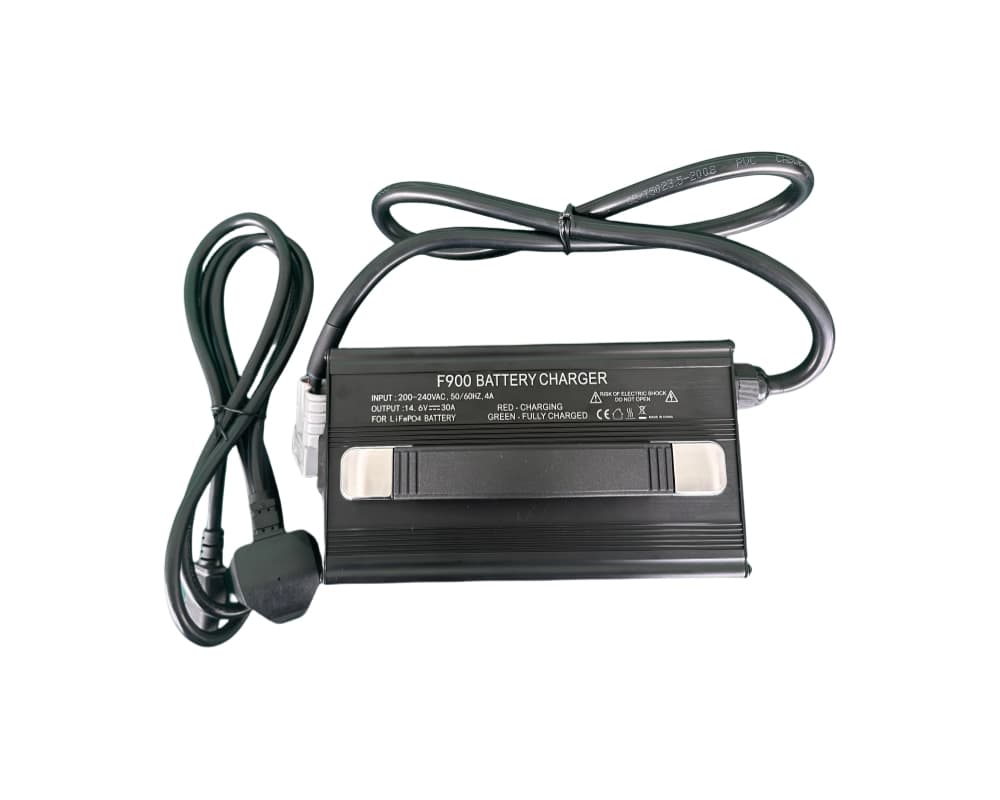
Proper charging is critical to the performance, safety, and lifespan of LiFePO4 (Lithium Iron Phosphate) batteries. In practice, many premature battery failures are not caused by manufacturing defects, but by incorrect charging methods or unsuitable chargers.
This FAQ addresses the most common questions about LiFePO4 battery charging, helping users make informed and safe decisions.
What Is the Charging Principle of LiFePO4 Batteries?
The charging principle of LiFePO4 batteries is fundamentally the same as other lithium-ion batteries.
During charging, lithium ions migrate from the cathode to the anode through the electrolyte and separator, while electrons flow through the external circuit. This electrochemical process stores energy inside the battery.
What differentiates LiFePO4 batteries is their stable chemistry, which offers better thermal stability and a longer cycle life compared to many other lithium battery types.
Under What Conditions Can LiFePO4 Batteries Be Charged Safely?
1. Temperature Requirements
Temperature is the most critical environmental factor for LiFePO4 battery charging.
- Recommended charging temperature: 0°C to 45°C (32°F to 113°F)
Within this range, LiFePO4 batteries can be charged safely without additional equipment, provided the battery is equipped with a reliable Battery Management System (BMS). A quality BMS monitors voltage, current, and temperature to prevent overcharge, over-discharge, and overcurrent conditions.
Below 0°C (32°F):
LiFePO4 batteries should not be charged directly. Charging at low temperatures may cause lithium plating,
which can permanently damage the battery. In cold environments, external heating solutions or self-heating batteries are required.
If the battery will not be used during winter, proper winter storage (winterization) is strongly recommended.
2. Environmental Conditions
In addition to temperature, the charging environment also matters:
- Avoid high humidity
- Avoid dusty, corrosive, or poorly ventilated environments
Excessive moisture or harsh surroundings can damage both the battery and charging equipment over time.
What Is a LiFePO4 Battery Charger?
A LiFePO4 battery charger is a charger specifically designed to match the voltage and charging profile of LiFePO4 batteries.
- Nominal cell voltage: 3.2V
- Typical full-charge voltage: ~3.65V per cell
LiFePO4 chargers use the CCCV charging method:
- Constant Current (CC): Rapidly charges the battery to near full capacity
- Constant Voltage (CV): Maintains a stable voltage while safely completing the charge
For example, a single LiFePO4 cell should not exceed approximately 3.65V, and a proper charger will stop increasing voltage at this level.
Can I Use a Lead-Acid Charger for LiFePO4 Batteries?
Technically, it may work in some cases—but it is not recommended.
Key differences include:
- Lead-acid batteries have a 2V nominal cell voltage, while LiFePO4 cells are 3.2V
- Lead-acid chargers use float charging, which LiFePO4 batteries do not require and may not tolerate well
As a result, a lead-acid charger may:
- Terminate charging prematurely
- Fail to fully charge the battery
- Increase long-term stress on the battery or BMS
If the BMS fails or is poorly designed, using a lead-acid charger may pose a real risk. For safety, performance, and battery longevity, a dedicated LiFePO4 charger is strongly recommended.
Are Cheap LiFePO4 Battery Chargers Reliable?
Low-cost chargers may function, but they come with increased risk.
Common issues include:
- Inferior components
- Poor voltage and current accuracy
- Inconsistent manufacturing quality
- Incorrect or misleading specifications
Considering the relatively high value of LiFePO4 batteries, using a low-quality charger to save cost is not a wise trade-off.
Can a Higher-Voltage Charger Be Used for LiFePO4 Charging?
No. This is unsafe.
Charging voltage must be carefully matched to the battery system. Excessive voltage can:
- Reduce battery lifespan
- Trigger BMS protection
- Cause internal overheating or permanent damage
While most modern BMS units will block unsafe charging conditions, relying on the BMS alone is not a best practice. Always select a charger designed for your specific LiFePO4 battery configuration.
Can Solar Chargers or Alternators Charge LiFePO4 Batteries?
Yes. LiFePO4 batteries can be charged from:
- Grid power
- Solar or wind systems
- Vehicle alternators
However, each power source requires appropriate charge controllers or DC-DC chargers configured for LiFePO4 chemistry. Using incompatible charging equipment may prevent proper charging or reduce efficiency.
Conclusion
LiFePO4 battery charging is largely automated, but understanding the fundamentals is essential for safety, performance, and long-term reliability.
By choosing the right charger, charging within the recommended temperature range, and following proper environmental guidelines, users can maximize the benefits of LiFePO4 batteries and ensure dependable energy storage for years to come.
To learn more about LiFePO4 batteries or compatible charging solutions, feel free to contact us or explore our product resources.
- Next:Latest Trends in Large-Capacity Energy Storage Cells
- Previous:Ultimate Guide to NMC Batteries: Everything You Need to Know
Contact Details
Lithium LiFePO4 Batteries and Lithium LiFePO4 Cells Supplier - LiFePO4 Battery Shop
Contact Person: Miss. Elena Wang
WhatsApp : +8615263269227
Skype : +8615263269227
WeChat :15263269227
Email : info@lifepo4batteryshop.com
All Products
- TC Elcon Charger (0)
- Headway Lithium Battery (6)
- Blade Battery (10)
- Semi Solid State Battery (6)
- A123 Battery (5)
- Sinopoly Battery (7)
- GBS Battery (16)
- CALB Battery (23)
- Cylindrical Cell (8)
- Energy Storage System (0)
- Battery Management System (5)
- Sodium ion Battery Cell (4)
- Lithium Titanate Battery (20)
- Ternary Lithium Battery Cell (11)
- REPT Battery (10)
- BYD Battery (2)
- CATL Battery (15)
- Thunder Sky Winston Battery (21)
- EVE Battery (30)
- LiFePO4 Battery Cell (8)
Certification

Customer Reviews
- I have fond memories of our meeting in Shanghai with LiFePO4 Battery Shop Elena. Your company left a strong impression on me with its impressive growth and professionalism. We both value straightforwardness and honesty, which I believe are the most important qualities in any partnership. I am confident that we can build a successful collaboration based on these shared values. —— Robert from USA
- I've been working with LiFePO4 Battery Shop for years, and their reliability is unmatched. While other suppliers frequently change sales teams, LiFePO4 Battery Shop has consistently provided exceptional service with a stable team. Their commitment to quality and customer support truly sets them apart. —— Henry from Australia