
Blog
Inverter vs Converter: Which One Does Your RV or Off Grid System Need?
2026-08-30 | Calvin
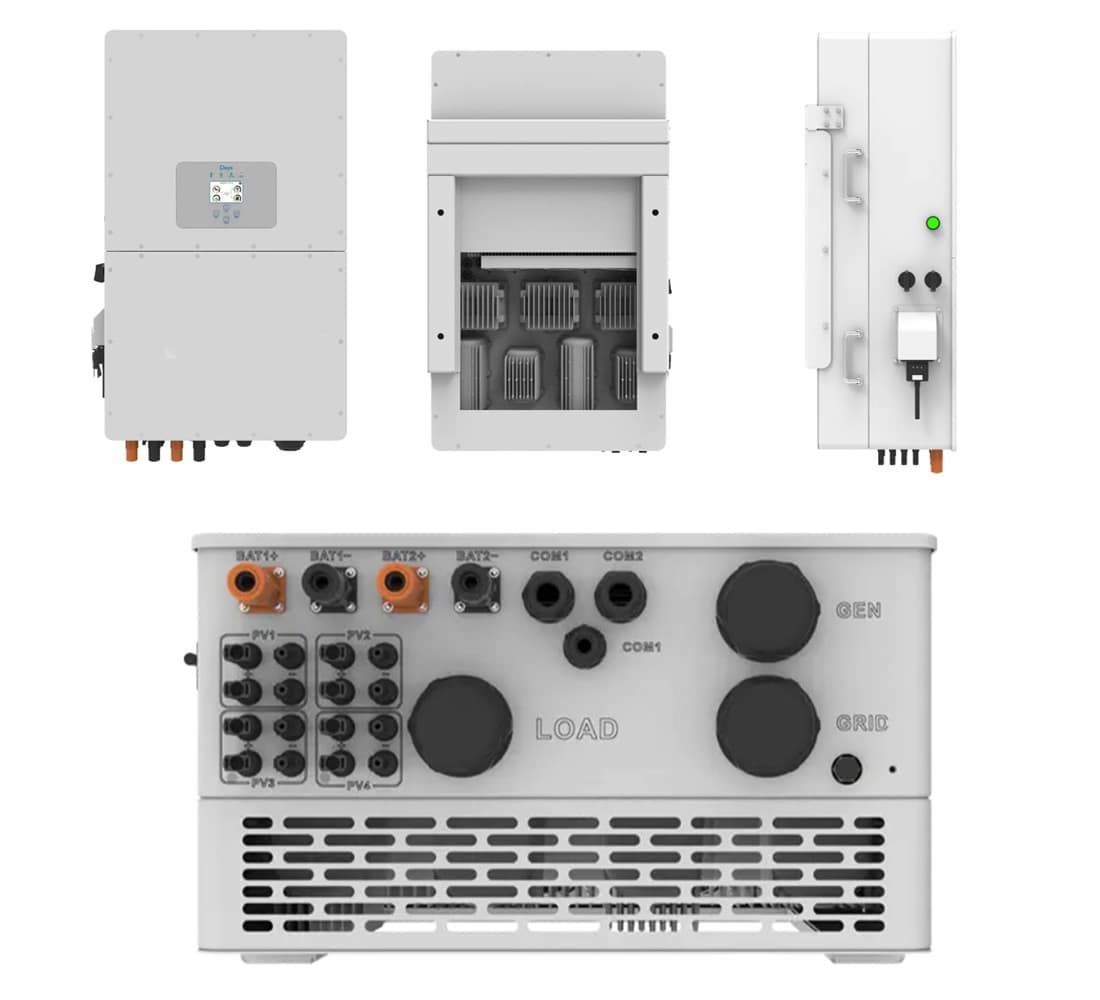
An inverter and a converter move electrical power in different directions. An inverter changes direct current from a battery into alternating current for household appliances. In an RV, a converter usually changes alternating current from shore power or a generator into direct current for the battery and the 12 volt circuits.
Many RVs, camper vans, boats, and off grid systems need both functions. The right choice depends on where your electricity comes from, what equipment you want to run, and how the battery will be charged.
Contents
- Quick answer
- AC and DC power
- What a converter does
- What an inverter does
- Inverter vs converter comparison
- Which device you need
- How to size an inverter and battery
- How to choose a converter charger
- RV system example
- Installation and safety
- Frequently asked questions
Inverter vs Converter: The Quick Answer
- Use an inverter when a battery must power AC equipment such as a microwave, television, coffee maker, laptop charger, or household outlet.
- Use an RV converter charger when shore power or a generator must supply the 12 volt circuits and recharge the house battery.
- Use a DC to DC charger when an alternator or another DC source must charge a battery using a controlled charging profile.
- Use an inverter charger when you want inversion, AC battery charging, and automatic power transfer in one device.
- Use both functions if you want AC power away from hookups and battery charging when shore power returns.
The essential difference is power direction. A converter generally supplies DC power. An inverter supplies AC power from a DC source.
Why RVs and Off Grid Systems Use Both AC and DC Power
Understanding the two electrical systems makes the equipment easier to choose.
Direct current power
Direct current, normally shortened to DC, moves in one direction. Batteries store and deliver DC power. Solar panels also produce DC electricity, although their changing output must pass through a suitable solar charge controller before charging a battery.
In an RV, the house battery commonly supplies lighting, fans, water pumps, controls, USB outlets, and other low voltage loads. The exact voltage depends on the system design. Small mobile systems often use a nominal 12 volt battery bank, while larger systems may use 24 or 48 volts to reduce current.
Alternating current power
Alternating current, or AC, changes direction repeatedly. Shore power, household outlets, and most portable generators provide AC electricity. Common AC loads in a camper include microwaves, air conditioners, induction cooktops, kettles, televisions, and standard wall outlets.
The United States Department of Energy describes an inverter as the equipment that converts DC electricity into the AC electricity used by the grid and many household loads. The same basic conversion happens in a battery powered RV or cabin.
What Is a Power Converter?
A power converter changes electrical power into a form that another device can use. The term covers several types of equipment. In RV discussions, however, converter usually means an AC to DC converter charger.
What an RV converter charger does
When the RV is connected to shore power or a generator, the converter charger changes the incoming AC supply into regulated DC power. It can then:
- Supply the RV's 12 volt lighting, pumps, fans, controls, and other DC circuits
- Recharge the house battery
- Maintain the battery when the RV remains connected to shore power, if the charging profile supports that use
Some converter chargers can power the DC distribution system without a battery, although that depends on the product and the loads. The WFCO converter guidance confirms that its converters can provide nominal 12 volt power without a battery, while noting that a battery can still be needed to support heavy intermittent loads.
Other devices called converters
The word converter is broader than the RV converter charger:
- DC to DC converter: Changes one DC voltage into another.
- DC to DC battery charger: Regulates a DC source, often a vehicle alternator, to charge a house battery correctly.
- AC power supply: Changes AC power into a specific DC voltage for electronics.
- Voltage converter: Raises or lowers voltage for compatible equipment.
A DC to DC charger is particularly important when the starting battery, alternator, and house battery have different charging requirements.
What Is a Power Inverter?
An inverter changes DC electricity from a battery bank into AC electricity. This lets an RV, camper, boat, or remote cabin operate equipment that would normally plug into a household outlet.
Pure sine wave and modified sine wave inverters
The output waveform affects appliance compatibility.
- Pure sine wave inverter: Produces a smooth AC waveform designed to closely match utility power. It is the safer general choice for modern electronics, variable speed motors, audio equipment, microwave controls, medical equipment, and appliances that do not tolerate rough power.
- Modified sine wave inverter: Produces a stepped waveform. It may run simple resistive loads, but some motors, chargers, clocks, audio devices, and electronic controls can run poorly, become noisy, heat up, or fail to operate.
A pure sine wave inverter usually costs more, but it gives an RV owner more freedom to change appliances later.
What an inverter does not do
A basic inverter does not charge the battery. It only uses battery power to create AC output. Charging requires a converter charger, a solar charge controller, a DC to DC charger, or another compatible battery charger.
A basic inverter also does not increase the amount of energy stored in the battery. A larger inverter can support a larger load, but it can drain the same battery more quickly and demand much more current from the battery management system, cables, and protection devices.
Inverter vs Converter Comparison
| Question | Inverter | RV converter charger |
|---|---|---|
| What is the usual input? | DC power from a battery bank | AC power from shore power or a generator |
| What is the usual output? | AC power for outlets and appliances | Regulated DC power for circuits and battery charging |
| When is it useful? | Camping without hookups, backup power, mobile work, and remote systems | Charging at a campground, at home, or from a generator |
| Does it charge the house battery? | No, unless it is a combined inverter charger | Yes, when its charging profile is compatible with the battery |
| Does it run AC appliances from the battery? | Yes | No |
| Does it consume battery power? | Yes, including some conversion loss and standby consumption | Not as its main source, since it normally uses incoming AC power |
| Key rating to check | Continuous output, surge output, battery voltage, waveform, and efficiency | DC output voltage, charging profile, charging current, and battery compatibility |
What is an inverter charger?
An inverter charger combines an inverter and an AC battery charger in one enclosure. Many models also include an automatic transfer switch. When shore or generator power is available, the unit passes suitable AC power to the loads and charges the battery. When that source disappears, it switches to battery powered AC output.
This arrangement can simplify a larger installation, but the unit still has to match the battery voltage, charge settings, continuous load, surge load, and available shore supply. Victron describes its MultiPlus as a combined inverter and charger with adaptive charging and transfer functions.
Do You Need an Inverter, a Converter, or Both?
Choose an inverter when
- You want normal AC outlets while camping without shore power
- Your battery must run a microwave, television, computer, coffee maker, or another AC appliance
- You are building battery backup for a cabin, workshop, or home circuit
- Your solar system stores energy in batteries and must supply AC loads
Choose a converter charger when
- You need to charge the house battery from shore power or a generator
- You want incoming AC power to supply the RV's DC circuits
- You are replacing an old charger that does not have a suitable profile for the new battery chemistry
Choose both functions when
- You alternate between campsites with hookups and remote camping
- You want the battery to provide AC power during an outage
- You want one system that can charge from AC power and later supply AC power from the battery
You may not need a large inverter when
Your main loads already operate on DC. Phones and laptops can often charge through efficient DC adapters, while lighting, fans, pumps, and refrigeration may be available in native DC versions. Avoiding an unnecessary conversion can reduce standby consumption and conversion losses.
A small inverter dedicated to occasional AC loads may be more efficient and less demanding than a large unit left on continuously.
How to Size an Inverter for an RV, Camper, or Off Grid System
Inverter size is not determined by battery capacity alone. You must check appliance power, starting surge, battery current, runtime, and the electrical limits of every connected component.
Step 1: List every AC appliance
Record the running watts of each appliance that may operate at the same time. Use the appliance data plate or a power meter when possible. Do not assume that the marketing name gives the actual input power. A microwave described by cooking output can draw considerably more from the outlet.
Step 2: Find the highest simultaneous load
Add the running watts of appliances that will genuinely operate together. A 900 watt microwave, a 120 watt refrigerator, and 100 watts of chargers produce a combined running load of 1,120 watts.
Select an inverter with enough continuous output for that load plus reasonable margin. The margin accounts for variation, temperature, and future loads, but it should not replace accurate measurement.
Step 3: Check starting and surge power
Motors, compressors, pumps, and some appliances draw extra power when starting. Compare the appliance requirement with both the inverter's surge rating and the duration for which that surge is available. A large peak number that lasts only a fraction of a second may not start a compressor that needs elevated power for longer.
Step 4: Calculate DC current
A high power inverter can draw substantial current from a low voltage battery. Use this estimate:
DC current in amps = AC load in watts ÷ battery voltage ÷ inverter efficiency
For a 1,500 watt load, a 12.8 volt battery, and 90 percent inverter efficiency:
1,500 ÷ 12.8 ÷ 0.90 = about 130 amps
The battery and its battery management system must support that continuous current. So must the cables, connections, disconnect, busbars, and overcurrent protection. A battery rated at 100 amp hours does not automatically support a 130 amp continuous discharge. Amp hours describe capacity, while the discharge current rating sets the power limit.
| AC load | 12.8 volt bank | 25.6 volt bank | 51.2 volt bank |
|---|---|---|---|
| 1,000 watts | 87 amps | 43 amps | 22 amps |
| 2,000 watts | 174 amps | 87 amps | 43 amps |
| 3,000 watts | 260 amps | 130 amps | 65 amps |
These are estimates, not cable or fuse specifications. Actual current changes with battery voltage, inverter efficiency, and load. The table shows why designers often move to a higher battery voltage as inverter power increases. Victron's inverter selection guidance also stresses that battery capability, system voltage, conductors, DC protection, and battery management system limits must support both continuous and surge demand.
Step 5: Calculate battery runtime
First calculate nominal battery energy:
Battery energy in watt hours = nominal voltage × amp hour capacity
A 12.8 volt, 100 amp hour LiFePO4 battery stores 1,280 nominal watt hours. The available AC energy is lower because you must account for the chosen usable capacity, inverter losses, temperature, wiring losses, battery limits, and aging.
Use this planning formula:
Estimated AC runtime = battery watt hours × usable fraction × inverter efficiency ÷ average AC load
If a 12.8 volt, 200 amp hour bank is planned around 90 percent usable capacity and 90 percent inverter efficiency, it supplies an estimated 2,074 watt hours of AC energy. At an average 600 watt load, the simple estimate is about 3.5 hours.
Real operation can be shorter. An inverter has its own standby consumption, loads cycle, temperature changes battery performance, and a battery management system may disconnect the pack at a limit.
How to Choose a Converter Charger
A converter charger should match the battery, the available AC supply, and the time available for charging.
Match the battery chemistry and charging instructions
Do not assume that every converter is suitable for every lithium or lead acid battery. Compare the converter's charging stages, voltage settings, current limit, temperature behavior, and maintenance mode with the battery manufacturer's instructions.
A configurable converter can be useful when changing battery chemistry. Progressive Dynamics, for example, lists a converter that allows selection among flooded lead acid, AGM, and LiFePO4 profiles. This demonstrates why the selected charging profile matters.
Choose a suitable charging current
The converter output should remain within the battery's permitted charge current. It must also leave enough power for DC loads that operate while charging.
A rough charging time estimate is:
Charging time in hours = capacity returned in amp hours ÷ available charging current
If a battery bank needs 100 amp hours returned and 40 amps actually reach the battery, the simple estimate is 2.5 hours. Allow more time for simultaneous house loads, current reduction near full charge, heat related limits, and normal conversion losses.
Check the existing RV converter before a lithium upgrade
An older converter may supply the RV's DC circuits but still charge a new LiFePO4 battery slowly or incompletely. Before replacing it, identify the converter model and compare its documented profile with the exact battery requirements. A suitable adjustable or automatic unit may only need the correct setting. An incompatible unit may require replacement.
Practical RV Power System Example
Consider a camper used for both campground stays and two night remote trips.
- The lights, water pump, roof fan, and control boards use 12 volt DC power.
- A laptop, television, and occasional kitchen appliance use AC power.
- Shore power is available at some campsites.
- Solar panels recharge the battery during remote stays.
- The vehicle alternator provides another charging source while driving.
This camper may use the following power path:
- Shore power feeds a compatible converter charger, which supplies DC loads and charges the house battery.
- The house battery directly supplies the DC distribution panel.
- The house battery also feeds a pure sine wave inverter for AC outlets.
- The solar array feeds a solar charge controller, which charges the battery.
- The alternator feeds a suitable DC to DC charger, which manages charging while driving.
A combined inverter charger could replace the separate inverter and AC converter charger functions. It would not normally replace the solar charge controller or alternator charger unless the chosen equipment explicitly includes those inputs.
Common Inverter and Converter Mistakes
- Buying by watts alone: Inverter watts do not confirm that the battery bank, battery management system, or cables can supply the required current.
- Ignoring surge duration: A peak rating is only useful if it can support the appliance for the time needed to start.
- Using the wrong charging profile: A converter that works with one battery chemistry may not charge another correctly.
- Installing an oversized inverter on a small 12 volt bank: This can create very high current and may trigger the battery management system or expose weak connections.
- Expecting solar panels to charge a battery directly: A suitable solar charge controller is normally required.
- Confusing capacity with output: Amp hour capacity influences runtime. Continuous and peak current ratings determine whether the battery can support the load.
- Leaving a large inverter on unnecessarily: Standby consumption can matter during long remote stays.
- Assuming an inverter charger covers every charging source: Solar and alternator charging often require their own controllers.
Installation and Safety Checklist
Even a 12 volt battery system can deliver enough current to overheat a cable or connection. AC output can also cause serious injury. Use the product manuals, local electrical requirements, and a qualified installer where appropriate.
- Confirm that the inverter input voltage matches the battery bank voltage.
- Confirm the battery management system's continuous current, peak current, and peak duration.
- Size conductors for current, cable length, insulation temperature, installation method, and acceptable voltage drop.
- Use correctly rated overcurrent protection and a battery disconnect.
- Keep DC cable runs short where practical and protect them from abrasion and movement.
- Follow the manufacturer's ventilation, clearance, orientation, and environmental requirements.
- Use a suitable transfer method so shore power and inverter output cannot be connected incorrectly.
- Follow the manufacturer's grounding and neutral instructions. These can change with system configuration and transfer equipment.
- Verify polarity and tighten terminals to the specified torque.
- Test the system with controlled loads before normal use.
Do not choose a cable or fuse from a general internet table without checking the exact equipment manual. Victron's DC wiring guidance explains that conductor selection depends on current, length, cross section, and voltage drop. Its installation documentation also pairs inverter models with specific battery, conductor, and fuse recommendations.
Final Decision
Choose an inverter when stored DC energy must run AC appliances. Choose a converter charger when incoming AC power must supply DC circuits and recharge the battery. Choose an inverter charger when you want both functions in one coordinated device.
The device name is only the beginning. A reliable system also requires compatible voltage, enough continuous and surge output, sufficient battery energy, adequate battery discharge capability, the right charging profile, and correctly designed wiring and protection.
Frequently Asked Questions
What is the main difference between an inverter and a converter?
An inverter changes DC battery power into AC power. In an RV, a converter usually changes AC shore or generator power into DC power for the battery and 12 volt circuits.
Does an RV need both an inverter and a converter?
An RV needs both functions if it must charge the battery from AC power and also run AC appliances from the battery. The functions can be provided by separate devices or a combined inverter charger.
Can an inverter charge a battery?
A basic inverter cannot charge a battery. A combined inverter charger can charge the battery when a suitable AC source is available.
Can an RV converter run AC appliances?
No. An RV converter supplies DC power. AC appliances use shore power, generator power, or AC output from an inverter.
Will my existing RV converter charge a LiFePO4 battery?
Possibly, but compatibility must be confirmed from the converter and battery documentation. Check the charging profile, voltage, current, temperature limits, and maintenance behavior. Do not rely only on the nominal 12 volt label.
Can a solar panel connect directly to an inverter?
In a typical battery based RV system, solar panels connect to a solar charge controller, which charges the battery. The inverter then draws from the battery. Other solar architectures exist, so follow the design and manuals for the exact equipment.
What size inverter do I need for an RV?
Add the running watts of AC appliances that may operate together, then check the highest starting surge. Select an inverter that can support both demands. Also verify the required DC current against the battery management system, battery, cable, fuse, disconnect, and busbar ratings.
How long will a 12 volt 100 amp hour battery run an inverter?
A 12.8 volt, 100 amp hour battery stores about 1,280 nominal watt hours. Runtime depends on usable battery capacity, inverter efficiency, average load, standby consumption, temperature, and system limits. At a constant 500 watt AC load, using 90 percent usable capacity and 90 percent inverter efficiency, the simple estimate is about 2.1 hours.
Is a pure sine wave inverter worth it?
For a general RV or off grid system, a pure sine wave inverter is usually the more compatible choice. It is especially appropriate for sensitive electronics, electronic controls, motors, audio equipment, and appliances whose manufacturers require clean sine wave power.
Is a 24 volt inverter more efficient than a 12 volt inverter?
The inverter's own efficiency depends on the model. However, a 24 volt system needs roughly half the DC current of a 12 volt system for the same power, which can reduce voltage drop and conductor demands. The entire system must use compatible voltage equipment.
- Next:Understanding the Lithium Battery Cell Manufacturing Process
- Previous:DIY LiFePO4 Car Battery Guide: Can You Build One Safely?
Contact Details
Lithium LiFePO4 Batteries and Lithium LiFePO4 Cells Supplier - LiFePO4 Battery Shop
Contact Person: Miss. Elena Wang
WhatsApp : +8615263269227
Skype : +8615263269227
WeChat :15263269227
Email : info@lifepo4batteryshop.com
All Products
- Forklift Battery Charger (0)
- TC Elcon Charger (5)
- Headway Lithium Battery (6)
- Blade Battery (10)
- Semi Solid State Battery (6)
- A123 Battery (6)
- Sinopoly Battery (7)
- GBS Battery (20)
- CALB Battery (26)
- Cylindrical Cell (14)
- Energy Storage System (0)
- Battery Management System (15)
- Sodium ion Battery Cell (4)
- Lithium Titanate Battery (23)
- Ternary Lithium Battery Cell (12)
- REPT Battery (10)
- BYD Battery (5)
- CATL Battery (15)
- Thunder Sky Winston Battery (26)
- EVE Battery (39)
- LiFePO4 Battery Cell (39)
Certification
Customer Reviews
- I have fond memories of our meeting in Shanghai with LiFePO4 Battery Shop Elena. Your company left a strong impression on me with its impressive growth and professionalism. We both value straightforwardness and honesty, which I believe are the most important qualities in any partnership. I am confident that we can build a successful collaboration based on these shared values. —— Robert from USA
- I've been working with LiFePO4 Battery Shop for years, and their reliability is unmatched. While other suppliers frequently change sales teams, LiFePO4 Battery Shop has consistently provided exceptional service with a stable team. Their commitment to quality and customer support truly sets them apart. —— Henry from Australia