
Blog
How to Charge a Deep Cycle Battery Correctly: Voltages, Stages & Chemistry-Specific Settings
2026-06-17 | Calvin
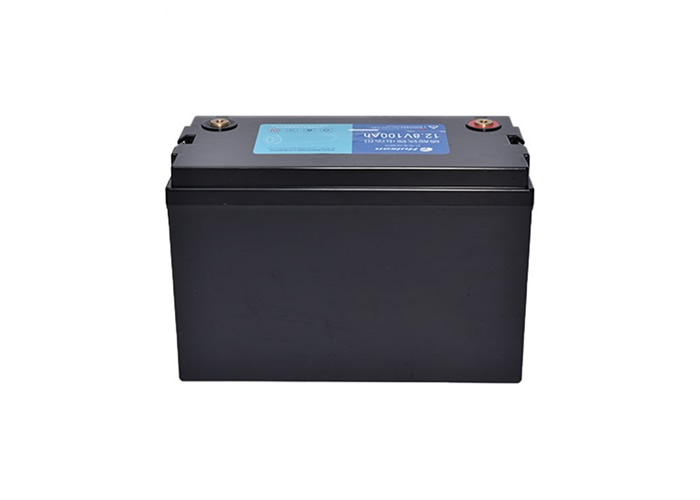
Whether a deep cycle battery lasts 500 cycles or 5,000 comes down almost entirely to how it's charged — at what voltage, what current, and with a charger matched to its chemistry.
The root mistake most people make is treating "deep cycle battery" as one thing. It isn't. LiFePO4, AGM, and flooded lead-acid each require fundamentally different charge voltages and profiles. Use the wrong one and you'll either undercharge (sulfation, capacity loss) or overcharge (overheating, electrolyte loss, BMS shutdown). This guide gives the exact settings for every common chemistry, the right charge current, how to charge from solar and alternators, and a step-by-step procedure.
Part 1: The Most Important Rule — Match the Charger to the Chemistry
Every deep cycle battery has a chemistry-specific charge profile, and using a charger set to the wrong chemistry is the leading cause of premature failure.
LiFePO4 uses a two-stage CC/CV (Constant Current / Constant Voltage) profile. It does not require — and should not receive — a sustained float stage, because LFP's very low self-discharge means float charging adds stress without benefit.
AGM, gel, and flooded lead-acid all use a three-stage bulk / absorption / float profile, but with different voltage targets. Gel in particular cannot tolerate the higher voltages flooded batteries accept.
If you've upgraded from lead-acid to lithium, you must reconfigure or replace your charger. A lead-acid charger typically undercharges a LiFePO4 battery (switching to float too early) and won't balance it properly; a lithium charger set to 14.6V will overcharge most lead-acid batteries.
Part 2: Exact Charge Voltages by Chemistry (12V Systems)
These are standard charge voltages for a nominal 12V battery. For 24V systems, double them; for 48V, multiply by four.
| Chemistry | Bulk/Absorption Voltage | Float Voltage | Charge Profile |
|---|---|---|---|
| LiFePO4 | 14.2–14.6V | None (or 13.6V standby) | CC/CV, no sustained float |
| AGM | 14.4–14.6V | 13.6–13.8V | 3-stage bulk/absorption/float |
| Gel | 14.1–14.4V | 13.5–13.8V | 3-stage (lower voltage — heat-sensitive) |
| Flooded lead-acid | 14.4–14.8V | 13.2–13.5V | 3-stage + periodic equalization |
LiFePO4 detail: The full charge target is 14.6V (3.65V per cell × 4). Once the battery reaches this voltage and current tapers to roughly 0.05C, charging is complete. Many users set a slightly lower target (14.2–14.4V) for daily cycling to reduce cell stress and extend life — sacrificing only a few percent of capacity.
Gel caution: Gel is the most voltage-sensitive chemistry. Exceeding roughly 14.4V permanently damages the gelled electrolyte. Never use a "flooded" or high-voltage charger setting on a gel battery.
Flooded equalization: Flooded lead-acid benefits from periodic controlled overcharge (equalization, ~15.5V) to remix electrolyte and reduce sulfation — but this must never be applied to AGM, gel, or lithium batteries.
Part 3: Understanding the Charge Stages
Lead-acid (AGM, gel, flooded): Three stages
Bulk: The charger delivers maximum current at rising voltage, restoring roughly 80% of capacity. This is the fast phase.
Absorption: Voltage is held constant at the absorption target while current gradually tapers, carefully filling the final ~20% without overcharging — typically taking longer than bulk despite delivering less energy.
Float: Voltage drops to the float level to maintain full charge and offset self-discharge — a maintenance trickle for batteries that sit between uses.
LiFePO4: Two stages
Constant Current (CC): The charger delivers a steady current until the battery reaches 14.6V, supplying the bulk of the charge.
Constant Voltage (CV): Voltage is held at 14.6V while current tapers toward zero. When current drops to approximately 0.05C (5A for a 100Ah battery), charging is complete and the charger disconnects.
LiFePO4 doesn't need a float stage because its self-discharge is only 1–3% per month — there's nothing meaningful to maintain.
Part 4: Choosing the Right Charge Current
Charge current is expressed as a fraction of the battery's amp-hour capacity (the C-rate), balancing charging speed against longevity.
LiFePO4: Can accept up to 1C (100A for a 100Ah battery), but 0.2C–0.5C (20–50A for a 100Ah battery) is the sweet spot for maximizing cycle life. Higher currents work but generate more heat and stress.
Lead-acid (AGM, gel, flooded): Should be charged at 0.1C–0.2C (10–20A for a 100Ah battery). Lead-acid cannot accept high charge currents efficiently — exceeding 0.2C causes excessive heat and gassing and shortens life.
Charge time formula:
Charge time (hours) ≈ Battery capacity (Ah) ÷ Charger current (A), plus roughly 10–20% for the absorption/CV taper.
Example: A 100Ah LiFePO4 battery charged at 20A takes about 5 hours of bulk plus a short CV taper — roughly 5.5 hours total. At 50A, bulk completes in about 2 hours.
Part 5: Charging from Solar and Alternators
Solar charging
Solar power never goes directly from panels to battery — it passes through a charge controller (PWM or MPPT). MPPT controllers are more efficient and the better choice for lithium systems and larger arrays; PWM is cheaper for small lead-acid setups.
Critically, the controller must be programmed for your battery chemistry. A controller set to "AGM" won't correctly charge a LiFePO4 battery, and a "Lithium" setting applied to a gel battery will overcharge it. On cloudy days, a solar system may never reach the absorption or float stages — this is normal and harmless.
Alternator charging
Most vehicle alternators cannot fully charge a deep cycle battery on their own. They output a fixed voltage optimized for the starter battery and lack the multi-stage profile a deep cycle bank needs. For LiFePO4 in particular, connecting directly to an alternator risks both incorrect voltage and dangerous current draw. The correct solution is a DC-DC charger, which converts and regulates the alternator's output to the correct chemistry-specific profile while protecting the alternator from overload.
Part 6: Step-by-Step Charging Procedure
- Verify chemistry and settings. Confirm your battery type and check that your charger or controller is set to the matching profile (Lithium, AGM, Gel, or Flooded).
- Inspect and clean terminals. Ensure terminals are clean and corrosion-free for a good connection.
- Connect in the correct order. Attach the positive (red) cable first, then the negative (black).
- Check the environment. Charge between 0°C and 45°C for lithium (never charge LiFePO4 below freezing without self-heating). Ventilate flooded batteries, which release hydrogen gas during charging.
- Begin charging. Power on the charger. A smart charger moves through the stages automatically and stops (lithium) or drops to float (lead-acid) when complete.
- Disconnect in reverse order. Turn off and unplug the charger first, then remove the negative (black) cable, then the positive (red).
Part 7: Common Charging Mistakes to Avoid
Wrong chemistry setting. "AGM" is not "Gel," and "Lithium" is not any of them — the single most damaging error. Always verify.
Charging LiFePO4 below freezing. Charging below 0°C causes permanent lithium plating. Use a battery with self-heating, or wait until cells warm above freezing.
Chronic undercharging. Leaving lead-acid batteries partially charged causes sulfation that permanently reduces capacity. Lead-acid should be returned to full charge promptly after use.
Over-current charging. Exceeding the recommended C-rate generates heat and shortens life. Stay within 0.2C for lead-acid and 0.5C for everyday LiFePO4 cycling.
Using an alternator alone for LiFePO4. Without a DC-DC charger, this risks alternator damage and incomplete charging.
Frequently Asked Questions
What voltage should I charge a 12V deep cycle battery to?
It depends on chemistry. A 12V LiFePO4 battery charges to 14.6V (some users target 14.2–14.4V for longer life). AGM charges to 14.4–14.6V with a 13.6–13.8V float. Gel charges to a lower 14.1–14.4V (it's heat-sensitive). Flooded lead-acid charges to 14.4–14.8V. Always match your charger's voltage setting to the battery's specific chemistry — using the wrong voltage causes undercharging or permanent damage.
Can I use a regular car charger on a deep cycle battery?
Only if it matches the battery's chemistry and offers the correct multi-stage profile. Most basic car chargers are designed for flooded lead-acid starter batteries and won't correctly charge AGM, gel, or LiFePO4 deep cycle batteries. For lithium deep cycle batteries specifically, you must use a charger with a dedicated LiFePO4 setting — a lead-acid charger will undercharge it and fail to balance the cells properly.
How long does it take to charge a deep cycle battery?
Divide battery capacity by charger current, then add 10–20% for the absorption or constant-voltage taper. A 100Ah battery charged at 20A takes roughly 5–6 hours; at 50A, about 2–2.5 hours. Lead-acid batteries take proportionally longer because they should be charged at lower currents (0.1–0.2C) than LiFePO4 (up to 0.5C for daily use).
Do LiFePO4 deep cycle batteries need a float charge?
No. LiFePO4 uses a two-stage CC/CV profile and does not require a sustained float stage. Its self-discharge is only 1–3% per month, so there's nothing meaningful to maintain. Applying continuous float voltage adds unnecessary stress. For long-term storage, charge to roughly 50% and disconnect rather than leaving the battery on a float charger.
What charge current should I use for a deep cycle battery?
For LiFePO4, 0.2C–0.5C is ideal for daily cycling (20–50A for a 100Ah battery), though up to 1C is acceptable. For lead-acid (AGM, gel, flooded), use 0.1C–0.2C (10–20A for a 100Ah battery) — lead-acid cannot accept high charge currents efficiently and overheats if pushed too hard. Always check your battery's specification sheet for the maximum continuous charge current.
Conclusion
Charging a deep cycle battery correctly comes down to one principle applied carefully: match everything to the chemistry. The right charger profile, the right voltage, the right current — all are chemistry-specific, and getting them right is what separates a battery that lasts 8–15 years from one that fails in 2.
LiFePO4 uses CC/CV to 14.6V with no float and tolerates higher charge currents. Lead-acid variants use three-stage bulk/absorption/float at lower currents, with gel being the most voltage-sensitive. Charge in a suitable temperature range, use a DC-DC charger when charging from an alternator, and program solar controllers for the correct chemistry. Do this consistently and your deep cycle battery will deliver its full rated life.
- Next:NMC vs LFP vs LTO Batteries: 2026 Comparison — Chemistry, Cost-Per-Cycle & How to Choose
- Previous:DIY Solar Power Station for Beginners: Sizing, Components & Step-by-Step Build
Contact Details
Lithium LiFePO4 Batteries and Lithium LiFePO4 Cells Supplier - LiFePO4 Battery Shop
Contact Person: Miss. Elena Wang
WhatsApp : +8615263269227
Skype : +8615263269227
WeChat :15263269227
Email : info@lifepo4batteryshop.com
All Products
- TC Elcon Charger (0)
- Headway Lithium Battery (6)
- Blade Battery (10)
- Semi Solid State Battery (6)
- A123 Battery (6)
- Sinopoly Battery (7)
- GBS Battery (16)
- CALB Battery (25)
- Cylindrical Cell (12)
- Energy Storage System (0)
- Battery Management System (15)
- Sodium ion Battery Cell (4)
- Lithium Titanate Battery (23)
- Ternary Lithium Battery Cell (12)
- REPT Battery (10)
- BYD Battery (5)
- CATL Battery (15)
- Thunder Sky Winston Battery (26)
- EVE Battery (37)
- LiFePO4 Battery Cell (31)
Certification
Customer Reviews
- I have fond memories of our meeting in Shanghai with LiFePO4 Battery Shop Elena. Your company left a strong impression on me with its impressive growth and professionalism. We both value straightforwardness and honesty, which I believe are the most important qualities in any partnership. I am confident that we can build a successful collaboration based on these shared values. —— Robert from USA
- I've been working with LiFePO4 Battery Shop for years, and their reliability is unmatched. While other suppliers frequently change sales teams, LiFePO4 Battery Shop has consistently provided exceptional service with a stable team. Their commitment to quality and customer support truly sets them apart. —— Henry from Australia