
Blog
How Long Do LiFePO4 Batteries Last? Lifespan, Cycle Life & Extension Tips
2026-05-26 | Calvin
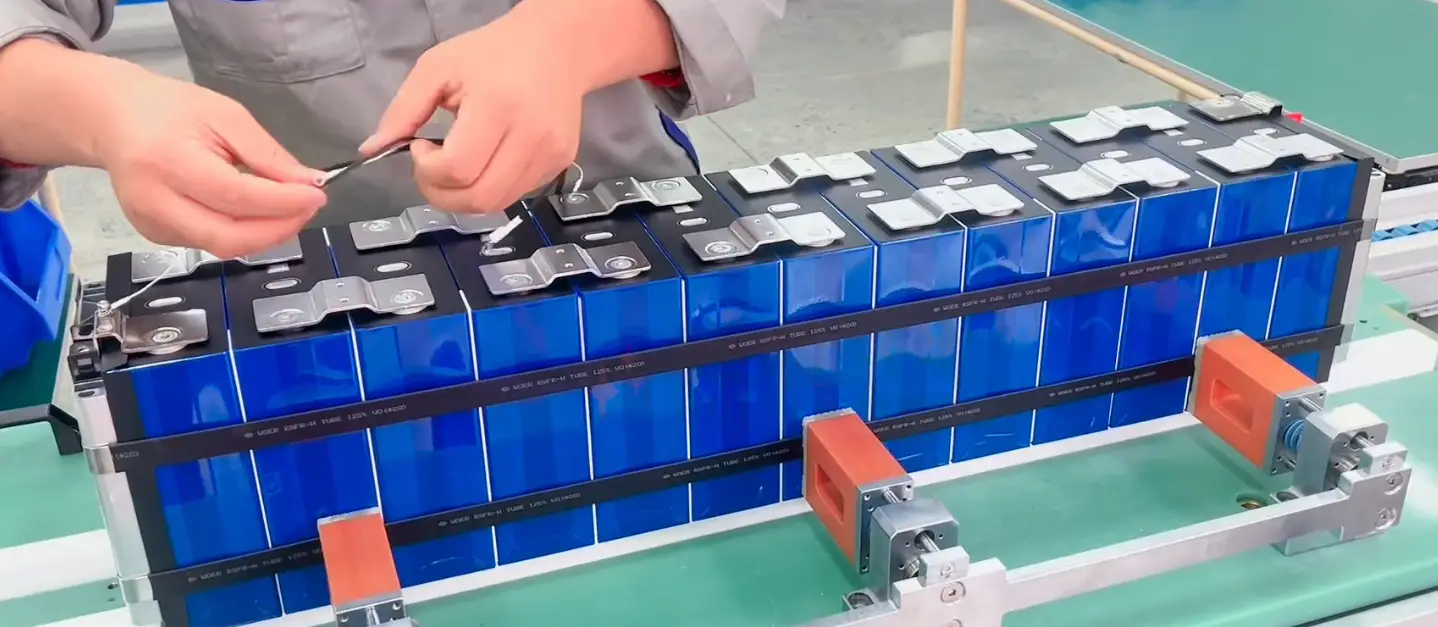
"How long will this battery last?" is the first question most buyers ask — and the most underspecified answer in the industry.
Manufacturers quote 3,000 cycles, 6,000 cycles, even 10,000 cycles. All of those numbers can be true simultaneously, depending on how the battery is used, at what temperature, to what depth of discharge, with what charger, and with what quality of Battery Management System. A LiFePO4 battery cycled daily at 100% depth of discharge in a hot climate will reach end of life in 8–10 years. The same chemistry, cycled to 50% depth of discharge at moderate temperatures, can legitimately last 20+ years.
The number that matters is not the manufacturer's peak claim — it's what your system will actually deliver under your real operating conditions.
This guide explains exactly that: the science behind LiFePO4 longevity, the specific variables that accelerate or extend it, how to calculate realistic lifespan for your application, what end-of-life looks like in practice, and what you can do today to add years to your battery's service life.
Part 1: The Right Way to Measure LiFePO4 Lifespan — Two Clocks Are Running
Most people think about battery lifespan as a single number of cycles. In reality, every LiFePO4 battery is aging on two simultaneous tracks: cycle aging and calendar aging. Understanding both is essential for accurately predicting real-world service life.
Cycle Life (Usage-Driven Aging)
Cycle life is the number of full charge-discharge cycles a battery can complete before its capacity drops to 80% of its original rated capacity. This 80% threshold is the industry standard "end of useful life" definition — the battery still works, but its reduced capacity makes it unsuitable for the application it was sized for.
Under controlled standard test conditions (25°C ambient temperature, 80–100% depth of discharge, 0.5C charge and discharge rate), high-quality LiFePO4 cells typically deliver 3,000–6,000 cycles. Optimized industrial-grade cells and carefully managed systems regularly exceed 6,000 cycles, with some applications documented beyond 10,000 cycles.
In years: a system cycled once per day reaches 3,000 cycles in 8.2 years; 6,000 cycles in 16.4 years.
Calendar Life (Time-Driven Aging)
Calendar aging happens regardless of whether the battery is being used. Chemical processes inside the battery continue even at rest — the Solid Electrolyte Interphase (SEI) layer at the anode gradually thickens, consuming active lithium and electrolyte; the electrode materials slowly decompose; internal resistance creeps upward.
Calendar life is evaluated through long-term storage tests under controlled temperature and state-of-charge (SOC) conditions — for example, "capacity retention ≥80% after 10 years of storage at 25°C and 50% SOC." Quality LiFePO4 batteries routinely pass this benchmark.
The critical insight: In real-world applications, both aging mechanisms operate simultaneously. A backup battery that sits at 100% charge in a hot utility room is experiencing significant calendar aging even if it never cycles. A solar battery cycling daily is accumulating both cycle and calendar age together. Your battery's actual service life is determined by whichever aging mechanism hits the 80% capacity threshold first.
For most active applications (solar, RV, marine), cycle aging dominates. For standby and backup systems, calendar aging is often the binding constraint.
Part 2: What the Cycle Life Numbers Actually Mean — Application by Application
The gap between a manufacturer's "up to 10,000 cycles" claim and a real-world 8-year service life comes down to how conservatively the battery is operated. Here is what the data shows across real operating conditions:
| Operating Condition | Typical Cycle Life | Real-World Years (1 cycle/day) |
|---|---|---|
| 100% DoD, 25°C, 0.5C rate | 2,000–3,000 cycles | 5–8 years |
| 80% DoD, 25°C, 0.5C rate | 3,500–5,000 cycles | 9–13 years |
| 50% DoD, 25°C, 0.5C rate | 6,000–8,000+ cycles | 16–22 years |
| 80% DoD, 35°C (high heat) | 2,000–3,500 cycles | 5–9 years |
| 80% DoD, 15°C (mild cold) | 3,000–4,500 cycles | 8–12 years |
| Unstable high C-rate discharge (>2C regularly) | 800–1,200 cycles | 2–3 years |
The pattern is clear: depth of discharge and temperature are the two dominant variables. Managing them is the single highest-leverage action any LiFePO4 battery owner can take.
Part 3: Depth of Discharge — The Most Misunderstood Lifespan Variable
Depth of discharge (DoD) describes what percentage of the battery's rated capacity is used in each cycle. A 100Ah battery discharged to 20Ah remaining has been discharged to 80% DoD.
The relationship between DoD and cycle life is not linear — it's multiplicative. Research from the National Renewable Energy Laboratory demonstrates that restricting depth of discharge to 70% can extend lifespan by 150% compared to full discharges. That is not a typo. Halving your daily discharge depth can more than double your total cycle count.
Why DoD has such a large effect
Every charge-discharge cycle subjects the battery's electrode materials to physical stress — lithium ions moving in and out of the crystal lattice cause microscopic mechanical expansion and contraction. Deeper discharges produce greater mechanical stress per cycle, accelerating the structural degradation of the cathode material.
LiFePO4's olivine crystal structure is exceptionally stable compared to NMC or LCO chemistries — it resists oxygen release and structural collapse far better. But it is not immune to stress. Shallower cycles simply produce less stress per cycle, allowing the structure to endure far more cycles over its lifetime.
Practical DoD management by application
Solar storage: Size your battery bank to meet daily needs at 50–70% DoD. A slightly oversized battery bank (say, 20% more capacity than your daily draw) pays for itself in substantially extended service life.
RV and marine house batteries: Avoid routinely discharging below 20% state of charge (80% DoD). Set low-voltage cutoffs in your BMS or inverter at 20% SOC. Consider this the battery's practical "empty."
Backup and UPS applications: These batteries cycle rarely but may discharge deeply when they do activate. This is acceptable — the low cycle frequency means the battery is calendar-aging faster than cycle-aging regardless.
Electric vehicles (commercial):strong> Fleet operators routinely limit charge to 80% and discharge floor to 20% — effectively operating in a 60% DoD window — specifically to extend battery pack service life.
Part 4: Temperature — The Silent Accelerant
Temperature is the most underestimated lifespan factor, primarily because its effects are gradual and invisible until significant capacity loss has already occurred.
The operating range that matters
LiFePO4 batteries function across a wide range (-20°C to 60°C), but they do not age equally across that range. The chemistry is optimized for a moderate band:
Ideal operating temperature: 15°C to 35°C (59°F to 95°F)
Outside this band, aging accelerates in different ways:
High temperature effects (above 35°C / 95°F)
Heat accelerates every chemical reaction inside the battery — including the degradation reactions. Specifically:
- The SEI layer at the anode grows faster, permanently consuming active lithium
- Electrolyte decomposition accelerates, increasing internal resistance
- Cathode material phase transitions occur at lower cycle counts
At 40°C, cycle life can be reduced by 20–30% compared to 25°C operation. At 45°C and above, degradation accelerates severely. A peer-reviewed 2025 study published in Frontiers in Energy Research confirmed that heat and deep charging and discharging modes accelerate battery aging — and that the decay ratio between deep and shallow DoD widens dramatically at elevated temperatures.
A battery operating at 40°C ambient temperature that would last 10 years at 25°C might last only 6–7 years. The effect compounds: hot climates, batteries installed in engine bays, battery compartments without ventilation, and direct sun exposure all represent serious lifespan threats.
Cold temperature effects (below 0°C / 32°F)
Cold reduces performance differently: it doesn't permanently degrade the chemistry at moderate cold, but it creates a specific hazard — lithium plating during charging.
When a LiFePO4 battery is charged below 0°C, lithium ions cannot properly intercalate into the graphite anode at the rate they arrive. Instead, metallic lithium plates onto the anode surface — a process that is largely irreversible and permanently reduces capacity with each occurrence. A single severe cold-charge event can destroy a meaningful percentage of a battery's capacity.
Below 0°C, charging should be halted entirely unless the battery has a built-in self-heating circuit (controlled by the BMS) that warms the cells before accepting charge current. At -20°C, usable capacity typically falls to around 60% of rated capacity — this is recoverable when the battery warms up, but repeated cold-charge cycling without heating causes permanent loss.
Key rule: If your battery will experience sub-zero temperatures, verify it has BMS-controlled self-heating before purchasing. This is not a luxury feature in cold climates — it is a lifespan requirement.
Temperature management strategies
- Install batteries in thermally stable locations: inside an RV or vessel rather than in an exterior compartment, in a climate-controlled utility room rather than an uninsulated garage
- Ensure adequate ventilation to prevent heat buildup in confined spaces
- For solar installations in hot climates, shade the battery bank from direct sun exposure
- In cold climates, use batteries with built-in self-heating, or pre-warm batteries before allowing charge current in winter
Part 5: Charge Rate (C-Rate) and Its Effect on Longevity
The C-rate describes how quickly a battery charges or discharges relative to its capacity. A 1C rate on a 100Ah battery means 100 amps. A 0.5C rate means 50 amps.
LiFePO4 handles high C-rates better than any other lithium chemistry — this is one of its genuine advantages. But consistently operating at high C-rates generates internal heat and accelerates degradation relative to moderate rates.
C-rate guidance by application
For maximum longevity: Charge at 0.2C–0.5C (20–50A for a 100Ah battery). This is the "standard" rate that cycle life specifications are typically tested at.
Acceptable sustained rate: Up to 1C for most quality LiFePO4 batteries. Many BMS units are configured to allow 1C as the continuous maximum.
High rate (emergency/fast charge): 1C–2C is permissible for quality cells but should not be the routine operating mode. Consistent 2C+ charging generates meaningful additional heat and shortens cycle life.
High C-rate discharge (peak loads): LiFePO4 handles 2C–3C discharge well for short durations. Sustained high-rate discharge (running heavy inverter loads, high-current motor applications) generates heat and should be managed by appropriate battery sizing rather than forcing the chemistry.
The practical recommendation for most applications: size your charging system and battery bank such that normal daily cycling occurs in the 0.2C–0.5C range. Oversizing the battery bank achieves this automatically — a 200Ah bank charged at 40A is operating at 0.2C even though the solar array produces 40A.
Part 6: The BMS — The Most Underrated Lifespan Factor
Every quality LiFePO4 battery includes a Battery Management System (BMS) — the electronic system that monitors individual cell voltages, temperatures, and current flow and intervenes to protect the cells from harmful conditions.
The BMS is not just a safety device. It is a direct lifespan management system. A high-quality BMS with proper configuration consistently achieves meaningfully longer battery service life than the same cells with a budget BMS — the difference can easily be 20–30% of total cycle life.
What a quality BMS does for longevity
- Overvoltage protection: Cuts off charge current when any cell reaches the maximum voltage (3.65V for LiFePO4). Overcharging above this threshold causes cathode damage that is permanent and cumulative.
- Under-voltage protection: Disconnects discharge when any cell drops below the minimum safe voltage (typically 2.5V). Deep discharge below this level causes lithium plating on the anode and damages the SEI layer.
- Cell balancing: As a battery pack ages, individual cells drift apart in capacity and state of charge. The BMS's balancing function (either active or passive) redistributes charge to keep all cells at equal SOC. Without balancing, the weakest cell in a series pack determines the effective capacity of the entire pack — and gets over-stressed in every cycle as it hits cutoff limits before the others.
- Temperature management: Quality BMS units monitor cell temperature and reduce charge/discharge rates in high heat, and block charging entirely below freezing. This single function prevents the two most common forms of irreversible lifespan damage.
- Overcurrent protection: Prevents instantaneous high-current events from exceeding the cell's rated discharge rate.
BMS quality is not visible in spec sheets
Marketing specs don't tell you BMS quality. Signals of a quality BMS include: cell-level monitoring (not just pack-level), active or passive balancing with specified balance current, temperature sensors at multiple points in the pack, configurable low-temperature charge cutoff, and manufacturer transparency about BMS specifications.
Part 7: Calendar Aging — How Storage Conditions Affect Lifespan
For batteries that spend extended periods not in active use — seasonal boats, backup generators, emergency power systems, off-season RVs — calendar aging is the primary lifespan factor.
The optimal storage SOC
The ideal state of charge for long-term storage is 40–60%. This range minimizes internal stress and significantly slows the chemical reactions that cause calendar aging.
Storing at 100% SOC is a common mistake that shortens lifespan. A fully charged state, particularly in warm conditions, keeps the cathode material at its highest-stress voltage for extended periods, accelerating the decomposition reactions that reduce capacity. Storing at 100% SOC in a hot environment combines two of the worst possible inputs simultaneously.
Storing at very low SOC (below 20%) is also harmful — the BMS may eventually cut off to prevent over-discharge, and self-discharge over months can bring cells into the damaging deep-discharge territory.
Practical storage protocol:
- Discharge or charge to approximately 50% SOC before storage
- Store in a cool, dry location — ideal storage temperature is 10–25°C
- Check voltage every 3–6 months; recharge to 50% if SOC has dropped below 30%
- Before returning to service, run a complete charge-discharge-charge cycle to recalibrate the BMS
Self-discharge rate
LiFePO4 has an impressively low self-discharge rate of approximately 1–3% per month at room temperature. A battery stored at 50% SOC in a temperate environment will typically retain sufficient charge for 6–12 months without intervention. Cold storage (around 10°C) reduces self-discharge further and is ideal for long-term storage.
Part 8: Real-World Lifespan by Application
| Application | Typical Daily Cycles | DoD per Cycle | Expected Service Life |
|---|---|---|---|
| Daily solar home storage | 1 cycle/day | 50–80% | 10–15 years |
| RV house battery (seasonal) | 0.5 cycles/day average | 60–80% | 12–18 years |
| Marine house battery (active season) | 1 cycle/day (seasonal) | 50–70% | 15–20+ years |
| Off-grid cabin (daily use) | 1 cycle/day | 70–90% | 8–12 years |
| Commercial EV / bus fleet | 1–2 cycles/day | 80% (software-limited) | 6–10 years |
| Backup/UPS (rare activation) | <0.1 cycles/day average | 80–100% when activated | 15–20 years (calendar-limited) |
| Trolling motor (fishing season) | 1 cycle/day (seasonal) | 60–80% | 12–18 years |
Note: These are real-world estimates incorporating both cycle and calendar aging under typical operating conditions. Individual results vary based on climate, BMS quality, cell grade, and maintenance practices.
Part 9: 7 Warning Signs Your LiFePO4 Battery Is Approaching End of Life
LiFePO4 batteries rarely fail suddenly — they degrade gradually and give clear warning signals before performance becomes unacceptable. Recognizing these signs early allows you to plan replacement on your schedule rather than facing an unexpected system failure.
1. Noticeably shorter runtime under the same load
This is the most common early sign. If the same overnight load that used to bring your battery from 100% to 30% is now bringing it to 10% — your usable capacity has shrunk. The battery is holding less energy than it used to.
A 10% capacity reduction after approximately 3,000 full charge cycles is typical and expected. Reduction beyond 20% indicates the battery is in late-stage aging.
2. Slower charging on sunny days / from a known charger
An aging battery's internal resistance increases, making it progressively harder for the battery to accept charge current at its original rate. If your solar system used to bring the battery from 20% to 100% in 4 hours on a sunny day and now takes 5–6 hours with the same generation, internal resistance has increased meaningfully.
3. Declining round-trip efficiency
A new LiFePO4 battery delivers approximately 95–98% round-trip efficiency. As the battery ages and internal resistance increases, more energy is lost as heat during charging and discharging. When round-trip efficiency drops below 85–80%, you're losing a significant fraction of every kWh you put in — an economic signal as well as a health indicator.
4. Voltage drops faster under load (higher internal resistance)
When you draw current, internal resistance creates a voltage sag. In a healthy battery, this sag is small and stable. In an aging battery, the sag is larger and occurs earlier in the discharge — the voltage drops toward the BMS cutoff threshold before the expected end of discharge.
If your system is tripping low-voltage alarms or shutting down at higher than expected SOC readings, internal resistance increase is the likely cause.
5. Frequent BMS cell balancing alarms or cell imbalance
In a healthy battery pack, individual cells stay close in voltage through normal operation. As cells age at different rates, the spread between the highest and lowest cell voltage increases — the weakest cell hits the cutoff threshold first, triggering BMS intervention.
If your BMS is reporting increasing cell imbalance or more frequent balancing activity than in previous years, the pack's cells are diverging — a clear sign of aging.
6. Abnormal heat generation during normal charge or discharge
A modest warmth during charging or heavy discharge is normal. A battery that becomes notably hot during moderate loads or routine charging has significantly elevated internal resistance. Excessive heat is both a symptom and an accelerant of further degradation.
7. Physical changes: swelling or deformation
Physical swelling of the battery case is a serious safety signal indicating internal gas generation. This can result from deep over-discharge, overcharging, severe internal short circuits, or advanced electrolyte decomposition. A swollen battery should be treated as a safety hazard — disconnect it immediately, do not charge it, and contact the manufacturer or a professional for guidance. Do not continue using a physically deformed battery.
Part 10: Proven Practices to Maximize LiFePO4 Battery Lifespan
Turning the science above into actionable daily habits:
Design for shallow cycles
Size your battery bank for your actual application load at 50–70% DoD, not 100%. This one design decision typically adds 50–100% to your total cycle count. If you consistently need 5kWh per day, install 8–10kWh of LiFePO4 capacity rather than 5–6kWh.
Set charge limits thoughtfully
Many inverters, charge controllers, and BMS units allow you to set a maximum charge voltage below the absolute cell maximum. Charging to 95% of rated capacity instead of 100% every day meaningfully reduces cathode stress while costing you only 5% of capacity. For most solar and RV applications, this is an easy trade worth making.
Store at 50% SOC when not in active use
When taking your RV out of service for winter, your boat out of the water, or any battery out of regular use for more than a few weeks — charge or discharge to approximately 50% SOC before storage. Store in the coolest accessible location. Check every 3–6 months.
Use the right charger, correctly configured
LiFePO4 requires a charger explicitly programmed for its charge profile — constant current to 3.65V per cell, then constant voltage until current tapers. Generic lithium-ion chargers (often configured for 4.2V/cell NMC) will overcharge LiFePO4 cells and cause permanent damage. Verify your charger's LiFePO4 setting before connecting.
Ensure adequate thermal management
Install batteries in thermally stable environments. Avoid engine bays, unventilated external compartments in hot climates, and locations with direct sun exposure. In cold climates, use batteries with self-heating capability and verify that the BMS activates the heater before charging in freezing conditions.
Maintain a regular inspection schedule
Every 3–6 months: check terminal connections for corrosion or looseness, check BMS monitoring data for cell voltage spread and temperature history, verify physical condition of battery casing (no swelling, cracks, or leakage). Address any anomalies before they compound.
Let your BMS do its job — don't bypass it
The BMS is protecting the cells from the conditions that cause permanent damage. Systems that bypass the BMS to "get more power" or "charge faster" are trading long-term lifespan for short-term convenience, consistently. A BMS shutdown is a protection event, not a malfunction.
Part 11: LiFePO4 Lifespan vs. Lead-Acid — The Real Cost Comparison
The upfront cost objection to LiFePO4 is real but incomplete. The relevant comparison is lifecycle cost, not purchase price.
| Metric | LiFePO4 | AGM Lead-Acid |
|---|---|---|
| Typical cycle life | 3,000–6,000 cycles | 300–500 cycles |
| Usable DoD | 95–100% | 50% |
| Effective capacity (100Ah battery) | ~95–100Ah usable | ~50Ah usable |
| Replacements over 10 years (daily cycle) | 0–1 | 4–6 |
| 10-year total cost (rough estimate) | Lower | Higher |
| Maintenance requirements | Virtually none | Regular watering (flooded), equalization |
| Weight (100Ah equivalent) | ~13 kg | ~28 kg |
To store 5kWh of genuinely usable energy: you need approximately 5.5kWh of LiFePO4 capacity, or approximately 11kWh of lead-acid capacity (accounting for 50% DoD limit). The lead-acid system also needs replacement every 2–3 years with regular deep cycling. Over a 10-year period, LiFePO4 is almost always the lower-cost option in total, despite higher upfront cost.
Frequently Asked Questions
How long do LiFePO4 batteries last in years?
Under typical operating conditions — daily cycling in a solar or RV application, moderate temperatures, 70–80% depth of discharge — a quality LiFePO4 battery lasts 10–15 years. Under optimized conditions (50% DoD, 15–25°C, appropriate charger, quality BMS), service lives of 15–20 years are realistic. Abusive conditions (consistently 100% DoD, hot climate, improper charging) can shorten this to 5–8 years.
What is the difference between cycle life and calendar life for LiFePO4?
Cycle life counts how many charge-discharge cycles the battery can complete before falling to 80% capacity. Calendar life measures how long the battery maintains acceptable performance from the date of manufacture, regardless of how many cycles it completes — aging happens even at rest. In active applications, cycle aging typically dominates. In standby or backup applications, calendar aging often determines service life. Real-world lifespan is whichever aging mechanism reaches the failure threshold first.
Does depth of discharge really affect LiFePO4 lifespan that much?
Yes — the effect is large. Research consistently shows that restricting depth of discharge to 70% can extend cycle life by 150% compared to full discharges. A battery cycled to 50% DoD will typically deliver 2–3× the total cycle count of the same battery cycled to 100% DoD. This is the single most impactful variable you can control in system design.
What happens if I charge a LiFePO4 battery in freezing temperatures?
Charging below 0°C causes lithium plating on the anode — metallic lithium deposits on the anode surface rather than intercalating properly. This process is largely irreversible and permanently reduces capacity. A single severe cold-charge event can cause meaningful permanent capacity loss. If your battery lacks a built-in self-heating circuit (controlled by the BMS), do not charge it below 0°C.
What are the signs that a LiFePO4 battery needs to be replaced?
The seven key indicators are: significantly shorter runtime under the same load, slower charging than in previous periods, declining round-trip efficiency, voltage dropping faster under load (increased internal resistance), frequent BMS cell imbalance alarms, abnormal heat during normal operation, and any physical swelling or deformation of the battery case. Physical swelling is a safety emergency requiring immediate disconnection.
Is 80% state of health (SOH) really "end of life"?
The 80% SOH threshold is the industry standard definition for the end of a battery's "first life" — the point at which it's typically no longer suitable for the application it was sized for. A 100Ah battery at 80% SOH effectively has 80Ah of capacity, which may mean your system no longer meets its designed load requirements. The battery continues to function — it just delivers less. Many LiFePO4 batteries retired from EVs at 70–80% SOH are repurposed for less-demanding stationary storage applications where they continue to provide years of additional value.
Does keeping a LiFePO4 battery at 100% charge shorten its life?
Yes, particularly in warm conditions. Storing at 100% SOC keeps the cathode material at its maximum-stress voltage, accelerating electrolyte decomposition and SEI layer growth. For batteries in active daily use, this effect is modest. For batteries stored at 100% for weeks or months at a time, particularly in warm environments, the calendar aging acceleration is meaningful. The recommended storage SOC is 40–60%.
Conclusion
LiFePO4 batteries are among the most durable energy storage technologies available — but their lifespan is not predetermined by the chemistry alone. It is the outcome of the chemistry meeting real operating conditions: temperature, depth of discharge, charge rate, BMS quality, and storage practices.
The headline number — 10–15 years of service life — is achievable and realistic for well-designed, well-maintained systems. It requires sizing the battery bank for shallow daily cycles, managing temperature exposure, using compatible charging equipment with a quality BMS, and storing correctly during periods of non-use.
The batteries that fail early are almost never failing because of the chemistry. They're failing because they were too small for their application (forcing 100% DoD every day), installed in hostile thermal environments, charged with mismatched equipment, or left at high SOC in hot storage. All of those outcomes are preventable with the right system design.
Get the design right, manage the variables, and a quality LiFePO4 battery will reliably outlast any lead-acid alternative by a factor of 3–5× in total delivered energy.
- Next:Battery Posts & Terminals: Types, Materials, Cleaning & Troubleshooting
- Previous:How to Read Lithium Battery Discharge & Charging Curves: The Complete 2026 Guide
Contact Details
Lithium LiFePO4 Batteries and Lithium LiFePO4 Cells Supplier - LiFePO4 Battery Shop
Contact Person: Miss. Elena Wang
WhatsApp : +8615263269227
Skype : +8615263269227
WeChat :15263269227
Email : info@lifepo4batteryshop.com
All Products
- TC Elcon Charger (0)
- Headway Lithium Battery (6)
- Blade Battery (10)
- Semi Solid State Battery (6)
- A123 Battery (6)
- Sinopoly Battery (7)
- GBS Battery (16)
- CALB Battery (25)
- Cylindrical Cell (9)
- Energy Storage System (0)
- Battery Management System (15)
- Sodium ion Battery Cell (4)
- Lithium Titanate Battery (22)
- Ternary Lithium Battery Cell (12)
- REPT Battery (10)
- BYD Battery (5)
- CATL Battery (15)
- Thunder Sky Winston Battery (26)
- EVE Battery (35)
- LiFePO4 Battery Cell (20)
Certification
Customer Reviews
- I have fond memories of our meeting in Shanghai with LiFePO4 Battery Shop Elena. Your company left a strong impression on me with its impressive growth and professionalism. We both value straightforwardness and honesty, which I believe are the most important qualities in any partnership. I am confident that we can build a successful collaboration based on these shared values. —— Robert from USA
- I've been working with LiFePO4 Battery Shop for years, and their reliability is unmatched. While other suppliers frequently change sales teams, LiFePO4 Battery Shop has consistently provided exceptional service with a stable team. Their commitment to quality and customer support truly sets them apart. —— Henry from Australia