
Blog
Functions and Applications of a Battery Management System (BMS)
2026-01-04 | Calvin
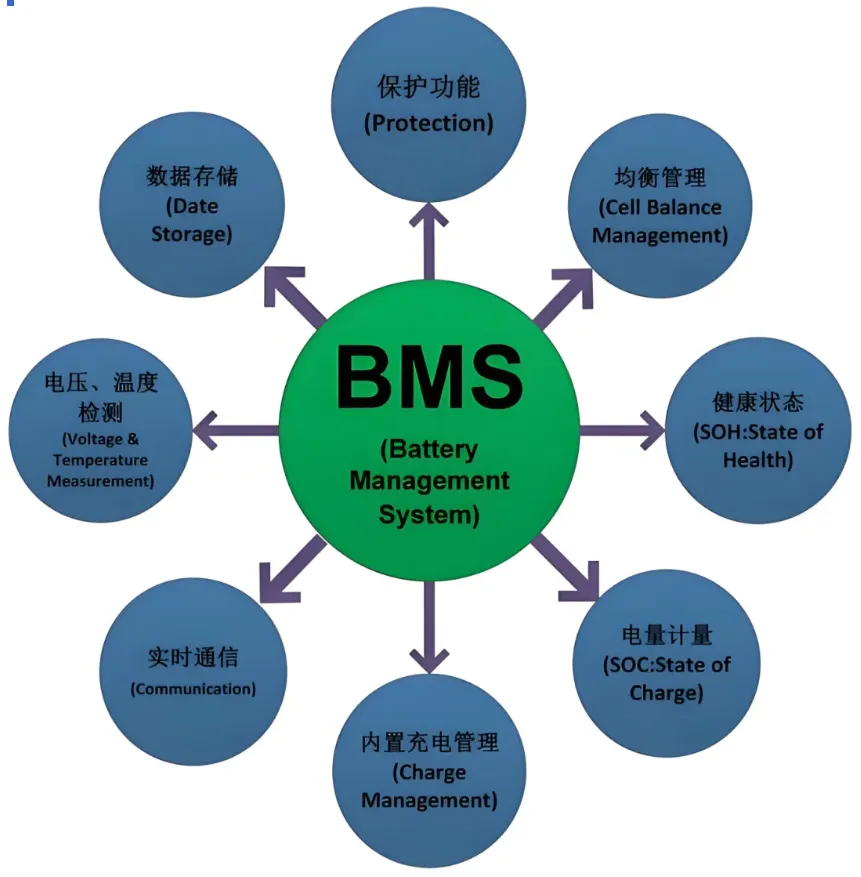
In today’s fast-moving technological world, battery technology has become the backbone of modern innovation. From electric vehicles and smartphones to renewable energy storage systems, batteries play a critical role in driving efficiency, sustainability, and mobility. However, as battery systems grow larger and more complex, managing them safely and efficiently becomes a serious challenge.
This is where the Battery Management System (BMS) comes into play. Acting as the brain of a battery pack, a BMS not only improves battery performance and lifespan but also ensures operational safety. In this article, we explore the definition, functions, development, and real-world applications of battery management systems, providing a clear and practical overview of this essential technology.
Overview of the Battery Management System (BMS)
Definition and Core Functions
A Battery Management System (BMS) is an electronic control system designed to monitor and manage rechargeable batteries, whether a single cell or a large battery pack. Its primary responsibility is to keep the battery operating within safe limits while delivering optimal performance.
Key functions of a BMS include:
- Monitoring battery voltage, current, and temperature in real time
- Protecting the battery from overcharge, over-discharge, overcurrent, and overheating
- Managing charge and discharge processes
- Balancing individual cells within a battery pack
- Collecting, processing, and reporting battery data
- Communicating with external systems such as inverters, chargers, or vehicle controllers
BMS solutions are widely used in high-capacity and high-performance battery systems, including electric vehicles, energy storage systems, and industrial power applications. By ensuring stable and controlled operation, a BMS significantly improves safety, reliability, and battery lifespan.
Purpose of a Battery Management System
In any complex battery system, the BMS is one of the most critical components. It acts as a bridge between the battery pack and the rest of the system, continuously managing voltage levels, temperature conditions, and charge/discharge states.
Without a BMS, batteries are at serious risk of:
- Overcharging or deep discharging
- Thermal runaway caused by uncontrolled chemical reactions
- Accelerated cell degradation due to imbalance
- Fire, explosion, or permanent battery damage
Cell imbalance, in particular, can dramatically reduce overall battery performance and increase maintenance costs. In severe cases, it may lead to catastrophic safety incidents.
By using a BMS, battery systems can accurately assess state of charge (SoC), state of health (SoH), and overall operating conditions. This allows for safer operation, optimized energy usage, and extended battery life—key factors for both users and manufacturers.
Development History of BMS Technology
The concept of battery management systems originated in the 1970s, alongside the early development of advanced rechargeable batteries. However, BMS technology gained widespread attention in the 1990s, driven by the rapid growth of electric vehicles and renewable energy systems.
Several countries played a pioneering role in this evolution:
- United States: Led early BMS development, introducing foundational battery protection and monitoring systems for electric vehicles and industrial use.
- Germany: Advanced BMS applications through systems such as BATTMAN and Bosch’s cloud-based battery management technologies, improving battery lifespan and system intelligence.
- Japan: Accelerated BMS adoption through strong government support for electric vehicles and energy-efficient technologies.
Over time, BMS technology has evolved from simple protection circuits into highly intelligent management platforms.
Key Technological Advancements
- Advanced monitoring: Real-time tracking of voltage, temperature, SoC, and SoH with high accuracy
- Improved balancing technologies: Active and passive balancing methods to ensure uniform cell performance
- Communication and data integration: Support for CAN bus, Modbus, and other protocols for seamless system integration
- Highly integrated designs: Combining thermal management, safety protection, and charge control into compact systems
- Smart algorithms: Optimized charging strategies, lifespan prediction, and performance optimization
- Remote monitoring and cloud connectivity: Enabling real-time diagnostics, maintenance, and performance analysis
- AI and machine learning integration: Using historical and real-time data to predict battery health, detect anomalies, and prevent failures before they occur
These innovations allow modern BMS solutions to deliver not only protection but also intelligent energy management in complex operating environments.
Applications of Battery Management Systems
BMS technology is essential in any system that relies on multi-cell or high-capacity batteries. Common application areas include:
Electric Vehicles (EVs) and Hybrid Vehicles
In EVs and hybrids, the BMS manages battery packs to ensure maximum performance, safety, and longevity. It monitors voltage, current, temperature, and SoC while preventing overcharging and deep discharging.
Renewable Energy Systems (Solar and Wind)
BMS solutions play a vital role in managing energy storage generated by renewable sources. They help optimize charging efficiency and ensure stored energy is available when needed.
Energy Storage Systems (ESS)
Whether residential, commercial, or grid-scale, energy storage systems rely on BMS technology to control charge cycles, extend battery life, and ensure safe long-term operation.
Industrial and Marine Applications
Large-scale industrial equipment and marine vessels use BMS systems to manage high-capacity battery packs under demanding conditions, ensuring reliability and safety.
Telecom and Data Center Backup Power
In backup power systems, BMS ensures batteries remain healthy and fully prepared to deliver power during outages, maintaining operational continuity.
Portable Power Stations and Home Energy Storage
High-capacity portable and home energy storage systems depend on BMS solutions to manage multiple battery strings safely and reliably, especially during emergency use.
Power Tools
BMS technology allows power tools to operate under high loads while preventing overheating and excessive discharge, improving tool performance and battery cycle life.
Two-Wheel Electric Mobility
Electric bicycles and scooters rely on BMS systems to enhance riding safety, extend range, and ensure stable power output across various conditions.
Robotics
In industrial, service, and consumer robotics, BMS ensures precise energy management, reliable operation, and battery safety in complex working environments.
Conclusion
As battery systems continue to grow in scale and complexity, the importance of a reliable Battery Management System cannot be overstated. A well-designed BMS ensures safety, maximizes performance, and significantly extends battery lifespan. From electric vehicles to energy storage and robotics, BMS technology is a cornerstone of modern energy solutions.
If you are developing or sourcing lithium battery systems, choosing a high-quality BMS is essential for long-term reliability and safety.
👉 Contact us to learn more about advanced BMS solutions designed for lithium iron phosphate (LiFePO4) batteries and energy storage applications.
- Next:The Advantages of Lithium-Ion Batteries in Forklifts: A Smarter Power Choice for Modern Warehouses
- Previous:Ultimate Guide to Buying the Right ATV Battery
Contact Details
Lithium LiFePO4 Batteries and Lithium LiFePO4 Cells Supplier - LiFePO4 Battery Shop
Contact Person: Miss. Elena Wang
WhatsApp : +8615263269227
Skype : +8615263269227
WeChat :15263269227
Email : info@lifepo4batteryshop.com
All Products
- Headway Lithium Battery (6)
- Blade Battery (8)
- Semi Solid State Battery (6)
- A123 Battery (5)
- Sinopoly Battery (7)
- GBS Battery (16)
- CALB Battery (22)
- Cylindrical Cell (6)
- Energy Storage System (0)
- Battery Management System (5)
- Sodium ion Battery Cell (4)
- Lithium Titanate Battery (20)
- Ternary Lithium Battery Cell (11)
- REPT Battery (10)
- BYD Battery (2)
- CATL Battery (14)
- Thunder Sky Winston Battery (21)
- EVE Battery (30)
- LiFePO4 Battery Cell (4)
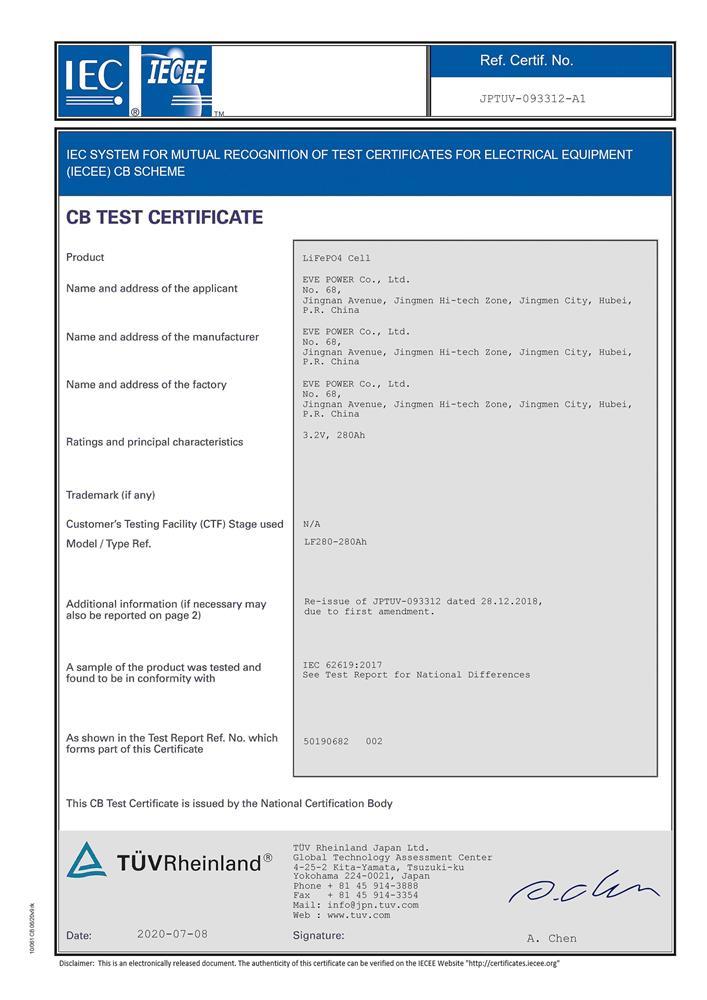
Certification


Customer Reviews
- I have fond memories of our meeting in Shanghai with LiFePO4 Battery Shop Elena. Your company left a strong impression on me with its impressive growth and professionalism. We both value straightforwardness and honesty, which I believe are the most important qualities in any partnership. I am confident that we can build a successful collaboration based on these shared values. —— Robert from USA
- I've been working with LiFePO4 Battery Shop for years, and their reliability is unmatched. While other suppliers frequently change sales teams, LiFePO4 Battery Shop has consistently provided exceptional service with a stable team. Their commitment to quality and customer support truly sets them apart. —— Henry from Australia