
Blog
18650 Battery Specs: Size, Voltage, Capacity & How to Choose the Right Cell
2026-04-25 | Calvin
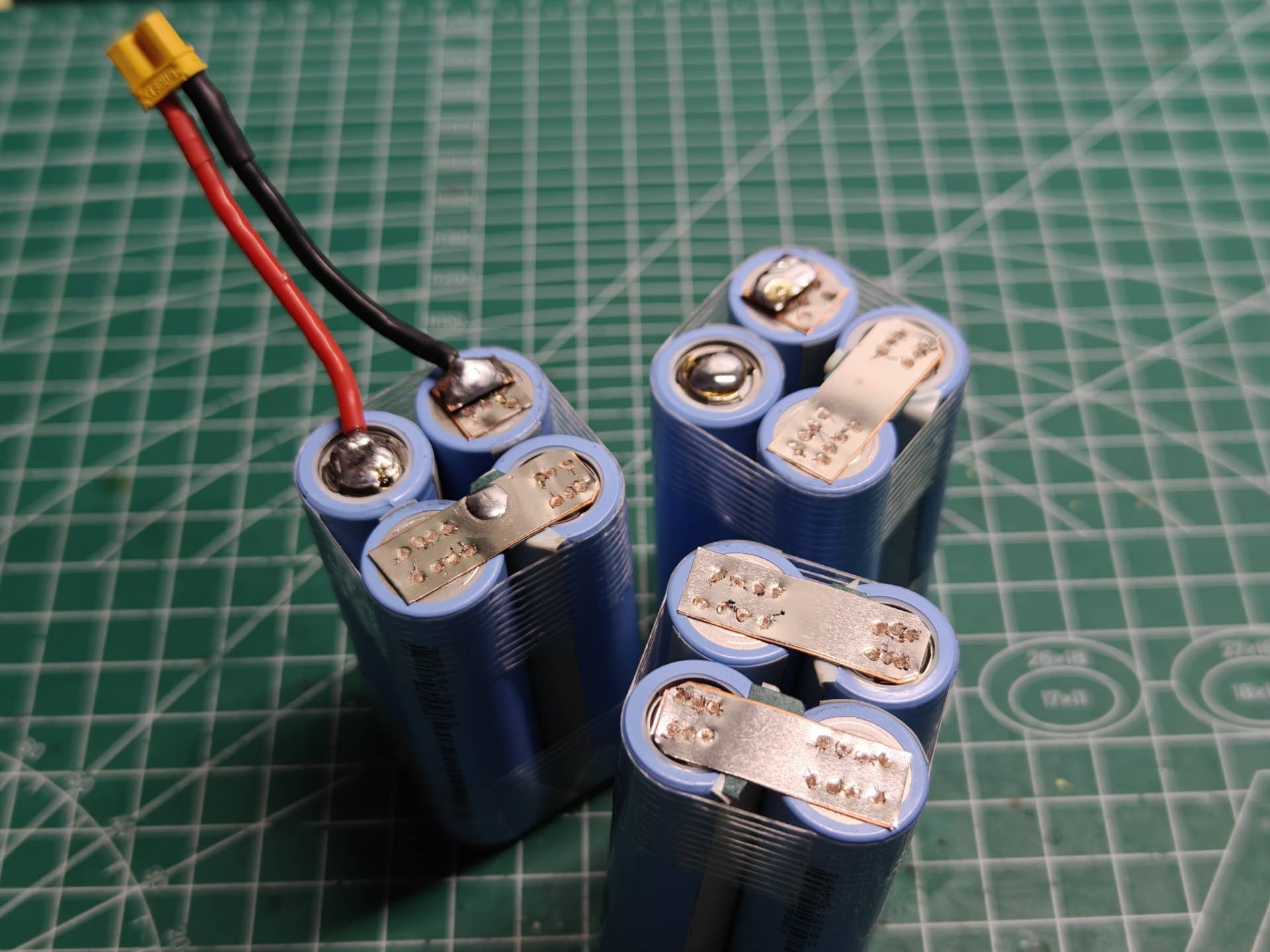
The 18650 battery is one of the most widely used lithium-ion cells on the planet. You will find it inside e-bikes, power tools, laptop packs, flashlights, drones, and even electric vehicles. But walk into any online store and you will see dozens of listings with different voltages, capacities, and labels with no clear explanation of what any of it means.
This guide breaks down every key 18650 battery spec in plain English, so whether you are a DIY builder, an electronics engineer, or just replacing a cell in a flashlight, you will know exactly what to look for.
1. What Does 18650 Mean? (Naming and Dimensions)
The name 18650 is not a model number - it is a size code. Every digit tells you something about the cell's physical dimensions:
| Digits | Meaning | Value |
|---|---|---|
| 18 | Diameter (mm) | 18 mm |
| 65 | Height / Length (mm) | 65 mm |
| 0 | Cell shape | Cylindrical |
So a standard 18650 cell measures 18 mm wide and 65 mm tall.
Important note: Protected cells include a small safety circuit board at the bottom, which can add 2-3 mm to the total length, pushing them to 67-68 mm. Always check the specs if your device has a tight battery compartment.
2. 18650 Battery Specs at a Glance
| Specification | Typical Value | Notes |
|---|---|---|
| Nominal Voltage | 3.6V - 3.7V | Average working voltage |
| Max Charge Voltage | 4.2V | Never exceed - fire risk |
| Discharge Cut-off | 2.5V - 3.0V | Below this = cell damage |
| Capacity Range | 1500 - 3600 mAh | Higher is not always better |
| Max Discharge Current | 5A - 36A+ | Depends on chemistry/model |
| Weight | 45 - 50 g approx | Varies by manufacturer |
| Cycle Life | 300 - 1000+ cycles | Depends on usage conditions |
| Dimensions | 18 mm (D) x 65 mm (H) | Protected cells: up to 68 mm |
3. Voltage Explained: 3.6V, 3.7V, or 4.2V?
This is the number one source of confusion for new buyers. You will see three different voltage numbers for the same cell. Here is what they actually mean:
| Voltage | Name | What It Means |
|---|---|---|
| 4.2V | Full Charge Voltage | Battery is 100% charged. Never exceed this value. |
| 3.6V / 3.7V | Nominal Voltage | The average voltage during a full discharge cycle. This is what is printed on the label. |
| 2.5V - 3.0V | Cut-off Voltage | The empty state. Most BMS units cut power here to prevent cell damage. |
Think of it this way: if a full tank of gas is 4.2V and an empty tank is 2.5V, then 3.6V is the average amount of fuel in the tank during a typical drive. That is your nominal voltage.
4. Capacity (mAh): How Much Is Enough?
Capacity tells you how much energy the cell can store, measured in milliampere-hours (mAh). Higher capacity means longer runtime before the next charge.
| Capacity Range | Category | Typical Applications |
|---|---|---|
| 1500 - 2000 mAh | Low capacity | Compact devices, lower-drain use |
| 2000 - 2600 mAh | Standard | Power tools, flashlights |
| 2600 - 3000 mAh | High capacity | E-bikes, DIY battery packs |
| 3000 - 3600 mAh | Ultra-high | Long-runtime devices, EVs |
Fake Capacity Warning: If you see a listing advertising 5000 mAh, 6000 mAh, or 9900 mAh for an 18650 cell, it is fake. The physical limit for current 18650 chemistry is around 3600 mAh. Any higher number is false advertising. Stick to Grade A cells from verified brands.
5. Discharge Rate (C-Rating): The Spec Most Buyers Ignore
Most people focus on capacity and ignore the C-rating - and that is a mistake, especially for high-drain applications like power tools or drones.
The C-rating tells you how fast a cell can safely discharge relative to its capacity. A 1C discharge means the full capacity is used in 1 hour. A 10C discharge drains it 10 times faster.
Example: A 3000 mAh cell at 10C can deliver 30A of continuous current. Pushing beyond the rated C means heat buildup, shortened lifespan, or in extreme cases, cell failure.
Use Case
| Use Case | Typical C-Rating Needed | Why |
|---|---|---|
| Flashlights / Low-drain devices | 1C - 3C | Slow, steady current draw |
| Power banks / Laptops | 1C - 2C | Low discharge, long runtime priority |
| Power tools / E-bikes | 5C - 15C | High burst current needed |
| Drones / Performance packs | 15C - 30C+ | Extreme peak discharge required |
Rule of thumb: For high-power applications, do not just pick the highest mAh cell - pick the one with the right C-rating for your load. A high-capacity cell with a low C-rating will overheat and degrade quickly under heavy use.
6. Protected vs. Unprotected Cells
This distinction is critical for both safety and compatibility:
| Feature | Protected | Unprotected |
|---|---|---|
| Safety circuit (PCB) | Yes - built-in | No - must rely on BMS |
| Length | 67-68 mm | 65 mm (standard) |
| Best for | Flashlights, single-cell devices | DIY packs with external BMS |
| Over-charge protection | Built-in | External BMS required |
| Over-discharge protection | Built-in | External BMS required |
| Short-circuit protection | Built-in | External BMS required |
| Cost | Slightly higher | Lower |
Bottom line: If you are building a battery pack with a BMS, unprotected cells are the standard choice - they are shorter, cheaper, and easier to spot-weld. If you are using a cell in a standalone device, go protected.
7. Flat Top vs. Button Top
Beyond voltage and capacity, the physical shape of the positive terminal matters - especially when fitting cells into devices or building packs.
| Type | Appearance | Best For |
|---|---|---|
| Flat Top | Positive end is nearly flat (slightly raised) | Spot-welded battery packs, series/parallel configurations |
| Button Top | Positive end has a protruding nipple like a AA battery | Flashlights, devices requiring direct spring contact |
Important: Some devices specifically require button tops to make proper contact with their spring connectors. Flat tops may not complete the circuit in those cases. Always check your device documentation before ordering.
For DIY battery pack builders: Flat top cells are the standard choice since they are spot-welded directly to nickel strips, eliminating the need for spring contact.
8. Frequently Asked Questions (FAQ)
- What is the maximum real capacity of an 18650 battery?
- As of 2025-2026, the maximum verified capacity for a genuine 18650 cell is approximately 3600 mAh. Any listing claiming 5000 mAh or higher is using fake or mislabeled cells. Always buy from verified suppliers with Grade A inventory.
- How can I spot a fake 18650 cell?
- Look for these red flags: capacity claims above 3600 mAh, unusually light weight (genuine cells weigh 45-50 g), no brand markings or datasheet available, and suspiciously low pricing. Reputable suppliers provide test data and brand-verified stock.
- How long do 18650 batteries last?
- A high-quality 18650 cell typically delivers 300-500 cycles under standard conditions before dropping to 80% capacity. High-performance cells like the Ampace JP30 can reach 1000+ cycles under optimal charge/discharge conditions.
- Can I use AA batteries instead of 18650 cells?
- No. AA batteries operate at 1.5V and measure approximately 14 mm x 50 mm. An 18650 runs at 3.6-3.7V and is significantly larger at 18 mm x 65 mm. They are not interchangeable in any device.
- Are 18650 cells suitable for DIY home energy storage?
- Yes, but with proper planning. 18650 cells are widely used in DIY powerwall builds and solar storage systems. You will need to combine many cells in series and parallel configurations, along with a quality BMS to manage balancing, over-charge, and over-discharge protection. For large-scale storage, prismatic LiFePO4 cells are often a more practical choice due to their larger individual capacity and simpler assembly.
- Next:Battery Load Test Guide: How to Test Your LiFePO4 Battery Performance (2026)
- Previous:How do BMS, EMS, and PCS Achieve Safe Collaboration in Energy Storage Systems?
Contact Details
Lithium LiFePO4 Batteries and Lithium LiFePO4 Cells Supplier - LiFePO4 Battery Shop
Contact Person: Miss. Elena Wang
WhatsApp : +8615263269227
Skype : +8615263269227
WeChat :15263269227
Email : info@lifepo4batteryshop.com
All Products
- TC Elcon Charger (0)
- Headway Lithium Battery (6)
- Blade Battery (10)
- Semi Solid State Battery (6)
- A123 Battery (6)
- Sinopoly Battery (7)
- GBS Battery (16)
- CALB Battery (25)
- Cylindrical Cell (9)
- Energy Storage System (0)
- Battery Management System (11)
- Sodium ion Battery Cell (4)
- Lithium Titanate Battery (22)
- Ternary Lithium Battery Cell (12)
- REPT Battery (10)
- BYD Battery (5)
- CATL Battery (15)
- Thunder Sky Winston Battery (26)
- EVE Battery (35)
- LiFePO4 Battery Cell (17)
Certification
Customer Reviews
- I have fond memories of our meeting in Shanghai with LiFePO4 Battery Shop Elena. Your company left a strong impression on me with its impressive growth and professionalism. We both value straightforwardness and honesty, which I believe are the most important qualities in any partnership. I am confident that we can build a successful collaboration based on these shared values. —— Robert from USA
- I've been working with LiFePO4 Battery Shop for years, and their reliability is unmatched. While other suppliers frequently change sales teams, LiFePO4 Battery Shop has consistently provided exceptional service with a stable team. Their commitment to quality and customer support truly sets them apart. —— Henry from Australia