
News
Why are energy storage cells getting bigger and bigger? From 280Ah to 1175Ah, where is the end point?
2026-08-11 | Calvin
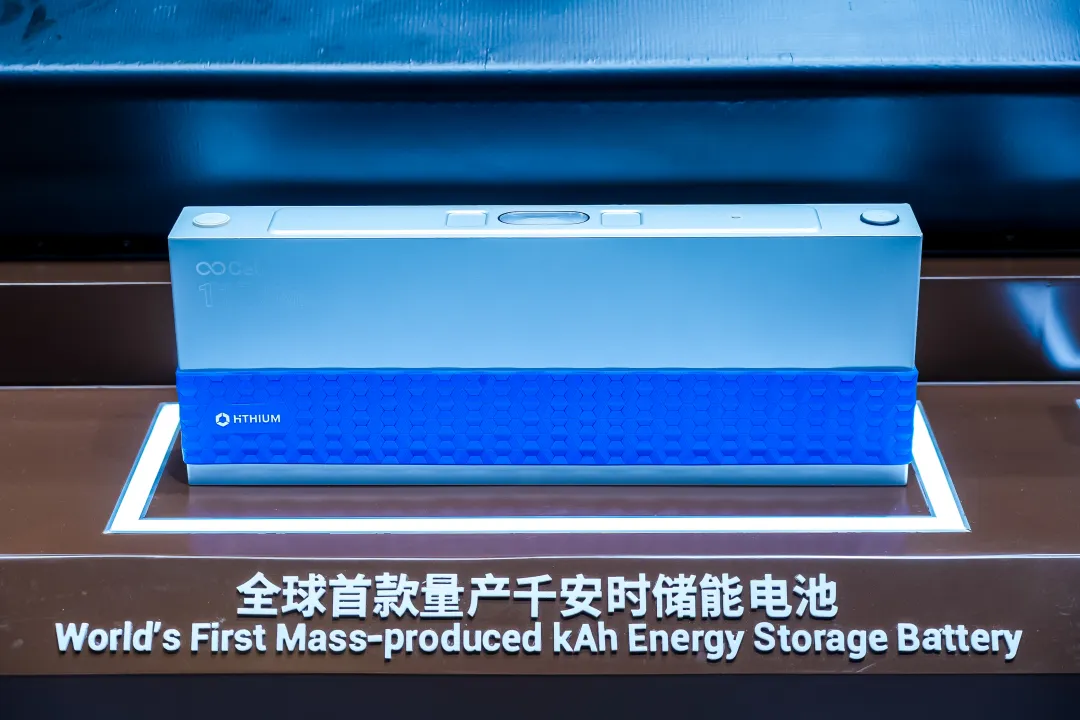
Energy storage cells have indeed changed rapidly in recent years.
Three or four years ago, the 280Ah lithium iron phosphate cell was still the mainstream answer for large-scale energy storage. It had moderate cost, sufficient lifespan, stable performance, and for the first time, gave generation-side storage systems a relatively unified standard specification.
But this standard did not last long.
The 314Ah cell quickly became the new mainstream, followed by the continuous emergence of 500Ah, 700Ah, 770Ah, and 790Ah cells. By the time Haichen Energy Storage launched and mass-produced the 1175Ah large-capacity cell, the industry had clearly entered a "big cell race."
Consequently, questions arise: Why are energy storage cells getting bigger? Is this merely a simple enlargement of dimensions, or is it an inevitable result of changes in the commercial logic of energy storage systems? From 280Ah to 1175Ah, where is the endpoint for cell capacity?
01 From 280Ah to 1175Ah, energy storage cells enter the era of large capacity
The 280Ah cell represents the true starting point of standardization for energy storage cells.
Around 2023, the 280Ah cell became almost the default specification for large-scale storage systems. Its significance lay not just in increased capacity, but more importantly, in the energy storage industry beginning to move away from the phase of "repurposing power batteries for storage," acquiring dedicated cells designed for long cycle life, low cost, and large-scale system integration.
However, the market's pursuit of cost reduction soon broke this balance.
Building on the 280Ah base, battery companies pushed capacity above 300Ah through structural optimization and energy density enhancement. Products like 314Ah and 320Ah were successively launched. Without requiring major modifications to existing production lines, they could deliver system-level cost reduction benefits.
Upgrading cells from 280Ah to 320Ah can reduce system costs by approximately 12.5%.
The real watershed appeared around 2025.
Multiple companies launched cells above 700Ah, such as 770Ah and 790Ah. Particularly after mass production of the 1175Ah lithium iron phosphate cell, the industry entered the thousand-ampere-hour level competition. This cell has a single-cell energy of 3.76kWh and weighs about 20.4kg.
This is no longer the small iterative step from 280Ah to 314Ah, but a change in the system integration logic.
The larger the cell, the fewer cells the system requires, leading to reductions in structural parts, wiring harnesses, connection points, and BMS sampling points. The true value of large cells begins to extend from the cell itself to the entire system.
02 The first driving force: Cost reduction
The primary and most direct reason for the increasing size of energy storage cells is cost reduction.
Ultimately, energy storage projects evaluate based on the Levelized Cost of Storage (LCOS) over the full lifecycle. The first step to lowering LCOS is to reduce initial investment costs.
Cell costs consist of two types of components.
- One type is active materials, including the cathode, anode, separator, and electrolyte.
- The other type is structural parts, such as the casing, cover plate, terminals, and venting valve.
When cell capacity increases from 280Ah to 560Ah, and then to 1130Ah or even 1175Ah, the amount of active materials used increases with capacity. However, the cost of structural parts does not increase proportionally with capacity.
In other words, the larger the cell, the lower the cost of non-active materials per unit Wh.
This advantage is further amplified at the system level.
For a 5MWh energy storage system, using 280Ah cells (approximately 0.896kWh per cell) would require about 5,580 cells.
If 1175Ah cells are used (approximately 3.76kWh per cell), only about 1,330 cells are needed.
This represents a reduction in cell count by nearly three-quarters. Consequently, BMS sampling points, wiring harnesses, connectors, copper-aluminum busbars, high-voltage boxes, and other components within the system are all reduced. Assembly complexity decreases, and potential failure points also decrease.
Industry data suggests that integrated storage systems using 1130Ah-class large cells, through optimized design, can achieve a cost reduction of up to 25% on the DC side excluding cell costs. The cost reduction on the system integration side, excluding cell costs, can even exceed 40%.
This is the strongest logic for large cells: it's not about how much cheaper a single cell is, but about how much simpler the entire storage system becomes.
Fewer wiring harnesses, fewer connection points, fewer slave control units—costs naturally decrease.
03 The second driving force: Efficiency and consistency
The second key value of large cells is improving system efficiency.
During the charging and discharging process of an energy storage system, current passing through cells, busbars, connectors, and wiring harnesses generates losses. More connection points mean higher contact resistance and higher energy losses.
Large-capacity cells reduce the number of series and parallel connections, thereby reducing connection points. The system circuit becomes simpler, leading to lower ohmic losses.
Simultaneously, processes like all-tab and stacking further reduce the internal resistance of the cell body.
Another even more critical benefit is consistency management.
Energy storage systems exhibit a strong "barrel effect." The usable capacity of a battery cluster is often determined by its poorest performing cell.
More cells increase the probability of a weak link, increase the difficulty of BMS management, and increase the challenge of balancing.
If the number of cells in a system is reduced from several thousand to just over one thousand, the number of objects the BMS must manage decreases significantly, making active balancing and state monitoring easier to refine.
Some advanced BMS systems are already capable of achieving 10A-level active balancing, regulating hundreds of cells.
The same logic applies to thermal management.
With fewer cells, liquid cooling systems can more easily control the temperature difference among individual cells. Leading companies in the industry have proposed temperature control targets of ≤3°C or even ≤0.5°C.
Smaller temperature differences lead to more consistent cell degradation and a higher probability of ensuring cycle life.
On the surface, larger cells mean increased capacity, but behind this is a reduction in the number of system management objects and an improvement in control precision.
04 The third driving force: Large-scale storage requires higher integration
The increase in cell size is also related to application scenarios.
For large-scale generation-side and grid-side storage projects, the primary concerns are energy density per unit area, capacity per standard container, lifecycle cost, and long-term availability.
The more electricity a standard 20-foot container can hold, the thinner the shared costs for land, civil works, fire protection, temperature control, and PCS integration become.
From early 2MWh systems to 3MWh, 5MWh, and now reaching towards 8MWh, containerized storage systems have consistently pushed for higher energy density.
Large cells are naturally suited to such scenarios.
They offer higher volumetric energy density, require fewer auxiliary materials, and have simpler system topologies. A 5MWh system using 314Ah cells might require 12 battery clusters in parallel. With larger capacity cells, the same capacity can be achieved with fewer clusters, freeing up more space for modules like the PCS, fire protection, and thermal control.
Policy is also reinforcing the value of large cells.
Following the implementation of the "Notice on Improving the Capacity Pricing Mechanism for the Generation Side," the revenue structure for storage has shifted from simple peak-valley arbitrage to a combination of "electricity energy + ancillary services + capacity pricing."
Capacity pricing essentially pays for the availability of storage.
As long as the system can reliably perform when the grid needs it, it can generate stable revenue.
This has led project owners to place greater emphasis on long lifespan, low degradation, and high long-term availability rates.
Previously, the focus was solely on initial investment, but now there is a greater focus on LCOS.
If large cells can simultaneously reduce system costs, improve efficiency, and extend lifespan, they will better meet the requirements of the capacity market and shared storage models.
05 The first boundary of large cells: Safety and thermal management
Larger cells are not unconditionally better.
The first boundary is safety.
The larger the cell capacity, the more energy stored within the single cell. As volume increases, the surface-area-to-volume ratio decreases, making it harder for internal heat to dissipate.
In the event of an internal short circuit or thermal runaway, the energy release from a large cell is more concentrated, potentially leading to more severe consequences.
Currently, the industry relies primarily on liquid cooling technology to address the heat dissipation challenge of large cells, using cold plates, liquid cooling pipelines, and refined channel designs to control cell surface temperature.
However, the key question remains: can external cooling effectively manage the internal temperature gradient of the cell?
As cells exceed 1500Ah or even 2000Ah, can existing thermal management systems effectively contain the core temperature rise?
This requires more experiments, simulations, and standard validation.
06 The second boundary of large cells: Manufacturing yield
The second boundary is manufacturing.
The larger the cell, the higher the manufacturing difficulty.
A tiny defect on an electrode sheet might have limited impact in a small cell. However, in an ultra-large capacity cell, any local imperfection can be amplified into a safety hazard or a consistency problem.
To ensure quality, leading companies are heavily adopting AI visual inspection, pushing defect detection capabilities to the parts-per-billion (PPB) level.
Novel processes like dry electrode technology are also highly anticipated. The industry expects dry electrode penetration to potentially increase from 5% in 2024 to 35% by 2026.
However, dry electrode technology demands high uniformity in mixing, high precision in calendaring, and stability of the electrode sheet. Applying it to large-format cells further increases the difficulty.
There is also an economic consideration.
When cells become very large, each individual cell has a higher value. Even with a yield of 99.9%, the cost of defective units becomes significantly greater.
If manufacturing yield and consistency cannot be stabilized, the economies of scale offered by large cells may be offset by rework, scrappage, warranty claims, and safety-related costs.
Therefore, the ceiling for cell capacity is determined not only by the material system but also by manufacturing capabilities.
The company that can stably, cost-effectively, and with high yield produce ultra-large cells will ultimately be the one with true competitiveness.
07 The third boundary of large cells: Scenario fit
Large cells are designed for large-scale storage, but they are not suitable for all scenarios.
For generation-side and grid-side large-scale storage, where the goal is low LCOS, high integration, and long life, thousand-ampere-hour class cells have a clear advantage.
Commercial and industrial (C&I) storage is different.
C&I projects typically range from several hundred kWh to a few MWh in scale, placing greater emphasis on modularity, flexible configuration, ease of installation, and convenient maintenance.
A single cell weighing around 20kg is not easy to replace or maintain. When the system scale is small, overly large cells might actually reduce configuration flexibility.
Residential storage is even more distinct.
In the residential storage scenario, safety, certification, compactness, and maintenance convenience have the highest priority. Smaller, more standardized cells are easier to certify and more convenient for modular design.
In recent years, the mainstream specifications in the residential market have been evolving towards 280Ah and 314Ah, indicating that different markets are converging on their own optimal capacity ranges.
- Large-scale storage is suited for large cells.
- Commercial and industrial storage requires a balance.
- Residential storage prioritizes safety and standardization.
It is not reasonable to force a 1175Ah cell, designed for grid-side applications, into all scenarios.
08 Where is the end point?
The trend of energy storage cells continuing to grow larger is a relatively certain direction for the coming years.
Especially in the generation-side and grid-side large-scale storage markets, cost, efficiency, integration, and capacity pricing mechanisms are all driving cells into larger capacity ranges.
1175Ah is likely not the end. It would not be surprising to see 1500Ah or even 2000Ah cells in the future.
However, capacity growth will not continue indefinitely.
When the cost-reduction benefits of larger cells begin to be offset by the difficulties of thermal management, manufacturing yield risks, transportation and installation costs, maintenance costs, and safety validation costs, the marginal returns will diminish.
In other words, large cells will continue to develop, but the endpoint is not "infinitely large."
What is more likely to emerge is a divergence.
The large-scale storage market will continue to evolve towards higher capacity, longer cycle life, and greater integration. Thousand-ampere-hour class cells will become an important choice for generation-side, grid-side, and shared storage projects.
The commercial and industrial storage market will seek a balance among cost, flexibility, and safety. 300Ah-class cells, with their mature industrial chain and stable performance, will likely remain a mainstay for a considerable period, while 500Ah-class products will gradually penetrate some medium-to-large C&I scenarios.
Residential and specialized application markets will continue to prioritize safety, standard certification, maintenance convenience, and system flexibility, with cell capacities likely stabilizing at relatively smaller sizes.
09 The real competition is not who can make the largest cell
From 280Ah to 1175Ah, the trend of increasingly larger energy storage cells is not merely a simple size race. It is the result of system cost reduction, efficiency improvement, and changes in market mechanisms.
Large cells can reduce system components, lower integration costs, improve management efficiency, and better meet the requirements of large-scale storage for low LCOS and long lifespan.
However, they also introduce new challenges related to thermal management, safety validation, manufacturing yield, and scenario suitability.
The future energy storage cell market will not have a single answer.
- Large-scale storage needs "giants" like the 1175Ah.
- Commercial and industrial storage may increasingly prefer balanced solutions between 300Ah and 500Ah.
- Residential storage will continue to opt for safer, more standardized, and more maintainable specifications.
For companies, merely enlarging the cell size is unlikely to build a long-term moat.
The truly valuable capability is understanding the demands of different application scenarios and providing solutions that align in terms of cost, safety, lifespan, efficiency, and operation & maintenance.
The trend of larger energy storage cells will continue, but ultimately, the winner will not be the "largest" cell, but the one that best fits the specific scenario.
- Next: World's First Sodium-Ion Battery Pure Electric Mining Truck Delivered!
- Previous: World's First! CATL's 350Wh/kg Aviation Battery Passes Adjacent Cell Thermal Runaway Verification
Contact Details
Lithium LiFePO4 Batteries and Lithium LiFePO4 Cells Supplier - LiFePO4 Battery Shop
Contact Person: Miss. Elena Wang
WhatsApp : +8615263269227
Skype : +8615263269227
WeChat : 15263269227
Email : info@lifepo4batteryshop.com
All Products
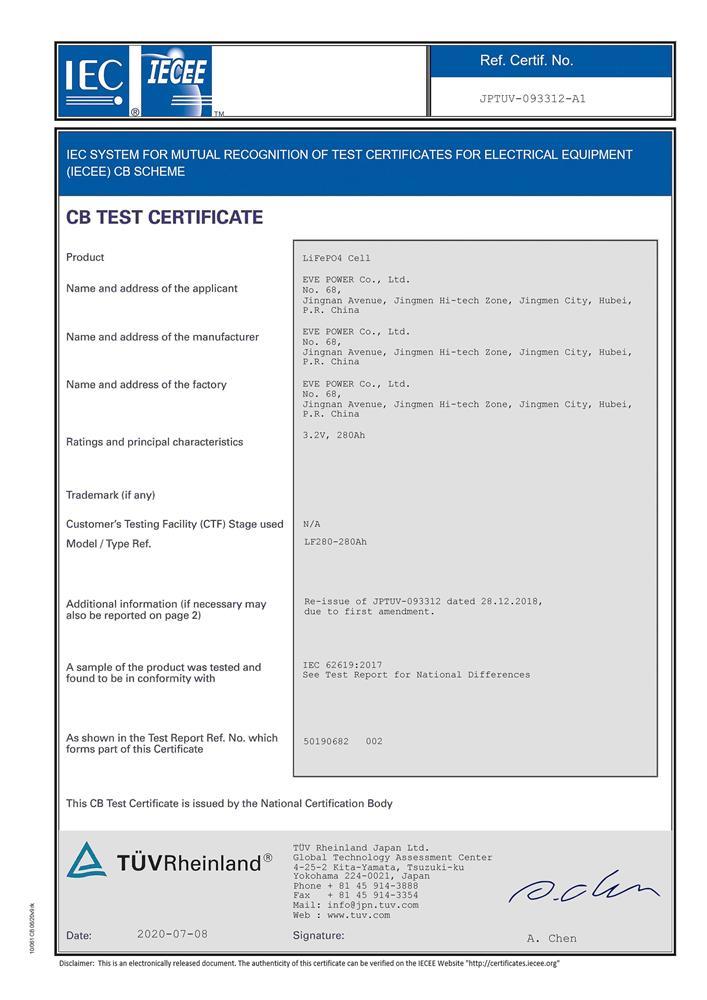
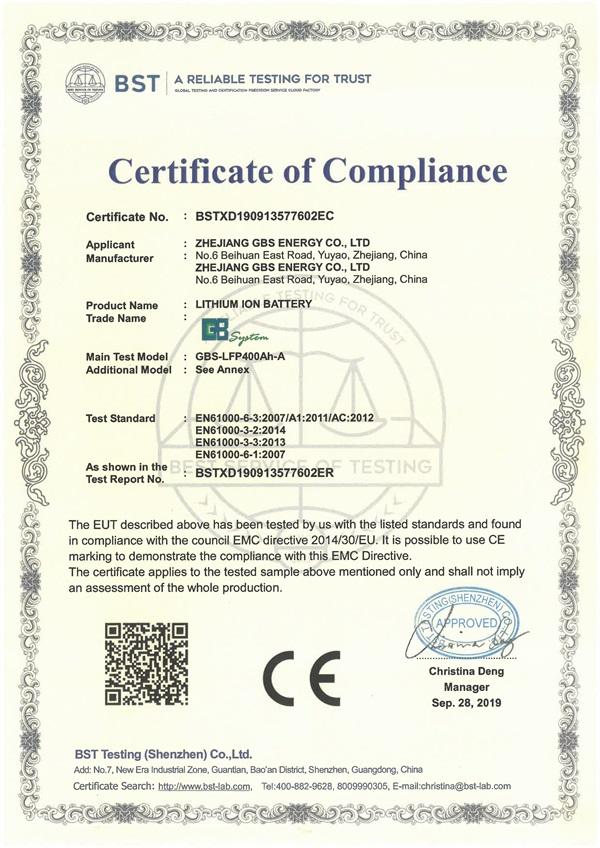
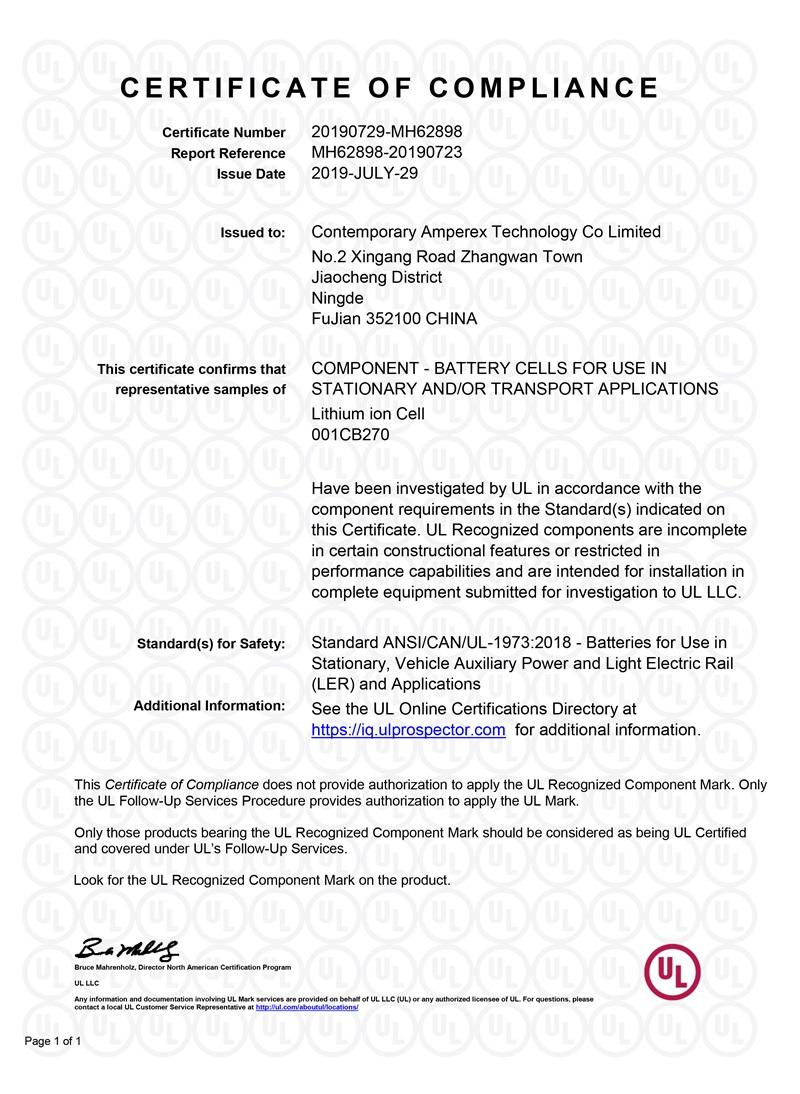
Certification
Customer Reviews
- I have fond memories of our meeting in Shanghai with LiFePO4 Battery Shop Elena. Your company left a strong impression on me with its impressive growth and professionalism. We both value straightforwardness and honesty, which I believe are the most important qualities in any partnership. I am confident that we can build a successful collaboration based on these shared values. —— Robert from USA
- I've been working with LiFePO4 Battery Shop for years, and their reliability is unmatched. While other suppliers frequently change sales teams, LiFePO4 Battery Shop has consistently provided exceptional service with a stable team. Their commitment to quality and customer support truly sets them apart. —— Henry from Australia