
News
EV Battery Shift to Energy Storage Accelerates: Surge in AI Data Center Demand Forces North American Battery Plants to Transform, But Still Lag Behind Chinese Imports
2026-02-22 | Calvin
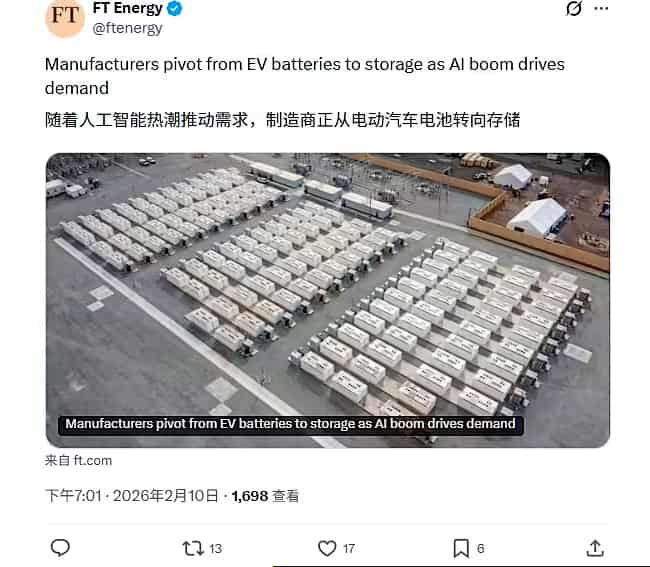
As US electric vehicle sales slow down and AI infrastructure accelerates, North American battery manufacturers are gradually shifting some of their production capacity, originally intended for electric vehicles, towards the energy storage sector in search of new growth points and to digest idle capacity.
According to a report today by the Financial Times, market research agency CRU's latest data shows that at least 10 North American plants are currently transforming their production lines to focus on energy storage cells, with seven of these factories primarily serving the energy storage market. These cancelled capacities were originally sufficient to meet the demand of 2 million electric vehicles.
As the construction boom of US data centers continues, the importance of energy storage has become even more prominent. AI data centers require stable and continuous power supply to address risks of power outages or voltage fluctuations. This has made ESS energy storage systems a natural part of data center infrastructure, providing new revenue sources for automakers and battery companies alike.
Several automakers have begun adjusting their strategies. Ford is retrofitting its electric vehicle battery plant in Kentucky, as it believes demand for domestic energy storage system batteries is rising, while the number of qualified suppliers is limited. Kurt Kelty, head of General Motors’ battery business, mentioned in an interview that the company is considering producing energy storage batteries in-house. Meanwhile, Stellantis, in partnership with Korean battery company Samsung SDI, is modifying part of their joint factory's production line in Indiana to produce energy storage cells. This shift also means that the Big Three automakers in Detroit could potentially become suppliers of energy storage batteries for large tech companies building AI data centers in the future.
Additionally, Tesla’s business data indirectly reflects the growth of the energy storage market. Tesla uses batteries from several suppliers, including CATL and LG, in its Megapack and Powerwall energy storage products. The company disclosed that its energy and power generation storage business saw a 27% year-on-year increase in revenue, reaching $12.8 billion, while revenue from electric vehicle sales dropped 9% to $64 billion. Tesla also noted that its energy business revenue was approximately $2.8 billion in 2021, showing significant growth in recent years.
The Financial Times believes that changes in the policy environment surrounding the electric vehicle market are also driving this shift. Due to the Trump administration's cuts to the electric vehicle tax credits established under Biden's Inflation Reduction Act (IRA), as well as efforts to weaken tailpipe emission rules and clean air standards in some states, policies originally aimed at encouraging consumers to switch to electric vehicles have been impacted. As a result, electric vehicles now account for only around 8% of new car sales in the US.
Policy changes and market slowdown have also put pressure on automakers’ battery investments. Stellantis is selling a 49% stake in its Windsor, Ontario battery plant to South Korea's LG for $100. Located just across the Detroit River, Stellantis had previously invested $980 million in the project. The report mentions that Stellantis last week announced a €22 billion asset write-down related to its electrification expansion. Evelina Stoikou, head of BloombergNEF’s Battery Technology & Supply Chain team, noted that large-scale electric vehicle investments in the US were closely tied to the financial support from the IRA, but some companies set overly optimistic targets.
Meanwhile, energy storage demand is expected to continue growing. As data centers drive up electricity consumption, even though the pace of new solar and wind power construction in the US has slowed, developers are increasingly inclined to include battery storage in renewable energy projects to store electricity and regulate supply. Charlotte McClintock, senior analyst in energy and climate at Rhodium Group, emphasized the crucial role of energy storage in balancing intermittent renewable energy sources.
Although electric vehicle tax credits for consumers have been reduced, the Trump administration’s Inflation Reduction Act still retains significant production incentives for battery manufacturers, including a $35/kWh tax credit and a 30% investment tax credit for energy storage, which will phase out after 2030. In addition, the US imposes nearly 60% tariffs on Chinese energy storage batteries, making the cost of producing energy storage cells domestically comparable to importing products from China.
However, Sam Adham, head of CRU's Battery Value Chain, believes that in the face of profit pressures from the slowdown in the electric vehicle market, battery manufacturers may not pass on the cost advantages to customers. This means energy storage buyers will still have difficulty obtaining domestic prices comparable to Chinese imports. He also pointed out that the leading producers of energy storage batteries in the US are Korean companies, but compared to Chinese companies, they are still less experienced in the commonly used lithium iron phosphate technology for energy storage batteries. Therefore, domestically produced energy storage batteries in the US may not match the size and performance of similar products imported from China.
Moreover, market uncertainty remains. Milan Thakore, an analyst with Wood Mackenzie's Electric Vehicle and Battery Supply Chain team, stated that their data shows that demand for electric vehicles will still absorb a larger share of battery installation needs than energy storage until the end of 2030. He believes that energy storage demand is unlikely to approach the scale of electric vehicle battery demand, even in a conservative estimate; if electric vehicle demand rebounds in the future, companies shifting to energy storage could face pressure to reallocate resources and even risk falling behind.
- Next: Gotion High-Tech Partners with BASF to Accelerate Iterative Upgrades in Solid-State Battery Technology
- Previous: Stellantis Advances "Revolutionary" Technology by Integrating Inverter and Onboard Charger Directly into the Battery
Contact Details
Lithium LiFePO4 Batteries and Lithium LiFePO4 Cells Supplier - LiFePO4 Battery Shop
Contact Person: Miss. Elena Wang
WhatsApp : +8615263269227
Skype : +8615263269227
WeChat : 15263269227
Email : info@lifepo4batteryshop.com
All Products
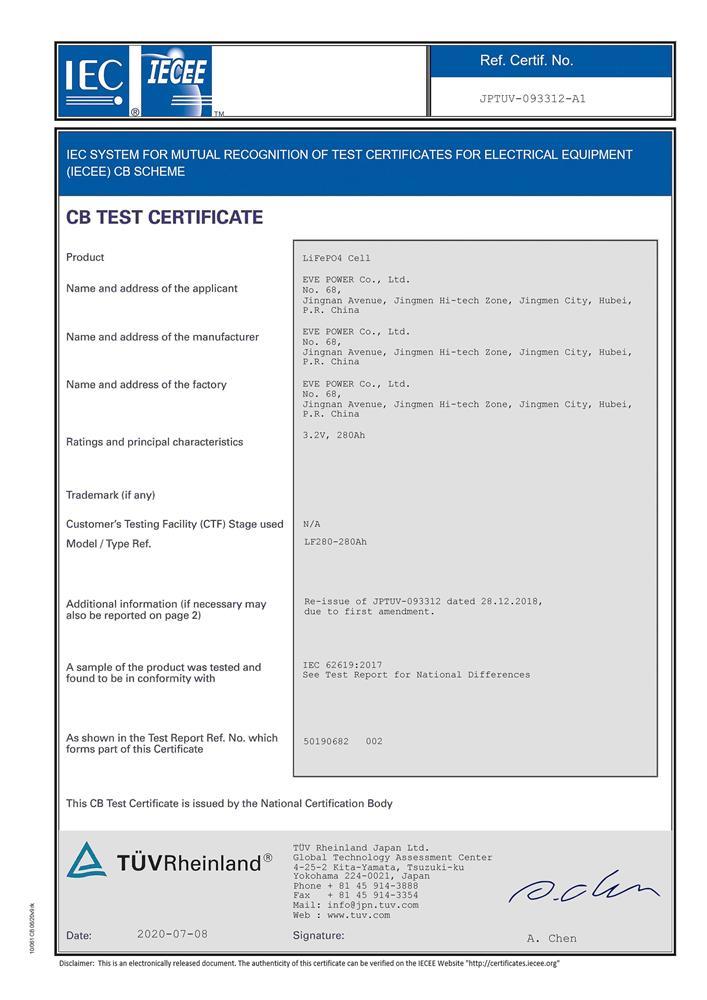
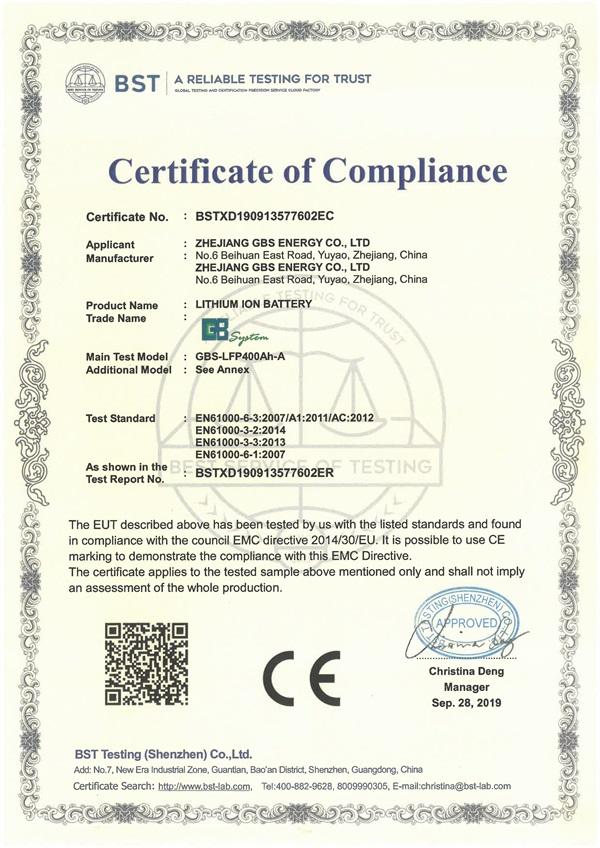
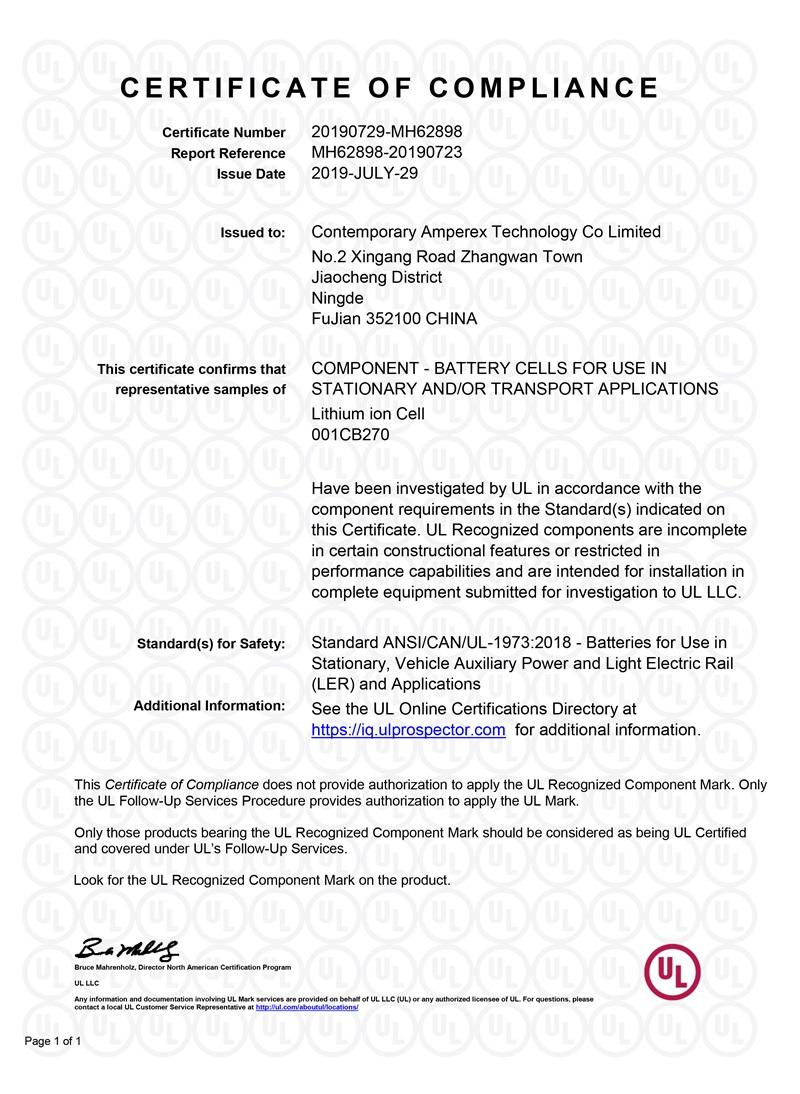
Certification
Customer Reviews
- I have fond memories of our meeting in Shanghai with LiFePO4 Battery Shop Elena. Your company left a strong impression on me with its impressive growth and professionalism. We both value straightforwardness and honesty, which I believe are the most important qualities in any partnership. I am confident that we can build a successful collaboration based on these shared values. —— Robert from USA
- I've been working with LiFePO4 Battery Shop for years, and their reliability is unmatched. While other suppliers frequently change sales teams, LiFePO4 Battery Shop has consistently provided exceptional service with a stable team. Their commitment to quality and customer support truly sets them apart. —— Henry from Australia