
News
Stellantis Advances "Revolutionary" Technology by Integrating Inverter and Onboard Charger Directly into the Battery
2026-02-27 | Calvin
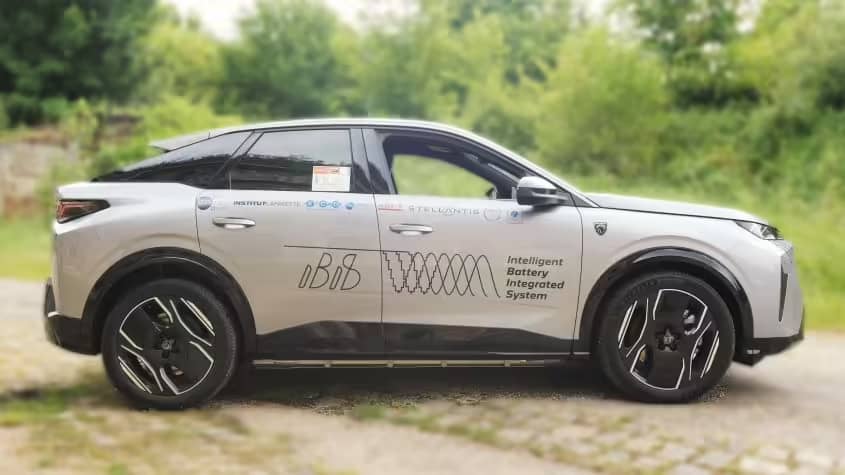
According to Auto Express, Stellantis is advancing the development of a revolutionary "Smart Battery Integration System," which will bring lighter weight, stronger power, higher efficiency, and faster charging speeds. The prototype of the Peugeot E-3008, which adopts this technology, has entered the final testing phase, with the goal of mass production by 2030.
This technology is being developed by Stellantis in collaboration with the battery company Saft and academic institutions. It integrates the inverter and onboard charger directly into the battery, fundamentally changing the way energy is managed in electric vehicles.
Traditional electric vehicles require frequent conversion between AC and DC power. The AC power provided by home chargers needs to be converted into DC to be stored in the battery, and when the motor operates, the DC power is converted back into AC to drive the vehicle. The regenerative braking process also undergoes the same conversion.
The Smart Battery Integration System eliminates the need for separate chargers and inverters. This not only reduces electronic components and lightens the vehicle by about 40kg, but it also improves overall efficiency and reduces costs.
Removing the inverter and charger also frees up 17 liters of interior space, making the cabin more spacious, and helps optimize aerodynamic performance, thereby improving the driving range.
Porsche is currently developing a similar battery technology, but Stellantis believes it has an advantage in testing progress and cost control. Road test results show that the E-3008, equipped with the Smart Battery Integration System, achieves a 10% improvement in efficiency under WLTC conditions and a 15% improvement in urban conditions. The maximum motor power has increased by 15%, from 150 kW to 172 kW. When using a 7 kW AC charger, the time required to fully charge the battery is reduced by 15%, from 7 hours to 6 hours.
Stellantis' Chief Engineering and Technology Officer, Ned Curic, stated that this innovation focuses on "simplification" and will help Stellantis offer better-performing, more affordable electric vehicles to customers. The current prototype uses ternary lithium cells, but in the future, it could also be paired with more cost-effective lithium iron phosphate cells and expanded to smaller vehicle models.
- Next: EV Battery Shift to Energy Storage Accelerates: Surge in AI Data Center Demand Forces North American Battery Plants to Transform, But Still Lag Behind Chinese Imports
- Previous: First Test Results of Donut Lab’s Solid-State Battery Released
Contact Details
Lithium LiFePO4 Batteries and Lithium LiFePO4 Cells Supplier - LiFePO4 Battery Shop
Contact Person: Miss. Elena Wang
WhatsApp : +8615263269227
Skype : +8615263269227
WeChat : 15263269227
Email : info@lifepo4batteryshop.com
All Products
Certification
Customer Reviews
- I have fond memories of our meeting in Shanghai with LiFePO4 Battery Shop Elena. Your company left a strong impression on me with its impressive growth and professionalism. We both value straightforwardness and honesty, which I believe are the most important qualities in any partnership. I am confident that we can build a successful collaboration based on these shared values. —— Robert from USA
- I've been working with LiFePO4 Battery Shop for years, and their reliability is unmatched. While other suppliers frequently change sales teams, LiFePO4 Battery Shop has consistently provided exceptional service with a stable team. Their commitment to quality and customer support truly sets them apart. —— Henry from Australia