News
Europe's Storage Boom: Can Sodium-Ion Batteries Overcome the Trust Deficit and Succeed?
2026-09-12 | Calvin
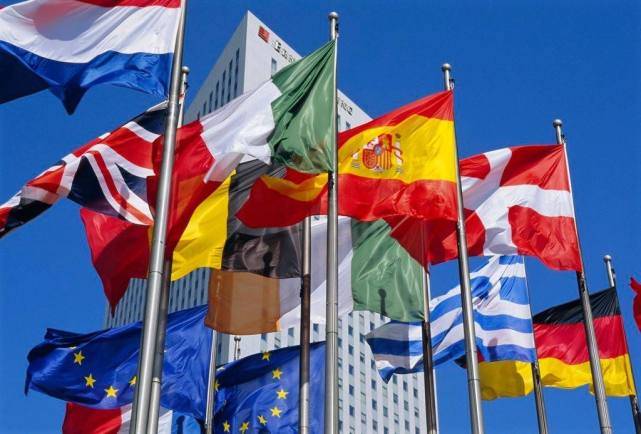
Sodium-ion batteries are seeking their first truly large-scale overseas market in Europe.
Since the beginning of this year, sodium-ion battery projects in Europe have started to accelerate significantly.
In July, CATL announced two consecutive European sodium-ion collaborations: a partnership with Dutch energy solutions company Alfen to deploy 5GWh of sodium-ion battery energy storage systems in Europe; and an agreement with Eastern European renewable energy company Solarpro for a 2GWh sodium-ion storage system, with both parties planning to promote the implementation of the first large-scale sodium-ion energy storage project in Central and Eastern Europe.
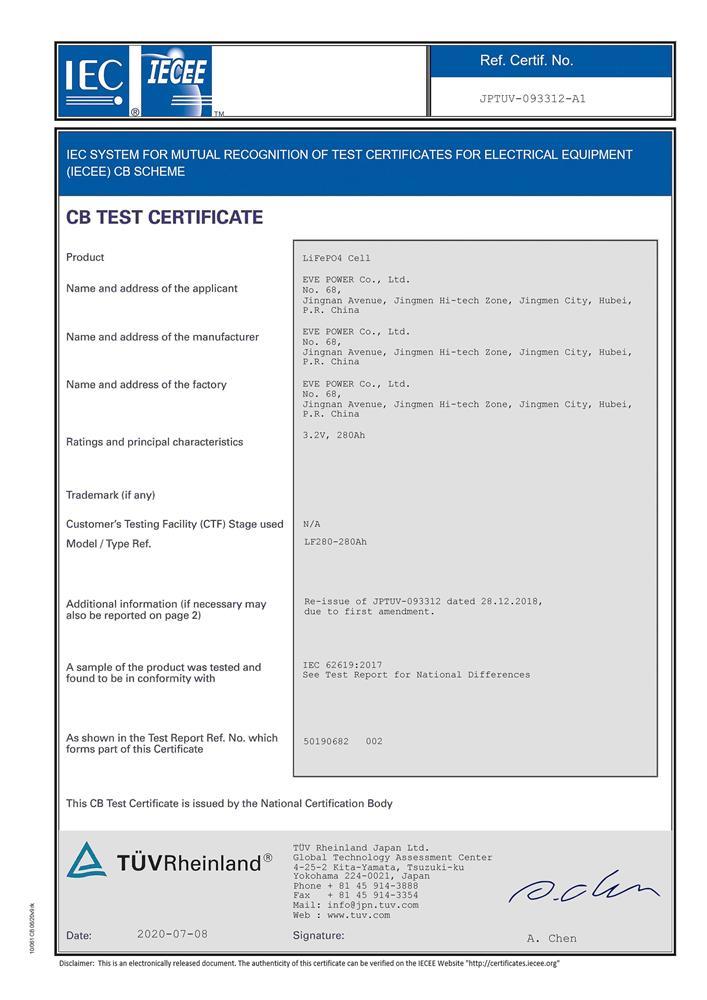
Earlier, HiNa Battery had already delivered a 1.1MWh sodium-ion battery cluster to a major German energy company, with the product obtaining certifications such as IEC 62619, UN 38.3, RoHS, and REACH.
Another path comes from Biwatt.
Unlike directly selling cells, Biwatt positions itself closer to the end-user side of the sodium-ion industry chain. It co-defines cell specifications with cell manufacturers, then builds downstream sodium-ion BMS, DC/DC converters, inverters, EMS, cloud platforms, and apps, pushing products into the residential storage, balcony storage, and commercial & industrial (C&I) storage markets.
Their assessment is that China's sodium-ion industry chain, in terms of materials and cells, is gradually maturing. The next factor truly determining the speed of overseas commercialization will be system integration, channel access, certifications, and local service capabilities.
Several strategic routes are now converging in Europe.
Europe Could Become the First Major Overseas Battlefield for Sodium-Ion Batteries
The European market first provides sufficiently large energy storage demand.
In 2025, Europe's cumulative operational battery capacity exceeded 100GWh for the first time. In 2026, new energy storage installations in Europe are still widely expected to grow, with utility-scale storage becoming the most prominent segment of growth.
The demand structure is also changing.
In the past, the European storage market was known for residential storage. However, with the increasing penetration of renewable energy, growing grid regulation needs, and the gradual improvement of capacity markets, the importance of utility-scale and C&I storage has risen significantly.
This explains why CATL chose to enter the European market starting with large-scale storage.
After releasing its Tianheng sodium-ion storage system this year, CATL quickly established partnerships with Alfen and Solarpro. The former covers mature European storage markets, while the latter focuses on Central and Eastern Europe, explicitly aiming to leverage sodium-ion's low-temperature performance to adapt to local climates.
However, an even more critical value of Europe for sodium-ion batteries lies in the market being sufficiently "fragmented."
The low winter temperatures in Northern and Central-Eastern Europe provide application scenarios for sodium-ion's wide temperature range. In mature storage markets like Germany and the UK, indoor C&I storage is more sensitive to fire safety, safety regulations, and installation conditions. Europe's emphasis on energy security, supply chain diversification, and low-carbon procurement also opens a window for new chemical systems beyond LFP.
According to Biwatt, the three most promising directions for sodium-ion batteries to prioritize in Europe are precisely indoor C&I storage, stationary storage in cold regions, and strategic autonomous procurement.
This also represents one of the biggest differences between the current push by sodium-ion companies into the European market versus the domestic market.
Domestically, the competition currently revolves around cost per Wh, cycle life, and manufacturing scale. Upon entering Europe, companies begin to calculate a different set of metrics:
Can fire protection be simplified? Can additional thermal management be reduced under low temperatures? Can installation costs be lowered? How high are lifecycle maintenance expenses? And can the supply chain meet European customers' long-term compliance requirements?
In other words, what sodium-ion batteries truly need to prove in Europe is their system value.
The Biggest Issue Is No Longer "Whether Sodium-Ion Batteries Can Work"
The problem is that LFP is already cheap enough and mature enough.
Lower energy density means that for the same storage capacity, a sodium-ion system may require more cells, larger volume, and potentially higher transportation and installation costs.
This prevents sodium-ion's theoretical material cost advantage from directly translating into end-project cost advantages.
Ouyang Pengcheng provided a more intuitive calculation at the Sodium Battery Summit.
If sodium-ion batteries are simply used to replace lithium-ion, their product cost might need to be around 20% lower to have a chance of covering the system, installation, and labor cost differences arising from lower energy density and increased weight.
This implies that, given LFP prices are currently at a low level, sodium-ion batteries would struggle to break into Europe based solely on being "cheaper."
Biwatt therefore proposes shifting the focus from Total Cost to Total Value.
Their assessment is that the equipment itself is only part of the total cost of an energy storage project, with installation, maintenance, and services also accounting for a significant portion. If one only focuses on reducing the cost of the battery pack itself, it only improves a portion of the overall project cost.
Sodium-ion batteries need to translate their advantages in safety, low-temperature performance, maintenance, and intelligent operation into lifecycle cost reductions.
For example, in indoor C&I storage, if sodium-ion's lower thermal runaway risk can ultimately reduce requirements for fire isolation, thermal management, and installation space, its competition is no longer just against "LFP cells at X yuan per Wh," but against the entire energy storage system.
The same applies in cold regions.
If sodium-ion batteries can reduce heating and temperature control needs in low-temperature environments, the true value lies not just in winter capacity retention, but in the lifecycle benefits gained from reduced auxiliary power consumption and equipment requirements.
This is an area sodium-ion companies must demonstrate with data in the next phase.
Claims of better safety, better low-temperature performance, and a lower carbon footprint can no longer remain at the product promotion level.
In the European market, every performance advantage must ultimately be quantified into test reports, certification results, operational costs, and project returns.
The Real Challenge in Europe: The "Trust Gap"
Beyond technology, there is an even higher barrier.
Ouyang Pengcheng described the sodium-ion industry in 2026 as being in the phase of crossing the "Valley of Death."
In the past few years, the industry focused on solving the problem of "existence."
Sodium-ion companies that were first to market could educate the market and gain attention through first-mover advantage. However, as more traditional lithium-ion players enter the sodium-ion space, the competition is rapidly shifting from "having it when others don't" to "excelling when others have it."
To move from early-stage products to mainstream markets, companies need to simultaneously overcome four thresholds: brand trust, compliance, channels, and cost.
Europe's particularity lies in the fact that it is not a single unified storage market.
Germany, the UK, France, the Nordic countries, and Eastern Europe differ significantly in climate, fire safety requirements, installation codes, subsidy policies, tax rates, consumer purchasing power, labor costs, and sales channels. Obtaining certification in one country does not mean the product can be directly replicated in another.
For Chinese sodium-ion companies, the European market is therefore difficult to conquer with "one product fits all."
Local certification, local channels, local marketing, local after-sales service, and even redefining products for different countries will all become necessary investments.
EU-level regulations are also tightening.
According to the EU Battery Regulation, from 2027, industrial batteries and other products will gradually enter the era of the Digital Battery Passport, requiring the recording and tracking of full lifecycle data, material sources, carbon footprint, and recycling information.
Simultaneously, supply chain due diligence, extended producer responsibility, and ESG requirements on the procurement side are also transmitting compliance pressure upstream in the supply chain.
While sodium-ion batteries have natural differentiation in some raw materials, this does not mean they can bypass European battery regulations.
The Digital Battery Passport applies to the battery product itself, not a specific chemical system.
Data on carbon footprint, material sources, production processes, recycling, and lifecycle data must ultimately be provided step-by-step along the value chain.
This exposes a current shortcoming in sodium-ion battery overseas expansion.
Ouyang Pengcheng revealed that European customers are already starting to request companies to provide carbon footprint and production data, but some upstream suppliers are currently unable to furnish complete data support.
Companies can tell customers that sodium-ion batteries are "more environmentally friendly" and have a "lower carbon footprint," but without complete data on production processes, material composition, and carbon emissions, these advantages are difficult to translate into competitiveness that European customers can audit and recognize.
This means that in the future, sodium-ion companies expanding into Europe will compete not only on cell certifications.
Anodes, cathodes, electrolytes, cells, PACKs, and system integrators will all need to gradually establish comprehensive carbon data and supply chain traceability systems.
In the past, Chinese battery companies exported products.
In the next phase, they must simultaneously export a data chain that can be verified by European rules.
Diverging Routes
Even when targeting Europe, the current strategies of sodium-ion companies show clear differences.
CATL has chosen the path of "large-scale storage + established integrators."
Alfen had already collaborated with CATL on lithium-ion storage projects, and Solarpro has also partnered with CATL to build storage projects. This allows sodium-ion products to directly enter mature customer and project channels without the need to build an entirely new sales network.
At the same time, CATL is working to minimize the retrofit costs for integrating sodium-ion technology into existing BESS systems.
This is a typical path for major manufacturers: leveraging existing customers, certifications, project experience, and system platforms to embed sodium-ion technology as a new chemical system into their ongoing storage business.
HiNa Battery is following a different route. Through its MWh-scale project in Germany and associated certifications, it first proves that Chinese sodium-ion products can complete project delivery in Europe, establishing overseas engineering case studies from the cell and battery cluster side.
Biwatt, on the other hand, is betting on the side closer to end-users—distributed storage and system branding.
It does not manufacture cells itself but co-defines requirements with cell manufacturers, then develops BMS, DC/DC converters, inverters, cloud platforms, and remote O&M systems around sodium-ion technology, attempting to amplify the performance differences of sodium-ion into final product differentiation.
The business logic behind these routes differs.
Utility-scale storage competes on scale, bankability, system reliability, and project channels. Residential storage, balcony storage, and C&I storage place more emphasis on product design, installer networks, local after-sales service, and consumer perception.
For sodium-ion batteries, this differentiation might actually present an opportunity.
LFP has already formed an extremely mature global industrial system. If sodium-ion directly attempts a full-frontal replacement, it will easily fall back into price competition.
A more realistic industrialization path is to first find niche scenarios—such as safety, low-temperature performance, supply chain structure, or lifecycle cost—where sodium-ion can generate clear benefits, and then gradually expand from one country, one customer type, and one product.
Therefore, the real signal currently emanating from the European market is not that sodium-ion batteries have begun to fully replace lithium-ion.
It signifies that the evaluation criteria for sodium-ion commercialization are changing.
From 2023 to 2025, industry competition mainly answered the question, "Can sodium-ion batteries be made?"
Entering 2026, more important questions are: Who can obtain certifications? Who can secure channels? Who can provide auditable data? Who can effectively translate safety and low-temperature advantages into project returns?
The European energy storage market continues to grow, but the window for sodium-ion batteries will not remain open indefinitely.
If LFP continues to reduce costs through larger cells, system integration, and economies of scale, the window sodium-ion relies on solely based on raw material prices may continue to narrow.
Therefore, what sodium-ion companies are essentially vying for in Europe is a very limited window of opportunity.
Whoever can first transform technological advantages into system advantages, and then into certifications, channels, and orders, is the one who can truly cross the "Valley of Death" for sodium-ion battery commercialization.
- Next: CATL's direct-sales platform goes live, attracting over 1,800 energy storage companies to make purchases
- Previous: Sunwoda Appears at Smart Energy Week Tokyo Autumn Show
Contact Details
Lithium LiFePO4 Batteries and Lithium LiFePO4 Cells Supplier - LiFePO4 Battery Shop
Contact Person: Miss. Elena Wang
WhatsApp : +8615263269227
Skype : +8615263269227
WeChat : 15263269227
Email : info@lifepo4batteryshop.com
All Products
Certification
Customer Reviews
- I have fond memories of our meeting in Shanghai with LiFePO4 Battery Shop Elena. Your company left a strong impression on me with its impressive growth and professionalism. We both value straightforwardness and honesty, which I believe are the most important qualities in any partnership. I am confident that we can build a successful collaboration based on these shared values. —— Robert from USA
- I've been working with LiFePO4 Battery Shop for years, and their reliability is unmatched. While other suppliers frequently change sales teams, LiFePO4 Battery Shop has consistently provided exceptional service with a stable team. Their commitment to quality and customer support truly sets them apart. —— Henry from Australia