
Blog
How to Accurately Estimate the State of Charge (SOC) of LiFePO4 Batteries
2025-12-19 | Calvin
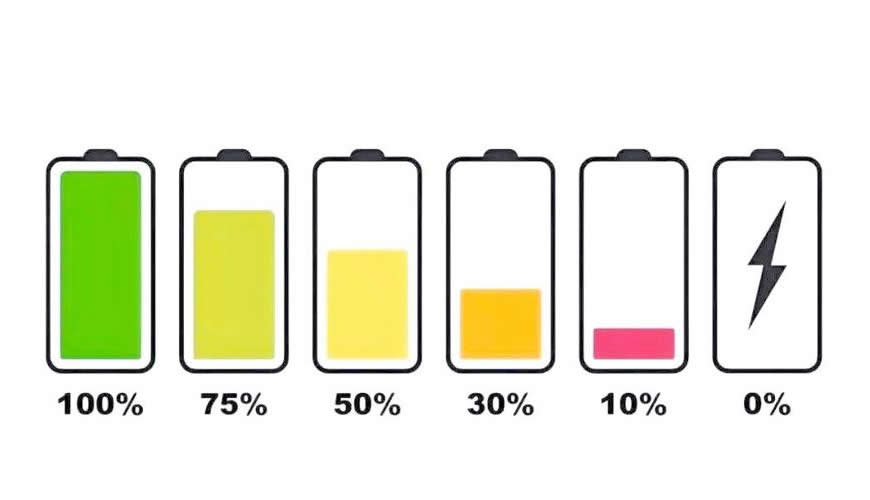
Lithium Iron Phosphate (LiFePO4) batteries have surged in popularity across various industries, thanks to their impressive energy density, long cycle life, and inherent safety features. As with any battery technology, one of the most critical metrics to monitor is the State of Charge (SOC), which indicates the battery's remaining energy. However, accurately estimating the SOC of a LiFePO4 battery can be a challenge. This article explores several methods for estimating the SOC of LiFePO4 batteries, helping you choose the most suitable approach for your needs.
What is State of Charge (SOC) and Why Does It Matter?
SOC refers to the amount of charge remaining in a battery relative to its full capacity. For LiFePO4 batteries, understanding the SOC is essential for maximizing their lifespan and ensuring safe operation. Overcharging or deep discharging can degrade the battery's performance over time, so accurate SOC estimation is crucial for both efficiency and safety.
For instance, if the SOC is too low, you risk over-discharging the battery, which can cause irreversible damage. Conversely, if the SOC is too high, the battery might overheat and shorten its lifespan. Therefore, accurate SOC estimation is essential for optimal battery management.
Estimating SOC Using Resting Voltage: A Simple and Effective Method
One of the easiest and most accessible methods to estimate the SOC of a LiFePO4 battery is by measuring its open circuit voltage (OCV) after allowing the battery to rest for about 30 minutes. During this time, the battery is not being charged or discharged, and the voltage stabilizes, providing a good estimate of the SOC.
Here is a reference table showing the approximate relationship between the resting voltage and the SOC for a typical LiFePO4 battery:
| SOC (%) | Resting Voltage (V) |
|---|---|
| 100% | 13.6 |
| 99% | 13.4 |
| 90% | 13.2 |
| 70% | 13.1 |
| 40% | 13.0 |
| 30% | 12.9 |
| 20% | 12.8 |
| 14% | 12.7 |
| 9% | 12.6 |
| 0% | 10.0 |
While this method is straightforward, it has its limitations. The voltage range can vary slightly between different LiFePO4 batteries due to manufacturing differences, meaning some calibration may be required. Additionally, the battery must rest for 30 minutes, which might not always be practical, especially in fast-moving applications.
Advanced SOC Estimation Methods for Real-Time Applications
While the resting voltage method is simple and effective, other methods offer more precision, especially for real-time monitoring during battery operation. These methods are particularly useful when the battery is being charged or discharged continuously, and it’s essential to know the SOC at any given moment.
1. Coulomb Counting
Coulomb counting is a widely used technique for real-time SOC estimation. This method involves measuring the current flowing into or out of the battery and integrating it over time to estimate the total charge. Although this technique can provide continuous monitoring of SOC, it requires precise current measurement and is subject to errors from drift over time. Calibration is essential to maintain accuracy.
2. Impedance Spectroscopy
Another advanced method for SOC estimation involves measuring the battery's internal impedance or resistance. Impedance spectroscopy can provide valuable insights into the battery’s condition, as the impedance varies with the state of charge. This technique requires specialized sensors and equipment, but it can give highly accurate estimates, especially in dynamic conditions where the battery is being actively used.
3. Machine Learning and Data Analytics
With the rise of artificial intelligence and machine learning, some systems are now using algorithms to predict SOC based on historical data, battery usage patterns, temperature, voltage, and other variables. These systems can offer highly accurate SOC estimates by learning from real-world data, making them ideal for sophisticated battery management systems (BMS) in electric vehicles, renewable energy storage, and other advanced applications.
Which SOC Estimation Method is Right for You?
Each SOC estimation method has its advantages and limitations. Here's a quick comparison:
| Method | Accuracy | Complexity | Best For |
|---|---|---|---|
| Resting Voltage | Moderate | Simple | Basic applications, low-cost solutions |
| Coulomb Counting | High (with calibration) | Moderate to High | Real-time monitoring during operation |
| Impedance Spectroscopy | High | High | High-precision applications |
| Machine Learning | Very High | Very High | Advanced systems, AI-driven battery management |
For simple use cases, such as off-grid power systems or portable devices, the resting voltage method might be sufficient. However, for more demanding applications like electric vehicles or grid storage systems, coulomb counting or impedance spectroscopy may be necessary to ensure real-time accuracy.
Conclusion: Choose the Right SOC Estimation Method for Your Needs
Accurately estimating the SOC of a LiFePO4 battery is critical for optimizing its performance, ensuring longevity, and maintaining safety. While the resting voltage method offers a simple and effective solution for low-cost and basic applications, more sophisticated methods like coulomb counting, impedance spectroscopy, and machine learning are essential for real-time monitoring in advanced systems.
By understanding the advantages and limitations of each method, you can choose the one that best suits your needs, balancing accuracy, cost, and complexity. Ensuring proper SOC estimation is a key element in maximizing the efficiency and lifespan of your LiFePO4 battery.
- Next:LiFePO4 Battery Temperature Range: What You Need to Know
- Previous:Why LiFePO4 Batteries Are the Future of Electric Vehicles
Contact Details
Lithium LiFePO4 Batteries and Lithium LiFePO4 Cells Supplier - LiFePO4 Battery Shop
Contact Person: Miss. Elena Wang
WhatsApp : +8615263269227
Skype : +8615263269227
WeChat :15263269227
Email : info@lifepo4batteryshop.com
All Products
- Blade Battery (8)
- Semi Solid State Battery (6)
- A123 Battery (5)
- Sinopoly Battery (7)
- GBS Battery (16)
- CALB Battery (22)
- Cylindrical Cell (6)
- Energy Storage System (0)
- Battery Management System (2)
- Sodium ion Battery Cell (3)
- Lithium Titanate Battery (20)
- Ternary Lithium Battery Cell (11)
- REPT Battery (8)
- BYD Battery (2)
- CATL Battery (14)
- Thunder Sky Winston Battery (21)
- EVE Battery (29)
- LiFePO4 Battery Cell (4)
Certification
Customer Reviews
- I have fond memories of our meeting in Shanghai with LiFePO4 Battery Shop Elena. Your company left a strong impression on me with its impressive growth and professionalism. We both value straightforwardness and honesty, which I believe are the most important qualities in any partnership. I am confident that we can build a successful collaboration based on these shared values. —— Robert from USA
- I've been working with LiFePO4 Battery Shop for years, and their reliability is unmatched. While other suppliers frequently change sales teams, LiFePO4 Battery Shop has consistently provided exceptional service with a stable team. Their commitment to quality and customer support truly sets them apart. —— Henry from Australia