
News
SP188 Maritime Shipping Rule Overhaul: Fading Shipping Privileges for Small Cylindrical Li-Ion Batteries
2026-08-29 | Calvin
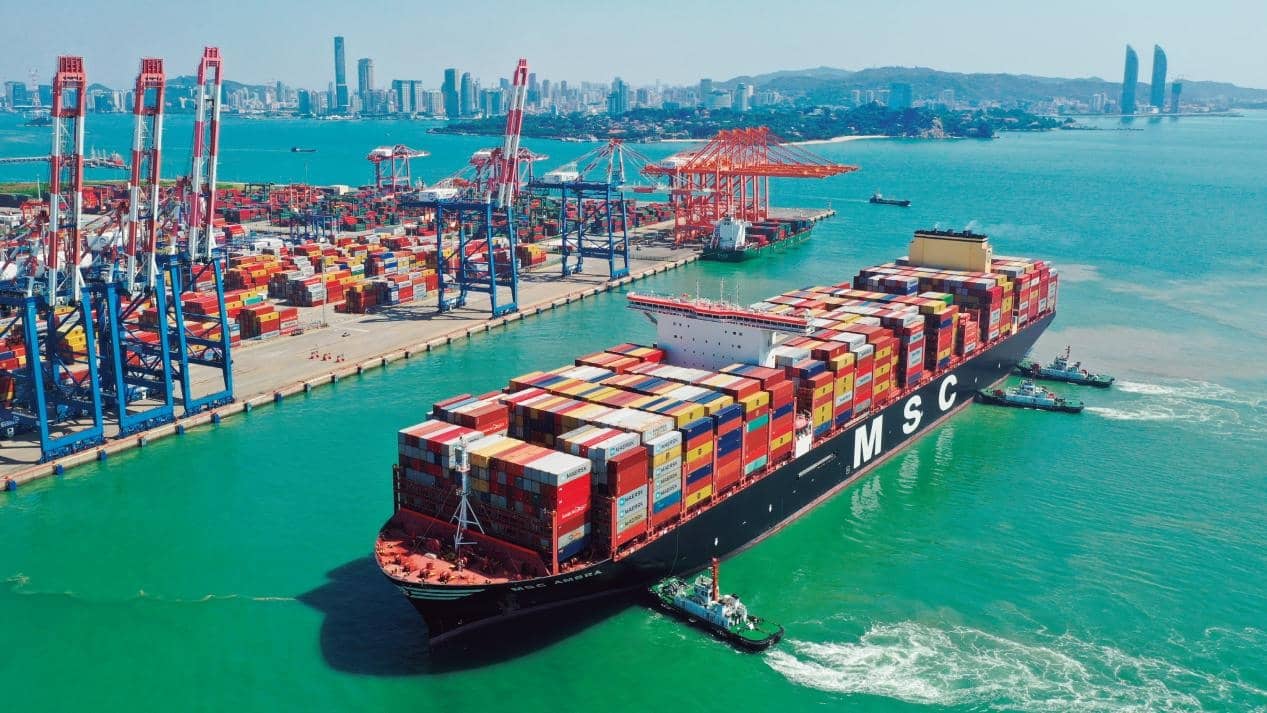
A maritime convenience rule that has long been used for the export of large quantities of small lithium batteries is being re-evaluated by the global shipping industry.
On August 19, the Cargo Incident Notification System (CINS), which includes major container shipping lines such as CMA CGM, COSCO Shipping, ONE, OOCL, Evergreen, Wan Hai, and Yang Ming, issued a recommendation document calling for reforms to Special Provision 188 (SP188) of the International Maritime Dangerous Goods (IMDG) Code.
CINS is a shipping safety organization composed of large liner companies. Established in 2011, it primarily identifies common risks such as undeclared dangerous goods, packaging failures, and fires by sharing ship cargo accident data among members, and proposes rule amendments to regulatory bodies like the International Maritime Organization (IMO).
The CINS proposal mandates that all lithium battery shipments should be subject to mandatory declaration in the future, even for products that currently comply with SP188 and can be handled as non-dangerous goods.
A more noteworthy recommendation is that the total gross weight of lithium batteries enjoying SP188 benefits within a single container should be limited to 20 kilograms. Exceeding this threshold would require full compliance with dangerous goods transport regulations.
While this recommendation has not yet become a mandatory international rule, major global shipping lines have already begun tightening their standards for lithium battery carriage, taking action ahead of regulators.
Since the beginning of this year, CMA CGM has required in markets such as India, Vietnam, Lebanon, and the UAE that all lithium-ion batteries must be declared at the time of booking or before loading, regardless of whether they are classified as dangerous goods or comply with SP188. For small lithium batteries still transported as non-dangerous goods, customers are also required to submit Material Safety Data Sheets (MSDS), UN38.3 test reports, SP188 compliance documents, and photos of the batteries, packaging, and loading process.
In some regions, regulations have become even stricter. In the UAE, CMA CGM stipulates that undeclared lithium batteries can be treated as a case of dangerous goods misdeclaration, subject to a fine of USD 15,000 per container.
Hapag-Lloyd also requires the submission of relevant test and transport documents for non-dangerous lithium batteries that comply with SP188, and necessitates a special stowage arrangement application.
OOCL requires that even new lithium batteries, which may be transported as non-dangerous goods under the IMDG special provisions, must be proactively declared during the booking stage and accept special stowage arrangements.
Some shipping companies have even stricter rules. Emirates Shipping Line suspended all lithium battery carriage on all routes this summer, including small lithium batteries that comply with SP188.
This signifies that the transport convenience offered by SP188 is already being curtailed in practice, even before formal amendments to international regulations.
Small Cylindrical Cells Are the Most Directly Affected Product Category
SP188 was originally designed to address the prohibitive logistics costs associated with subjecting small lithium batteries to the full dangerous goods transport standards.
Under current rules, lithium-ion cells with a rated energy not exceeding 20 Wh and lithium-ion batteries not exceeding 100 Wh can be exempted from a significant portion of the IMDG Code's dangerous goods transport requirements, provided they meet conditions related to UN38.3 testing, packaging, short-circuit prevention, and labeling.
This 20 Wh threshold closely aligns with the specifications of small cylindrical batteries massively exported from China. Currently, mainstream 18650 cells predominantly fall within this range. For example, 3Ah and 4Ah 18650 cells, calculated at a nominal voltage of 3.6V, have rated energies of approximately 10.8Wh and 14.4Wh. Some 21700 cells around 5Ah, with an energy of about 18Wh, also fall below the 20Wh limit.
This is precisely why the changes to SP188 are of particular concern for 18650 and some 21700 products. These cells are widely used in power tools, vacuum cleaners, garden tools, e-bikes, light electric vehicles, and consumer electronics. China is also a major global hub for the production and export of these small cylindrical batteries.
However, as the capacity of 21700 cells continues to increase, some high-capacity 6.5Ah and 7Ah models have already surpassed the 20Wh threshold, rendering them ineligible for SP188. Similarly, 46-series large cylindrical cells have higher individual cell energy and typically do not fall under this exemption. The situation is similar for power batteries and large energy storage cells; most of these products exceed SP188's individual energy limits and are usually already transported under dangerous goods regulations.
Therefore, this round of regulatory changes is primarily and directly aimed not at large power or storage batteries, but at 18650 and some 21700 small cylindrical products that have long relied on SP188 for bulk ocean shipping.
A Single Container Can Hold Tens of Thousands of Batteries
The core controversy driving the shipping industry's request to revise SP188 also stems directly from the transport methods used for these small cylindrical cells.
SP188 restricts the energy per individual cell or battery but does not limit the total number of compliant batteries that can be placed in a single container. Theoretically, a container can hold thousands or even tens of thousands of cylindrical cells, each individually under 20Wh. While each cell meets SP188 requirements, the aggregate energy stored within such a container becomes substantial.
For shipping lines, the problem is that such cargo has historically been treated as non-dangerous goods. In the event of a fire, collision, or other accident, crew members may not be able to immediately identify that a container holds a large quantity of lithium batteries.
The World Shipping Council (WSC), along with five countries including Germany and Singapore, the International Chamber of Shipping (ICS), the Baltic and International Maritime Council (BIMCO), the International Union of Marine Insurance (IUMI), and the International Group of P&I Clubs, have submitted this issue for discussion at the IMO. These organizations represent international liner companies, major global shipowners, and the shipping insurance market. In other words, the push to reform SP188 is a common demand coalescing among shipping lines, shipowners, and insurers.
The IMO's Sub-Committee on Carriage of Cargoes and Containers is scheduled to further discuss the SP188 issue in September. However, even if related amendments are advanced, it will still take time for industry recommendations to be incorporated into a new version of the IMDG Code and subsequently enforced globally.
Therefore, what Chinese companies truly need to address in the short term is not a suddenly effective "new international regulation", but rather the increasing number of internal safety rules unilaterally implemented by shipping lines themselves.
China's Small Cylindrical Battery Exports Bear the Brunt
From the perspective of market flows, SP188 is not a trade measure targeting the US, Europe, or any specific country; it is a set of international maritime safety rules. Consequently, as long as small cylindrical batteries manufactured in China are exported via container ships, regardless of destination (North America, Europe, Southeast Asia, or the Middle East), they are subject to the effects of evolving carrier rules. The actual impact depends on which shipping line the company chooses, which port it departs from, and the specific internal regulations enforced in the destination market.
For example, exporting small cylindrical cells to North America via a carrier that has already tightened lithium battery declaration and special stowage requirements may involve increased documentation review and space approval, even if the products themselves comply with SP188. Similar changes have already occurred in European, Middle Eastern, and Asian markets. CMA CGM has issued multiple regional notices this year, indicating that major shipping lines are progressively transforming internal safety management for lithium batteries from localized rules to more unified global operational standards.
For Chinese small cylindrical battery companies, the most immediate impact is not that they "cannot export", but rather that the logistics process becomes more complex. Under the previous system, goods complying with SP188 could be processed relatively simply for ocean transport after meeting packaging and testing requirements. Now, even if ultimately transported as non-dangerous goods, companies may need to submit UN38.3, MSDS, product models, packaging plans, and even loading photos in advance, awaiting internal carrier approval before booking completion.
For leading companies that mass-export single product types over the long term, these new requirements can still be managed through mature logistics and compliance systems. However, for small and medium-sized battery factories, traders, and consumer electronics OEM companies exporting multiple models in smaller batches, the additional documentation, review, and operational requirements will significantly increase management costs.
If international rules are further tightened in the future, the impact may expand further. Should some cargo previously compliant with SP188 be required to be transported under full dangerous goods rules, companies would incur additional costs for dangerous goods declaration, packaging, labeling, port operations, special stowage, and insurance. More critical than cost could be the availability of space. Shipping companies can set internal rules stricter than international minimum standards based on their own risk management. As some have already chosen to suspend lithium battery carriage during specific seasons, future challenges for battery exporters might not just be "how much freight rates rise", but whether they can find a carrier willing to ship on certain routes and during certain periods. Thus, logistics stability could become a new competitive variable for companies heavily reliant on exporting 18650 and 21700 cells.
China Wants to Relax the Single-Cell Limit, While Shipping Lines Tighten Container-Level Management
There is a notable divergence in the ongoing international discussions surrounding SP188. This year, China submitted a document to the UN Sub-Committee of Experts on the Transport of Dangerous Goods, proposing to re-evaluate the 20Wh individual cell limit in SP188 and suggesting raising the energy threshold for lithium-ion cells from 20Wh to 40Wh. China's concern is whether a cell above 20Wh should still be subject to risk classification standards established in the past, given advancements in cell manufacturing technology, safety levels, and energy density.
Conversely, the shipping industry is focused on a different issue: even if each individual battery poses a manageable risk, should a container loaded with thousands or tens of thousands of these batteries still be managed as ordinary cargo? While the two approaches do not necessarily conflict, they reflect differing perceptions of risk boundaries among various segments of the industrial chain. For battery manufacturers, raising the 20Wh threshold allows more high-capacity products to benefit from simplified transport treatment. For shipping lines and insurers, the greater concern has shifted from the risk of a single cell to the total risk posed by the entire container.
As China's cylindrical cells evolve towards higher capacities and export volumes continue to grow, the debate surrounding SP188 may ultimately reshape the international maritime rules for small lithium batteries. However, before international regulatory rules are formally amended, the shipping lines have already made their initial move. For Chinese companies producing 18650 and some 21700 cells, the future challenge is no longer just whether their products can meet SP188 requirements, but whether carriers are still willing to transport an entire container of these cells as ordinary cargo, even if they do comply.
- Next: HiTHIUM's Full-Scenario Integrated Commercial & Industrial Solution Officially Launches in Vietnam
- Previous: Trump Signs Executive Order: Battery Energy Storage Systems Included in Ban List
Contact Details
Lithium LiFePO4 Batteries and Lithium LiFePO4 Cells Supplier - LiFePO4 Battery Shop
Contact Person: Miss. Elena Wang
WhatsApp : +8615263269227
Skype : +8615263269227
WeChat : 15263269227
Email : info@lifepo4batteryshop.com
All Products
Certification
Customer Reviews
- I have fond memories of our meeting in Shanghai with LiFePO4 Battery Shop Elena. Your company left a strong impression on me with its impressive growth and professionalism. We both value straightforwardness and honesty, which I believe are the most important qualities in any partnership. I am confident that we can build a successful collaboration based on these shared values. —— Robert from USA
- I've been working with LiFePO4 Battery Shop for years, and their reliability is unmatched. While other suppliers frequently change sales teams, LiFePO4 Battery Shop has consistently provided exceptional service with a stable team. Their commitment to quality and customer support truly sets them apart. —— Henry from Australia