
News
Dr. Robin Zeng: From Scale Explosion to Long-Term Reliability, Energy Storage Enters the Era of New Infrastructure
2026-10-18 | Calvin
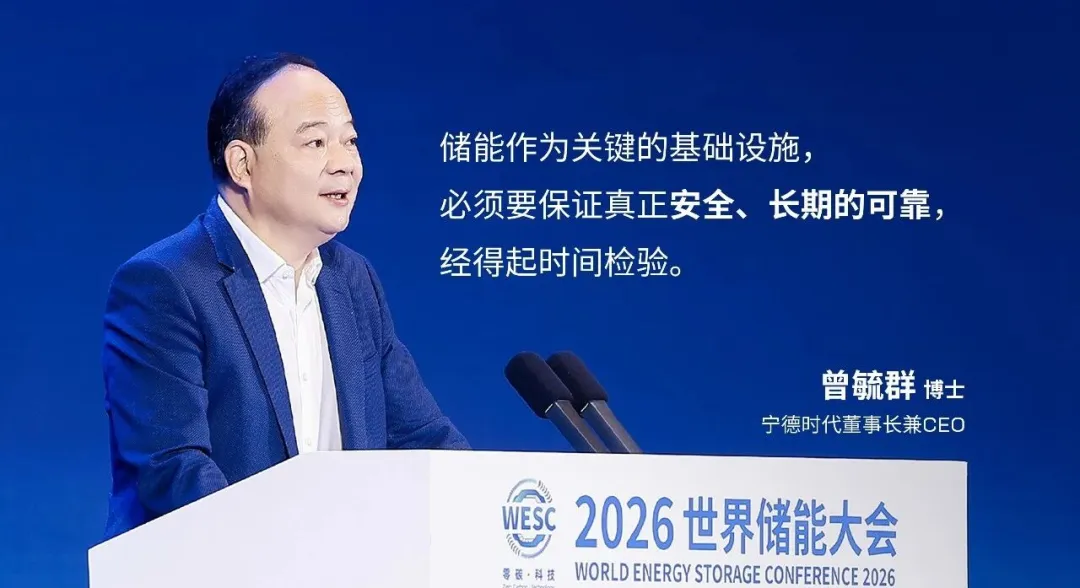
The following is the transcript of the speech:
This year, the global energy storage market has grown at a high speed. According to SNE Research data, in the first half of the year, global energy storage battery shipments increased by 71% year-on-year, and for the first time, markets outside China accounted for more than half. From Europe and the United States to emerging regions such as Latin America, Southeast Asia, and Africa, more and more countries are deploying energy storage on a large scale.
What is more noteworthy than the growth rate is that the role of energy storage in the power system is undergoing a fundamental change.
Over the past decade or so, the global energy transition has made remarkable progress. The installed capacity of clean energy such as wind and solar power has continued to expand, but challenges to stability on the generation side have also followed. At the same time, industry and transportation are accelerating electrification, and new types of loads such as computing power are growing rapidly, placing higher demands on the reliability and flexibility of the power system.
Against this background, energy storage is gradually moving from being a supporting facility for new energy to becoming an indispensable new type of infrastructure for the power system.
This means that the energy storage industry cannot only pursue improvements in equipment parameters, but must also build system capabilities and long-term reliability that meet the needs of the power grid.
To truly enter the era of new infrastructure, I believe the energy storage industry needs to strengthen core capabilities in three aspects.
■ For diversified power grid needs, build whole-station-level solution capabilities
Once energy storage becomes infrastructure, the evaluation criteria extend from equipment capacity, efficiency, and cost to the support, response, and regulation capabilities required by the power grid.
We see that the needs of power grids in different regions around the world are diverging: Europe needs more flexible resources to absorb green electricity; the rapidly developing computing centers in the United States urgently need highly reliable power supply; and in Africa and Southeast Asia, where power grids are relatively weak, energy storage must also take on the tasks of voltage stabilization and frequency stabilization.
In the face of these differentiated needs, what is required is a deep understanding of the power grid, the collaborative integration of battery cells, power electronics, and intelligent control technologies, as well as the overall optimization of power station operations.
Recently, we supported the Hydra project in South Africa with "whole-station delivery." This is the largest hybrid renewable energy project in Africa, meeting the electricity needs of 200,000 households each year. The largest energy storage project in Australia that we delivered, Supernode, has also been put into operation. It will supply clean electricity for the 2032 Brisbane Olympics.
CATL has already implemented more than 3,000 energy storage projects globally, with cumulative battery R&D and testing data exceeding 500 billion entries. This accumulation of practical and R&D data helps us gain an in-depth understanding of power grid operating conditions in different regions and integrate actual operational needs into system solutions, thereby greatly improving the grid connection adaptability and operational reliability of power stations.
■ Persist in underlying innovation and enhance technological adaptability in complex scenarios
Energy storage application scenarios are becoming more and more extensive, and operating environments are becoming more and more complex. In high-temperature regions, energy storage needs better thermal stability, reduced lifespan degradation, and lower auxiliary power consumption; in cold regions, high capacity retention is needed; and in scenarios with rapid load changes, higher power and faster response are required. These challenges must ultimately be solved through underlying innovation in materials and electrochemical systems.
CATL has long adhered to the parallel development of multiple technology routes. For example, we leverage the low-temperature performance and resource advantages of sodium batteries to complement lithium batteries; through material and structural innovation, we enable battery cells to maintain stable operation at high temperatures; and for the highly dynamic loads of AI data centers, our high-rate battery cells, supported by intelligent control strategies, achieve millisecond-level precise response of the system. We also have hybrid power stations that enable lithium batteries and sodium batteries to work in coordination with each other.
■ Move from product component testing to systematic, whole-station-level verification
Large-scale energy storage stations are complex systems. Even if all components meet standards, it does not mean that the system will be reliable in the long term after integration.
Therefore, reliability verification must extend from cell and equipment testing further to whole-station-level, full-scenario verification. We need to simulate real and even harsher environments as much as possible, test the operating boundaries of the system, and thereby discover and solve problems before commissioning as much as possible.
In May this year, the Xiamen Verification Energy Storage Technology Research Institute that we established was officially launched, with a planned total investment of 3 billion yuan. It can complete multi-dimensional whole-station-level testing ranging from grid connection testing, extreme environment testing, to electromagnetic compatibility testing. It is now open to the entire industry. So far, "Xiamen Verification" has carried out systematic verification for 32 projects globally, involving power station capacity of more than 16 GWh.
The global energy storage industry is ushering in unprecedented development opportunities. As an energy storage company, we are both excited by this prospect and always filled with awe—energy storage, as critical infrastructure, must ensure true safety and long-term reliability and withstand the test of time.
CATL is willing to continue, with an open attitude, to work together with global partners to continuously promote technological innovation, deepen whole-station verification, and jointly advance the high-quality development of the energy storage industry, so that energy storage becomes a reliable long-term support for the global energy transition.
- Next: EVE Energy's 261kWh Outdoor Energy Storage Cabinet Passes Japan Fire Resistance Test and Officially Gains Australia CEC Approval
- Previous: NFPP vs NFS: Who Will Dominate the Polyanionic Sodium Battery Track?
Contact Details
Lithium LiFePO4 Batteries and Lithium LiFePO4 Cells Supplier - LiFePO4 Battery Shop
Contact Person: Miss. Elena Wang
WhatsApp : +8615263269227
Skype : +8615263269227
WeChat : 15263269227
Email : info@lifepo4batteryshop.com
All Products
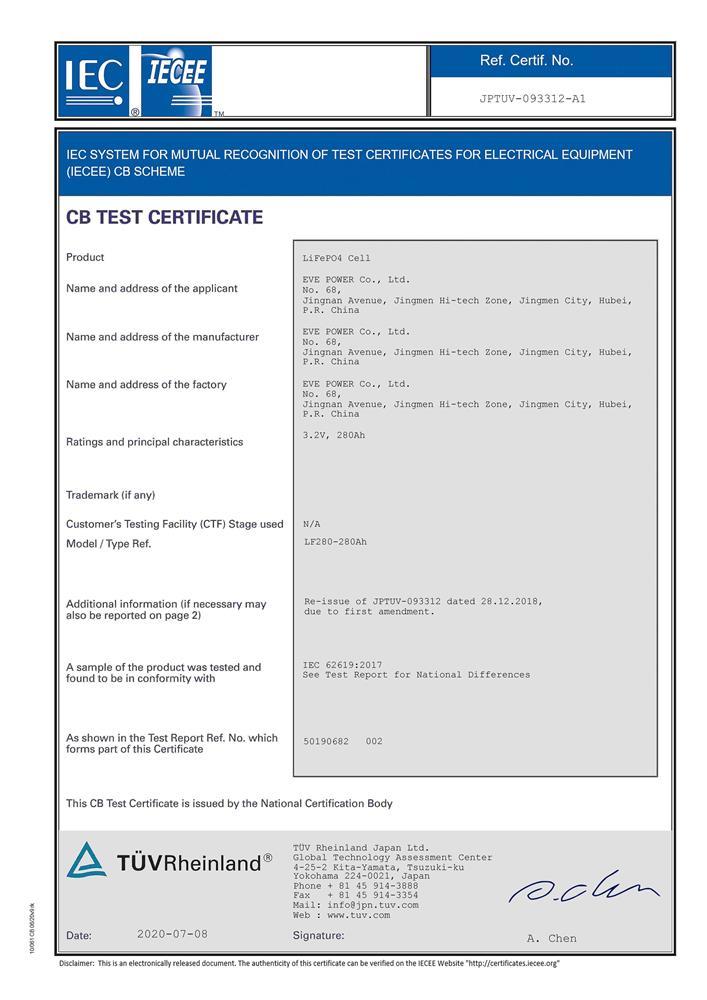
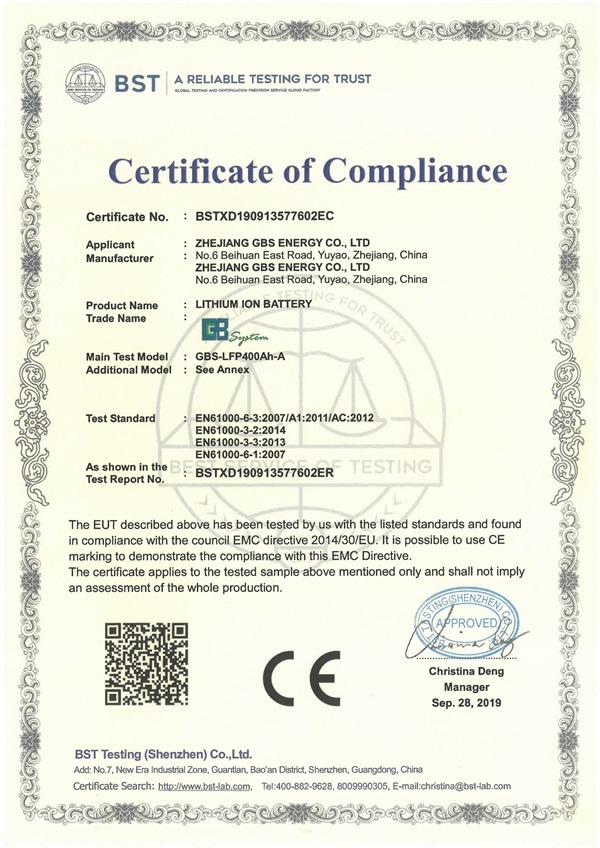
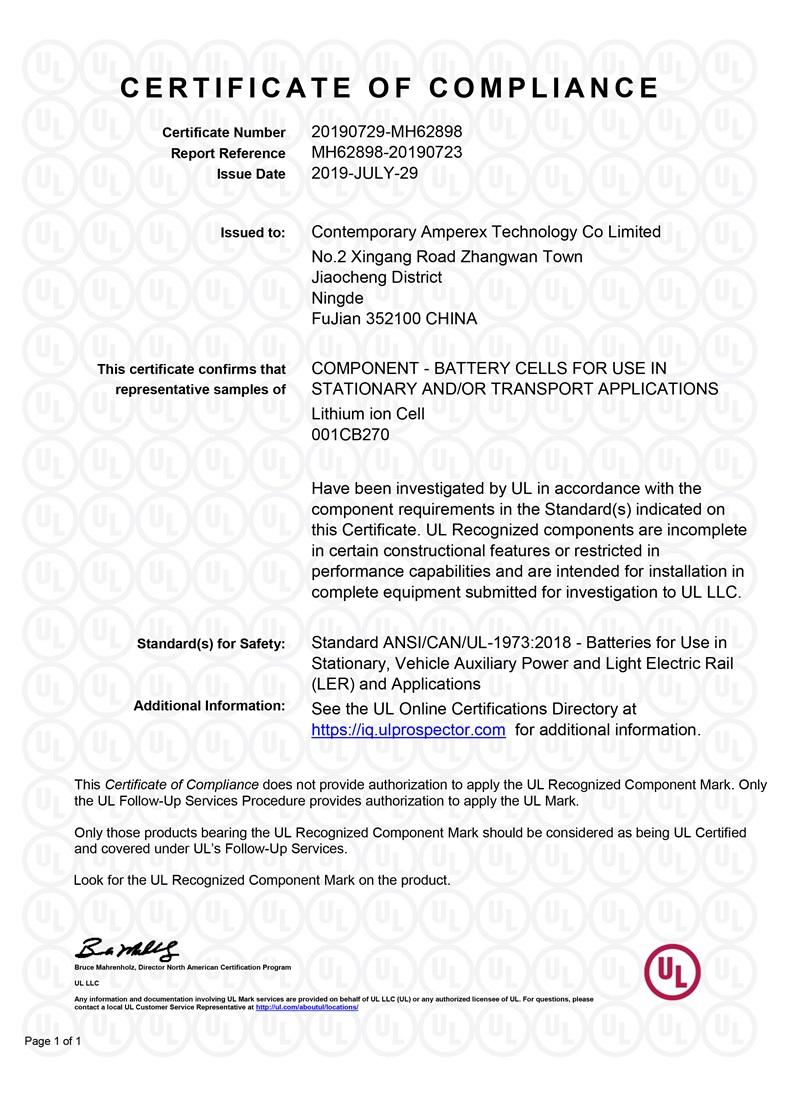
Certification
Customer Reviews
- I have fond memories of our meeting in Shanghai with LiFePO4 Battery Shop Elena. Your company left a strong impression on me with its impressive growth and professionalism. We both value straightforwardness and honesty, which I believe are the most important qualities in any partnership. I am confident that we can build a successful collaboration based on these shared values. —— Robert from USA
- I've been working with LiFePO4 Battery Shop for years, and their reliability is unmatched. While other suppliers frequently change sales teams, LiFePO4 Battery Shop has consistently provided exceptional service with a stable team. Their commitment to quality and customer support truly sets them apart. —— Henry from Australia