
News
BYD CTO Sun Huajun: How 20 Years of Persistence in LFP Batteries Helped BYD Overtake Tesla
2026-01-16 | Calvin
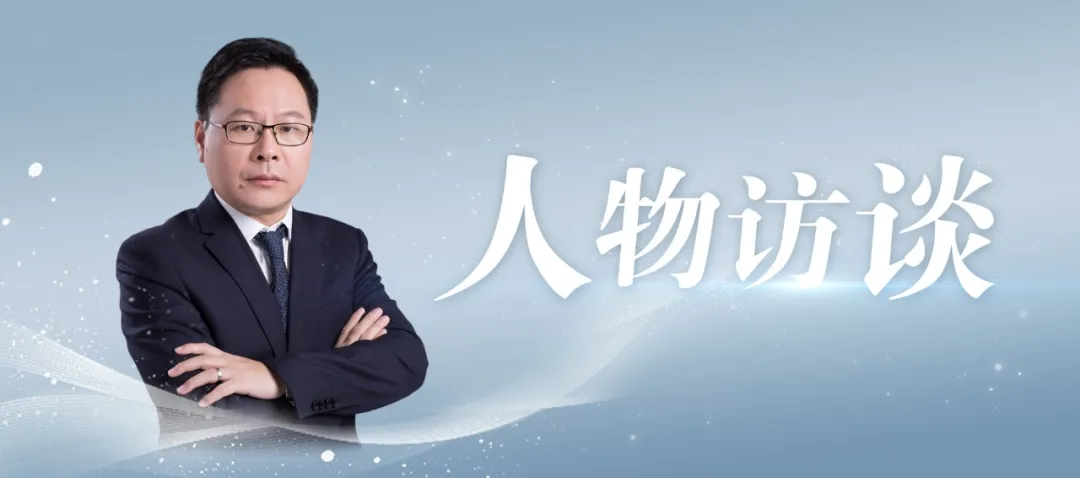
The first working day of 2026 delivered a headline that shook the global automotive industry—BYD had taken the crown. Over the past year, BYD became the world’s top seller of pure electric vehicles, with 2.2567 million EVs sold in 2025, marking a year-on-year growth of 27.86%.
From being overtaken in 2019 to reclaiming the top spot in 2025, BYD spent six years completing its comeback. Yet behind this long-distance race lies a much longer story—one that began 23 years ago with a bold and patient journey down a challenging technological path.
The foundation of this rise rests on a battery material once widely believed to be unsuitable for electric vehicles—lithium iron phosphate (LFP). Long considered a “clumsy route” by the mainstream EV industry due to its low energy density, LFP was largely overlooked.
Today, reborn through BYD’s Blade Battery, LFP has become a technological path the global automotive industry can no longer ignore.
Strategic Planning: Choosing the LFP R&D Path
In 2002, BYD Chairman Wang Chuanfu made the decisive call to pursue LFP battery research and remained deeply involved on the front lines. Sun Huajun, who joined BYD in 2000 after graduating from the Department of Chemistry at Fudan University, witnessed the entire growth journey of BYD’s power battery business.
According to Sun, the industry at the time had three mainstream battery routes: lithium cobalt oxide with high energy density used in mobile phones, lithium manganese oxide offering better safety, and lithium iron phosphate, which had the lowest energy density but the strongest thermal stability.
Globally, leading battery companies focused on lithium cobalt oxide, already mature in consumer electronics. LFP, due to its lower energy density, was almost ignored in the passenger vehicle market.
“Chairman Wang’s primary concern was safety,” Sun explained. BYD’s awareness of lithium battery safety risks originated in the mobile phone era. Around 2006, large-scale global recalls by international brands due to battery overheating served as a wake-up call for the entire industry. “And batteries only get larger and are installed in vehicles,” Sun added.
Another deeper consideration was resource independence and raw material cost stability. “Cobalt and nickel used in ternary batteries are scarce in China, posing serious supply chain risks,” Wang Chuanfu once explained. In contrast, China has abundant reserves of phosphorus and iron, key materials for LFP batteries.
Thus began BYD’s long-term exploration. In 2008, the world’s first plug-in hybrid model, the F3DM, was launched with BYD’s self-developed LFP battery. Subsequent flagship models such as the e6, Qin EV, and Tang DM were also built on this foundation. The BYD e6, for instance, achieved a driving range of around 300 kilometers.
Focus: Refining the LFP Battery
Between 2017 and 2019, as new energy subsidies declined and other factors took effect, the EV market cooled, and driving range became the biggest pain point.
High-energy-density ternary lithium batteries took center stage. According to data from the China Automotive Battery Innovation Alliance, ternary batteries recorded cumulative sales of 34.5 GWh in 2018, accounting for 55.4% of total sales, while LFP batteries totaled 24.4 GWh. Many emerging EV brands equipped their flagship models with ternary batteries to compete on range figures.
Under market pressure, even BYD experienced moments of hesitation.
Sun noted that BYD also invested in ternary battery R&D, but the team remained concerned about safety risks, especially under complex real-world driving conditions.
BYD later entered what Wang Chuanfu described as its “darkest moment.” “2019 was BYD’s most difficult year. There was only one goal—survive.”
Amid industry contraction and pessimism, BYD made two critical decisions: shift its strategic focus from commercial vehicles to passenger cars while investing heavily in top-tier design talent; and continue refining LFP batteries despite intense pressure and industry marginalization.
Innovation: Breaking Through LFP Performance Limits
An internal discussion known as the “Qinghai Meeting” helped restore confidence and triggered the launch of what would become the Blade Battery.
The core debate centered on achieving a 600-kilometer range with LFP. The battery team changed its approach—moving away from pure energy density metrics and focusing instead on battery pack space utilization. They discovered that traditional irregular battery packs used only about 40% of available space, limiting range to roughly 400 kilometers. The new platform adopted a flat, regular structure.
Wang Chuanfu famously used an analogy: “A single chopstick breaks easily; a bundle of chopsticks does not.” By designing long, blade-shaped cells tightly arranged together, more energy could fit into the same space. “Once the cells were elongated and closely packed, space utilization exceeded 60%,” Sun recalled.
Turning this idea into reality was a formidable engineering challenge. Nearly one-meter-long ultra-thin blade cells faced major hurdles in stacking precision, electrode cutting, and ultra-thin aluminum casing manufacturing. “The Blade Battery structure was a completely new challenge for us,” Sun said.
The team rebuilt the manufacturing system from the ground up. To prevent cutting burrs from piercing separators and causing short circuits, BYD developed custom ultra-long cutting blades.
In 2020, the Blade Battery made its official debut. At the launch event, Wang Chuanfu personally demonstrated the nail penetration test, visually proving its superior safety over ternary batteries. That same year, BYD introduced the Han sedan, its first flagship model powered by the Blade Battery.
The success of the Blade Battery laid the groundwork for BYD’s product surge. In the second half of 2020, sales rebounded, with new energy vehicle sales reaching 190,000 units.
In 2021, BYD continued its momentum with models like the Qin Plus and Song Plus, equipped with fourth-generation DM technology. Targeting the family car market, these models leveraged the safety and cost advantages of the Blade Battery, pushing annual NEV sales beyond 600,000 units.
During global supply chain crises, BYD’s vertically integrated approach proved invaluable. Between 2021 and 2022, as automakers worldwide struggled with chip and battery shortages, BYD’s supply chain became its strongest moat, securing a critical window for growth.
Commitment: Continuing the LFP Journey
Over the past two decades, BYD has been the most steadfast advocate of the LFP route, committing bold and sustained R&D investment. Today, its power battery R&D team numbers around 10,000 people, giving BYD a decisive edge in the electrification era.
By 2025, industry competition had shifted toward ultra-fast charging and solid-state batteries, with attention focused on charging efficiency and ranges exceeding 700 kilometers.
BYD continues to follow a rigorous engineering rhythm—from laboratory validation to pilot testing and mass production. In 2025, BYD introduced its megawatt flash-charging battery, capable of adding 400 kilometers of range in just five minutes.
Even so, LFP remains BYD’s core strategy. Sun revealed that investment in LFP R&D will continue, with safety always taking priority.
“Engineers can afford trial and error. Even failure is a conclusion—it proves a path doesn’t work,” Sun said. “But technology managers must have a strong sense of risk. A battery is like a ‘hexagonal warrior,’ requiring balance across cost, charging speed, lifespan, safety, and energy density.”
- Next: Great Power Unveils New 100Ah LiFePO4 Residential Storage Cell
- Previous: Finnish Battery Company Donut Lab Claims to Launch the World's First Mass-Produced Solid-State Battery
Contact Details
Lithium LiFePO4 Batteries and Lithium LiFePO4 Cells Supplier - LiFePO4 Battery Shop
Contact Person: Miss. Elena Wang
WhatsApp : +8615263269227
Skype : +8615263269227
WeChat : 15263269227
Email : info@lifepo4batteryshop.com
All Products
Certification
Customer Reviews
- I have fond memories of our meeting in Shanghai with LiFePO4 Battery Shop Elena. Your company left a strong impression on me with its impressive growth and professionalism. We both value straightforwardness and honesty, which I believe are the most important qualities in any partnership. I am confident that we can build a successful collaboration based on these shared values. —— Robert from USA
- I've been working with LiFePO4 Battery Shop for years, and their reliability is unmatched. While other suppliers frequently change sales teams, LiFePO4 Battery Shop has consistently provided exceptional service with a stable team. Their commitment to quality and customer support truly sets them apart. —— Henry from Australia