
News
Reevaluating Global Electrification After "Oil is More Expensive than Electricity"
2026-03-28 | Calvin
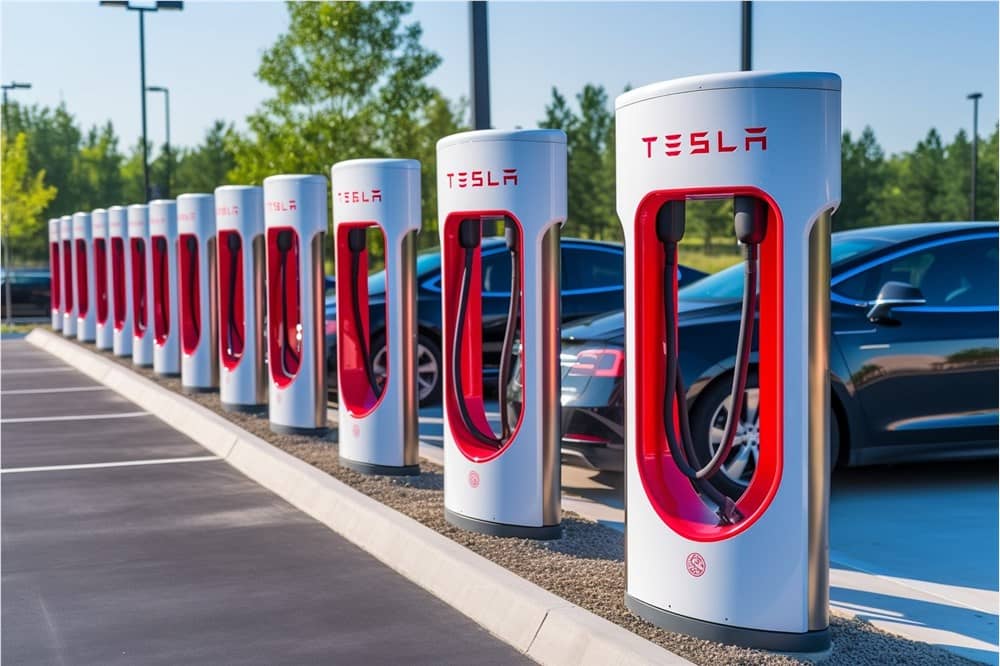
The Washington government is attempting to reframe the language of the old energy era: more oil, more natural gas, and stronger national power.
From the President's executive order signed at the White House to release America's energy potential, to the declaration of a national energy emergency, and the repeated emphasis on America's energy dominance, the Trump administration’s policy narrative is clear:
It aims to accelerate the approval of oil, gas, and traditional electricity projects, linking energy security, affordability, and national strength together again.
The old energy order is not a conspiracy theory of bystanders, but a publicly written policy direction by the White House.
However, the market response has been sharper than political slogans.
Since late February, the U.S. military actions against Iran were initially hoped by Trump to build a shield using domestic oil and gas resources. But after surrounding conflicts, Brent crude oil once rose to $110 per barrel, WTI rose to $99, and U.S. crude oil exports were expected to reach a record 4.6 million barrels per day in March. With the blockage of the Strait of Hormuz and the international market turning to U.S. oil, the U.S. did not escape the global oil price shock. On the contrary, during the increase in exports and tightening domestic supply, higher gasoline and diesel prices and inflationary pressures were swallowed back into the domestic market. The so-called energy independence in the global oil market does not equate to price independence.
However, the result of war was not the consolidation of the old order but a reassessment of the costs and benefits of escaping oil by consumers, car manufacturers, and factories. The first to feel this were not policymakers but consumers. According to reports, the war-induced surge in oil prices has already led to a 7% increase in gasoline prices in the UK, 8% in the EU, and 27% in the U.S. since February.
In Germany, the online car platform MeinAuto saw a 40% rise in traffic related to electric vehicles. A survey by Carwow showed that 48% of respondents said the surge in oil prices would affect their consideration of electric or hybrid cars. UK second-hand electric car dealer EV Experts reported record sales.
But this is not a "new energy victory" story.
The IEA’s judgment is key: while home charging generally offers significant operating cost savings over fuel vehicles, public charging prices can tear this conclusion apart.
In the U.S., most electric vehicle owners have home charging conditions, but public fast charging has already become nearly as expensive as gasoline in many scenarios. In Europe, where home charging conditions are weaker than in the U.S., public charging prices and tax structures have a greater impact on the economics of car purchases.
Thus, the war raised the pain of oil prices but did not automatically transform this pain into a neat, uniform increase in pure electric car sales. The result is still determined by the energy supply structure, electricity pricing mechanisms, and the availability of vehicle models.
Europe is the most direct testing ground for this "recalculation of accounts."
A March analysis by the European Federation for Transport and Environment shows that when oil prices break the $100 per barrel mark, the additional operating costs for European fuel car users are about five times higher than those for electric vehicle users.
The problem is that the market’s response has not, as envisioned a few years ago, neatly pointed to pure electric vehicles. On the contrary, global car manufacturers are announcing something else through their profit sheets: they are moving away from the single path of pure electric passenger cars.
According to incomplete statistics, at least 12 global car manufacturers are reducing their electric vehicle plans due to factors including stubborn demand for internal combustion engines, policy backslides, and deteriorating market conditions.
Specifically, global car manufacturers have written down over $70 billion due to the pullback from electric vehicle strategies. Honda canceled three electric cars originally planned for production in the U.S. and expects to record its first annual loss in nearly 70 years. Stellantis has written down €22.2 billion in related losses and has redirected brands like Jeep to hybrid and range-extended vehicles.
This shift can easily be misread as "the retreat of new energy." In fact, it is not. A more accurate statement is that the war has amplified the economic impulse to break free from oil but has not revived the traditional automakers' previous pure electric strategy, which was heavily capital-intensive, reliant on policies, and dependent on public charging networks.
Consumers reconsidering new energy does not automatically mean they choose a pure electric car; automakers recalculating costs does not mean they are returning to fuel logic. Many companies' real choice is hybrid, plug-in hybrid, and range-extended vehicles.
European market data shows that in February, 67% of new car registrations in the EU were for pure electric, plug-in hybrid, and hybrid vehicles, which precisely indicates that "electrification" is advancing, but in a much more diversified way than a few years ago.
In terms of energy storage, General Motors and LGES are converting their electric vehicle battery factory in Tennessee to produce lithium iron phosphate batteries for energy storage and recalling 700 previously laid-off workers.
The head of GM's battery and sustainability division candidly stated that the demand in the energy storage market "far exceeds supply," and the slowing electric vehicle sales are no longer enough to fill the three existing battery factories.
LG and SK On are also shifting some electric vehicle battery capacity to energy storage to meet the needs of AI data centers and the power grid.
When seen together, these shifts are more powerful than looking at car sales alone. They show that traditional car manufacturers have not collectively betrayed "electricity." Rather, they have collectively abandoned the old notion that "pure electric passenger cars are the only path."
Batteries have not been abandoned, and electric drives have not been abandoned. What has been abandoned is the single-threaded transformation rhythm that is policy-driven, capital-first, with consumers following later.
If we lower the lens further, the performance of the two-wheeler market is even more direct.
A study by India’s energy and climate think tank CEEW last year showed that the total ownership cost per kilometer for electric two-wheelers nationwide was about 1.48 rupees, while for gasoline two-wheelers it was 2.46 rupees.
By February this year, India’s electric two-wheeler sales reached 111,680 units, a 46% year-on-year increase, and sales for the first 11 months had already surpassed the total sales for the previous fiscal year.
This is not to say that the Indian two-wheeler market has suddenly become fully electrified due to the war. Rather, it shows that when the impact of oil price shocks overlaps with the already established cost advantages, consumers will make the switch faster.
The signal from the industrial manufacturing side is also heavy.
Global factories are currently not only facing the rise in oil prices but also the amplification of oil and gas fluctuations through electricity pricing mechanisms.
Germany's mid-sized chemical company Gechem has suspended expansion and hiring; BASF has raised prices on some products by over 30%, and Lanxess has raised prices while announcing the layoff of 550 employees.
This shows that in Europe, the energy shock has not immediately turned into a "factories accelerating new energy transformation" romantic narrative. Instead, it has initially led to halting expansions, price increases, and layoffs.
Consumers at gas stations have learned that oil is more expensive than electricity. Factories have learned on their profit sheets that as long as the production function is still deeply tied to oil and gas fluctuations, any geopolitical conflict can turn into a cost crisis.
Looking at all the clues together, the article's proposition stands firm:
The Trump administration's goal was to preserve an old power order centered on oil and gas expansion, traditional electricity, and American energy dominance.
The backlash from the war against this order is exposing the vulnerability of oil prices, inflation, and supply chain risks once again.
What the market has done is not an ideological choice, but a cost choice.
It has not neatly embraced pure electric vehicles, nor has it returned to fuel reliance. Instead, it is seeking a more pragmatic path: whoever can first strip their cost structure from oil fluctuations—even just partly—has a better chance of preserving sales, profits, and capital expenditure autonomy.
The escalation of the Middle East conflict and the dollar's continued periodic benefit from risk-averse demand shows that the old financial anchor has not collapsed yet; but just like how U.S. oil and gas resources have not shielded the country from oil price shocks, the dollar’s safe-haven properties no longer mean it can automatically smooth over the real costs of geopolitical risks.
The financial dividends remain, but the energy dividends are thinning, and this is the crack in the old order.
If this war leaves any lasting consequence, it may not be the result that Trump wanted. What it has forced the market to learn is this: the more fossil energy is weaponized, the more specific the reasons for escaping it become.
However, the market's answer is not idealistic.
It does not leap into a pure electric utopia but first moves toward hybrids, range-extended vehicles, energy storage, and all middle paths that reduce exposure to oil without driving itself into a capital black hole.
The old order has not collapsed immediately, but it has begun to be re-priced.
- Next: EVE Successfully Rolls Out Two All-Solid-State Batteries
- Previous: EU's New Regulation Requires Easily Replaceable Batteries in Electronic Devices, Tech Giants Face Design Challenges
Contact Details
Lithium LiFePO4 Batteries and Lithium LiFePO4 Cells Supplier - LiFePO4 Battery Shop
Contact Person: Miss. Elena Wang
WhatsApp : +8615263269227
Skype : +8615263269227
WeChat : 15263269227
Email : info@lifepo4batteryshop.com
All Products
Certification


Customer Reviews
- I have fond memories of our meeting in Shanghai with LiFePO4 Battery Shop Elena. Your company left a strong impression on me with its impressive growth and professionalism. We both value straightforwardness and honesty, which I believe are the most important qualities in any partnership. I am confident that we can build a successful collaboration based on these shared values. —— Robert from USA
- I've been working with LiFePO4 Battery Shop for years, and their reliability is unmatched. While other suppliers frequently change sales teams, LiFePO4 Battery Shop has consistently provided exceptional service with a stable team. Their commitment to quality and customer support truly sets them apart. —— Henry from Australia