
News
General Motors to Phase Out LFP Batteries and Bet on Lithium-Rich Manganese Batteries
2026-06-16 | Calvin
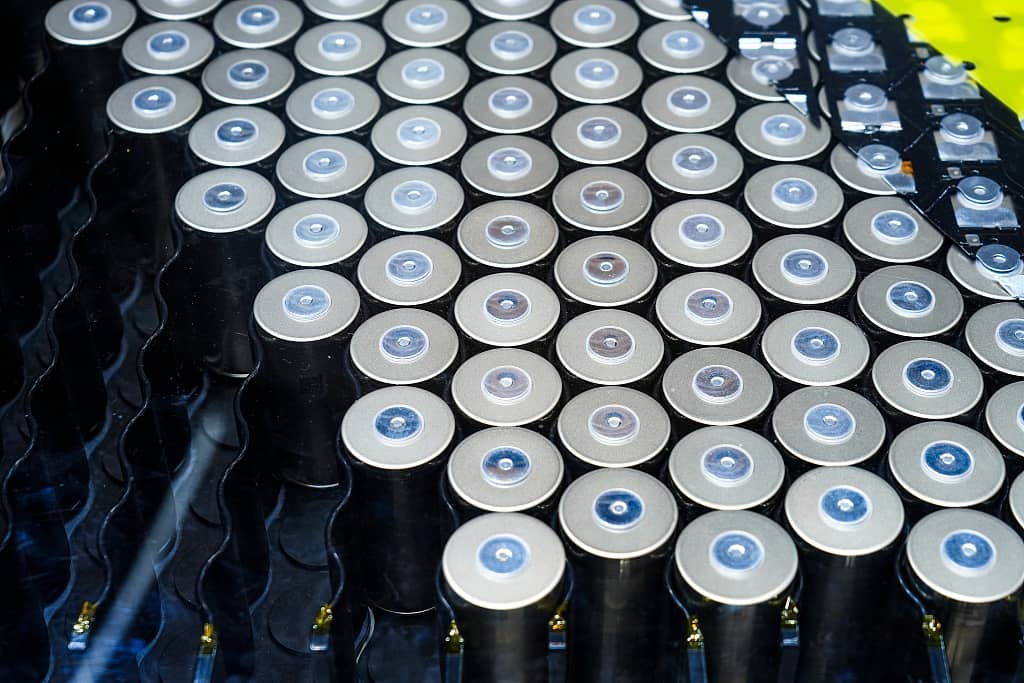
General Motors (GM) is making a major adjustment to its electric vehicle (EV) battery technology roadmap.
Not long ago, lithium iron phosphate batteries (LFP batteries) were seen by GM as a key solution to cut costs and popularize its electric vehicles. The Detroit-based automotive giant previously announced plans to launch mass production of LFP cells at its joint venture plant in Tennessee by the end of 2027 to cope with fierce cost competition in the market. However, its plans have now changed.
According to the company's latest disclosure, GM has designated lithium-rich manganese (LMR) batteries as one of the core battery technologies for its next-generation electric vehicles. Adopting prismatic cell design, LMR batteries are scheduled for mass production and vehicle installation in 2028. Meanwhile, the LFP batteries originally intended for GM's EV lineup will likely be excluded from its passenger vehicle product portfolio.
A senior executive in charge of GM's battery business revealed in an interview that the Tennessee joint venture plant will start LFP cell production this month, yet these products will only be used for energy storage systems instead of electric vehicles. "LFP batteries may not be adopted in our vehicle product lineup," he stated, adding that LMR batteries will become GM's mainstream battery solution for the future.
This strategic shift means GM's former dual-battery strategy — pairing high-nickel ternary batteries with LFP batteries — has undergone substantial adjustments.
A Decade-long Strategic Layout
This transformation is not a last-minute decision, but a well-planned technological breakthrough after years of preparation.
GM has invested in LMR technology research and development for more than a decade. While most automakers focused on ternary and LFP batteries in the early stage, GM maintained continuous R&D investment in LMR. The technology appeals to GM for its potential to strike an optimal balance between low cost and high energy density, which is largely determined by its material composition.
In terms of material ratios, LMR batteries feature a sharply increased manganese content. GM disclosed that its LMR cells contain 60% to 70% manganese, 30% to 40% nickel, and merely 0% to 2% cobalt. By comparison, mainstream high-nickel ternary batteries such as NCMA consist of around 85% nickel, 10% manganese and 5% cobalt.
The adjusted material proportion brings multiple advantages:
- Cost control: Manganese is far cheaper than nickel and cobalt. Replacing part of nickel and cobalt with manganese greatly reduces material costs. GM noted that the manufacturing cost of its LMR batteries in the U.S. is roughly on par with that of LFP batteries, which are already well-known for low costs.
- Energy density: GM claims its prismatic LMR cells deliver about 33% higher energy density than mainstream high-performance LFP cells, enabling more electricity storage under the same weight and volume.
- Application scenarios: GM plans to first equip electric pickup trucks and full-size SUVs with LMR batteries. These vehicles demand long driving range, high load capacity and cost efficiency. The company targets a driving range of over 400 miles (approximately 644 kilometers) for vehicles fitted with LMR batteries. Simply put, LMR batteries are cheaper than high-nickel ternary batteries and better suited for large vehicles with long-range requirements than LFP batteries.
Regarding the production timeline, GM will launch pilot production of LMR cells at its joint venture plant with LG New Energy by the end of 2027, followed by commercial mass production at the Ultium Cells factory in Tennessee in 2028. GM aims to become the world's first automaker to deploy LMR batteries in mass-produced passenger electric vehicles.
GM is not the only player bullish on LMR technology. Ford announced in 2024 that it would push forward the mass production of LMR batteries for its new-generation EVs. Leading battery suppliers including CATL, Samsung SDI and China Automotive New Energy are also conducting intensive R&D on LMR batteries.
Industrialization Challenges Facing LMR Technology
Despite promising prospects, LMR batteries have not yet achieved large-scale commercial application.
Lithium-rich manganese cathode materials have been studied by academia and the industry for years, but they have failed to become a mainstream power battery route. The core obstacle lies in the huge gap between the excellent performance shown in laboratories and the practical requirements for vehicle-grade mass production. A host of technical issues emerge when translating theoretical advantages into engineering applications.
The major technical hurdles of LMR materials include voltage decay, high initial irreversible capacity loss, poor rate performance and limited cycle life, among which voltage decay is the most critical problem. According to S&P Global, LMR batteries suffer from continuous capacity and voltage degradation during charge-discharge cycles, leading to gradual performance decline. Besides, their low charge-discharge rate makes them incompatible with ultra-fast charging and high-rate discharge scenarios. Thermal stability is also a potential safety risk as excessive heat accumulation may impair battery safety.
These technical bottlenecks mean a series of improvements in material modification, cell design and manufacturing processes are still needed to promote the mass adoption of LMR batteries in vehicles.
Some automakers claim to have made breakthroughs. Ford said it has found solutions to voltage decay without revealing specific technical details. GM also stated that relevant technical difficulties have been resolved, and innovative manufacturing processes will be adopted to minimize risks. It added that the performance of its LMR batteries under extreme temperatures is expected to match that of its first-generation high-nickel batteries. Nevertheless, the actual performance of mass-produced products remains to be verified after launch.
Chinese enterprises have also made notable progress in this field. As a leading domestic cathode material manufacturer, Shenzhen Dynanonic has achieved bulk supply of ultra-high capacity lithium-rich manganese materials for all-solid-state batteries with a monthly output exceeding 20 tons. Its products have been delivered to solid-state battery clients including Qingtao Energy, WeLion, ProLogium, Ganfeng Lithium and China Automotive New Energy.
In terms of vehicle installation verification, China Automotive New Energy, in collaboration with the team led by Academician Chen Jun from Nankai University, has developed ultra-high specific energy lithium-rich manganese semi-solid batteries. The batteries were successfully installed on test vehicles in February 2026, achieving an energy density of over 500 Wh/kg and a driving range of more than 1,000 kilometers. Demonstration operation is scheduled to kick off in 2026. These developments prove that LMR technology is accelerating from laboratory research to industrial verification.
GM's pivot to LMR batteries also needs to be viewed against the broader market backdrop. Currently, the growth of the U.S. EV market is slowing down, so cutting costs and launching cost-competitive electric vehicles has become a common priority for local automakers. Tesla, Ford and other global carmakers have rolled out EVs equipped with LFP batteries to seize market share by leveraging LFP's advantages in cost and safety.
For years, all of GM's more than ten electric vehicle models launched in the U.S. were powered by high-nickel batteries with high energy density. It is reported that Chevrolet Bolt, GM's most affordable electric model in the U.S., is now fitted with LFP cells supplied by CATL. This reflects GM's lack of low-cost battery solutions in its current EV product lineup.
Against this backdrop, GM is betting big on LMR batteries as its next-generation core technology, striving to strike a new balance between long driving range and low cost. Still, it remains to be seen whether GM can resolve core technical issues such as voltage decay before the scheduled mass production in 2028.
- Next: Chinese Lithium Battery Goes Global: EU Steps Up Vigilance
- Previous: SOLiTHOR Unveils 10Ah Prototype Solid-State Battery Cell with 465Wh/kg Energy Density
Contact Details
Lithium LiFePO4 Batteries and Lithium LiFePO4 Cells Supplier - LiFePO4 Battery Shop
Contact Person: Miss. Elena Wang
WhatsApp : +8615263269227
Skype : +8615263269227
WeChat : 15263269227
Email : info@lifepo4batteryshop.com
All Products
Certification
Customer Reviews
- I have fond memories of our meeting in Shanghai with LiFePO4 Battery Shop Elena. Your company left a strong impression on me with its impressive growth and professionalism. We both value straightforwardness and honesty, which I believe are the most important qualities in any partnership. I am confident that we can build a successful collaboration based on these shared values. —— Robert from USA
- I've been working with LiFePO4 Battery Shop for years, and their reliability is unmatched. While other suppliers frequently change sales teams, LiFePO4 Battery Shop has consistently provided exceptional service with a stable team. Their commitment to quality and customer support truly sets them apart. —— Henry from Australia