News
Chinese Lithium Battery Goes Global: EU Steps Up Vigilance
2026-06-13 | Calvin
European wariness toward China’s battery supply chain has entered a new round of escalation.
Over the past week, the European Commission has been mulling new rules for supply chain diversification, requiring enterprises in sensitive sectors to reduce reliance on a single supplier and source goods from at least three different suppliers. Although EU trade commissioners did not name the battery industry explicitly, the rules targeting critical minerals, high-risk supply chains and excess production capacity in China essentially cover the entire lithium battery industrial chain.
Meanwhile, the EU has continued to toughen its defensive stance against China’s new energy industry. Manfred Weber, President of the European People's Party, recently called for Brussels to adopt a harder line in trade with China and discuss protective trade measures including tariffs.
Over the past year, the EU has imposed anti-subsidy tariffs on Chinese electric vehicles (EVs). Now policy focus is extending beyond finished vehicle imports to supply chain dependence, rules of origin, local content ratios, public procurement and security of raw materials. This means the European market for Chinese lithium battery players is undergoing profound regulatory changes.
In the past, European clients mainly evaluated products based on performance, pricing, delivery capacity and certification cycles. Going forward, supply chain concentration, carbon footprint, origin compliance, data governance, local after-sales services, as well as eligibility for public subsidies and government procurement will all become new market entry thresholds.
Interestingly, despite growing European caution over Chinese batteries, Chinese lithium battery firms are accelerating their footprint across Europe.
At the end of May, a ternary cathode material project jointly developed by Xiamen Tungsten New Energy and French nuclear fuel recycling firm Orano officially broke ground in Dunkirk, France. Pushed forward by their joint venture Neomat CAM, the project is designed with an annual production capacity of 40,000 tons, enough to power around 500,000 electric vehicles, and is scheduled to start operation by the end of 2028.
This is one of the most notable overseas moves by Chinese lithium battery enterprises recently. More than just another overseas manufacturing base, it fills a key gap in Europe’s battery supply chain. In past years, Europe’s push for battery localization mainly centered on cell production. Major Chinese players including CATL have built facilities in Germany and Hungary, EVE Energy launched large cylindrical battery projects in Hungary, CALB set up operations in Portugal, and Vision Battery also established plants across Europe.
Nevertheless, Europe’s so-called localized battery industry only achieved partial localization at the cell end, as upstream links such as cathode materials, precursors, battery recycling, anode materials and electrolytes still rely heavily on Asian suppliers. Against this backdrop, Xiamen Tungsten New Energy’s French project carries far-reaching significance: it brings China’s material technologies, engineering expertise and industrial operational capabilities directly into the burgeoning battery industrial cluster in northern France.
Europe is caught in a paradox: it aims to cut dependence on China yet still needs Chinese enterprises to improve its complete battery industrial chain.
Xiamen Tungsten New Energy is not alone. Over the past month, Guoxuan High-Tech has also made headway with its projects in Spain. Its cathode material plant and battery recycling project in Valladolid have obtained support from Spain’s PERTE VEC funding program.
Different from pure cell manufacturing, such projects align closely with European battery regulations and critical raw material laws that prioritize local production of materials, on-site manufacturing and domestic battery recycling.
In short, Chinese lithium battery companies are shifting their European strategy from simply exporting finished products to restructuring the local battery supply chain. Rather than being blocked by trade barriers, Chinese firms have adjusted their market entry approach: shifting from product export to capacity deployment, from battery cell sales to full layout covering materials, battery systems and recycling, and transforming from external suppliers into integrated local industrial participants.
This transformation is driven by robust downstream demand in Europe that keeps drawing China’s lithium battery supply chain deeper into the region.
Europe’s EV market maintains steady growth. In the first four months of 2026, the market share of pure electric vehicles in the EU climbed to nearly 20%. Despite phased subsidy cuts, pressure on local automakers and hesitant consumer sentiment, the overall trend remains clear: fuel vehicles keep losing market share, while hybrid and pure electric vehicles continue to expand.
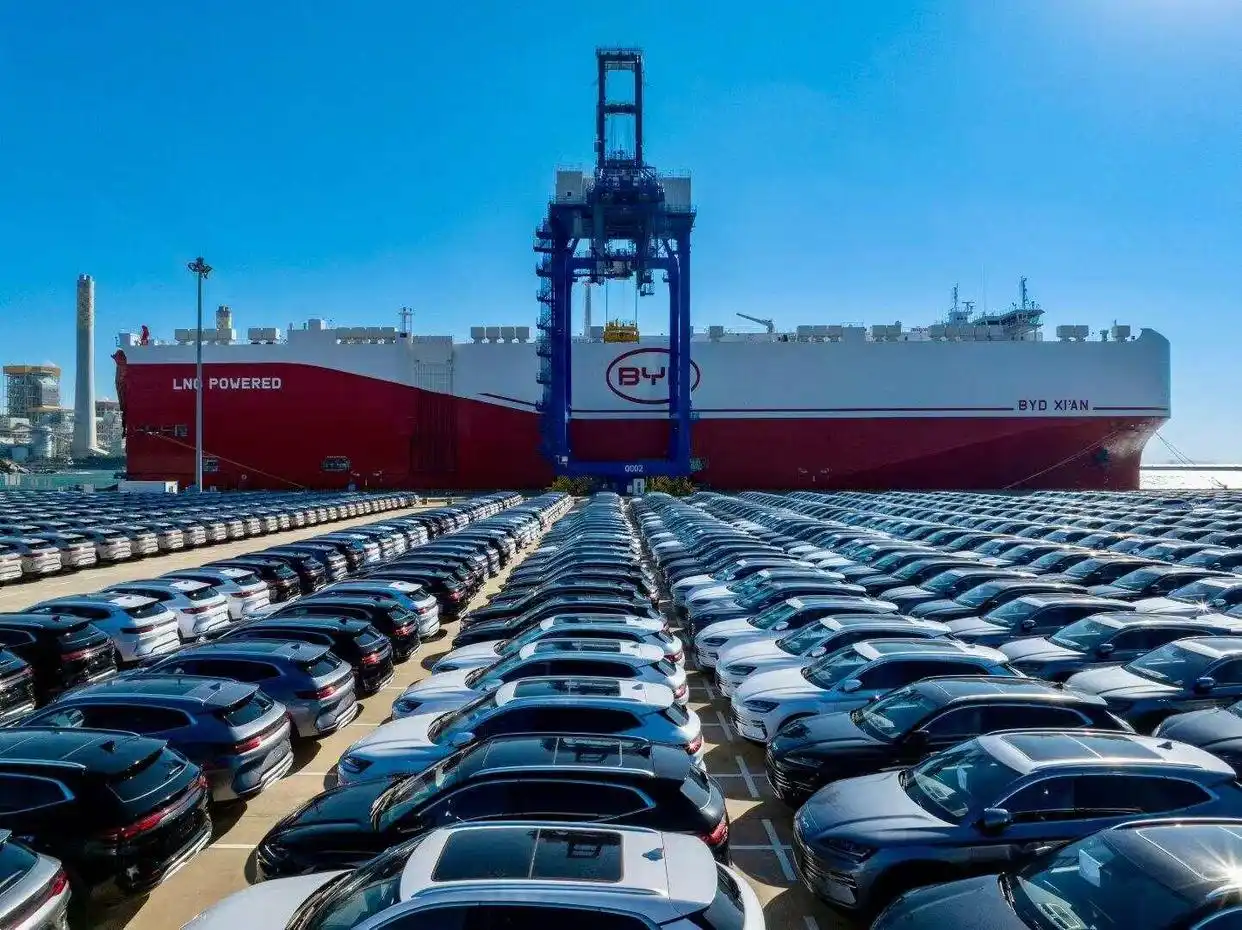
More importantly, Chinese automakers are gaining growing traction in Europe. Latest regional auto market data shows Chinese brands are seeing rapid sales growth. In May, the UK recorded its highest new car registrations since the pandemic, with pure electric vehicle sales surging. Brands including BYD, Chery, MG, Leapmotor and Geely continue to expand their presence in Britain. Similar growth was witnessed in Italy, where BYD achieved a sharp year-on-year sales increase in May, and Chery’s Omoda and Jaecoo brands also saw rapid market penetration.
Chinese automakers are no longer limited to exporting complete vehicles to Europe. BYD is pressing ahead with its plant construction in Hungary; Chery has partnered with EBRO to launch local manufacturing in Spain; Leapmotor has entered the European market leveraging Stellantis’ distribution and production networks; Geely has built a solid local foundation through Volvo, Polestar and its European assets. SAIC, Dongfeng, FAW and other domestic carmakers are also exploring diverse cooperation and local manufacturing models in Europe.
The expansion of Chinese automakers in Europe creates strong incentives for domestic battery, material and equipment suppliers to follow suit and go overseas. European automakers also demand battery supplies with cost advantages and stable delivery schedules. After repeated setbacks for Europe’s homegrown battery industry, the engineering capabilities of Chinese enterprises have become increasingly irreplaceable.
The logic for the energy storage sector is even more straightforward. While power batteries are affected by vehicle tariffs, rules of origin and automaker platform cycles, energy storage has become an essential component for Europe’s energy transition.
Booming installation of renewable energy, insufficient grid flexibility and volatile power prices have driven up demand for grid-scale, industrial & commercial energy storage and storage supporting new energy projects across Europe.
Chinese energy storage firms have also made new progress in Europe recently. Trina Storage announced the completion of equipment delivery and on-site installation for its 40MW/160.48MWh Gamma energy storage project in Romania, which is expected to be put into operation in the third quarter of 2026. CATL has also signed a strategic cooperation agreement with Finnish firm Merus Power, planning to supply around 3GWh of battery energy storage system solutions for the Nordic market.
The European energy storage sector faces a more acute dilemma: on one hand, the EU strives to build a more independent, secure and localized energy system; on the other hand, Chinese enterprises remain the most practical choice thanks to their advantages in cost control, system integration, large-scale delivery and rich project experience.
European project operators seek to diversify supply chains to mitigate risks, yet they can hardly bypass Chinese battery and energy storage companies when launching grid-side energy storage and renewable energy supporting projects.
In essence, Europe’s trade policies have not shut its door to China’s lithium battery industry completely, but added far more complicated restrictions on market access.
- Next: SVOLT Showcases System-level Full-scenario Solutions at SNEC 2026
- Previous: General Motors to Phase Out LFP Batteries and Bet on Lithium-Rich Manganese Batteries
Contact Details
Lithium LiFePO4 Batteries and Lithium LiFePO4 Cells Supplier - LiFePO4 Battery Shop
Contact Person: Miss. Elena Wang
WhatsApp : +8615263269227
Skype : +8615263269227
WeChat : 15263269227
Email : info@lifepo4batteryshop.com
All Products
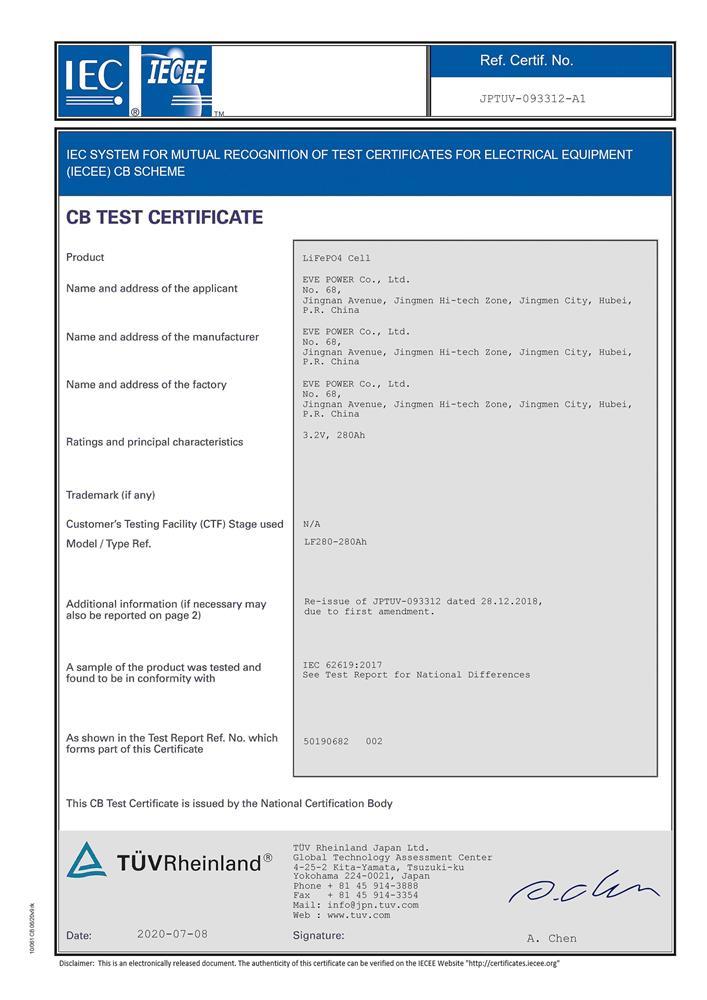
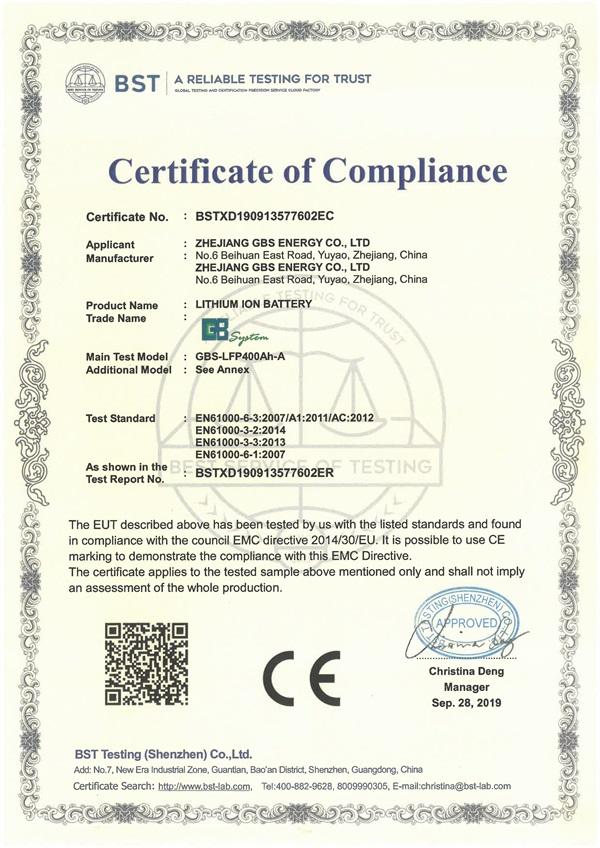
Certification
Customer Reviews
- I have fond memories of our meeting in Shanghai with LiFePO4 Battery Shop Elena. Your company left a strong impression on me with its impressive growth and professionalism. We both value straightforwardness and honesty, which I believe are the most important qualities in any partnership. I am confident that we can build a successful collaboration based on these shared values. —— Robert from USA
- I've been working with LiFePO4 Battery Shop for years, and their reliability is unmatched. While other suppliers frequently change sales teams, LiFePO4 Battery Shop has consistently provided exceptional service with a stable team. Their commitment to quality and customer support truly sets them apart. —— Henry from Australia