
News
The Cold War of EV Batteries: How CATL, BYD, and Gotion Are Redefining Low-Temperature Performance
2026-03-19 | Calvin
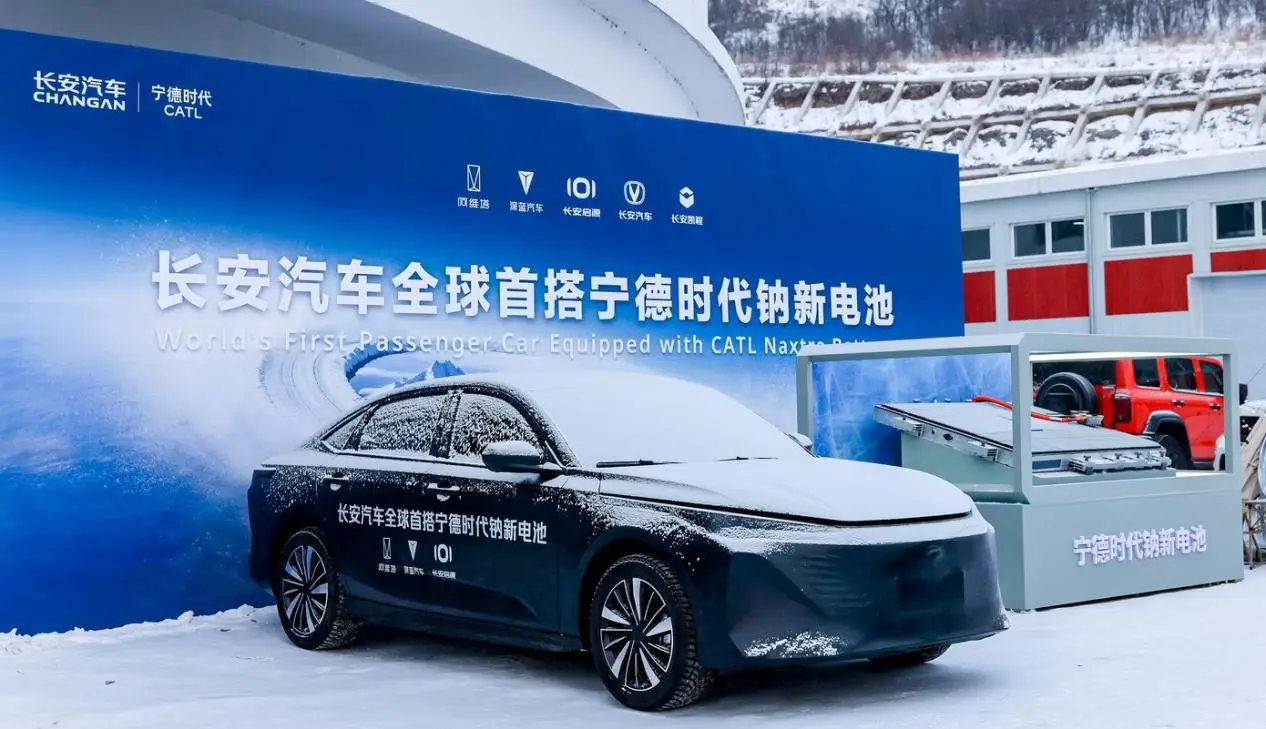
Since the beginning of the year, lithium battery giants such as CATL, BYD, and Gotion High-Tech have introduced a range of low-temperature solutions across materials, application scenarios, and charging infrastructure. Their objective is clear: to seize the opportunities in the second half of electrification.
It can be said that electrification has reached an intense stage where “no low-temperature capability, no battery.” Charging must work in low temperatures, discharging must work in low temperatures, long range must be maintained in low temperatures, startup must function in low temperatures, start-stop systems must adapt to low temperatures, and both passenger and commercial vehicles must perform in low temperatures. This has become an all-encompassing battle across scenarios and performance metrics.
What temperature qualifies as “low”? Based on the winter testing locations favored by battery makers and OEMs in recent years, regions such as Northeast China and Inner Mongolia—where average winter temperatures can drop below those of Antarctica—have become symbolic battlegrounds, with extreme lows of -30°C to -40°C.
The increasing frequency of winter testing also reflects the shared ambition of battery manufacturers and automakers to expand electric vehicle adoption beyond the Shanhai Pass into colder northern regions.
Around the benchmark of -30°C, BYD’s recently released second-generation Blade Battery achieves ultra-fast charging in under 12 minutes even in extreme cold. CATL’s Tianxing II sodium-ion battery for light commercial vehicles enables plug-and-charge functionality at -30°C without preheating. Meanwhile, Gotion High-Tech’s G-KE battery, paired with the Changan Qiyuan A06, demonstrates stable and efficient 6C ultra-fast charging performance even after 24 hours of outdoor freezing at -40°C.
The strategies differ: CATL leverages sodium-ion batteries to compete in both passenger and commercial vehicle segments under low-temperature conditions, while integrating battery swapping into its ecosystem. BYD, on the other hand, focuses on improving low-temperature charging performance of lithium batteries, linking upstream ultra-fast charging technology with downstream vehicle models such as Denza and Tang to build its own low-temperature ecosystem.
If BYD’s first-generation Blade Battery significantly improved the safety perception of LFP batteries, the second-generation Blade Battery not only addresses the low-temperature performance gap but also elevates the overall value proposition of LFP technology.
Competition in the Low-Temperature “Ecosystem”
In the past, the biggest advantage of battery swapping was the ability to restore full charge within minutes—much faster than conventional charging. However, even with advancements in charging technology, the 2025 benchmark still revolves around the concept of “a full charge in the time it takes to drink a cup of coffee,” which typically requires around 15 minutes.
BYD’s second-generation Blade Battery, combined with megawatt-level ultra-fast charging, enables charging in under 10 minutes under normal conditions. Even at -30°C, it can charge from 20% to 97% in just 12 minutes.
The large-scale deployment of ultra-fast charging stations—especially in northern low-temperature regions—will be a key driver for making BYD’s fast-charging vehicles more affordable.
Opening up northern markets depends heavily on the rapid development of charging infrastructure. These regions are not only critical growth markets for new energy vehicles but also for charging and battery swapping stations, making them pivotal in the second phase of electrification.
From the OEM perspective, BYD’s fast-charging technological advantage is deeply integrated into its own vehicles. Although its charging stations may eventually be opened to other brands, the extremely high charging power requires batteries with higher voltage platforms for compatibility.
Currently, 800V has become the threshold for fast-charging competition. By 2025, vehicles equipped with 800V high-voltage platforms are expected to exceed a 10% market penetration rate, with sales nearing 1.5 million units, and projected to reach 15% by 2026.
In terms of battery configurations, 5C batteries are the mainstream choice for 800V platforms. Models such as the Xpeng G9 Max, NIO ET9, Li Auto MEGA, Zeekr 007/009, and Xiaomi SU7 Ultra/YU7 are equipped with 5C batteries, supplied primarily by leading companies like CATL, CALB, EVE Energy, and Gotion High-Tech.
Low-temperature performance may become a new competitive advantage for 800V platform vehicles. For example, the Changan Qiyuan A06 equipped with Gotion’s G-KE battery, after 24 hours of freezing conditions, can add 200 km of range in just 6 minutes of charging, thanks to its 800V silicon carbide high-voltage platform and 6C ultra-fast charging capability.
BYD’s ultra-fast charging technology may require a 1000V high-voltage platform to fully demonstrate its advantages.
In addition to technology, pricing will be a decisive factor in the competition. Previously, over 80% of 800V high-voltage vehicles were priced above 200,000 RMB, concentrated in the mid-to-high-end segment. However, with efforts from manufacturers like BYD, Arcfox, and Leapmotor, 800V models are now entering the 150,000–200,000 RMB price range.
A new wave of “price disruptors” in fast charging is emerging. BYD is pushing 1000V models into the 200,000 RMB and even 150,000 RMB segments. Less than a week after announcing its fast-charging strategy, BYD launched fast-charging versions of Fangchengbao and Tai 3, with starting prices as low as 153,800 RMB.
Meanwhile, CATL’s low-temperature ecosystem integrates materials, passenger and commercial applications, and both ultra-fast charging and battery swapping.
First, CATL’s sodium-ion batteries have been adopted across multiple Changan-affiliated brands, including Avatr, Deepal, Qiyuan, and Yinli, marking the beginning of large-scale deployment.
Second, CATL plans to build over 3,000 “Chocolate” battery swapping stations nationwide this year, covering more than 140 cities. In colder regions such as Beijing-Tianjin-Hebei, Heilongjiang, Jilin, Liaoning, Inner Mongolia, and Shanxi, over 600 stations will be deployed.
The Material System Showdown in Low Temperatures
The emergence of low-temperature ultra-fast charging for LFP batteries may reshape the competitive landscape among lithium battery systems (LFP, ternary, LMFP) and other material systems, particularly sodium-ion batteries.
First, it impacts ternary materials. Traditionally, ultra-fast charging batteries relied on ternary systems to achieve higher charging rates and longer range. BYD’s latest development pushes LFP performance to its limits, breaking the trade-off between fast charging, energy density, and cycle life, while maximizing cost advantages.
Second, within LFP itself, past improvements in low-temperature performance were mainly achieved through manganese doping. Industry speculation suggests that BYD’s second-generation Blade Battery adopts an LMFP (lithium manganese iron phosphate) material system.
LMFP offers a key advantage over traditional LFP in low-temperature performance, maintaining nearly 80% capacity at -20°C.
CATL has also developed its own material-based solutions. According to its chairman Robin Zeng, LMFP batteries outperform traditional LFP batteries in cost efficiency, energy density, and low-temperature performance at scale.
As early as 2023, CATL’s LMFP-based M3P battery was used in several versions of the Luxeed S7, and has since been applied to models such as Luxeed R7, Stelato S9, and Exeed Yaoguang.
In addition to multi-material strategies, sodium-ion batteries are a key pillar of CATL’s low-temperature ecosystem. Last year, CATL introduced multiple dual-core battery systems, including LFP + sodium-ion combinations that leverage lithium for range and sodium for low-temperature performance.
Passenger vehicles equipped with sodium-ion batteries can deliver nearly three times the discharge power of conventional LFP vehicles at -30°C, maintain over 90% capacity at -40°C, and even operate stably at -50°C.
In the commercial vehicle sector, CATL’s Tianxing light commercial low-temperature edition—the first mass-produced sodium-ion battery for this segment—supports plug-and-charge functionality even when the battery cell is fully frozen at -30°C.
Overall, the narrative of battery performance in low temperatures is not about a single material system or isolated breakthrough, but rather the result of ecosystem integration and long-term technological accumulation.
- Next: Gotion High-Tech G-Grade Battery Partners with Changan Qiyuan A06 to Complete -40°C Winter Standard Limit Test
- Previous: CALB 60Ah Solid-State Battery Unveiled, Range Breaks 1000km
Contact Details
Lithium LiFePO4 Batteries and Lithium LiFePO4 Cells Supplier - LiFePO4 Battery Shop
Contact Person: Miss. Elena Wang
WhatsApp : +8615263269227
Skype : +8615263269227
WeChat : 15263269227
Email : info@lifepo4batteryshop.com
All Products
Certification
Customer Reviews
- I have fond memories of our meeting in Shanghai with LiFePO4 Battery Shop Elena. Your company left a strong impression on me with its impressive growth and professionalism. We both value straightforwardness and honesty, which I believe are the most important qualities in any partnership. I am confident that we can build a successful collaboration based on these shared values. —— Robert from USA
- I've been working with LiFePO4 Battery Shop for years, and their reliability is unmatched. While other suppliers frequently change sales teams, LiFePO4 Battery Shop has consistently provided exceptional service with a stable team. Their commitment to quality and customer support truly sets them apart. —— Henry from Australia