
News
CATL 2026 Super Tech Day: Six Major Innovations Reshaping the New Energy Industry
2026-04-27 | Calvin
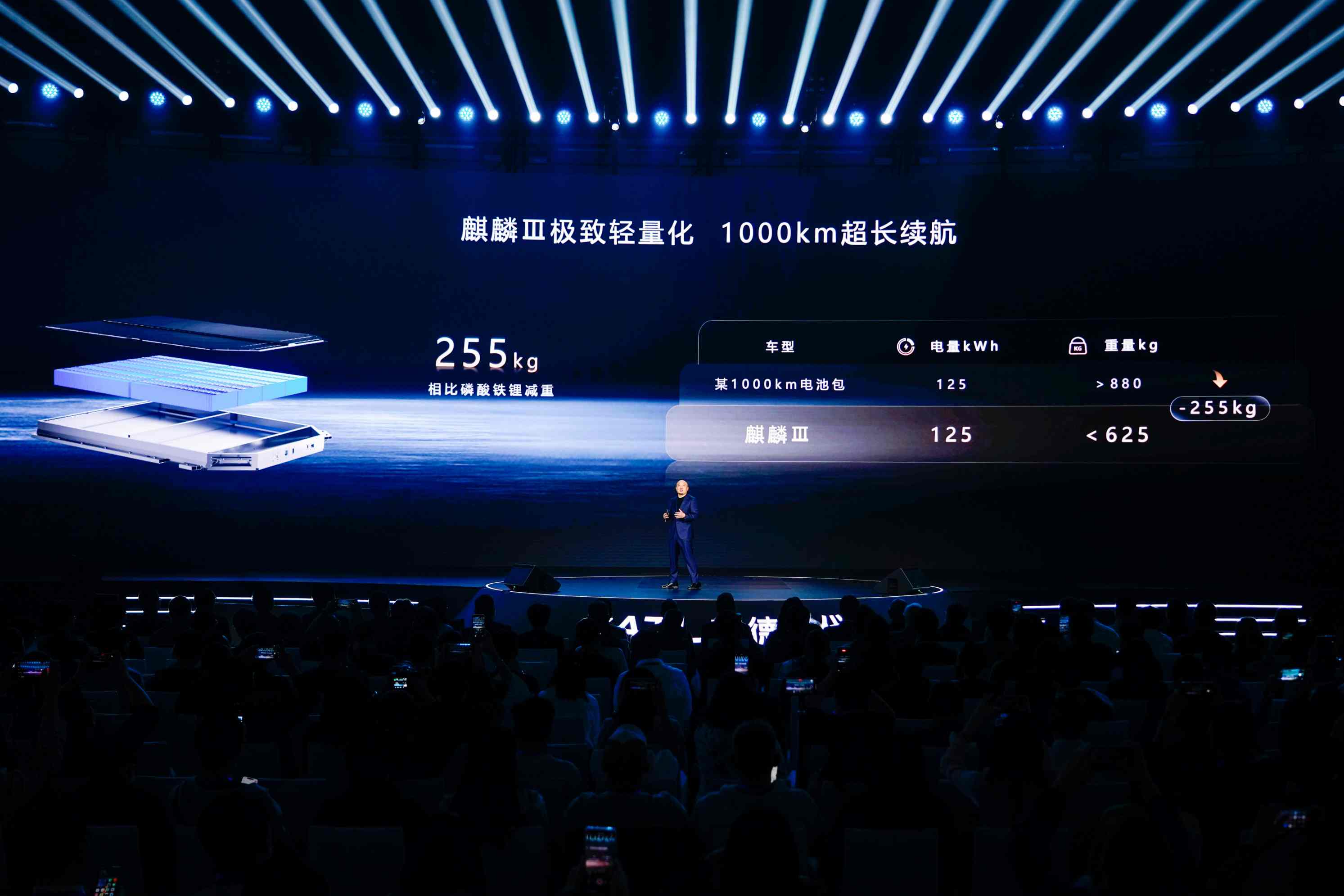
On April 21, 2026, Contemporary Amperex Technology Co. Limited (CATL) held its Super Tech Day product launch event in Beijing, officially unveiling six major innovations: the third-generation Shenxing ultra-fast charging battery, the third-generation Kirin battery, the Kirin Condensed State battery, the second-generation Xiaoyao Super Hybrid battery, the Sodium-ion battery, and the Super-Swap Integrated All-Scenario Energy Supplement Network Plan. These innovations aim to provide more diverse and efficient new energy solutions for different travel scenarios and user needs.
At the launch event, Wu Kai, an academician of the Chinese Academy of Engineering and Chief Scientist at CATL, systematically explained the advantages, boundaries, and development directions of different material systems. He stated that lithium iron phosphate (LFP) has gradually approached the theoretical energy density limit, making it more suitable for the development of ultra-fast charging technologies focused on achieving the ultimate balance. He also emphasized that ternary materials, with their high energy density advantages, remain a key battleground in global power battery technology competition, reaffirming that energy density is still the core indicator for evaluating the technological leadership of power batteries. Sodium-ion batteries, on the other hand, will show great promise in high-temperature, ultra-cold travel scenarios and energy storage fields. From the perspective of consumer differentiation needs and energy security, the lithium battery industry must develop multiple chemical systems in parallel.
Third-Generation Shenxing Ultra-Fast Charging Battery: No Longer a Choice Between Ultra-Fast Charging and Long Lifespan
From an electrochemical mechanism standpoint, the core challenge in achieving higher charging rates without damaging battery life is not trickle charging, but the temperature rise. According to the Arrhenius formula, for every 10°C increase in battery temperature, the internal side reaction rate doubles, which significantly affects lifespan.
The third-generation Shenxing ultra-fast charging battery overcomes this by reducing heat generation, enhancing heat dissipation, and improving precision. After 1,000 full charge cycles, the battery's capacity retention rate remains over 90%, achieving the perfect balance between ultra-fast charging and long lifespan. The latest third-generation Shenxing ultra-fast charging battery has achieved an industry-leading ultra-fast charging capacity of 10C equivalent, with a peak of 15C. It can charge from 10% to 35% SOC in just 1 minute, from 10% to 80% SOC in 3 minutes 44 seconds, and from 10% to 98% SOC in just 6 minutes 27 seconds. In extreme cold environments of -30°C, it takes about 9 minutes to charge from 20% to 98% SOC. The addition of battery self-heating technology and the Super-Swap Integrated Energy Supplement Network further ensures low-temperature ultra-fast charging without restricting the type of charging pile, offering both charging and swapping options.
Third-Generation Kirin Battery: Lighter, Stronger, More Premium
In the past, high-end new energy vehicles (NEVs) needed to stack battery capacity to achieve long-range, which often sacrificed the vehicle's demand for lightweight design.
The third-generation Kirin battery has an energy density of 280Wh/kg, achieving a 1,000 km range while standardly equipped with 10C ultra-fast charging. The battery pack weighs only 625 kg, which is 255 kg lighter and saves 112L of space compared to the same class of vehicles using LFP batteries with a 1,000 km range.
This significant reduction in weight leads to several benefits. First, in terms of energy consumption, the vehicle's energy consumption per 100 km is reduced by more than 6%, saving approximately 0.78 kWh per 100 km. For a vehicle that drives 20,000 km annually, this results in an annual electricity saving of 15.6 million kWh, reducing CO2 emissions by 78,500 tons, which is equivalent to planting 2.55 million trees and covering 1,250 hectares of green space. In terms of handling and safety, the 0-100 km/h acceleration time is reduced by approximately 0.6 seconds, the overtaking window is reduced by 12%, the moose test speed increases by 8%, and the vehicle's body tilt angle decreases by 6.5%, improving emergency avoidance by 15-25%. The braking distance is shortened by about 1.44 meters. According to data from institutions like the China Automotive Engineering Research Institute, every 1-meter reduction in braking distance decreases the probability of highway accidents by 8%. In terms of durability, key components of the chassis last 40% longer, and tire life is extended by 30%. What used to require replacement every 30,000-40,000 km now lasts at least 10,000 km longer. The saved 112L of space increases headroom by at least 18mm or can be used to optimize the vehicle's aerodynamic design.
Kirin Condensed State Battery: Aviation-Grade Technology for Passenger Cars
The Kirin Condensed State Battery from CATL is the first to apply aviation-grade condensed-state technology to power batteries for passenger cars. With an energy density of 350Wh/kg, it sets a new record for mass-produced batteries. This technology, initially developed for electric aircraft, has been tested on a 4-ton commercial airplane and will soon undergo further verification on aircraft over 8 tons.
The Kirin Condensed State battery has a volumetric energy density of 760Wh/L. With a typical vehicle battery pack design, it can achieve a range of up to 1,500 km for sedans and 1,000 km for full-size, three-row, six-seat SUVs. The battery pack weighs less than 650 kg. A 1,500 km range is not only a disruption to traditional internal combustion engine vehicles but also a leap forward compared to today's electric vehicles. For example, driving from Beijing to Nanjing, a distance of over 1,000 km, can be completed in one go, even with highway driving at reduced range.
In terms of safety, the Kirin Condensed State battery upgrades traditional liquid electrolyte to condensed-state electrolytes, eliminating risks associated with electrolyte leakage and combustion, fundamentally cutting off the safety risks caused by leakage.
Second-Generation Xiaoyao Super Hybrid Battery: Bringing Hybrid Vehicles into the 600 km Pure Electric Era
The second-generation Xiaoyao Super Hybrid Battery increases the pure electric range to 600 km, with all models featuring 10C ultra-fast charging. It introduces the "Super Hybrid System" technology, combining LFP, Super Hybrid, and ternary materials into three technical routes, covering all hybrid scenarios from mainstream family vehicles to high-end all-purpose models.
The LFP version of the second-generation Xiaoyao Super Hybrid Battery offers a pure electric range of 500 km, meeting daily commuting needs with a "charge once a week." The new Super Hybrid System, based on a lithium iron phosphate olivine crystal structure, achieves a 15% improvement in range compared to single LFP batteries, with a density of 230Wh/kg. The ternary version pushes the pure electric range to over 600 km, achieving a combined range of over 2,000 km, truly realizing "one car for two uses."
In terms of power, the second-generation Xiaoyao outputs 1.5 MW of instant power when fully charged and remains stable at 1.2 MW even at 20% SOC, addressing the "power loss in low battery" issue. In off-road scenarios, such as desert "chicken coop" pits, the battery provides more than 350 kW of instant power—three times the power required for escape—even with less than 10% charge remaining.
In terms of safety, the bulletproof-grade bottom coating can withstand 1,500 Joules of impact energy, which is 10 times the national standard (150 Joules) and equivalent to the impact of a standard rifle shot. The waterproof sealing capability can endure continuous immersion at a depth of 2 meters for over 200 hours without affecting performance, ensuring uninterrupted power and safety during heavy rain or off-road water crossings.
Sodium-Ion: From Technological Breakthrough to Industrialization
This year, CATL has overcome four major industry challenges in sodium-ion battery mass production: extreme water control, hard carbon gas production, aluminum foil bonding bottlenecks, and self-generating negative electrodes for large-scale production, addressing over a hundred engineering challenges.
The sodium-ion battery will begin large-scale production by the end of 2026.
Super-Swap Integrated: The Best Energy Supplement Model
CATL believes that the future energy supply model will be divided into home charging, public charging, and battery swapping. The Super-Swap Integrated model is the best form of this evolution.
CATL announced that its passenger car "Chocolate" and heavy truck "Qiji" battery swap stations will be equipped with Shenxing ultra-fast charging piles, realizing "swappable and chargeable, super-swap linkage."
Super-Swap stations share the box transformers and charging modules, reducing energy conversion stages, and lowering energy loss by more than 13 percentage points compared to traditional charging stations. In case of emergency, the swap station's battery can also discharge to the charging pile, achieving a device reuse rate of over 85%. Each parking space can serve three times the number of vehicles compared to traditional charging stations, with the capital cost of ultra-fast charging only one-fifth of that of traditional stations.
In terms of battery products, the Chocolate swap battery (model 26) is equipped with an 800V high-voltage architecture, with the first batch offering 75 kWh capacity. Future versions will feature larger capacities, fully compatible with B to C class 800V vehicles, covering the A0 to C class vehicle matrix.
In terms of network construction, CATL plans to build 4,000 Super-Swap Integrated stations by the end of 2026, covering nearly 190 cities and an 11-horizontal, 12-vertical highway network. CATL will collaborate with automakers and energy partners to jointly build a "Super-Swap Shared Network," with the first batch of partners including Changan, Chery, GAC, Seres, SAIC-GM-Wuling, and BAIC. By 2028, they plan to build more than 100,000 shared energy infrastructure stations.
Dr. Zeng Yuqun, Chairman of CATL, emphasized at the event that industrial innovation must adhere to rigorous scientific research principles. For Chinese technology to go global, it relies not only on speed and scale but also on the quality of innovation, verification capability, and the credibility of the brand.
From five battery products covering all chemical systems to the full implementation of the Super-Swap Integrated energy network, CATL has completed a full-chain layout from battery products to energy infrastructure at this Super Tech Day, moving from "breakthroughs at single points" to "comprehensive coverage of all scenarios" in new energy mobility, ensuring that every travel need of users finds the best solution.
- Next: CATL Releases Car-Specific Aggregated-Phase Battery, 1500km Range
- Previous: Sunwoda Becomes Tesla's 5th Global Battery Supplier
Contact Details
Lithium LiFePO4 Batteries and Lithium LiFePO4 Cells Supplier - LiFePO4 Battery Shop
Contact Person: Miss. Elena Wang
WhatsApp : +8615263269227
Skype : +8615263269227
WeChat : 15263269227
Email : info@lifepo4batteryshop.com
All Products
Certification
Customer Reviews
- I have fond memories of our meeting in Shanghai with LiFePO4 Battery Shop Elena. Your company left a strong impression on me with its impressive growth and professionalism. We both value straightforwardness and honesty, which I believe are the most important qualities in any partnership. I am confident that we can build a successful collaboration based on these shared values. —— Robert from USA
- I've been working with LiFePO4 Battery Shop for years, and their reliability is unmatched. While other suppliers frequently change sales teams, LiFePO4 Battery Shop has consistently provided exceptional service with a stable team. Their commitment to quality and customer support truly sets them apart. —— Henry from Australia