News
By 2027, Sodium ion Battery Costs Will Fully Drop Below LiFePO4
2026-05-08 | Calvin
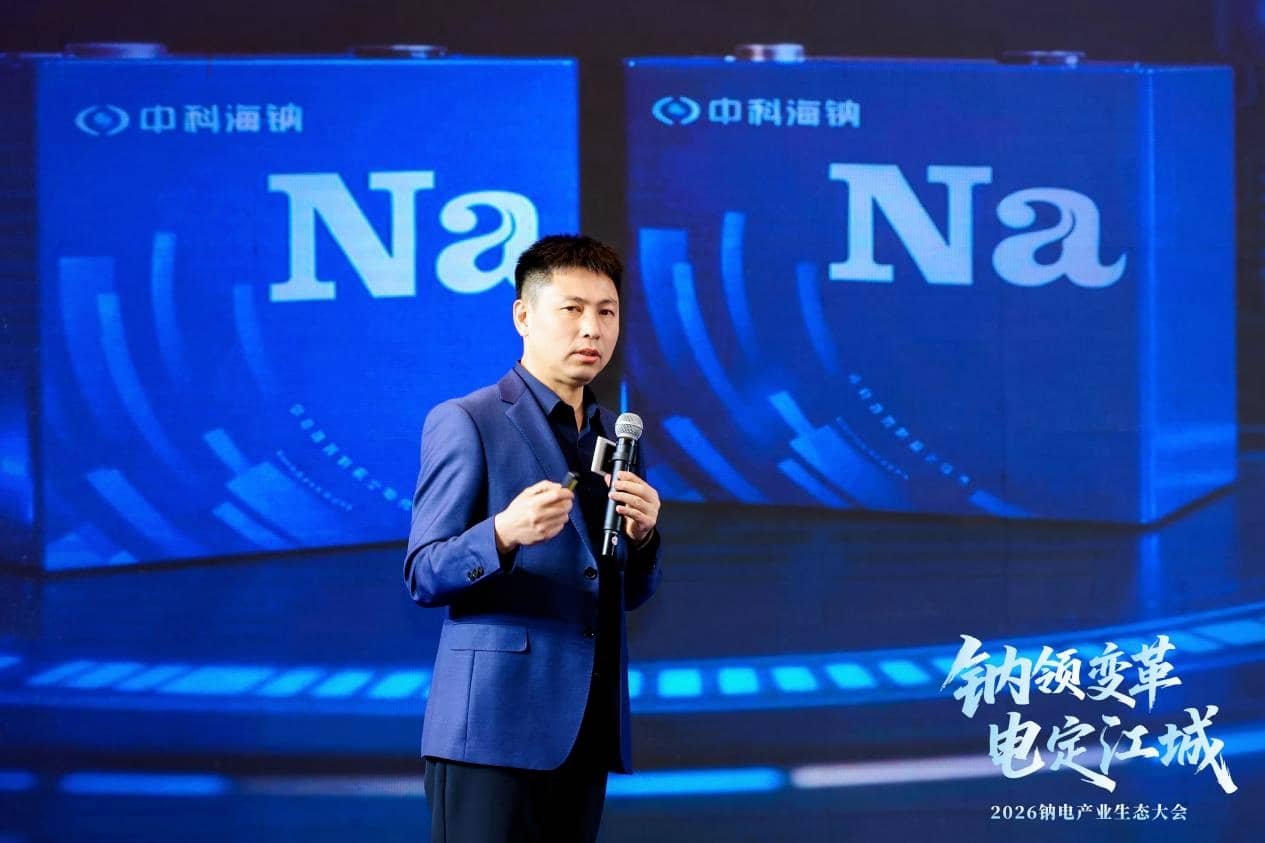
0.35 CNY/Wh is just the beginning. By 2027, Sodium ion battery costs are expected to undercut LiFePO4 across the board.
If you follow the new energy market, you’ve probably noticed lithium carbonate prices rising again. At the start of 2026, prices rebounded to over 140,000 CNY per ton, pushing the cost of LiFePO4 batteries higher.
Meanwhile, Sodium ion battery costs are falling at a speed that is clearly visible.
In early April 2026, Li Shujun, General Manager of Zhongke Haina, revealed a striking figure at the 2026 Global Sodium ion Battery Industry Ecosystem Conference. In the first quarter of 2026, Sodium ion battery cell costs had dropped to 0.35–0.40 CNY/Wh, narrowing the price gap with LiFePO4 batteries to just 0.10–0.15 CNY/Wh.
What does this mean? The crossover point between Sodium ion and lithium battery prices is right on the horizon.
01 Three Drivers Behind the Cost Decline
Li Shujun analyzed that the rapid decline in Sodium ion battery costs stems from three main factors.
1. Natural Advantage in Raw Materials
Sodium reserves in the earth’s crust are 400–1200 times greater than lithium, with raw material costs just 1/50 of lithium. China’s domestic supply is abundant, minimizing exposure to lithium price fluctuations. As long as Sodium ion mines exist, raw material costs for Sodium ion batteries have little room to rise.
2. Continuous Advances in Manufacturing Technology
Replacing copper foil with aluminum foil for current collectors reduces costs by 15 percent. Layered oxides and coal-based hard carbon materials are now mass-producible, and product yield has increased from 85 to over 95 percent, meaning the same input produces more qualified batteries.
3. Benefits of Large-Scale Production
By 2026, China’s total Sodium ion battery capacity exceeded 80 GWh, with leading companies’ single production lines reaching 10 GWh. Scaling production spreads out equipment depreciation, labor, and management costs, further reducing unit costs.
02 Price Crossover: 0.35 CNY/Wh by End of 2026, Below LiFePO4 in 2027
Li Shujun provided a clear timeline: on a 1 GWh production line, the comprehensive cost of Sodium ion batteries is about 0.4 CNY/Wh. With scale effects, costs are expected to fall below 0.35 CNY/Wh by the end of 2026, and fully undercut LiFePO4 by 2027, establishing a stable cost advantage.
The 2026 Global Sodium ion Battery Technology Application Industry White Paper confirms this trend. It shows that polyanionic Sodium ion battery cell costs have dropped to 0.5–0.6 CNY/Wh, and with scale, could reach 0.2–0.3 CNY/Wh. Cycle life can reach up to 20,000 cycles, double that of LiFePO4. This indicates that the cost advantage of Sodium ion batteries is not just a few points today, but a long-term, expanding gap. Industry estimates suggest that large-scale adoption of Sodium ion batteries could widen the cost gap to 30 percent or more.
03 Application Scenario Roadmap
Li Shujun predicts Sodium ion batteries will penetrate markets in stages:
- 2026: large-scale use in energy storage and low-speed electric vehicles
- 2027: adoption in passenger vehicles and medium-to-high-end energy storage
- 2028: industrial scale reaches hundreds of GWh, cell costs drop below 0.3 CNY/Wh, cost advantage grows to 15–20 USD/kWh
At the same time, energy-type Sodium ion batteries will reach energy densities above 180 Wh/kg, approaching LiFePO4 levels.
04 Impact on Lithium Batteries
The drop in Sodium ion battery costs does not signal the end for lithium batteries, but introduces a “catalyst effect.”
Lithium batteries remain relevant, leading in energy density, mature supply chains, and scale. The rise of Sodium ion batteries means lower-end markets will see rapid replacement.
In energy storage, Sodium ion batteries offer long life, high safety, and low cost. In cost-sensitive areas like electric two-wheelers and low-speed vehicles, Sodium ion batteries could quickly replace lead-acid and some lithium batteries.
Lithium prices will face long-term pressure. After years of volatility, the rise of Sodium ion batteries provides a cost-competitive alternative, capping lithium prices.
Technology diversification will also emerge. Future development will see complementary use of lithium and Sodium ion batteries. Lithium targets high energy density and long range, while Sodium ion focuses on low cost, high safety, and low-temperature performance. Hybrid lithium-Sodium ion solutions are already mature in electric vehicles and energy storage.
05 Investor and Consumer Perspective
For investors, falling Sodium ion battery costs point to a highly predictable growth path. From modest progress in 2023 to full-scale production in 2026, Sodium ion batteries have transitioned from technical verification to industrialization in three years.
For consumers, lower costs mean cheaper electric vehicles and storage systems. Once Sodium ion battery prices undercut LiFePO4, manufacturers gain greater cost reduction potential, reflected in lower retail prices.
It is likely that electric vehicle prices will see another downward wave in the next two years.
- Next: 3 Years, 60 GWh: CATL Secures the World's Largest Sodium-Ion Battery Order
- Previous: Sunwoda 5MWh Liquid-Cooled Energy Storage System Large-Scale Fire Test Successfully Completed
Contact Details
Lithium LiFePO4 Batteries and Lithium LiFePO4 Cells Supplier - LiFePO4 Battery Shop
Contact Person: Miss. Elena Wang
WhatsApp : +8615263269227
Skype : +8615263269227
WeChat : 15263269227
Email : info@lifepo4batteryshop.com
All Products
Certification
Customer Reviews
- I have fond memories of our meeting in Shanghai with LiFePO4 Battery Shop Elena. Your company left a strong impression on me with its impressive growth and professionalism. We both value straightforwardness and honesty, which I believe are the most important qualities in any partnership. I am confident that we can build a successful collaboration based on these shared values. —— Robert from USA
- I've been working with LiFePO4 Battery Shop for years, and their reliability is unmatched. While other suppliers frequently change sales teams, LiFePO4 Battery Shop has consistently provided exceptional service with a stable team. Their commitment to quality and customer support truly sets them apart. —— Henry from Australia