
Blog
What is the Impact of High Temperature on Lithium-Ion Batteries?
2026-04-03 | Calvin
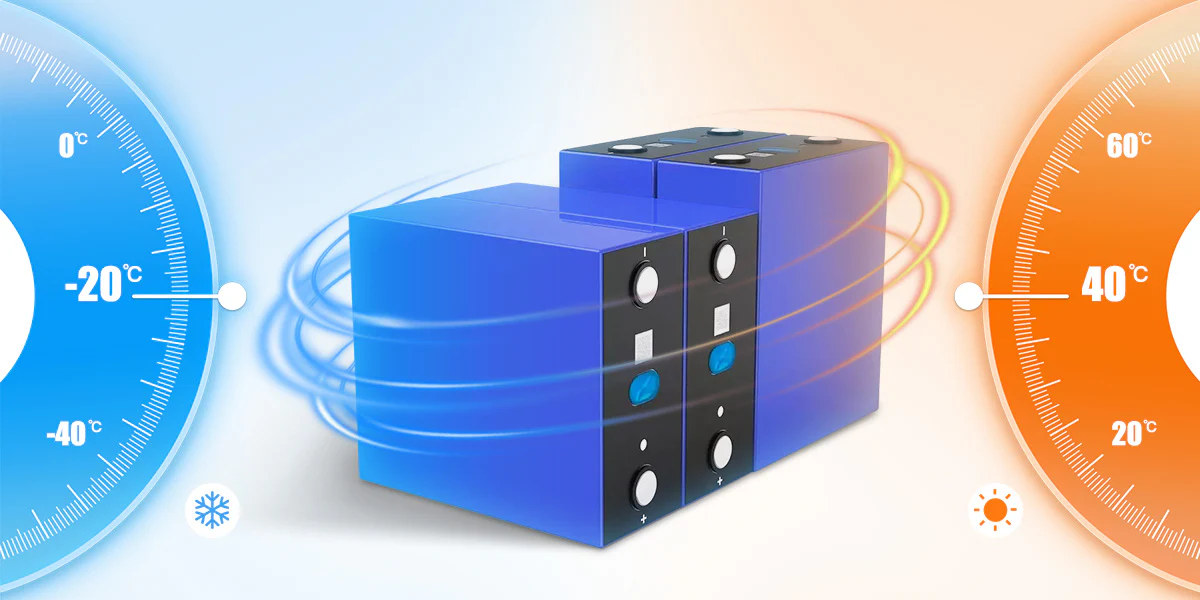
Hello everyone, today we are going to cover a very important topic: high temperature. What exactly does it do to lithium-ion batteries? Why are batteries in devices like smartphones, power banks, and electric vehicles more prone to issues during summer? Today, we will clarify everything about structure, principles, and risks in one go.
1. What Does a Lithium-Ion Battery Look Like? What is its Working Principle?
A lithium-ion battery, often referred to as a lithium battery, consists of five key components: the anode, cathode, separator, electrolyte, and the outer casing. Before we dive into how a lithium-ion battery works, let’s first understand its main components:
- Cathode - This is the most valuable part of the battery, making up around 40% of its cost. It is responsible for the insertion and extraction of lithium ions during charging and discharging, which is the main source of the battery’s energy. The active material of the cathode is typically lithium-containing transition metal oxides (e.g., LiCo2, NCM, NCA) or poly-anionic compounds (e.g., LiFePO4).
- Anode - The active material is graphite (e.g., natural graphite or artificial graphite), which has a layered structure that allows lithium ions to easily embed themselves.
- Separator - This acts as a “firewall” between the anode and cathode. It’s a polymer film with a microporous structure (e.g., polyethylene (PE), polypropylene (PP), or composite separators). It allows lithium ions to pass freely but blocks electrons, preventing direct contact between the anode and cathode, thus avoiding the risk of a short circuit.
- Electrolyte - The electrolyte provides the pathway for lithium ions to move between the anode and cathode, much like a conveyor belt. Lithium ions travel from the anode to the cathode and back, generating electrical energy in the process.
- Outer Casing - This encapsulates and protects the internal components of the battery. It typically comes in rigid forms like steel or aluminum cases or flexible soft-pack casings like composite aluminum-plastic films.
Working Principle of Lithium-Ion Batteries:
1. Charging Process: During charging, lithium ions move from the cathode into the electrolyte, pass through the separator’s tiny holes, and embed themselves into the anode, forming LiC compounds.
2. Discharging Process: During discharge, both electrons and lithium ions move in the same direction but via different paths. Electrons travel from the anode through the external circuit to the cathode, while lithium ions move from the anode through the electrolyte and separator to the cathode, where they combine with the arriving electrons. The electrical energy we use is generated during this process.
The charging and discharging process of a lithium-ion battery is quiet, stable, and efficient. However, all of this can be disrupted by "high temperatures"!
2. What Happens Inside the Battery at High Temperatures?
As the temperature rises, the battery starts to behave like a pot gradually being heated up, triggering a series of critical “chemical reactions” one after another:
- SEI Membrane Decomposition (90°C–120°C) - The surface of the anode is protected by a membrane (SEI membrane), which acts like the skin of the battery. At high temperatures, this membrane can no longer hold up, and it begins to decompose and break apart, releasing heat. This marks the beginning of the battery “heating up”.
- Lithium Insertion Reacting with Electrolyte (Above 120°C) - Once the SEI membrane breaks, the lithium ions embedded in the graphite are exposed and immediately react with the electrolyte. This violent reaction releases a large amount of heat, causing the temperature inside the battery to rise rapidly, making your phone hot enough to function like a hand warmer.
- Electrolyte Decomposition (Above 200°C) - The electrolyte is highly flammable and is made from lithium hexafluorophosphate and alkyl carbonate solvents. At high temperatures, it decomposes, releases gas, and generates heat, like a flammable liquid container ready to “erupt”.
- Cathode Decomposing and Releasing Oxygen - When charging, the cathode is highly oxidative, like a gunpowder barrel. The high temperature triggers it to decompose and release oxygen, which then mixes with the flammable electrolyte, making the situation even more dangerous.
- Lithium Insertion Reacting with Binder - After the SEI membrane is gone, lithium ions embedded in the graphite may also react with the binder of the anode, releasing more heat and accelerating the process.
Once these reactions cascade, the temperature inside the battery increases rapidly, like a snowball rolling downhill, and it is too late for the heat to dissipate.
3. What Harm Does High Temperature Do to Lithium-Ion Batteries?
This series of chemical reactions ultimately results in three levels of damage to the battery: first, a decline in performance; second, a reduction in lifespan; and finally, a risk of fire or explosion!
Performance Drops Sharply:
- Capacity Decreases, Battery Life Shortens: Each time the SEI membrane is rebuilt, valuable active lithium ions are consumed. This results in a decrease in battery capacity, and you will notice the battery’s runtime shrinking. At the same time, internal resistance increases, slowing down charging and discharging, and weakening performance.
- Impedance Increases, Low Charging/Discharging Efficiency: At high temperatures, the cathode material accumulates by-products like rock salt, similar to "scale buildup". This increases impedance, obstructing current flow and causing a dramatic drop in charging and discharging efficiency.
Lifespan Significantly Shortened:
- Active Lithium "Stolen": High temperatures accelerate side reactions, and active lithium is consumed unknowingly. This leads to a depletion of the battery’s “resources,” shortening its lifespan significantly.
- Anode Gets “Clogged”: High temperatures cause transition metals from the cathode to dissolve and deposit on the anode surface, blocking the pathway for lithium ions, which accelerates battery aging.
- Internal Structure "Collapses": High temperatures can lead to thermal decomposition and gas generation, which damages the internal structure of the battery, causing irreversible damage. The battery’s ability to store and deliver energy is permanently impaired.
The Most Dangerous: Thermal Runaway — The Battery Goes into “Self-Destruct” Mode:
When the heat generation rate inside the battery exceeds the heat dissipation rate, the heat builds up quickly, and the battery begins leaking, gas-producing, swelling, and smoking—just like an inflating pufferfish ready to explode. If the temperature continues to rise, the battery can burn intensely and even explode.
What’s more terrifying is that this effect can spread. A single battery experiencing thermal runaway can trigger a chain reaction in the entire battery pack, like throwing a spark into a pile of firecrackers, leading to uncontrollable explosions.
4. How Should Lithium-Ion Batteries Be Used Correctly?
Since we know that batteries are sensitive to heat, how should we take care of them?
- Store in a Cool Place: Don’t let lithium-ion battery products “run naked” in the sun. Try to park electric vehicles in garages or shaded areas during summer. Don’t leave phones on dashboards that can get hot enough to cook an egg, as the battery's lifespan will be drastically shortened.
- Charge Slowly and Coolly: After long-distance travel, don’t rush to charge. Think of it like finishing a marathon—you wouldn't want to jump into another heavy task immediately. Similarly, charging a heated battery is like asking it to “work while sick.” It’s best to cool the battery for 15-20 minutes before charging.
- Avoid Overcharging: In high-temperature environments, charging a battery to 100% puts too much internal pressure. It’s better to charge it to 80-90%, just like eating to 70-80% full is most comfortable for humans.
- Store Long-Term with Partial Charge: If you plan to leave your electric vehicle or electronics unused for a long time (e.g., during the summer break), don’t store them fully charged or fully drained. Keep the charge between 40%-60% and place them in a cool, dry area (around 25°C is optimal).
In conclusion, high temperatures can significantly affect the performance, lifespan, and safety of lithium-ion batteries. Therefore, it is important to use and store devices with lithium-ion batteries under appropriate temperature conditions.
- Next:The Ultimate Guide to 18650 and 14500 Batteries: A Detailed Comparison
- Previous:Why Do Lithium-Ion Batteries Catch Fire?
Contact Details
Lithium LiFePO4 Batteries and Lithium LiFePO4 Cells Supplier - LiFePO4 Battery Shop
Contact Person: Miss. Elena Wang
WhatsApp : +8615263269227
Skype : +8615263269227
WeChat :15263269227
Email : info@lifepo4batteryshop.com
All Products
- TC Elcon Charger (0)
- Headway Lithium Battery (6)
- Blade Battery (10)
- Semi Solid State Battery (6)
- A123 Battery (6)
- Sinopoly Battery (7)
- GBS Battery (16)
- CALB Battery (25)
- Cylindrical Cell (9)
- Energy Storage System (0)
- Battery Management System (5)
- Sodium ion Battery Cell (4)
- Lithium Titanate Battery (22)
- Ternary Lithium Battery Cell (12)
- REPT Battery (10)
- BYD Battery (2)
- CATL Battery (15)
- Thunder Sky Winston Battery (26)
- EVE Battery (35)
- LiFePO4 Battery Cell (17)
Certification
Customer Reviews
- I have fond memories of our meeting in Shanghai with LiFePO4 Battery Shop Elena. Your company left a strong impression on me with its impressive growth and professionalism. We both value straightforwardness and honesty, which I believe are the most important qualities in any partnership. I am confident that we can build a successful collaboration based on these shared values. —— Robert from USA
- I've been working with LiFePO4 Battery Shop for years, and their reliability is unmatched. While other suppliers frequently change sales teams, LiFePO4 Battery Shop has consistently provided exceptional service with a stable team. Their commitment to quality and customer support truly sets them apart. —— Henry from Australia