
Blog
The Ultimate Guide to Battery State of Charge (SoC) and State of Health (SoH): What Every Battery User Needs to Know
2026-04-12 | Calvin
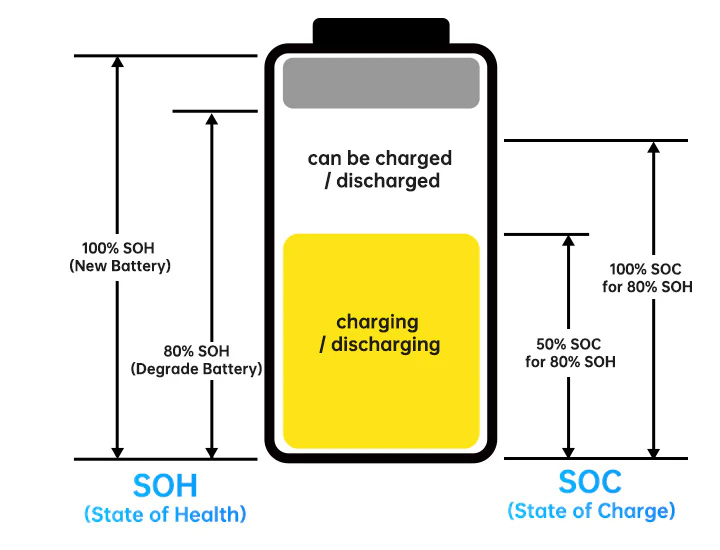
In the modern world, battery-powered devices—from smartphones and laptops to electric vehicles (EVs) and renewable energy storage systems—are a vital part of our daily lives. Understanding how to manage and maintain the performance of these batteries is crucial for ensuring reliability, longevity, and overall efficiency. Two key metrics—State of Charge (SoC) and State of Health (SoH)—play a critical role in battery management. These terms, while related, serve distinct functions that directly impact how a battery performs.
This comprehensive guide will explore the nuances between SoC and SoH, how they are measured, and why understanding these metrics can extend the life of your battery-powered devices. Whether you’re an EV owner, a renewable energy enthusiast, or a consumer of portable electronics, this article is designed to help you optimize your battery’s performance.
Part 1: Understanding Battery State of Charge (SoC)
What is Battery State of Charge?
Battery State of Charge (SoC) is a key indicator of how much energy remains in your battery at any given moment. It functions much like a fuel gauge, showing you how much charge is left in a battery. The SoC is typically expressed as a percentage, where 100% represents a fully charged battery, and 0% indicates it’s completely drained. Maintaining an optimal SoC range is essential for extending battery lifespan and avoiding performance degradation.
Measuring SoC: Different Methods Explained
1. Coulomb Counting
- How it works: Tracks the flow of current into and out of the battery.
- Advantages: Provides accurate, real-time tracking of charge.
- Limitations: Requires initial calibration and may accumulate errors over time.
2. Voltage Method
- How it works: Estimates SoC based on the battery’s voltage.
- Advantages: Quick and simple.
- Limitations: Susceptible to temperature fluctuations and load changes.
3. Impedance Spectroscopy
- How it works: Measures the battery’s internal resistance to gauge the charge.
- Advantages: Offers a detailed health profile.
- Limitations: Requires specialized equipment and is not used in everyday applications.
Why SoC Monitoring Matters
Maintaining an accurate SoC ensures optimal performance. If a battery is consistently overcharged or deep-discharged, it can experience reduced capacity and overall damage, which shortens its lifespan. For example, lithium-ion batteries—found in most modern devices—last longer when their SoC remains between 20% and 80%.
Part 2: Understanding Battery State of Health (SoH)
What is Battery State of Health?
While SoC measures how much charge remains, State of Health (SoH) refers to the overall condition of the battery, relative to when it was new. SoH takes into account factors like the battery's remaining capacity and internal resistance, giving users insight into how much useful life the battery has left. For instance, a battery with 80% SoH means it can only hold 80% of the original charge it could when it was new.
Measuring SoH: Common Assessment Methods
1. Capacity Testing
- How it works: Fully charge and then discharge the battery to assess how much energy it can hold.
- Interpreting Results: If the battery holds less charge than when it was new, its SoH is compromised.
2. Internal Resistance Measurement
- How it works: Measures the battery’s internal resistance, which increases as a battery ages.
- Significance: Higher resistance indicates a reduced ability to deliver power efficiently.
3. Self-Discharge Rate
- How it works: Measures how quickly a battery loses its charge when not in use.
- Significance: A higher self-discharge rate can indicate poor health.
Factors Affecting SoH
- Battery Age: Over time, all batteries degrade, leading to reduced capacity and performance.
- Charge-Discharge Cycles: Each charge cycle wears the battery down, diminishing its ability to hold charge.
- Environmental Conditions: Extreme temperatures or exposure to moisture can cause significant battery degradation.
Part 3: SoC vs. SoH: Key Differences Explained
| State of Charge (SoC) | State of Health (SoH) |
|---|---|
| Measures current charge level | Measures overall battery capacity |
| Expressed as a percentage (0-100%) | Expressed as a percentage (0-100%) |
| Primarily tested via voltage and coulomb counting | Tested via capacity, internal resistance, and self-discharge rate |
Key Takeaway
SoC is a snapshot of your battery’s remaining charge, whereas SoH tells you how much of your battery’s original capacity remains. Both are crucial for maintaining optimal performance and avoiding unexpected failures.
Part 4: The Relationship Between SoC and SoH
How SoC Influences SoH
Maintaining an optimal SoC helps protect the battery’s health. Overcharging and deep discharging—both of which occur when the SoC is outside of the ideal range (20%–80%)—can accelerate aging and shorten the battery’s life.
How SoH Affects SoC Accuracy
As a battery ages and its SoH declines, it becomes more difficult to accurately measure SoC. Aging batteries may show inaccurate SoC readings or lose charge more quickly. Innovative systems now account for these changes by adjusting SoC estimates based on factors like internal resistance and past usage patterns.
Summary of SoC and SoH Relationship
- SoC affects SoH: Frequent deep discharges reduce health.
- SoH affects SoC accuracy: Aging batteries make SoC readings less reliable.
- Balanced charging (20–80%) improves both SoC stability and SoH longevity.
Part 5: Real-World Applications of SoC and SoH Management
- Electric Vehicles (EVs): Managing SoC between 20% and 80% can extend battery life by up to 60%. Regular SoH testing every 3,000 miles ensures drivers avoid unexpected capacity drops and maximize vehicle range.
- Solar Energy Storage: In solar systems, regularly monitoring SoC and performing annual SoH tests ensures batteries retain 90%+ of their capacity over a 5-year period.
- Medical Equipment: For critical medical devices like portable oxygen concentrators, accurate SoC and SoH management ensures reliable performance, preventing costly failures in high-stakes situations.
Part 6: Best Practices for Maintaining SoC and SoH
1. Regular Monitoring
Using tools like Battery Management Systems (BMS), check both SoC and SoH regularly to prevent degradation.
2. Optimal Charging Practices
Charge batteries between 20% and 80% to reduce stress and prevent overcharging or deep discharging.
3. Temperature Management
Avoid exposing batteries to extreme temperatures, which can significantly impact both SoC accuracy and SoH. Ideally, keep them in a stable, moderate environment.
4. Proper Storage
Store unused batteries at around 50% charge in a cool, dry place to prevent degradation and enhance longevity.
5. Regular Maintenance
Perform routine checks for wear and tear, clean terminals, and replace the battery when SoH significantly declines.
Part 7: FAQs About Battery SoC and SoH
Q1: How often should I check my battery’s SoC and SoH?
It’s recommended to check SoC daily, especially for devices like smartphones and EVs. SoH should be checked at least once every 6 months or whenever you notice performance degradation.
Q2: Can I still use my device with low SoH?
Yes, but battery performance will diminish over time, leading to shorter usage times and increased risk of failure.
Q3: Are there any tools to help me manage SoC and SoH?
Yes, Battery Management Systems (BMS), diagnostic tools, and mobile apps can help monitor both SoC and SoH effectively.
Conclusion
Understanding and maintaining both the State of Charge (SoC) and State of Health (SoH) of your battery are critical for ensuring its longevity and optimal performance. By following the best practices outlined above, you can protect your investment, avoid unexpected failures, and extend the life of your battery-powered devices.
- Next:Why Do Lithium Batteries Experience Internal Short Circuits?
- Previous:Portable Battery Charger vs. Power Bank: What's the Difference?
Contact Details
Lithium LiFePO4 Batteries and Lithium LiFePO4 Cells Supplier - LiFePO4 Battery Shop
Contact Person: Miss. Elena Wang
WhatsApp : +8615263269227
Skype : +8615263269227
WeChat :15263269227
Email : info@lifepo4batteryshop.com
All Products
- TC Elcon Charger (0)
- Headway Lithium Battery (6)
- Blade Battery (10)
- Semi Solid State Battery (6)
- A123 Battery (6)
- Sinopoly Battery (7)
- GBS Battery (16)
- CALB Battery (25)
- Cylindrical Cell (9)
- Energy Storage System (0)
- Battery Management System (7)
- Sodium ion Battery Cell (4)
- Lithium Titanate Battery (22)
- Ternary Lithium Battery Cell (12)
- REPT Battery (10)
- BYD Battery (5)
- CATL Battery (15)
- Thunder Sky Winston Battery (26)
- EVE Battery (35)
- LiFePO4 Battery Cell (17)
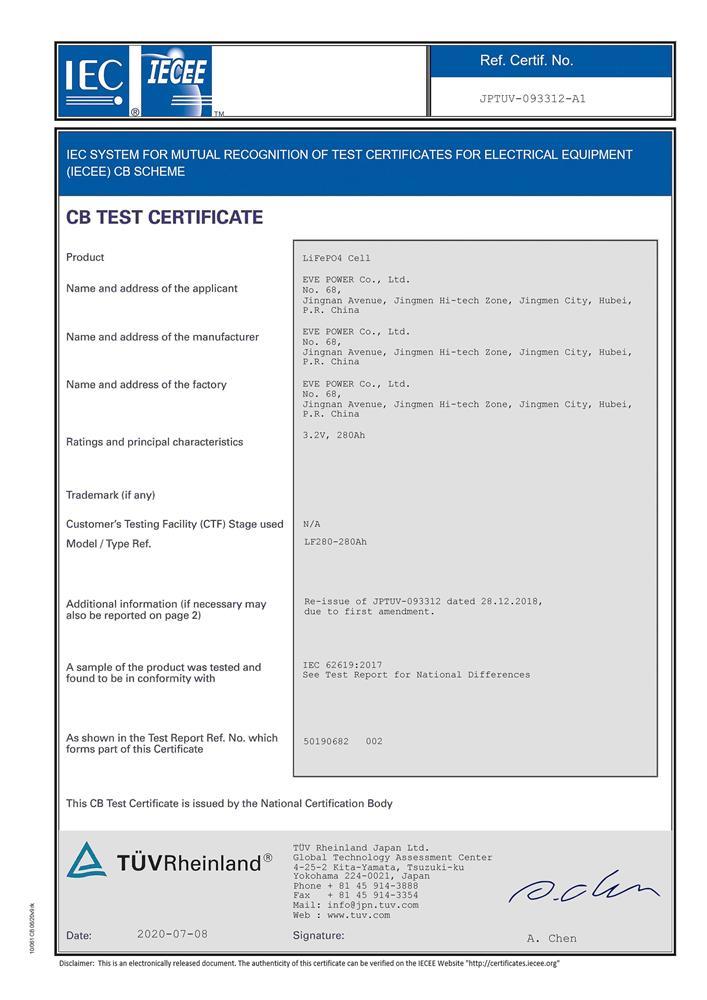
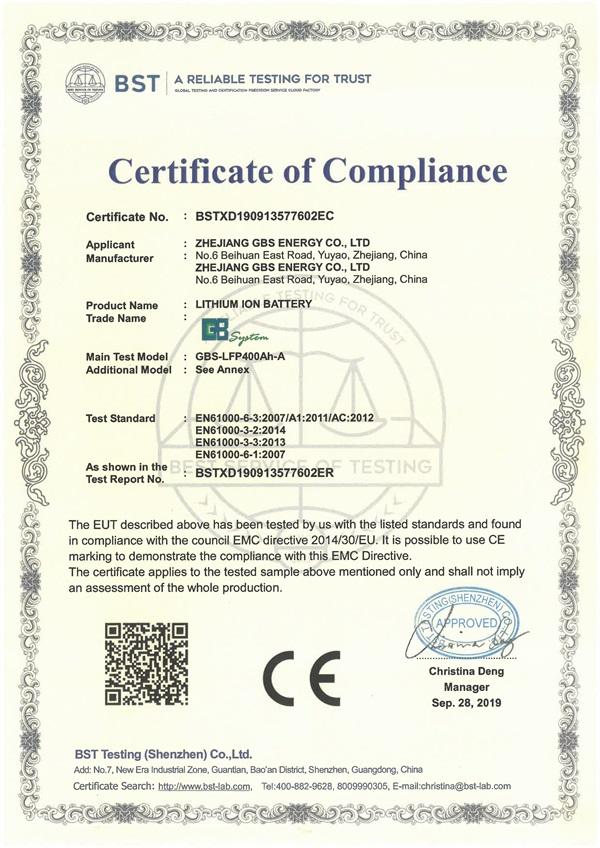
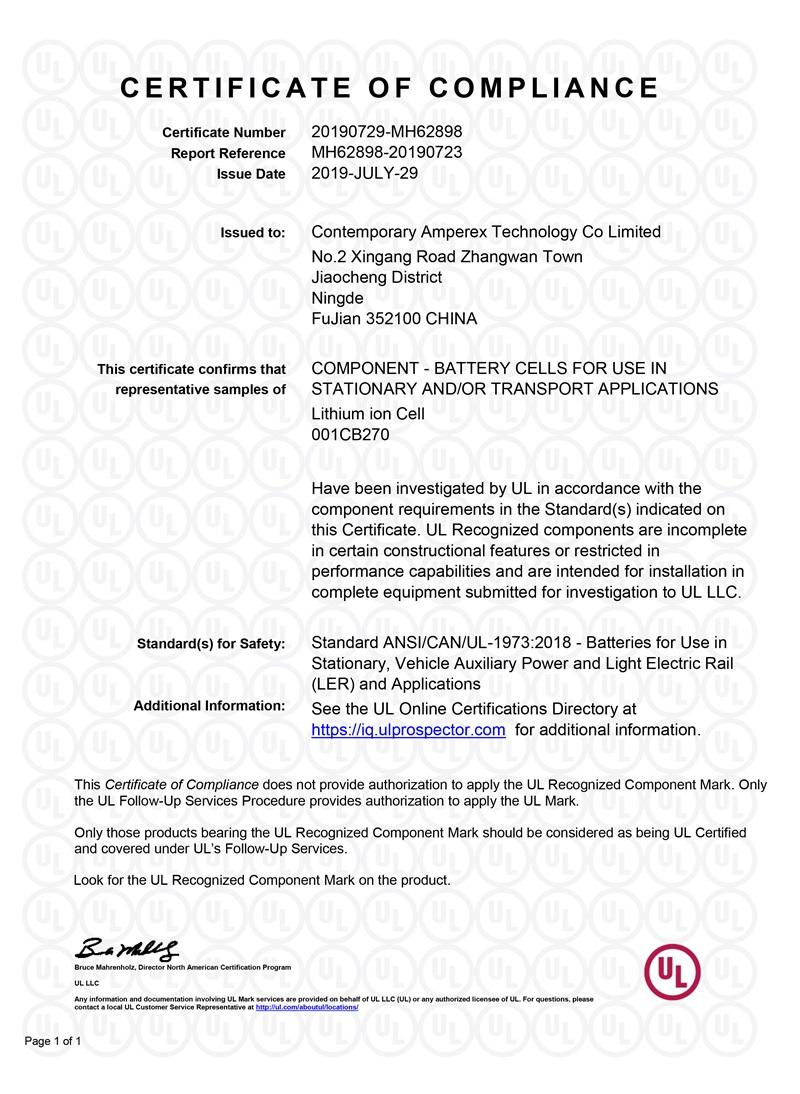
Certification
Customer Reviews
- I have fond memories of our meeting in Shanghai with LiFePO4 Battery Shop Elena. Your company left a strong impression on me with its impressive growth and professionalism. We both value straightforwardness and honesty, which I believe are the most important qualities in any partnership. I am confident that we can build a successful collaboration based on these shared values. —— Robert from USA
- I've been working with LiFePO4 Battery Shop for years, and their reliability is unmatched. While other suppliers frequently change sales teams, LiFePO4 Battery Shop has consistently provided exceptional service with a stable team. Their commitment to quality and customer support truly sets them apart. —— Henry from Australia