
Blog
14.4 Volt Battery Guide: Specifications, Types, Charging & Applications
2026-07-26 | Calvin
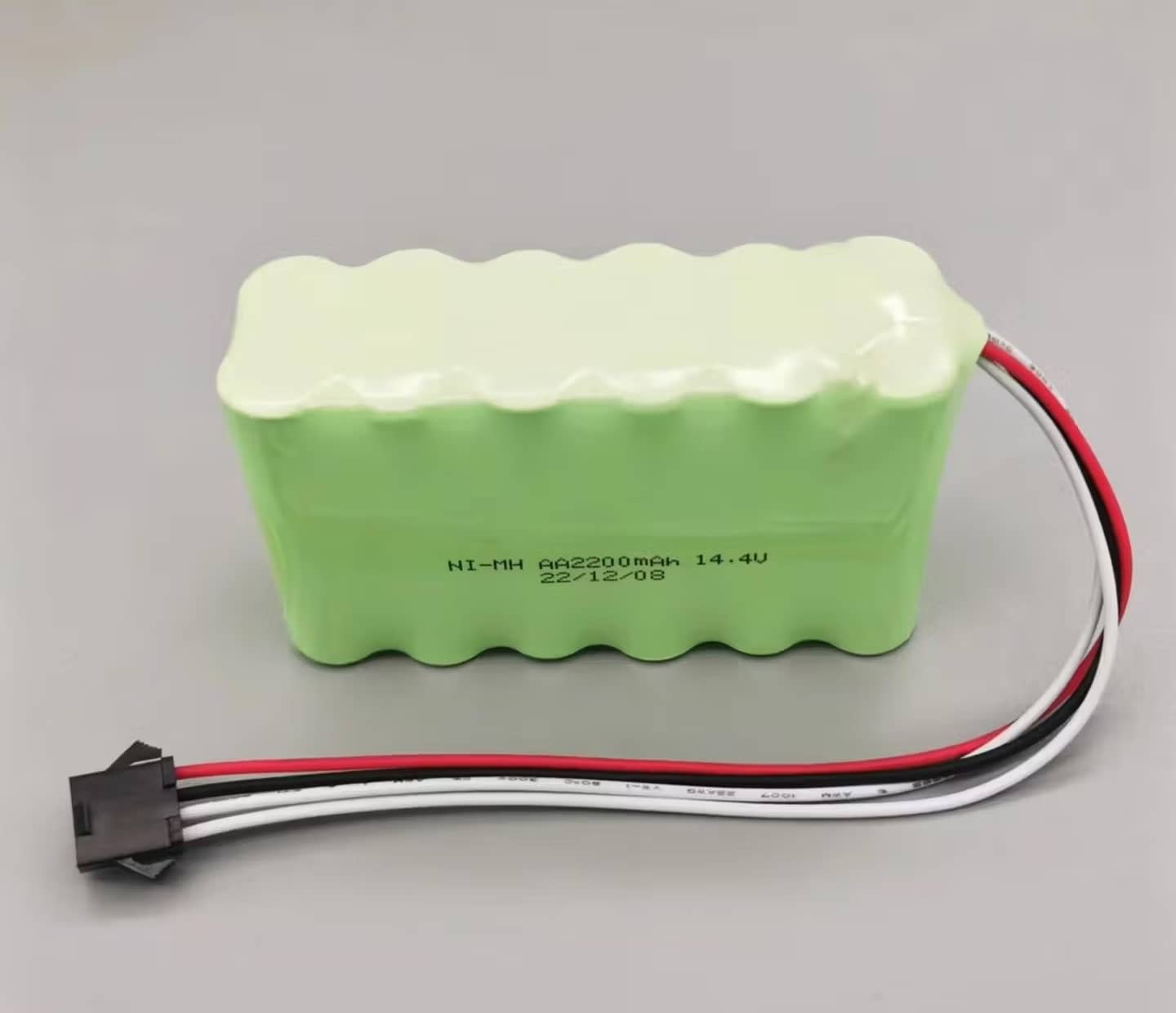
A 14.4V battery is a widely used rechargeable battery configuration found in cordless tools, robotics, medical equipment, household appliances, and industrial systems. It provides a practical balance between power output, battery size, and portability, making it a popular choice for medium-power applications.
Although many people recognize the 14.4V label on a battery pack, the voltage rating alone does not tell the complete story. Battery chemistry, capacity, cell configuration, charging requirements, and protection systems all determine how well a 14.4V battery performs.
This complete guide explains what a 14.4V battery is, how it is built, the different battery types available, how to charge it correctly, how long it lasts, and how to choose the right 14.4V battery for your application.
What Is a 14.4V Battery?
A 14.4V battery is a rechargeable battery pack designed to provide a nominal output voltage of 14.4 volts. Unlike a single battery cell, a 14.4V battery pack is made by connecting multiple smaller cells together in series to achieve the required voltage.
The term "14.4V" refers to the combined nominal voltage of the battery cells inside the pack. It does not describe the battery chemistry. A 14.4V battery can be built using different technologies, including:
- Lithium-ion (Li-ion)
- Lithium iron phosphate (LiFePO4)
- Nickel-metal hydride (NiMH)
- Nickel-cadmium (NiCd)
Each chemistry provides different advantages in terms of weight, charging speed, safety, capacity, and lifespan.
What Does 14.4V Mean?
The 14.4V rating represents the battery's nominal voltage, which is the average voltage during normal operation. The actual voltage of the battery changes depending on its charge level and chemistry.
For example, a lithium-ion 14.4V battery pack typically uses four cells connected in series:
4 cells × 3.6V = 14.4V nominal voltage
When fully charged, each lithium-ion cell reaches approximately 4.2V:
4 cells × 4.2V = 16.8V fully charged voltage
This difference between nominal voltage and maximum charging voltage is normal and important when selecting chargers and compatible devices.
How Many Cells Are in a 14.4V Battery?
The number of cells inside a 14.4V battery depends on the battery chemistry because different cell types have different nominal voltages.
| Battery Chemistry | Cell Voltage | Number of Cells | Total Voltage |
|---|---|---|---|
| Lithium-Ion (Li-ion) | 3.6V | 4 cells in series | 14.4V |
| NiMH | 1.2V | 12 cells in series | 14.4V |
| NiCd | 1.2V | 12 cells in series | 14.4V |
The cell arrangement affects the battery's performance, weight, charging requirements, and overall lifespan.
14.4V Battery Specifications Overview
| Specification | Description |
|---|---|
| Nominal Voltage | 14.4 volts |
| Battery Type | Rechargeable battery pack |
| Common Chemistries | Li-ion, LiFePO4, NiMH, NiCd |
| Typical Applications | Power tools, robotics, medical devices, household equipment |
| Capacity Measurement | Ah or mAh |
| Energy Measurement | Watt-hours (Wh) |
| Protection | BMS or protection circuits depending on chemistry |
Understanding 14.4V Battery Capacity
Voltage tells you the electrical pressure of a battery, but capacity determines how much energy the battery can store.
Battery capacity is usually measured in:
- Amp-hours (Ah) — the amount of current a battery can provide over time
- Milliamp-hours (mAh) — commonly used for smaller battery packs
- Watt-hours (Wh) — the total energy stored in the battery
The relationship between voltage, capacity, and energy is:
Watt-hours (Wh) = Voltage (V) × Amp-hours (Ah)
Example:
- 14.4V × 2Ah = 28.8Wh
- 14.4V × 5Ah = 72Wh
- 14.4V × 8Ah = 115.2Wh
A higher Ah rating generally provides longer runtime, but it may also increase battery size and weight.
Types of 14.4V Batteries
A 14.4V battery is available in several chemistries, and each type offers different performance characteristics. Choosing the right chemistry depends on the application, required runtime, charging requirements, safety needs, and budget.
14.4V Lithium-Ion Battery (Li-ion)
Lithium-ion is the most common modern battery technology used in 14.4V battery packs. It is widely used because it provides high energy density, lower weight, fast charging, and good overall performance.
Most 14.4V lithium-ion packs use a 4-cell series configuration, where four lithium-ion cells are connected together to achieve a 14.4V nominal output.
Advantages of 14.4V Li-ion Batteries
- High energy density
- Lightweight compared with NiMH and NiCd
- Fast charging capability
- Low self-discharge rate
- Long service life with proper maintenance
- No memory effect
Disadvantages of 14.4V Li-ion Batteries
- Requires battery management system (BMS)
- More sensitive to overheating
- Requires compatible chargers
- Higher initial cost
Common Applications
- Cordless drills
- Electric screwdrivers
- Portable vacuum cleaners
- Robotics
- Medical equipment
- Portable electronics
14.4V LiFePO4 Battery
Lithium iron phosphate (LiFePO4) is another lithium battery chemistry known for excellent safety, long cycle life, and thermal stability.
A 14.4V LiFePO4 battery is commonly built using four lithium iron phosphate cells connected in series, with each cell having a nominal voltage of approximately 3.2V to 3.3V.
Advantages of 14.4V LiFePO4 Batteries
- Very long cycle life
- Excellent thermal stability
- High safety performance
- Low risk of overheating
- Stable voltage output
Disadvantages of 14.4V LiFePO4 Batteries
- Larger and heavier than some Li-ion alternatives
- Higher upfront cost
- Lower energy density compared with some lithium-ion chemistries
Common Applications
- Backup power systems
- Industrial equipment
- Medical devices
- Energy storage systems
14.4V NiMH Battery
Nickel-metal hydride (NiMH) batteries were widely used before lithium-ion technology became dominant. They remain useful in applications where reliability and simple charging systems are important.
Advantages of NiMH Batteries
- More environmentally friendly than NiCd
- Good durability
- Less sensitive to overcharging than lithium batteries
- Reliable performance
Disadvantages of NiMH Batteries
- Higher weight
- Lower energy density than lithium batteries
- Higher self-discharge rate
- Slower charging
Common Applications
- Older cordless tools
- Household devices
- Industrial equipment
14.4V NiCd Battery
Nickel-cadmium (NiCd) batteries were historically popular for power tools because of their durability and ability to operate in harsh environments.
However, modern applications have largely moved away from NiCd because cadmium is toxic and lithium technologies provide better performance.
Advantages of NiCd Batteries
- Very durable
- Good performance in cold temperatures
- High discharge capability
Disadvantages of NiCd Batteries
- Contains toxic cadmium
- Memory effect problems
- Lower energy density
- Less environmentally friendly
14.4V Battery Chemistry Comparison
| Feature | Li-ion | LiFePO4 | NiMH | NiCd |
|---|---|---|---|---|
| Energy Density | High | Medium | Medium | Low |
| Weight | Light | Medium | Heavy | Heavy |
| Cycle Life | Good | Excellent | Moderate | Good |
| Charging Speed | Fast | Moderate | Slow | Slow |
| Safety | Requires protection | Excellent | Good | Good |
| Common Use | Modern electronics and tools | Long-life systems | Older rechargeable devices | Legacy industrial tools |
14.4V Battery Advantages and Disadvantages
Advantages of 14.4V Batteries
- Balanced power and portability
- Suitable for medium-power applications
- Available in multiple chemistries
- Compact battery pack design
- Good compatibility with many devices
Disadvantages of 14.4V Batteries
- Not suitable for extremely high-power applications
- Performance depends heavily on battery chemistry
- Replacement requires matching voltage and specifications
- Older packs may use outdated battery technology
14.4V Battery vs 18V Battery: What Is the Difference?
The difference between a 14.4V and 18V battery is mainly the amount of electrical power available to the device. Higher voltage batteries can deliver more power when the equipment is designed to support them.
| Feature | 14.4V Battery | 18V Battery |
|---|---|---|
| Power Output | Moderate | Higher |
| Weight | Usually lighter | Usually heavier |
| Runtime | Depends on capacity | Depends on capacity |
| Common Applications | Compact tools and devices | Professional power tools |
| Compatibility | Requires 14.4V system | Requires 18V system |
Is an 18V Battery Better Than a 14.4V Battery?
Not necessarily. The better battery depends on the device design and application. An 18V battery may provide more power, but a 14.4V battery can be the better choice for equipment designed specifically around that voltage.
Using a higher-voltage battery in a device that was not designed for it can damage electronics, motors, or charging systems.
How to Charge a 14.4V Battery Safely
Charging a 14.4V battery correctly is essential for safety, performance, and battery lifespan. The correct charging method depends on the battery chemistry because lithium-ion, LiFePO4, NiMH, and NiCd batteries require different charging systems.
Charging a 14.4V Lithium-Ion Battery
A 14.4V lithium-ion battery pack usually contains four cells connected in series. Because each lithium-ion cell charges to approximately 4.2V, the maximum charging voltage of the complete pack is around 16.8V.
A proper lithium-ion charger uses a controlled charging process:
- Constant current charging
- Constant voltage charging
- Automatic charging cutoff
A Battery Management System (BMS) is also important because it protects the pack from:
- Overcharging
- Over-discharging
- Overcurrent
- Cell imbalance
- Excessive temperature
Charging a 14.4V NiMH or NiCd Battery
NiMH and NiCd batteries require different charging methods from lithium batteries. Using a lithium charger on a NiMH or NiCd pack can damage the battery.
Always use a charger specifically designed for the battery chemistry installed in your device.
How Long Does a 14.4V Battery Last?
The lifespan of a 14.4V battery depends mainly on battery chemistry, charging habits, operating temperature, and usage conditions.
| Battery Type | Typical Cycle Life | Expected Lifespan |
|---|---|---|
| Li-ion | Approximately hundreds to over 1,000 cycles depending on design | 2–5 years depending on use |
| LiFePO4 | Often thousands of cycles | 5–10+ years in suitable applications |
| NiMH | Hundreds of cycles | 2–4 years depending on maintenance |
| NiCd | Hundreds to over 1,000 cycles | Several years with proper care |
Factors That Reduce Battery Lifespan
- High operating temperatures
- Using incorrect chargers
- Repeated deep discharges
- Leaving batteries fully charged for long periods
- Physical damage or moisture exposure
How to Extend 14.4V Battery Life
- Use the correct charger for the battery chemistry.
- Avoid exposing batteries to extreme heat.
- Store unused batteries in a cool, dry location.
- Inspect batteries for swelling or damage.
- Follow manufacturer charging recommendations.
Common Applications of 14.4V Batteries
The 14.4V battery remains popular because it provides a practical balance between power, size, and portability.
Cordless Power Tools
14.4V battery packs are commonly found in cordless drills, screwdrivers, sanders, and other portable tools. They provide enough power for many household and professional tasks without creating excessive weight.
Robotics and Automation Systems
Robotic equipment often uses 14.4V battery systems because they provide stable power while maintaining a compact design.
Medical Equipment
Portable medical devices require dependable batteries with predictable performance. Depending on the application, Li-ion or LiFePO4 14.4V packs can provide reliable energy storage.
Household Appliances
Cordless vacuum cleaners, garden equipment, and portable devices often use 14.4V battery packs because they provide a good balance between runtime and weight.
How to Replace a 14.4V Battery
Replacing a 14.4V battery requires more than matching the voltage label. The replacement battery must also match the device requirements.
Check These Specifications Before Replacement
- Voltage: Confirm the replacement is designed for 14.4V operation.
- Battery chemistry: Do not replace NiMH with Li-ion without checking compatibility.
- Capacity: Higher Ah may increase runtime but may also change battery size.
- Connector type: The electrical connection must match the device.
- Physical dimensions: The battery must fit correctly inside the equipment.
- Charger compatibility: The charger must match the replacement chemistry.
Can You Replace a 14.4V Battery With a Higher Voltage Battery?
In most cases, no. A device designed for a 14.4V battery is built around specific voltage limits. Installing a higher-voltage battery such as an 18V pack may damage the motor, electronics, or control system.
Always follow the equipment manufacturer's voltage recommendations before upgrading a battery.
Frequently Asked Questions About 14.4V Batteries
What does a 14.4V battery mean?
A 14.4V battery is a rechargeable battery pack designed to provide a nominal voltage of 14.4 volts. It is usually created by connecting multiple smaller cells in series.
How many cells are inside a 14.4V lithium battery?
A typical 14.4V lithium-ion battery contains four cells connected in series. Each lithium-ion cell provides approximately 3.6V, resulting in a 14.4V nominal pack.
Is a 14.4V lithium battery better than NiMH?
For many modern applications, lithium-ion provides advantages such as higher energy density, lower weight, and faster charging. However, NiMH may still be suitable where durability and simpler charging requirements are important.
Can I use any charger for a 14.4V battery?
No. The charger must match the battery chemistry and charging requirements. A lithium-ion battery requires a lithium-compatible charger, while NiMH and NiCd batteries require different charging methods.
How many watts is a 14.4V battery?
The watt-hour capacity depends on the battery's amp-hour rating. The formula is:
Wh = Voltage × Ah
For example, a 14.4V 5Ah battery stores approximately:
14.4 × 5 = 72Wh
Are 14.4V batteries still used today?
Yes. Although many industries have moved toward higher-voltage systems, 14.4V batteries remain widely used in cordless tools, robotics, medical devices, and portable equipment.
Final Thoughts: Choosing the Right 14.4V Battery
A 14.4V battery provides a practical combination of power, portability, and flexibility. However, the best battery choice depends on more than voltage alone.
When selecting a 14.4V battery, consider:
- Battery chemistry
- Capacity requirements
- Charging method
- Device compatibility
- Required lifespan
- Operating environment
For modern applications requiring lightweight design and fast charging, lithium-ion 14.4V batteries are often the preferred choice. For applications requiring maximum safety and long cycle life, LiFePO4 can be an excellent option.
By understanding 14.4V battery specifications, cell configurations, charging requirements, and application needs, users can choose a battery that delivers reliable performance, longer lifespan, and safer operation.
- Next:21700 Battery: Complete Guide to Size, Voltage, Capacity & Applications
- Previous:How Long Will a 100Ah Lithium Battery Run a 12V Fridge? Complete Guide
Contact Details
Lithium LiFePO4 Batteries and Lithium LiFePO4 Cells Supplier - LiFePO4 Battery Shop
Contact Person: Miss. Elena Wang
WhatsApp : +8615263269227
Skype : +8615263269227
WeChat :15263269227
Email : info@lifepo4batteryshop.com
All Products
- TC Elcon Charger (3)
- Headway Lithium Battery (6)
- Blade Battery (10)
- Semi Solid State Battery (6)
- A123 Battery (6)
- Sinopoly Battery (7)
- GBS Battery (16)
- CALB Battery (26)
- Cylindrical Cell (14)
- Energy Storage System (0)
- Battery Management System (15)
- Sodium ion Battery Cell (4)
- Lithium Titanate Battery (23)
- Ternary Lithium Battery Cell (12)
- REPT Battery (10)
- BYD Battery (5)
- CATL Battery (15)
- Thunder Sky Winston Battery (26)
- EVE Battery (37)
- LiFePO4 Battery Cell (37)
Certification
Customer Reviews
- I have fond memories of our meeting in Shanghai with LiFePO4 Battery Shop Elena. Your company left a strong impression on me with its impressive growth and professionalism. We both value straightforwardness and honesty, which I believe are the most important qualities in any partnership. I am confident that we can build a successful collaboration based on these shared values. —— Robert from USA
- I've been working with LiFePO4 Battery Shop for years, and their reliability is unmatched. While other suppliers frequently change sales teams, LiFePO4 Battery Shop has consistently provided exceptional service with a stable team. Their commitment to quality and customer support truly sets them apart. —— Henry from Australia