
News
U.S. Formally Bans Imports of Chinese Inverters
2026-08-01 | Calvin
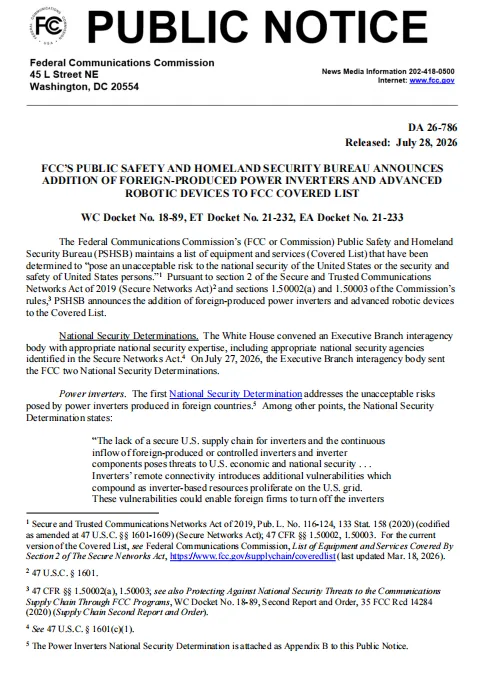
On July 28, local time, the U.S. Federal Communications Commission (FCC) issued an import ban prohibiting the import of new Chinese humanoid robots, quadruped robots, and grid-connected power inverters. The move is ostensibly aimed at preventing national security risks, ensuring the security of the U.S. artificial intelligence supply chain, and promoting the reshoring of critical manufacturing to the United States.
All foreign-made products newly added to the list are deemed to pose an unacceptable risk to U.S. national security and public safety. Such devices are considered likely to create supply chain security vulnerabilities, undermine U.S. economic security, and present significant cybersecurity risks that could threaten the operation of U.S. critical infrastructure.
According to four sources with knowledge of the matter, following the implementation of this restriction, the FCC plans to set up exemption channels for a large number of non-Chinese suppliers. The new rules take effect immediately on the day of issuance, and the scope of control is limited to new model products that have not yet entered the U.S. market. At the same time, the FCC reserves the right to revoke the sales authorization for products that have already received market access approval.
Foreign manufacturers of inverters and advanced robotics equipment may submit applications to conduct security assessments. If the assessment determines that their equipment does not pose an unacceptable national security risk, they may receive conditional approval and be exempt from the control list.
- Applications related to power inverters: to be reviewed by the U.S. Department of Defense or the Department of Homeland Security;
- Applications related to advanced robotics equipment: to be reviewed by the U.S. Department of Defense.
According to a Reuters report on June 30, the Trump administration was drafting a comprehensive import ban on Chinese-made inverters. At the time, industry associations representing U.S. solar installers and renewable energy developers warned that a sudden ban would quickly drive up the prices of photovoltaic and energy storage equipment, while the current production capacity of Western inverter manufacturers is far from sufficient to replace Chinese supplies on a large scale. Previously, under the Fiscal Year 2026 National Defense Authorization Act, the U.S. Department of Defense had already been prohibited from procuring solar photovoltaic cells, modules, or inverters manufactured by foreign entities of concern, including Chinese companies.
It is noteworthy that this U.S. action bears a similar logic to recent policy trends in the European Union. In April 2026, the EU introduced rules stipulating that, for the same cybersecurity reasons, any project using inverters manufactured in China, Russia, Iran, or North Korea would no longer be eligible for any EU energy project subsidies. At the same time, EU policymakers are also considering further strengthening security controls, including designating certain suppliers as high-risk entities, possibly as part of an amendment to the Cybersecurity Act. However, a European Commission spokesperson emphasized that the act does not specifically target any country but proposes a framework to identify countries that pose cybersecurity risks.
On May 7, in response to a question regarding the EU's prohibition on funding support for projects using Chinese inverters, a spokesperson for the Chinese Ministry of Commerce stated that China urges the EU to immediately cease such actions and said that China would carefully assess the impact of this policy on the interests of Chinese enterprises and take measures to safeguard their legitimate rights and interests.
On July 28, China's Ministry of Commerce issued "China's Position on the So-Called 'Overcapacity' Issue," stating that the issue of production capacity should be viewed comprehensively, objectively, and fairly—both historically and dialectically—and that cooperation, mutual benefit, and joint resolution of differences should be upheld through openness. It further stated that protectionism would only disrupt the global trade order, harm the security and stability of global supply chains and the healthy and orderly development of industrial cooperation, and pose long-term risks to world economic growth.
- Next: China Ends Its 11 Year Tax Exemption for Lithium-Ion Batteries
- Previous: China has repealed the policy on the "cascade utilization" of waste power batteries from new energy vehicles
Contact Details
Lithium LiFePO4 Batteries and Lithium LiFePO4 Cells Supplier - LiFePO4 Battery Shop
Contact Person: Miss. Elena Wang
WhatsApp : +8615263269227
Skype : +8615263269227
WeChat : 15263269227
Email : info@lifepo4batteryshop.com
All Products
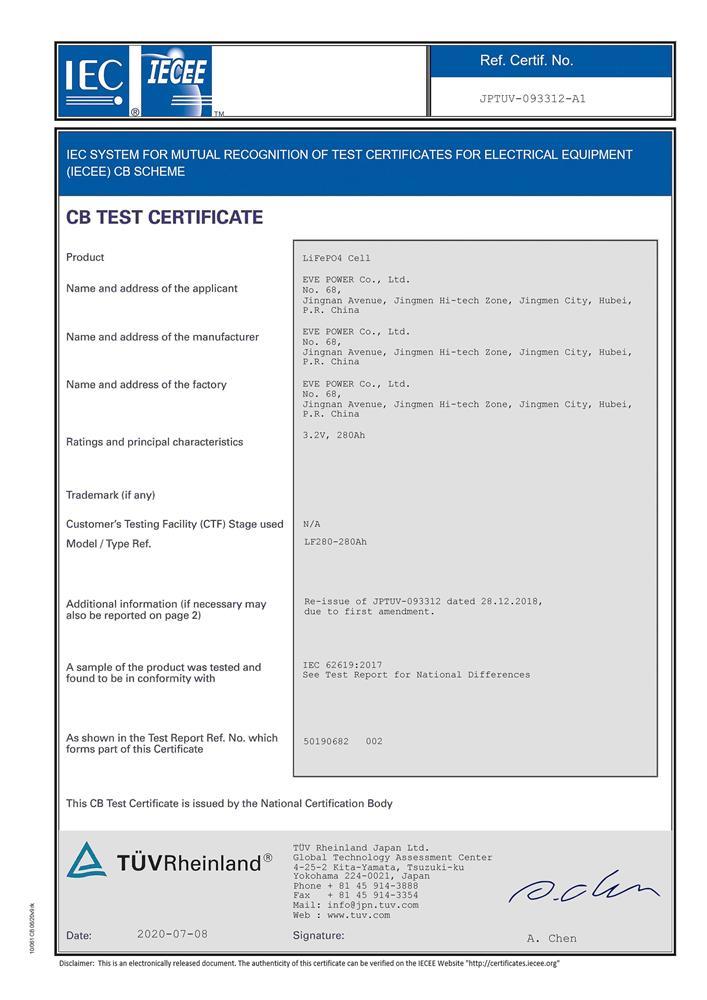
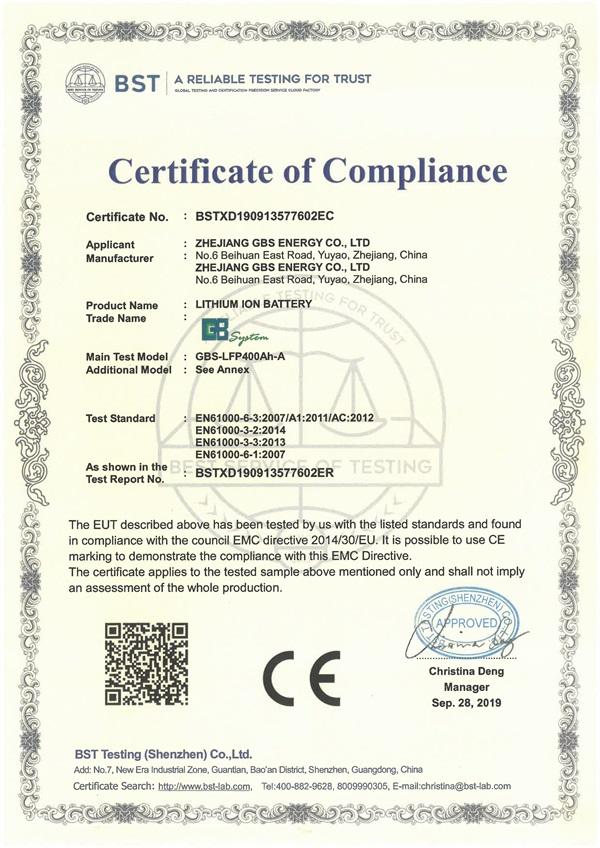
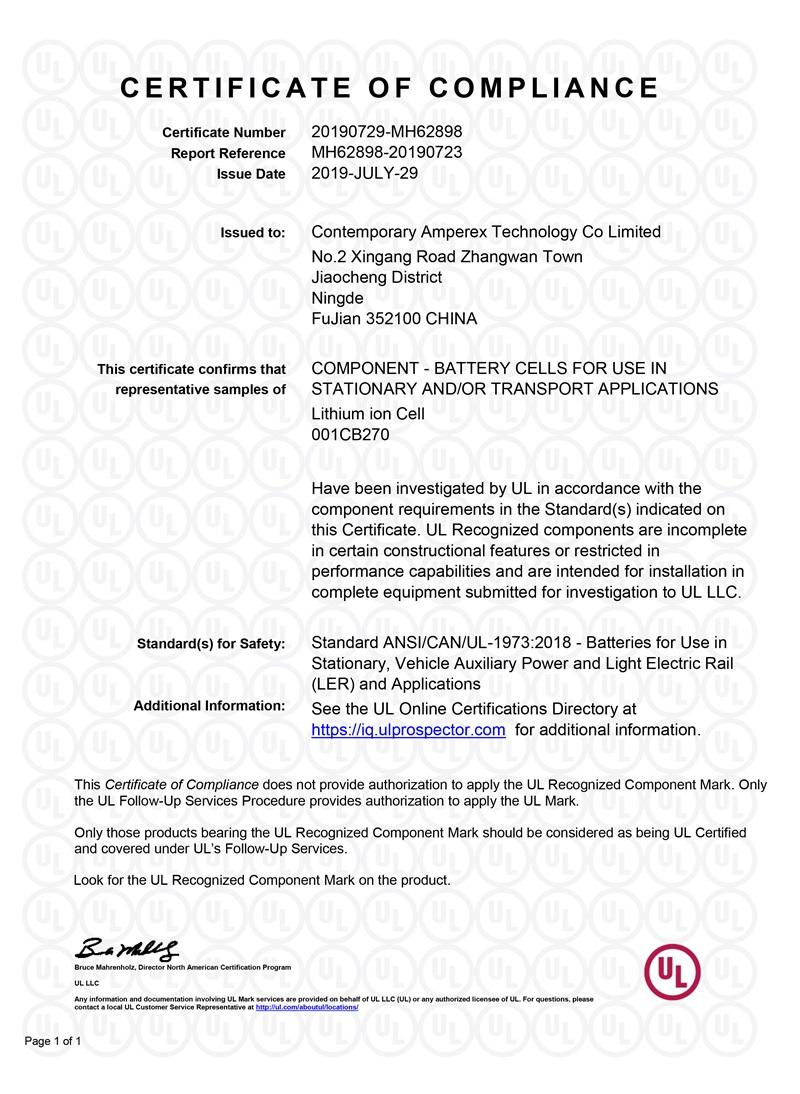
Certification
Customer Reviews
- I have fond memories of our meeting in Shanghai with LiFePO4 Battery Shop Elena. Your company left a strong impression on me with its impressive growth and professionalism. We both value straightforwardness and honesty, which I believe are the most important qualities in any partnership. I am confident that we can build a successful collaboration based on these shared values. —— Robert from USA
- I've been working with LiFePO4 Battery Shop for years, and their reliability is unmatched. While other suppliers frequently change sales teams, LiFePO4 Battery Shop has consistently provided exceptional service with a stable team. Their commitment to quality and customer support truly sets them apart. —— Henry from Australia