
News
One Million 684Ah Stacked Cells Roll Off the Line: The Era of Large-Scale Mass Production for Energy Storage “Stacked” Cells Has Officially Arrived
2026-01-08 | Calvin
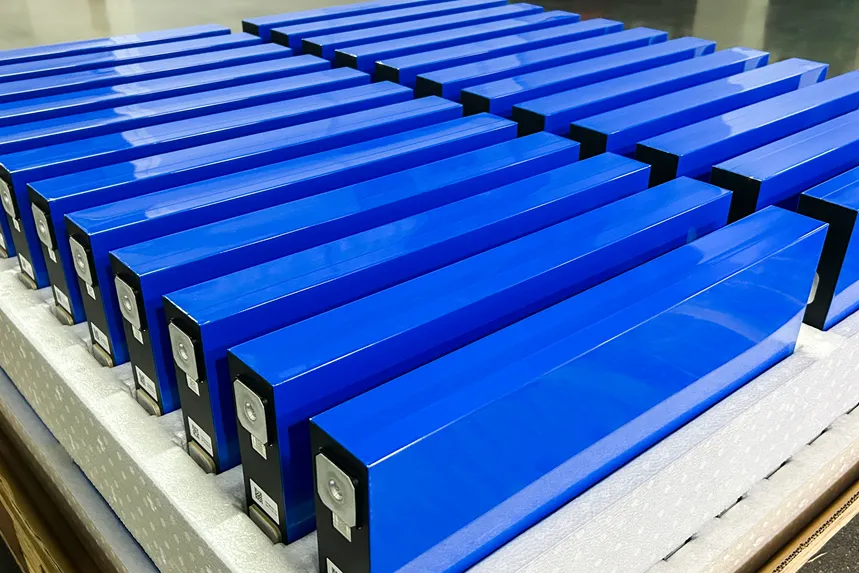
December 23 marked a major milestone for the energy storage industry. As the one-millionth 684Ah stacked battery cell rolled off the production line at Sunwoda’s manufacturing base, the era of large-scale mass production for energy storage “stacked” cells officially began.
According to industry sources, this production line completed the delivery of one million cells in just three months. This achievement signals that the stacked-cell manufacturing process has successfully overcome mass-production yield bottlenecks such as particle contamination and burr formation, and will accelerate the deployment of 600Ah+ stacked cells across multiple leading manufacturers.
One Million Cells in Three Months
Industry’s First Large-Scale Production Line
Previously, the industry held reservations about the mass production of large stacked cells designed specifically for energy storage. Concerns centered on issues such as particulate contamination, burrs, alignment accuracy, and wrinkling during manufacturing, all of which could constrain production efficiency.
Since entering mass production in September, the industry’s first large-scale 684Ah stacked-cell production line for energy storage has achieved one million units off the line in just three months. The realization of large-scale manufacturing and full-process quality control has laid a solid foundation for the stable delivery of 684Ah cells by 2026.
Mature Manufacturing Process for 684Ah Stacked Cells
Defect Rates Controlled at the PPB Level
Behind this high-quality delivery lies a comprehensive optimization and upgrade of the entire process, from production to quality inspection, for large stacked cells.
On the production side, to ensure high-quality manufacturing, Sunwoda has implemented a series of advanced technologies, including four-layer particle protection, Hi-pot insulation testing combined with CIL ceramic edge-sealing technology, three-axis alignment platform technology, and a three-stage anti-wrinkling process of forming, setting, and pressing. These measures systematically eliminate particles, remove burrs, precisely align electrode plates, and maintain surface flatness. As a result, the production yield has reached parity with traditional winding processes.
On the quality inspection side, the stacked-cell production line features industry-leading detection accuracy. Each line uses micron-level defect recognition, covering more than 230 major inspection categories. Across the entire line, over 1,510 inspection instruments work in combination with 2.5D imaging and AI-based inspection algorithms to form a fully closed-loop AI visual inspection system. In addition, online CT inspection has been introduced to achieve 100% inspection of stacked OH, enabling single-cell defect rates to be controlled at the PPB level and ensuring high-quality delivery.
The “Stacked” Process
A Key Technology Path for Energy Storage Cells
Driven by the global energy transition and carbon neutrality goals, energy storage stations are growing rapidly in scale. At the same time, battery cell technology is evolving toward larger capacity and higher energy density. Stacked cells, which balance economic efficiency and safety, have become a critical pathway for reducing system complexity and optimizing total lifecycle costs in energy storage systems.
For cells below 500Ah, the winding process can still ensure safety and efficiency thanks to years of mature mass production. However, for cells exceeding 500Ah, the increased thickness and width pose challenges. In winding processes, the sequential winding and compression of the cathode, separator, and anode lead to stress concentration at the corners, making them prone to cracking. This increases the risk of lithium plating, internal short circuits, and even thermal runaway.
Compared with winding, the stacked approach chosen for 684Ah cells represents a technological choice favoring higher performance, longer service life, and superior safety, and it reflects the advanced development direction of large-capacity cells. By assembling electrodes and separators in a layered structure, the stacked process eliminates R-angle space waste and achieves more uniform internal arrangement. This significantly enhances energy density while reducing safety risks during cycling through more evenly distributed internal stress and lower expansion rates.
Moreover, each electrode layer in a stacked cell has an independently connected tab. Compared with the half-tab design commonly used in winding processes, this structure offers lower internal resistance and more uniform heat dissipation, resulting in higher charge–discharge efficiency and a longer service life.
Accelerated Deployment of Stacked Cells
Capacity Expansion to Continue Through 2026
The mass production of 684Ah stacked cells is driving the industry’s shift from a “size competition” to genuine technological iteration. Currently, multiple leading battery manufacturers are positioning stacked technology as a next-generation solution for large-format cells. In addition to Sunwoda, approximately 70% of mainstream cell manufacturers—including CALB, REPT, EVE, and SVOLT—have already deployed stacked-cell technologies. Capacity for 684Ah stacked cells is expected to continue expanding through 2026.
As energy storage systems continue to scale up, demand for 600Ah+ cells is steadily increasing. Several leading energy storage system integrators have introduced system-level, purpose-built solutions for 600Ah+ stacked cells. From selecting the right cells to managing them effectively, these companies have completed comprehensive upgrades to their system operation logic, enabling high-quality market deployment.
The application of even larger-capacity cells is the combined result of technological advancement and market demand. Together, these forces will continue to drive the energy storage industry toward higher-quality and more sustainable development.
- Next: Global Electrification Faces a “Reverse Tide”: Europe Rolls Back the Internal Combustion Engine Ban, Ford Shifts to Range-Extended Powertrains and Energy Storage
- Previous: REPT BATTERO Won the “2024 Green Heavy Duty Trucks - Quality Supplier Enterprise of the Year Award”, Contributing to the Renewal of Green Energy
Contact Details
Lithium LiFePO4 Batteries and Lithium LiFePO4 Cells Supplier - LiFePO4 Battery Shop
Contact Person: Miss. Elena Wang
WhatsApp : +8615263269227
Skype : +8615263269227
WeChat : 15263269227
Email : info@lifepo4batteryshop.com
All Products
Certification
Customer Reviews
- I have fond memories of our meeting in Shanghai with LiFePO4 Battery Shop Elena. Your company left a strong impression on me with its impressive growth and professionalism. We both value straightforwardness and honesty, which I believe are the most important qualities in any partnership. I am confident that we can build a successful collaboration based on these shared values. —— Robert from USA
- I've been working with LiFePO4 Battery Shop for years, and their reliability is unmatched. While other suppliers frequently change sales teams, LiFePO4 Battery Shop has consistently provided exceptional service with a stable team. Their commitment to quality and customer support truly sets them apart. —— Henry from Australia