News
Nearly KRW 20 Trillion in High-Nickel Orders “Evaporate”: Tracking the Progress of Tesla’s 4680 Battery
2026-01-13 | Calvin
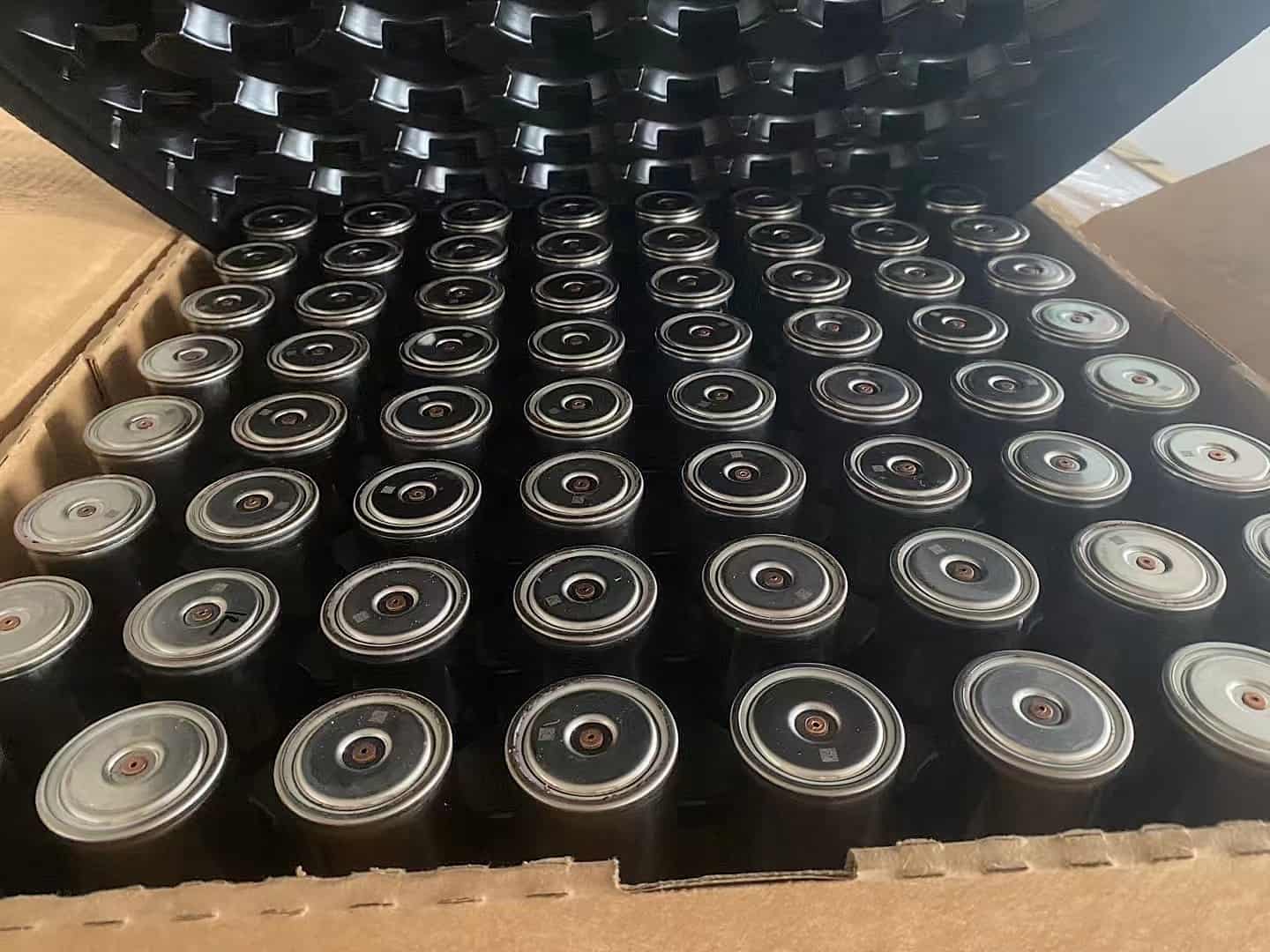
A contract revaluation disclosed by South Korea’s high-nickel cathode material supplier L&F has once again pushed Tesla’s 4680 battery program into the spotlight.
According to a filing submitted by L&F to the Korea Exchange, the company signed a multi-year supply agreement in February 2023 with Tesla and its affiliates for high-nickel cathode materials. Based on raw material prices at the time, the estimated contract value reached approximately KRW 3.83 trillion, covering the period from 2024 to 2025.
However, on December 29, 2025, L&F revealed that the estimated value of the contract had been revised down to less than KRW 10 million—a reduction of nearly 99%. The sole explanation given was a “change in supply volume.”
Over the past two years, this order had been widely viewed as a key lever for L&F to lock in Tesla as a long-term customer and share in the growth dividends of the 4680 battery. Now, with the contract value effectively dropping to near zero, it has not only dealt a direct blow to the supplier’s performance expectations but has also become one of the clearest financial signals suggesting that Tesla’s 4680 battery program is encountering headwinds.
From KRW 3.83 Trillion to “Ten-Million-Level”: How a High-Nickel Contract Vanished
L&F did not disclose further details in its announcement, broadly attributing the adjustment to “changes in supply volume.” Still, reports from multiple media outlets and research institutions help piece together a fuller picture.
Reuters, citing sources familiar with the matter and industry analysts, noted that the contract covered high-nickel cathode materials for Tesla’s 4680 batteries, with deliveries scheduled from January 2024 to December 2025. The materials were mainly intended for Tesla’s Texas factory, serving platforms such as the Cybertruck and a previously planned low-cost vehicle.
South Korean mainstream media further reported that after the downsizing, the remaining contract value essentially only covers the cost of early-stage sample shipments.
In communications with the market, L&F emphasized that the adjustment was made in response to changes in the global electric vehicle market and battery supply landscape, describing it as a revision to production planning rather than a unilateral action.
The capital market response was swift. On the first trading day after the announcement, L&F’s shares fell more than 7% intraday on the Korea Exchange.
From the valuation boost at the time of signing in 2023 to the steady pullback since 2024 amid cooling U.S. EV demand and repeated delays in 4680 mass production, this contract—once seen as a symbol of a “Tesla order”—ultimately closed in near-zero fashion. In doing so, it completed a full cycle for the optimism surrounding high-nickel expansion.
The “4680 Failure” Label and the Boundary of Facts
In both the secondary market and public discourse, the dramatic shrinkage of the L&F contract was quickly labeled as evidence of “Tesla’s 4680 failure.”
Reuters directly linked the contract to the 4680 battery cells and attributed the revision to two main factors. First, Tesla’s in-house 4680 battery production ramp has fallen short of expectations, with key processes such as dry electrode technology facing difficulties in large-scale manufacturing. Second, the overall slowdown in U.S. EV demand has reduced incremental demand for high-nickel cells.
Bloomberg, in an article titled “The Cost of Cybertruck Failure for Korean Suppliers”, placed greater emphasis on the vehicle level. It argued that as the only mass-produced model currently using 4680 cells at scale, the Cybertruck’s weaker-than-expected sales significantly limited upstream demand for high-nickel materials, becoming a major backdrop to the hollowing out of L&F’s contract.
Looking at publicly available information, several threads roughly align.
When Tesla introduced the 4680 concept at its 2020 Battery Day, it promised that larger cylindrical cells combined with dry electrode processes would significantly reduce battery costs within about three years, supporting a roughly $25,000 mass-market vehicle.
In reality, by the end of 2025, 4680 cells remain largely concentrated in a small number of models such as the Cybertruck. Some early Model Y versions equipped with 4680 cells have reportedly been discontinued, while the much-discussed “affordable car” project has been adjusted or delayed multiple times.
Technically, Tesla is still producing and using 4680 cells. Teardown analyses generally agree that this generation adopts a high-nickel ternary cathode system and new processes like dry electrodes, delivering higher energy density. However, manufacturing yields and cost reductions have fallen noticeably short of initial promises.
Elon Musk himself has acknowledged during earnings calls that scaling dry electrode technology is a “major challenge” and that the 4680 production ramp has been “slower than originally expected.”
Based on these facts, the L&F contract alone cannot be simply interpreted as proof that the 4680 technology itself has completely failed.
A more accurate description would be this: the product and capacity roadmap centered on high-nickel 4680 cells—intended to simultaneously support Cybertruck growth and a low-cost vehicle—has been forced to slow sharply, and in some cases partially retreat, under the combined pressure of real-world demand and manufacturing complexity.
High-Nickel Takes a Step Back: From Volume Driver to Premium Niche
The changing market environment behind the L&F contract is also reflected in adjustments to Tesla’s own battery mix.
On one hand, high-nickel cells remain the core configuration for premium models and long-range variants. Certain Model 3 and Model Y versions in the U.S. and Europe, as well as performance models, continue to rely on high-nickel NCA/NCM systems, with external supply from partners such as Panasonic and LG.
This portion of demand has not fundamentally reversed due to the L&F contract change.
On the other hand, LFP and other more cost-controlled cathode chemistries are increasingly taking over the volume segment of the market.
In China and some export markets, Tesla’s standard-range models have widely adopted LFP prismatic cells. In energy storage systems, Tesla has also clearly shifted toward LFP in recent years, working with partners such as LG Energy Solution to plan U.S.-based LFP capacity, locking incremental volume into lower-cost chemistries with more moderate range requirements.
This portfolio shift closely tracks the broader macro environment of the U.S. EV market. With interest rates staying high and subsidy policies uncertain, consumers have grown more sensitive to the price of high-ticket EVs. Many automakers have responded by cutting or delaying investments in pure EV projects to cope with softer demand.
Recently, LG Energy Solution disclosed the cancellation or termination of contracts with Ford and Freudenberg, affecting total orders exceeding KRW 13 trillion. The reasons were similarly attributed to adjustments in North American EV projects and policy conditions.
In this rebalancing process, high-nickel cells have shifted from being seen as an unconditional “next-generation mainstream path” to focusing more narrowly on segments where genuine pricing power still exists.
For Tesla, this means the pace of capacity expansion around high-nickel 4680 cells at its Texas factory has been forced to slow, while globally, the company continues to double down on LFP and products tailored specifically for energy storage applications.
The Nickel Resource Angle: Expectations Reset Upstream
Zooming further upstream to the resource level reveals a set of nearly synchronized moves.
On December 26, Shengtun Mining announced the termination of its planned high-grade nickel matte project at Indonesia’s Weda Bay Industrial Park, which was designed to produce 40,000 tons annually. The company also dissolved the joint venture PT ChengMach Nickel Indonesia that served as the investment vehicle.
Originally approved in 2021, the project was expected to require an investment of approximately USD 245 million and produce 40,000 tons of nickel content per year for use in battery precursors and related value chains. However, it never entered formal production.
According to the company’s announcement, the board has approved the termination of the investment and the cancellation of the joint venture, authorizing management to handle follow-up matters.
Driven by high-nickel expectations and a rush into Indonesian nickel over the past few years, many projects were launched rapidly. Now, against the backdrop of weakening nickel prices and margin pressure in certain segments, unfinished or underperforming projects have become the first to exit at a loss.
At the same time, Indonesian authorities are signaling a new round of production controls. The government plans to cut nickel ore production quotas from roughly 379 million tons currently to about 250 million tons in 2026—a reduction of nearly one-third—aimed at stabilizing prices and easing oversupply.
Following the announcement, both Shanghai nickel futures and LME nickel prices rebounded quickly.
Institutions interpret this as a sign that resource-producing countries, after years of aggressive volume expansion to capture market share, are beginning to reshape price benchmarks and profit distribution through output cuts and quota management.
Viewed together, the evaporation of the L&F contract, the termination of Shengtun’s project, and Indonesia’s planned output reduction correspond to simultaneous pullbacks at three levels: midstream high-nickel demand expectations, Chinese investment in nickel projects, and resource-country supply strategies.
All of them point to the same underlying shift. The era of unconditional expansion around high-nickel batteries and nickel resources is giving way to a phase of selective contraction and repricing.
- Next: REPT BATTERO Won the “2024 Green Heavy Duty Trucks - Quality Supplier Enterprise of the Year Award”, Contributing to the Renewal of Green Energy
- Previous: Great Power Unveils New 100Ah LiFePO4 Residential Storage Cell
Contact Details
Lithium LiFePO4 Batteries and Lithium LiFePO4 Cells Supplier - LiFePO4 Battery Shop
Contact Person: Miss. Elena Wang
WhatsApp : +8615263269227
Skype : +8615263269227
WeChat : 15263269227
Email : info@lifepo4batteryshop.com
All Products
Certification
Customer Reviews
- I have fond memories of our meeting in Shanghai with LiFePO4 Battery Shop Elena. Your company left a strong impression on me with its impressive growth and professionalism. We both value straightforwardness and honesty, which I believe are the most important qualities in any partnership. I am confident that we can build a successful collaboration based on these shared values. —— Robert from USA
- I've been working with LiFePO4 Battery Shop for years, and their reliability is unmatched. While other suppliers frequently change sales teams, LiFePO4 Battery Shop has consistently provided exceptional service with a stable team. Their commitment to quality and customer support truly sets them apart. —— Henry from Australia